
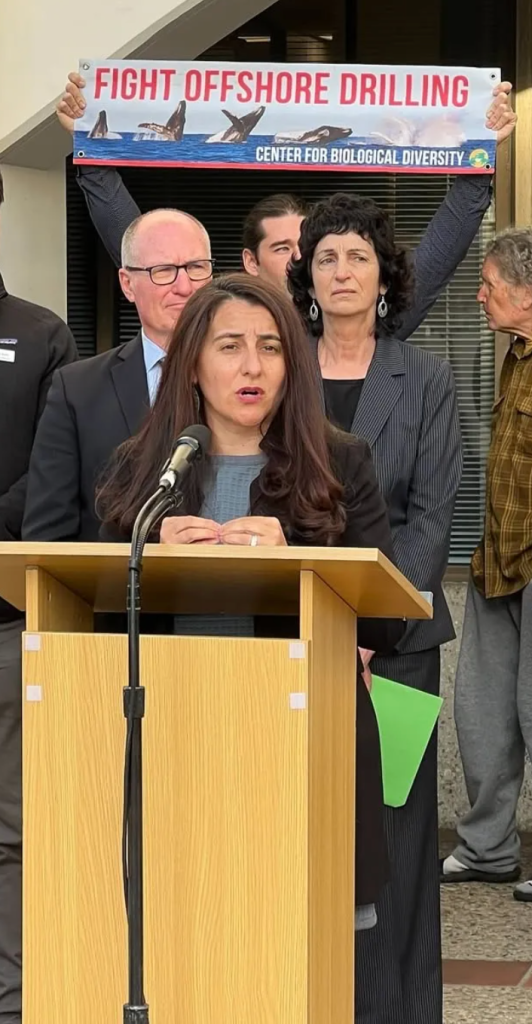
Sable Offshore’s convoluted saga to restart ExxonMobil’s oil plant along the Gaviota Coast — shut down the past 10 years by an oil spill sprung from a ruptured pipeline running along that stretch of waterfront — just got significantly more challenging for the oil company and even more convoluted.
Late Saturday night, the state legislature passed an emergency oil bill, ramrodded through both houses by Governor Gavin Newsom — wary of potential price spikes at the pump — to ease environmental regulations hampering oil development in Kern County. But in exchange, the governor appears to have tossed Sable Offshore under the bus, at least partially, by including language from bills introduced separately by Santa Barbara’s representatives in Sacramento, State Senator Monique Limón and Assemblymember Gregg Hart, both designed to heighten the regulatory hurdles the Houston-based oil company must clear and provide additional oversight and safety measures sought by their environmentally minded political base.
Hart’s language would make Sable seek and secure a conditional development permit from the California Coastal Commission to get a restart permit for the company’s plant, pipeline, and three offshore oil platforms. Sable and the Coastal Commission have been locked in a bitter dispute over the commission’s jurisdiction. The commission fined Sable $18 million last year for not complying with several cease-and-desist orders on repair work the company was then conducting on Exxon’s former — and badly corroded — pipeline.
While Sable has issued no public statement, the company has made clear it fully intends to sue the state for $11 billion should Newsom sign the bill.
The governor’s bill includes language crafted by Limón to ensure that any company that took over the pipeline — from which 140,000 gallons spilled in 2015 — would have to conduct not just hydrostatic water tests to ensure the pipe repairs were adequate, but spike hydrostatic testing as well. These involve using shorter spurts of high-pressure water to ensure that smaller cracks and fissures are exposed before the pipeline can be cleared for restart.
When the governor first unveiled plans to include this language in his sprawling oil bill, the plan was that the bill — then proposed as a budget amendment — would become law effective the day the governor signed it. Since then, the bill’s effective date has been pushed out to January 1, a small but key procedural victory for Sable, a company that’s demonstrated both the urgency and ability to move fast. It will now have reason to be in a red-hot hurry to secure all the necessary permits it needs before the January 1 deadline.
Whether it can remains to be seen. It must still secure new easement permits from the State Parks Department for the four miles of pipeline on easement that go through Gaviota State Park. The existing easement expired in 2016 and has been reupped every year so that necessary repairs can be done if need be. State Parks administrators have expressed some concern about issuing such provisional permits to allow the plant to restart. Parks officials have suggested that the frequency of repair work — more digging and disruption would be entailed — could be significantly more frequent as a cautionary hedge, required by the California State Fire Marshal against the possibility of pipeline erosion.
Last but not least, there’s the transfer of title and development rights — from Exxon to Sable — that the County of Santa Barbara must approve. Right now, that remains in legal limbo. The supervisors found themselves deadlocked 2-2 — Supervisor Joan Hartmann recused herself over a conflict of interest — over the transfer earlier this year.
This Monday, federal judge Dolly Gee ruled that the supervisors needed to go back and try again within 60 days. And if that didn’t work, she added, the supervisors had to try once more within 45 days.
In the interim, Supervisor Hartmann and the county counsel had been informed by the Fair Political Practices Committee that the alleged conflict of interest did not exist and Hartmann was free to vote on the transfer matter.
Sable had sued, arguing that with the supervisors tied, the planning commission’s 3-1 vote in favor of the transfer should hold sway. Attorneys for the county and the Environmental Dense Center, representing a coalition of groups opposed to restarting the Exxon plant, argued otherwise. The judge explained in her ruling how she was cutting the baby in half, but in reality, it was a clear victory for the county and the enviros. What happens next is a matter of feverish conjecture, but certain litigation.









You must be logged in to post a comment.