
Warning: This article contains descriptions of sexual abuse.
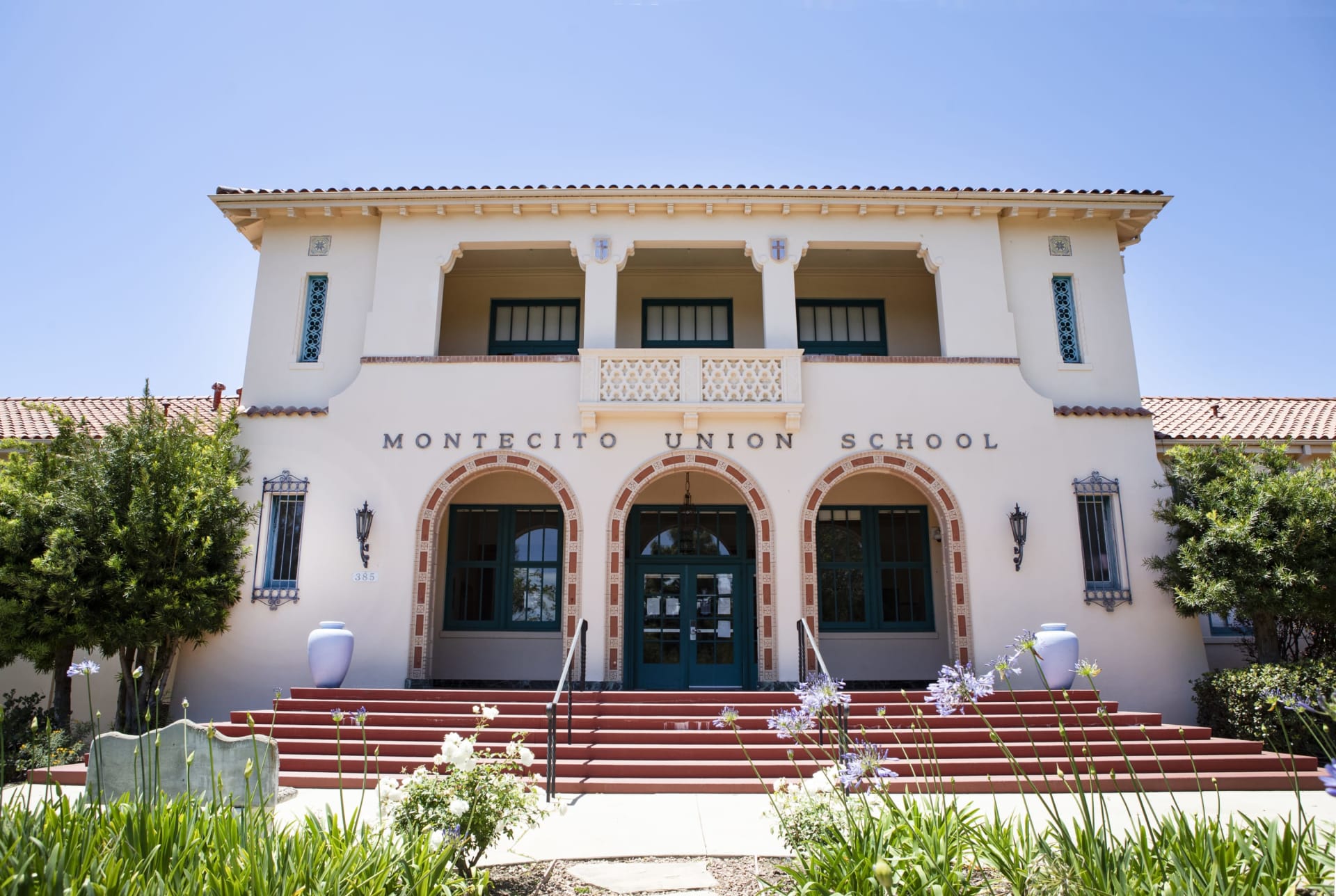
The allegations are shocking. Stanford Kerr, the beloved principal of Montecito Union School from 1954 to 1979, is accused of molesting two young brothers. School staff are said to have known about the abuse but did nothing to stop it. Kerr, who had also previously taught at Gaviota and Carpinteria elementary schools, was never charged with a crime and died in 2013.

The stakes are high. When the trial in the civil case against the Montecito school district begins later this week, attorneys for the brothers ― identified in court documents as John Doe 1 and John Doe 2 ― will argue the school failed to protect them and seek millions of dollars in damages. Montecito Union roundly denies the accusations though has already paid part of a $1 million settlement to a third alleged victim of Kerr. A large jury award could wipe out the district’s remaining $13 million in reserves, given its lack of records of liability insurance from the era.
And the ramifications reach beyond Montecito. A fierce debate is taking place in Sacramento over possible amendments to a 2019 state law that extended the statute of limitations for claims of childhood sexual assault. Since Assembly Bill 218 went into effect, school districts and other public entities have spent an estimated $8 billion settling and defending the bevy of lawsuits the legislation made possible. The Carpinteria Unified School District is currently fighting a similar but unrelated 50-year-old claim that its administrators say could bankrupt the district.
“We cannot turn our backs on victims of sexual abuse,” said State Senator Monique Limón, who represents Santa Barbara County. However, she acknowledged, “As we see the implementation of AB 218 and claims come forward, I believe we must evaluate and continue the conversations in the legislature on the right balance between bringing justice to families and survivors, while evaluating the impact to our schools.”
“We should protect victims. They have suffered and deserve accountability,” agreed Santa Barbara’s Assemblymember Gregg Hart. “But this is a crisis begging for a solution, and the solution is not apparent.”
‘The Worst Kid in School’
Kerr’s abuse of John Doe 1 began with the boy stealing money from the school office to buy candy, according to the trial brief filed last week by his attorneys. When his conscience got the better of him and he tried to return the money, Doe 1 was caught by a secretary and brought before Kerr. The principal then began to use disciplining Doe 1 as justification for what became a brutal pattern of assault, the brief states.
Doe 1, who was 8 years old at the time and whose own father was a violent disciplinarian, claims Kerr on dozens of occasions would force him to strip down to his underwear, bend him over his knee, and spank him while telling him he was “the worst kid in school.” That escalated to Kerr allegedly touching Doe 1 all over his body, masturbating behind his desk, and eventually choking Doe 1 unconscious on a couch. “[Doe 1] recalls waking up to find himself face down on the couch with pain in his penis and rectum,” his attorneys wrote.
At one point during this period, Doe 1’s brother, John Doe 2, found a key on the playground and decided to take it to Kerr, “a man he respected and looked up to as the school principal,” the brief continues. When Doe 2 opened the door to Kerr’s office he was stunned to find his brother standing in his underwear. Two secretaries outside also witnessed Doe 1 in his underwear, Doe 2 claims, but quickly shooed him away and closed the door.
A short time later, Kerr allegedly approached Doe 2 from behind, wrapped him in a bear hug, and without warning grabbed the tip of his penis so hard it made the boy scream in pain. Doe 2 reported the incident to a teacher, who confronted Kerr, “shaking her finger at him while Kerr did not respond,” the brief states. But neither the secretaries nor the teacher ever contacted law enforcement or child protective services.
Finally, both brothers say, a Montecito Union employee appeared at their home one night and pressured their parents to sign a contract that would require Doe 1 to go straight home from school ― and not Kerr’s office ― if he got into trouble. Their attorneys believe this was done to shield the district from scandal. The parents agreed. Kerr retired shortly thereafter.
During the discovery phase of the case, Montecito Union failed to produce a copy of this contract. In fact, the Does’ attorneys note, the school did not submit a single record of them during their time at the public elementary school. “It’s as if the boys never existed,” they said.
‘A Stellar Educator’
In their own trial brief, the defense attorneys representing Montecito Union say the district has no record of any complaints against Kerr over his 25-year tenure. They also explain that proving or disproving the decades-old allegations will be extremely difficult. “All individuals who could confirm or deny plaintiffs’ factual claims are dead,” they state, including Kerr, the secretaries and the teacher, the employee who made the house call, and the Does’ mother. (Their father could not be located.)
Moreover, those who are still alive from that time, including three former Montecito Union teachers and two boardmembers, will testify “how they held Kerr in the highest regard and how any hint of abuse would have been reported immediately under the standards of the day,” the attorneys said. In depositions, these witnesses described Kerr as a “stellar educator who enjoyed universal respect.” Two of Kerr’s children are also expected to testify. “Both are shocked by the allegations against their father and will testify to the type of father and man that Stan Kerr was,” the brief states.
The defense will question the credibility of the brothers, particularly Doe 1, who has struggled with substance abuse, mental health, and legal issues for much of his adult life. Since 1994 he has been convicted of drug possession, grand theft, and sexual battery.
The district admits it has no direct evidence to contradict the brothers’ claims. “Indeed, the District will not ask the jury to disbelieve Plaintiff’s testimony about the abuse itself,” the attorneys state. Instead, the jury will be asked to decide if the school in fact knew of Kerr’s alleged conduct and failed to act. The evidence of that supposed negligence “strains the bounds of credulity,” they argue.
Past and Present
Anthony Ranii, the current principal of Montecito Union School who has been outspoken in his criticism of AB 218, declined a request for an interview. In previous public statements he insisted that “what happened in 1972 to 1976 doesn’t have anything to do with the [school’s] current staff, the current policies, and the current procedures.”
But the recent deposition of a Montecito Union employee would seem to cast doubt on that statement. When asked in 2024 if he had an understanding of what a mandated reporter is, and what their duties are, the employee testified he did not.
In two letters to Montecito Union parents, Ranii vowed the district would “vigorously” defend against the lawsuit and he emphasized he and other California districts would continue pushing for a “legislative fix.” “It seems deeply unfair that allegations from 1972-1976 would need to be resolved by taking away resources from students in 2025,” he wrote
In both letters, Ranii did not name Kerr, instead referring to him only as an “employee.” Though the claim was filed more than two years ago, only in recent weeks has the school acknowledged Kerr’s identity. To the brothers and their attorneys, the previous omissions are evidence that the district is continuing to unjustly protect Kerr and its reputation.
“After decades of sexual abuse scandals, even entities such as the Roman Catholic Church and the Boy Scouts have been forced to change their ways by societal recognition that secrecy is a sexual predator’s best friend, and a danger to today’s children,” the attorneys stated. “Montecito Union’s recent refusals to identify Kerr suggest it has yet to learn that lesson.”
Opening arguments are expected to take place early next week before Judge Thomas Anderle.
Related Posts










Premier Events

Sat, Mar 28
7:15 PM
Santa Barbara
Santa Barbara Stargazing Tour

Tue, Mar 17
5:30 PM
Santa Barbara
SB Independent’s Annual St. Patrick’s Day Stroll 2026

Thu, Mar 19
6:00 PM
Santa Barbara
Chaucer’s Book Talk & Signing: Elizabeth Gilchrist

Sat, Mar 28
All day
Santa Barbara
Coffee Culture Fest

Sat, Apr 18
11:30 AM
Goleta
The Santa Barbara Independent Backyard Brunch
Sat, Mar 28 7:15 PM
Santa Barbara
Santa Barbara Stargazing Tour
Tue, Mar 17 5:30 PM
Santa Barbara
SB Independent’s Annual St. Patrick’s Day Stroll 2026
Thu, Mar 19 6:00 PM
Santa Barbara
Chaucer’s Book Talk & Signing: Elizabeth Gilchrist
Sat, Mar 28 All day
Santa Barbara
Coffee Culture Fest
Sat, Apr 18 11:30 AM
Goleta


You must be logged in to post a comment.