One year from now, Santa Barbara County and 47 other counties in the state will have to change the way they investigate deaths in custody because of a bill authored State Assemblymember Gregg Hart and just signed into law by Governor Gavin Newsom.
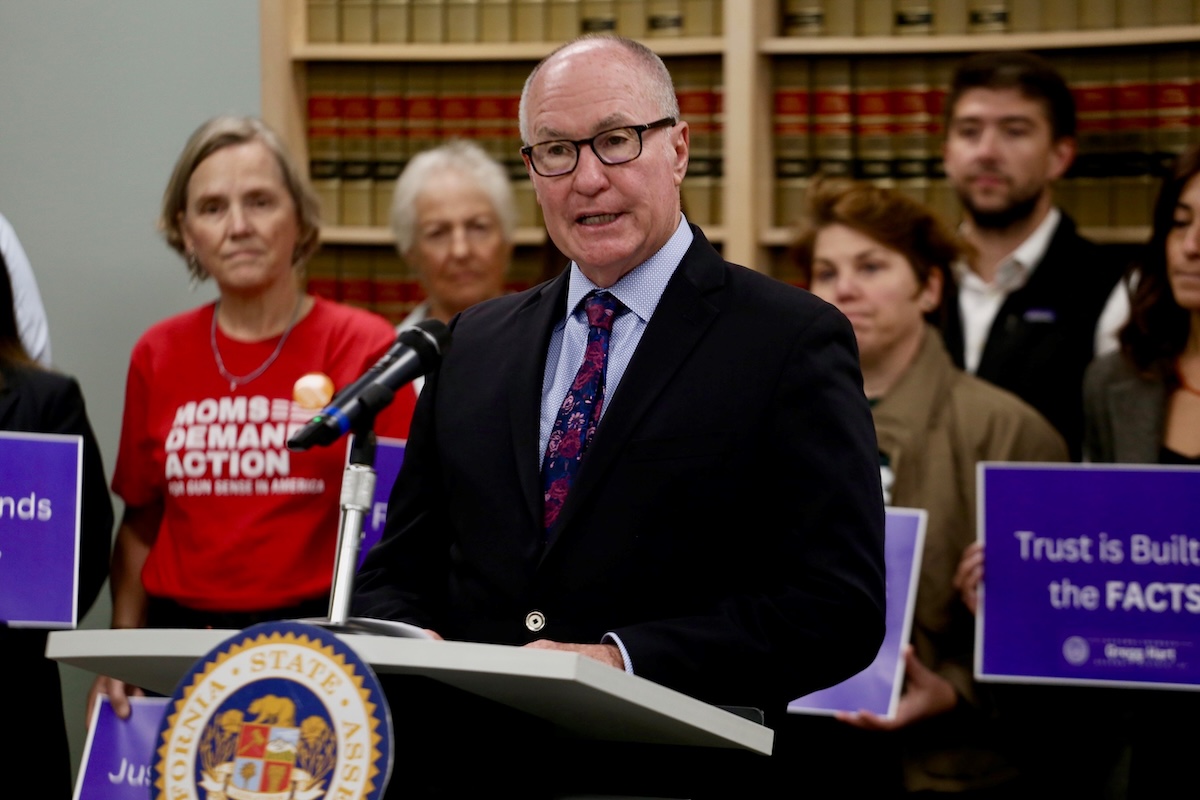
As outlined by Hart — flanked by county supervisors Joan Hartmann and Laura Capps and 15 other supporters at a press conference held in the Santa Barbara College of Law last Wednesday — gone are the days when then the county sheriff and county coroner are the same person, at least when it comes to deaths in custody. In those cases, Hart’s Assembly Bill 1108, the Forensic Accountability, Custodial Transparency, and Safety (FACTS) Act, will require the county sheriff to contract out for the services of an independent third-party medical examiner to avoid what he and the Santa Barbara County Grand Jury in 2023 described as “an inherent conflict of interest.” It’s inherently unreasonable, Hart and several other speakers said, to allow the people in charge of jailhouses to investigate the cause, manner, and circumstances of jailhouse deaths when their oversight and management may have contributed to the deaths in question.
Endorsing the bill was former Grand Jury Foreman Dale Kunkel, who had investigated the death of a woman who died in county jail of a perforated gastric rupture and spent the last two days of her life howling in pain. Because she had been addicted to opiates at the time, her symptoms were conflated and confused with withdrawal pains, and she didn’t get the care she sought and needed. In a letter Kunkel wrote to Governor Newsom — as an individual not a former foreman — he noted that the press release issued by the Sheriff’s Office described the woman dying of natural causes and the outcome had been unavoidable. The grand jury concluded otherwise, Kunkel wrote, insisting the death could potentially have been avoided had she received the attention she needed in a timelier fashion.
“When there’s a death in the jail,” Supervisor Hartmann stated, “it’s a failure.”
Hart’s bill had been opposed in the legislature by law enforcement organizations and by families of people who died in custody. The latter demanded that each county have its own coroner’s office, separate and distinct from their sheriff’s office. Local government opposed this because of the high costs involved, and law enforcement agencies dismissed the idea, as Sheriff Bill Brown did when the grand jury first recommended this fix, as “a solution in search of problem.” Brown noted that the county’s forensic pathologist had 33 years of medical experience, performed 2,000 autopsies, and had rendered expert testimony in 100 trials. Any perceived conflict of interest, he said, would be strictly hypothetical and not born of actual facts.
By allowing counties to contract out the services of a medical examiner on an as-needed basis — as Hart’s bill mandates — local governments already straining under chronic budget shortfalls would not be saddled with the considerable added costs of a brand-new department.
“We’re in the presence of a master legislative craftsman,” Hartmann gushed.
Hart said the bill should provide some small solace to family members experiencing grief because of the death of their loved one. They would have greater confidence that the people investigating their loved one’s death were not in some fashion responsible for it.
The bill — which covers state prisons and those who died while in the custody office — goes into effect January 2027.