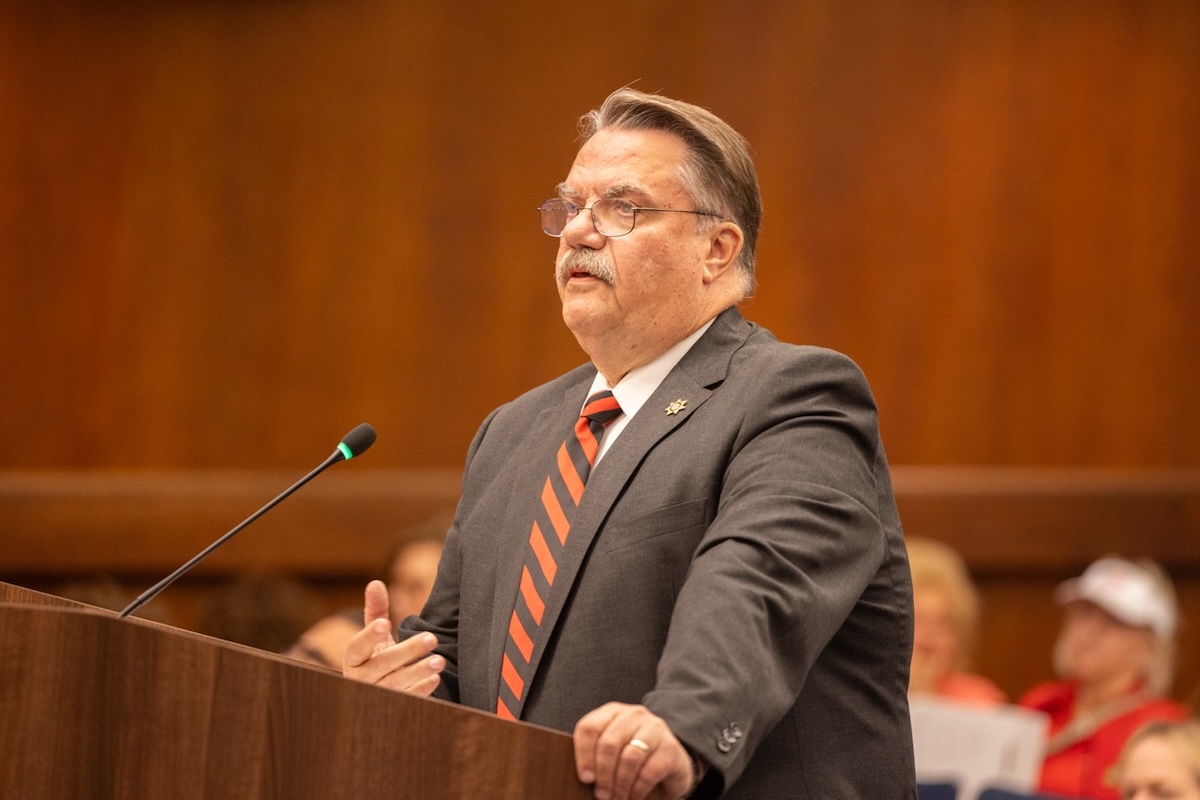
Sheriff Bill Brown notified the Santa Barbara County supervisors he would not comply with their recent request to keep them apprised of any specifics relating to Immigration and Customs Enforcement (ICE) activities in Santa Barbara County. To do so, the Sheriff wrote, could be “construed as obstruction of justice under federal law.”
Brown had informed the supervisors that ICE officials did, in fact, contact his office in advance of ICE actions to let him know when immigration enforcement efforts were taking place within county jurisdiction. This is part of a policy known as “deconfliction,” in which federal agencies with law enforcement powers notify their local counterparts to minimize the potential for conflict and violence.
Brown made it clear in a memo he sent the Supervisors on October 14 he would not provide the supervisors any information relating to the number of federal actions, the dates, the locations “or other specifics relating to these operations.” The sheriff added, “Disclosing such information, either prospectively or retroactively, could interfere with ongoing federal prosecutions.”
Up on the fourth floor of the County Administration Building, where the supervisors and their staffs work, Brown’s remarks elicited some vexed head scratching as to how the release of basic after-the-fact information could compromise ongoing investigations. But given that the same attorney’s office that represents the supervisors also represents the sheriff, it’s doubtful much will come from that.
In addition, Brown notified the supervisors — both times “respectfully” — that he would not be complying with a recently passed state law, Senate Bill 627, requiring federal immigration agents to wear identification badges and to not wear masks that covered their faces. Brown cited two court cases — one a Supreme Court cases dating back to 1890 — that affirmed state and local law enforcement authorities cannot prosecute or interfere with federal officers while acting in their official capacity.
Many elected officials who supported of SB 627 recognized these judicial constraints even as they voted for the measure but cited more recent court rulings — since overturned — holding that the manner in which ICE raids were conducted was tantamount to racial profiling. The appeals court judge ruled that the color of one’s skin, the language one spoke, and one’s tendency to work in a car wash did not constitute reasonable grounds of suspicion to stop and detain anyone.
“We value our collaborative relationship with the Board of Supervisors,” Brown wrote, “and appreciate your understanding of these legal and operational constraints.”