Downtown Santa Barbara is at a crossroads. The Paseo Nuevo mall, once the city’s retail heart, has become a relic of another era. Built for department-store shopping and car-based consumption, it’s now a half-empty monument to a time that’s gone. We can either cling to nostalgia or step forward into a more vital, livable, and economically sustainable future.
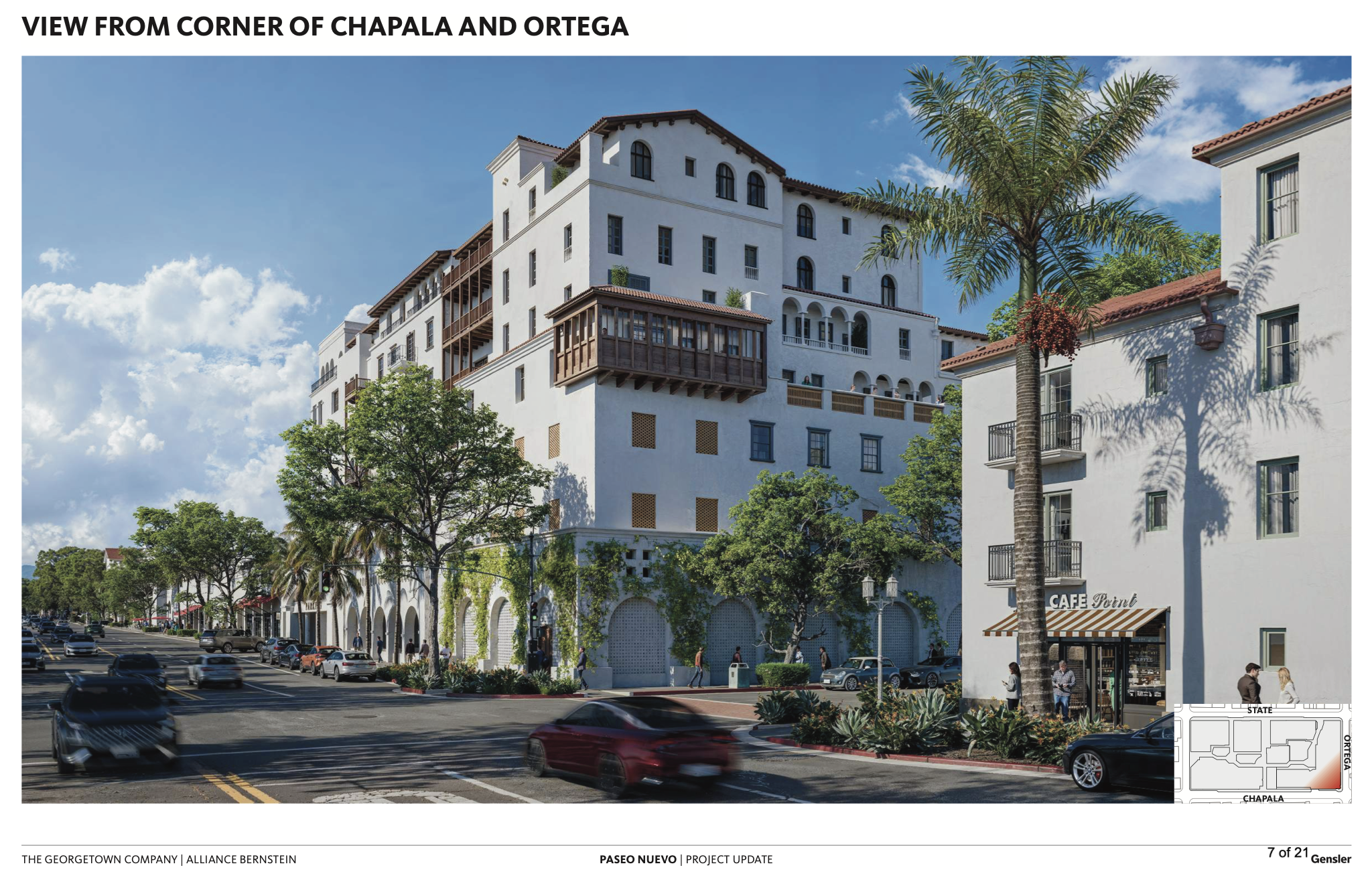
That future must include housing. For decades, Santa Barbara has talked about creating a true mixed-use downtown, one where people live, work, and shop locally instead of commuting in and driving out. The redevelopment of Paseo Nuevo finally makes that vision possible. It’s a once-in-a-generation opportunity to replace obsolete square footage with homes, open space, and smaller-scale retail that actually fits today’s reality.
Under the current proposal, 233 market-rate apartments would rise where the Macy’s box now sits, joined by 80 affordable units developed by the Santa Barbara Housing Authority on nearby City Lot 2. In total, that’s more than 300 new homes in the urban core, the largest infusion of downtown housing in Santa Barbara’s modern history.
Critics say the project feels rushed, ill-defined, or too friendly to a private developer. But the truth is, public-private partnership is the only way a project of this magnitude gets built in California today. Cities no longer have the bonding capacity, redevelopment agencies, or public financing tools that once made urban renewal possible. Instead, we depend on private capital willing to take on risk capital that will go elsewhere if met with endless delay or political uncertainty.
Let’s be clear: This is not a “giveaway” of city land. The city owns parcels under the mall and adjacent parking lots assets that currently generate zero housing, minimal tax revenue, and contribute to a hollowed-out downtown. Transferring or ground-leasing this land as part of a comprehensive deal converts dormant value into permanent public benefit: affordable homes, tax base, pedestrian infrastructure, and hundreds of new residents supporting local shops and restaurants. That is smart governance, not a handout.
Without this deal, the alternative is bleak: a decaying mall, no redevelopment for decades, and a downtown economy slipping further behind. AllianceBernstein, the current owner, has both the capital and the commitment to reinvest something few national investors would even consider in a small coastal market like ours. We should seize that willingness to partner, not punish it.
Some have raised concerns about the location of the affordable housing, suggesting it lacks “dignity.” Dignity doesn’t come from a street address; it comes from design, safety, and integration. The Housing Authority has a long record of producing beautiful, high-quality housing that fits its surroundings and enhances neighborhoods. Those same standards will apply here. Co-locating affordable and market-rate housing in the heart of downtown is precisely the inclusive model we should be proud to champion.
The Planning Commission also questioned why this project isn’t being sent to voters. The answer is simple: A ballot measure would effectively kill it. Every month of delay increases costs and erodes feasibility. Our elected council already has the authority and responsibility to decide whether the public benefits justify the land contribution and they do. Their job is to lead, not punt.
Inaction has a cost. Each year that Paseo Nuevo sits underused, we lose potential housing, tax revenue, and vitality. Our downtown deserves more than empty storefronts and stalled debates. The world is changing, and downtown Santa Barbara must change with it.
This project isn’t perfect; few transformative projects ever are. But it’s the right scale, at the right time, in the right place. It brings residents, jobs, and investment back to the city’s heart. And it sends a message that Santa Barbara believes in its own future.
We can continue to mourn the mall that was, or we can build the community we need. Let’s choose housing. Let’s choose vitality. Let’s choose progress.
Marge Cafarelli is president of LIT Homes, a modular housing manufacturer that builds sustainable, community-based solutions. She has more than 40 years of experience in real estate development and housing innovation, including founding the S.B. Public Market.