

This article was underwritten in part by the Mickey Flacks Journalism Fund for Social Justice, a proud, innovative supporter of local news. To make a contribution go to sbcan.org/journalism_fund.
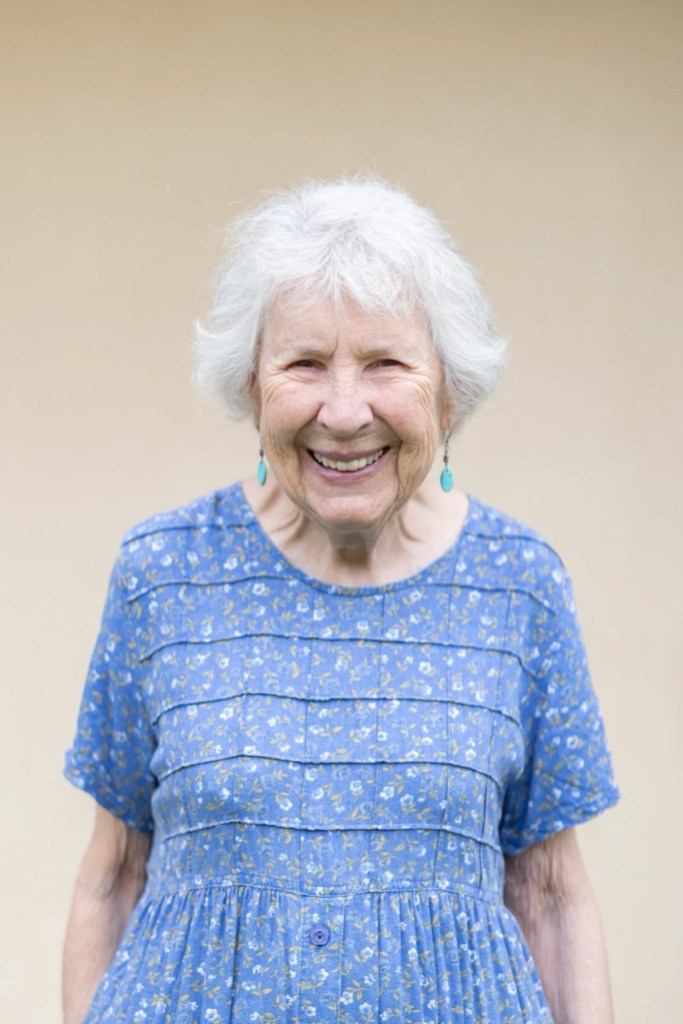
As a journalist, sometimes stories appear unexpectedly. I met Shyama Osborne on her front patio to talk about housing this spring. There, while I sipped tea, I got to hear an eyewitness account of the “day that will live in infamy,” the bombing of Pearl Harbor.
“It was Sunday morning, and like most Sundays, we were in my parents’ bedroom,” Osborne told me. “My father was reading the funnies to us.”
Osborne was about three months shy of six years old in December 1941, when Japan attacked Pearl Harbor in Honolulu, Hawai’i. Her father was a newly minted lieutenant. The family ― Osborne, her parents and her two younger sisters ― lived in officer housing next to the nearby Hickam Air Force Base.
“The house started shaking. We heard booms, and my father jumped off the bed,” Osborne said.
Osborne said her father knew immediately that the US was being bombed by the Japanese military. She said he went into the bathroom, which was the only room in the house with a window that faced the harbor.
“He called us all in and lifted us up one by one so we could see the smoke and the flames,” she said.
Her mother, Osborne said, started closing all the windows and shutting the drapes in the house. Here, Osborne said she can’t quite remember if it was her mother who told her later, or if she, too, saw it: A plane shot past a window.
“[It] came so close, she could see the rising sun on it. She could see the pilot in the cockpit,” she said.
Bullets struck the house next to theirs, and outside, as her father went to report for duty, he found that one of the car’s tires had been shot.
Osborne said she remembers her mother staying calm. She took their kitchen table ― a large metal table, and put it up against the window. Osborne, her mother, and her sister climbed under. Their neighbor, a woman with a Great Dane, came over to join them.
“So we were all under the table with that big dog,” she said laughing.
Later, Osborne’s father drove her, her mother, and her sisters to an air raid shelter and then returned to duty. Osborne’s mother and the girls had to leave their home along with all other Army dependents, with her mother only having time to stop and take a few clothes. From there, they stayed with a family in Honolulu before boarding a ship for San Francisco.
“All the way there, we had to wear life jackets and keep blackout at night,” she said. “Because who knows? We thought maybe they would follow us and bomb the ships.”
Once in San Francisco, the Red Cross greeted the evacuees with blankets and warm clothing (they were coming from the tropics, after all). Osborne, her mother and her sister moved in with family in Riverside while her father served in the war.
As large as it looms in our popular culture, World War II can seem distant. Each year, there are fewer eyewitnesses to the period that reshaped American culture. The chance to sit in a lush patio and hear, firsthand, an account of one of the most famous attacks on the United States felt special because it served as a reminder of the diverse, far-reaching stories in this community.
Thank you, Shyama, for sharing your story with me.







You must be logged in to post a comment.