
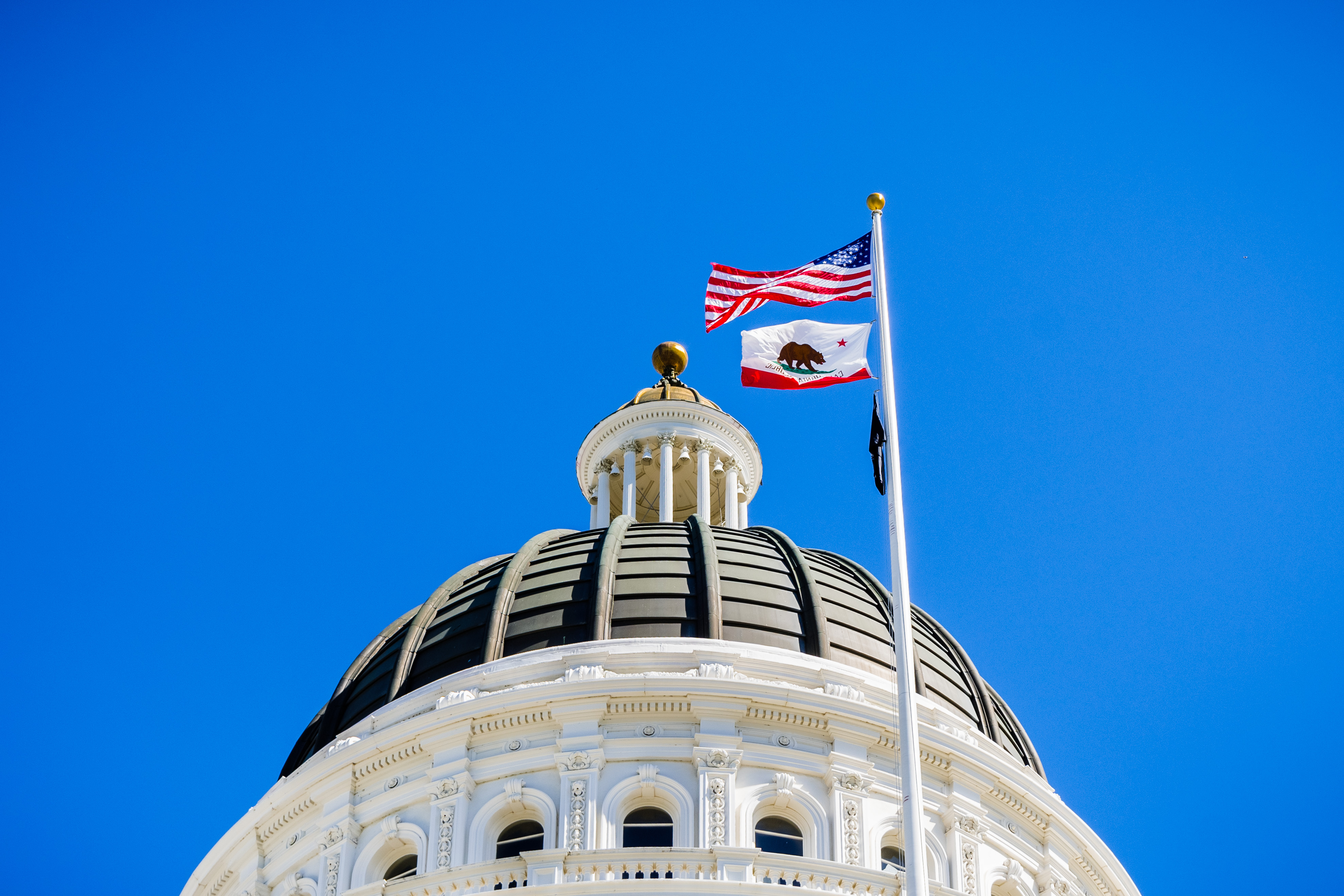
From officially parting with plastic bags to increases in minimum wage, a number of new laws are going into effect this year in California, with many beginning on January 1. With the new year underway, here is what to expect starting in 2026.
Education
Assembly Bill 727 requires that all public middle and high school students’ school ID cards include the number to the Trevor Project, a 24/7 suicide prevention hotline for LGBTQ youth.
In the face of Washington’s attacks on resources for transgender and gay youth, the bill ensures that support for students who may face discrimination or harassment for their sexual orientation or gender identity remains readily accessible.
In the same vein, under SB 760, all public and charter schools will also be expected to provide at least one accessible all-gender restroom during school hours starting July 1.
Promoted with the motto “real food for kids,” Assembly Bill 1264 will remove the “most concerning” ultra-processed foods from students’ on-campus eats. It bans certain foods and snacks that contain added colors (such as Red 40 dye) and sweeteners and have high concentrations of sugar, fat, and sodium.
The law will be implemented in phases, starting this year, and move toward a full ban by 2035. It is the first of its kind in the nation, following in the footsteps of other countries that have long banned artificial dyes and sweeteners in children’s foods.
A state-sanctioned switch to the “Science of Reading” also takes effect this year. Assembly Bill 1454 requires the statewide implementation of evidence-based literacy instruction, officially moving away from the largely discredited “whole language” approach to reading that emphasized context clues over explicit phonics rules.
The state’s support will buttress local efforts, as many Santa Barbara County schools have already begun shifting toward science-based reading instruction.
The state is cracking down on screens, too. AB 3216 mandates that all public schools adopt policies to limit smartphone use on campus, starting July 1.
At the college level, Senate Bill 1454 establishes a direct pipeline for eligible high school students — with at least a 2.5 GPA and completed A-G coursework — to be automatically admitted to participating California State University campuses, starting with 2026 enrollment.
It also requires that community colleges create programs that support a smoother transfer for community college students to a four-year university.
Immigration
Some new immigration laws are centered on school campuses. That includes AB 419, which requires schools to post information about students’ and families’ rights when it comes to immigration enforcement, reiterating that all children have a right to a free public education.
In case of emergency separations, AB 495 established the “Family Preparedness Act,” making it easier for parents to name caregivers and set up joint guardianship through the courts.
It also protects families’ privacy — including restrictions on childcare facilities sharing immigration-related information.
In health care, SB 81 will protect patient privacy by designating documented status and place of birth as protected information, and restricting federal agents’ access to hospitals without a warrant.
Starting in February, SB 294 will require California employers to give workers a written notice of their rights, including during immigration or law enforcement encounters, and lets employees name someone to contact should they be detained or arrested at work.
Health
Other improvements in state healthcare are also in store this year.
For starters, the state is capping insulin costs. Under SB 40, large state-related health insurers must limit insulin copays to no more than $35 for a 20-day supply, making it more affordable for Californians who need it.
For families with young children, diapers and wipes will now be available through the state emergency food bank program thanks to AB 798.
SB 729 requires large employer insurance plans to cover infertility treatment, such as IVF, and expands access for same-sex couples and single parents.
AB 42, the Safe and Secure Health Data Act, strengthens privacy protections for people seeking reproductive or gender-affirming medical care. That includes preventing healthcare providers in the state from reporting prescriptions including testosterone and mifepristone to the state’s drug monitoring program.
SB 27 will expand the state’s CARE Court program to include people with bipolar disorder and psychotic traits and eases the process to connect people in the justice system to mental health care. It comes at a time when mental health care in the Santa Barbara County jail has been under intense scrutiny.
Housing
To protect renters, AB 628 requires landlords to provide a working stove and refrigerator in all apartments. These utilities will be treated as necessities instead of optional amenities, but tenants can use their own appliances if agreed to in writing.
SB 610 places the responsibility on landlords to clean up mold, smoke, ash, or water damage in rental units after disasters, and return unused rent or deposits if a tenancy ends. It also grants residents in mobile homes buyback rights and longer notice periods if parks are damaged or sold.
Social security recipients are also receiving extra protections through a new law that guards them against being evicted if their benefits were interrupted through no fault of their own.
SB 79 requires counties and cities to adopt long-term general plans for transit-oriented housing development, allowing denser, taller multi-family housing and streamlining development near major transit stops. Its reported purpose is to both tackle the state’s housing crisis and promote public transit. The “Abundant & Affordable Homes Near Transit Act” takes effect July 1.
Animals
AB 867 bans cat-declawing statewide, only allowing medically-necessary procedures performed by a licensed veterinarian. Declawing is painful for the animal as it is essentially the amputation of the last bone in each toe, leading to problems such as chronic pain and arthritis.
AB 478 requires shelters to hold rescued pets for at least 30 days after an emergency before putting them up for adoption or transferring them out.
SB 221 expands the state’s stalking law to pets so that threats against someone’s pet count as credible threats and can be prosecuted.
To combat puppy mills, AB 506 requires pet sellers to disclose a pet’s origin and health information and AB 519 prohibits third-party pet brokers, particularly online pet brokers, from selling cats, puppies, and rabbits bred by others for profit in California.
Additionally, two new bills are aimed at addressing the national veterinarian shortage, expanding the role of registered veterinary technicians and veterinary assistants.
Labor
California’s minimum wage is increasing from $16.50 to $16.90 per hour in January for all industries, catching up to previously-implemented higher wages for fast food workers and other jobs.
AB 250 opens a window stretching from January 1, 2026, to December 21, 2027, lifting the statute of limitations for adult survivors of workplace sexual assaults, allowing survivors to file claims regardless of when the incident occurred.
Additionally, SB 642, coming from Santa Barbara County’s own state senator Monique Limón, expands the state’s equal pay laws by broadening key definitions, clarifying categories of unlawful pay practices, and extending the statute of limitations to three years.
SB 648 will ban employers from taking credit card processing fees out of gratuities and require tips to be paid out in full, alongside granting the Labor Commissioner stronger enforcement protocols to tackle tip theft.
AB 692 bans “stay-or-pay” clauses in job contracts that require workers to repay bonuses, training, or relocation costs if they leave.
AB 1340 gives California rideshare drivers the right to organize and collectively bargain through driver organizations of their choice, though they will remain classified as independent contractors.
Technology & AI
As artificial intelligence continues to expand and build upon itself, new state laws will attempt to rein it in to protect the public.
AI-related laws include AB 489, preventing AI chatbots from posing as licensed professionals such as doctors or nurses, and AB 621, strengthening protections against digital sexual exploitation by targeting the creation and distribution of AI-generated pornography, which often takes advantage of an individual’s likeness without their consent.
With California’s position as a major hub for technology companies, SB 53 requires large AI developers to maintain “risk-mitigation strategies” to improve safety and transparency. SB 243 requires chatbots to include disclaimers that they are not real people when used by minors and mandates safety protocols to prevent bots from encouraging self-harm.
SB 524 requires law enforcement agencies to disclose if and when AI technologies are used to draft police reports. It also bans AI vendors from using or sharing law enforcement data and requires agencies to keep records of how AI was used.
AB 578 requires food delivery apps including DoorDash and Uber Eats to provide full refunds in cases of undelivered or incorrect orders — previously, the platforms would only offer partial refunds or delivery credits without transparent criteria.
AB 656 requires social media companies to offer a simple delete button that lets users remove their accounts and personal data, and bans design tricks that make it harder to delete accounts.
Starting in August, SB 942, the California AI Transparency Act, will require large AI platforms to offer a free tool for detecting AI-generated images, video or audio and to label such content with visible and embedded disclosures.
Environment
Grocery stores around Santa Barbara have already said goodbye to plastic bags in preparation for Senate Bill 1053, which went into effect on January 1. SB 1053 targets the loophole in California’s original plastic bag ban that allowed stores to provide thicker plastic bags under the guise that they were “reusable.” This updated law will truly do away with plastic bags in grocery stores to reduce plastic waste and support a shift to recyclable and reusable bags. Only recycled paper bags will now be offered in checkout lanes.
Consumer Protection
AB 1299 makes parking enforcement more flexible by letting agencies reduce or waive fines for people facing hardship — such as homelessness or low income — and by expanding payment plan options.
Starting July 1, the “No More Loud Commercials” law will require streaming services like Netflix and Hulu to keep ad volume consistent with the volume of the programs being watched.
Starting October 1, SB 766 will strengthen consumer protections for car buyers by requiring clear pricing, banning junk fees, and granting used car purchasers a three-day right to return.
Food & Labeling
AB 1830 requires some manufacturers of corn tortillas and corn masa products to add folic acid to their products to prevent birth defects, particularly in higher-risk communities.
Beginning July 1, AB 660 will ban the sale in California of any food intended for human consumption — other than eggs and infant formula — unless it is labeled with either the quality-date terms “best if used by” or “best if frozen by,” or the safety-date terms “use by” or “use or freeze by.” It also prohibits consumer-facing “sell by” dates, which often leads to confusion and food waste.
Also starting July 1, SB 68 will require chain restaurants in California to clearly list major food allergens for each menu item.
New State Holiday
Diwali will now be an official state holiday in California starting in 2026, giving public schools and employees the option to take the day off. This year, it falls on Sunday, November 8.
Public Safety & Firearms
SB 805 will require California officers who are off duty or in plainclothes to clearly display identification while carrying out enforcement duties. The identification must include the agency name and either the officer’s name or badge number. The bill also broadens the offense of impersonating a peace officer and authorizes officers to request identification from individuals who claim to be law enforcement.
In response to recent immigration enforcement tactics, SB 627 prohibits federal and local law enforcement officers from wearing face masks while conducting official duties.
Starting January 1, SB 53 will require all firearms in California homes to be safely stored — using a California DOJ-approved locking device or gun safe — unless they are being carried or controlled by an authorized user.
AB 1263 strengthens California’s regulation of ghost guns by imposing sales limits on commonly used firearm parts and imposing more stringent ID and delivery requirements. It also expands liability for manufacturers and sellers — including those who distribute digital gun-building files — aimed at making untraceable firearms more difficult to produce.
California’s “Glock Ban,” AB 1127, will go into effect on July 1, stopping gun dealers from selling certain pistols that can be turned into fully automatic weapons.
SB 704, starting July 1, will require all standalone gun barrels to be sold in person from a licensed firearms vendor with background checks and transaction records.
Related Posts





Premier Events
Thu, Feb 26
11:00 AM
Montecito
La Casa de Maria – Lunch and Learn
Fri, Mar 06
2:00 PM
Santa Barbara
Music & Meditation SB – Concert March 6, 2026

Sun, Mar 08
6:30 PM
Santa Barbara
6th Eco Hero Award Brock Dolman & Kate Lundquist

Wed, Feb 25
4:00 PM
SANTA BARBARA
Career Exploration Fair: For Teens & Young Adults

Wed, Feb 25
5:00 PM
Isla Vista
Forward Ever Backward Never

Wed, Feb 25
6:30 PM
Santa Barbara
Creative Exploration
Wed, Feb 25
8:00 PM
Santa Barbara
Salvidoria, Orangepit!, & Magnetize at SOhO
Thu, Feb 26
1:00 PM
SANTA BARBARA
Shocking History of Electricity in Santa Barbara

Thu, Feb 26
7:00 PM
Santa Barbara
Anniversary Screening – Connectivity: “Chulas Fronteras”

Thu, Feb 26
7:00 PM
Santa Barbara
Beautiful Borders: Texas-Mexico Crossings in Film
Thu, Feb 26
7:30 PM
Santa Barbara
An Evening with The Mends & Redfish at SOhO

Fri, Feb 27
2:30 PM
Santa Barbara
Opera Santa Barbara presents “Caesar and Cleopatra

Fri, Feb 27
8:00 PM
Santa Ynez
Taylor Dayne at Chumash
Thu, Feb 26 11:00 AM
Montecito
La Casa de Maria – Lunch and Learn
Fri, Mar 06 2:00 PM
Santa Barbara
Music & Meditation SB – Concert March 6, 2026
Sun, Mar 08 6:30 PM
Santa Barbara
6th Eco Hero Award Brock Dolman & Kate Lundquist
Wed, Feb 25 4:00 PM
SANTA BARBARA
Career Exploration Fair: For Teens & Young Adults
Wed, Feb 25 5:00 PM
Isla Vista
Forward Ever Backward Never
Wed, Feb 25 6:30 PM
Santa Barbara
Creative Exploration
Wed, Feb 25 8:00 PM
Santa Barbara
Salvidoria, Orangepit!, & Magnetize at SOhO
Thu, Feb 26 1:00 PM
SANTA BARBARA
Shocking History of Electricity in Santa Barbara
Thu, Feb 26 7:00 PM
Santa Barbara
Anniversary Screening – Connectivity: “Chulas Fronteras”
Thu, Feb 26 7:00 PM
Santa Barbara
Beautiful Borders: Texas-Mexico Crossings in Film
Thu, Feb 26 7:30 PM
Santa Barbara
An Evening with The Mends & Redfish at SOhO
Fri, Feb 27 2:30 PM
Santa Barbara
Opera Santa Barbara presents “Caesar and Cleopatra
Fri, Feb 27 8:00 PM
Santa Ynez

