From our school days, we know the story of European immigrants coming in waves to homestead and farm the American prairie. This 19th-century movement produced astonishing bounty to feed America’s booming population. It offered land to landless immigrants. The grasslands were transformed by the invention of the steel plow, the building of extensive drainage systems, and the application of artificial fertilizers.
These changes have come, however, at enormous cost. Dave Hage and Josephine Marcotty, authors of Sea of Grass: The Conquest, Ruin, and Redemption of Nature on the American Prairie, document how the plants, microbes, and animals of our North American grasslands created one of earth’s richest ecosystems. The roots of these grasses, which range between 12 and 15 feet deep, sequester carbon and lock it up for centuries. Scientists estimate that grasslands hold one-third of the earth’s terrestrial carbon stocks, more than forests and the atmosphere combined. Unfortunately, plowing of our prairies continues to this day on a massive scale. Keeping remaining grasslands intact is one of the simplest and most powerful ways to address climate change.
Change is coming. No-till planting, the opposite of plowing, is growing but still only accounts for about 15 percent of crops. Acreage planted in cover crops, a substitute for artificial fertilizer, is also expanding but represents a mere 5 percent of cropland. Farmers save money on fertilizers, pesticides, and fossil fuels when utilizing these practices while improving soil fertility, soil moisture, and soil structure.
Roughly 90 percent of the nation’s corn and soybeans go into livestock feed or biofuels. Reducing or eliminating the federal subsidy for corn ethanol would help protect remaining grasslands. Moreover, taking all factors into account, ethanol produces more carbon emissions than an equivalent amount of fossil fuel.
Some big consumer food companies, Unilever and Pepsi to name two, are supporting regenerative agriculture by paying their supply farmers to make changes. Congress could also reform the federal crop insurance program to encourage more conservation and habitat restoration.
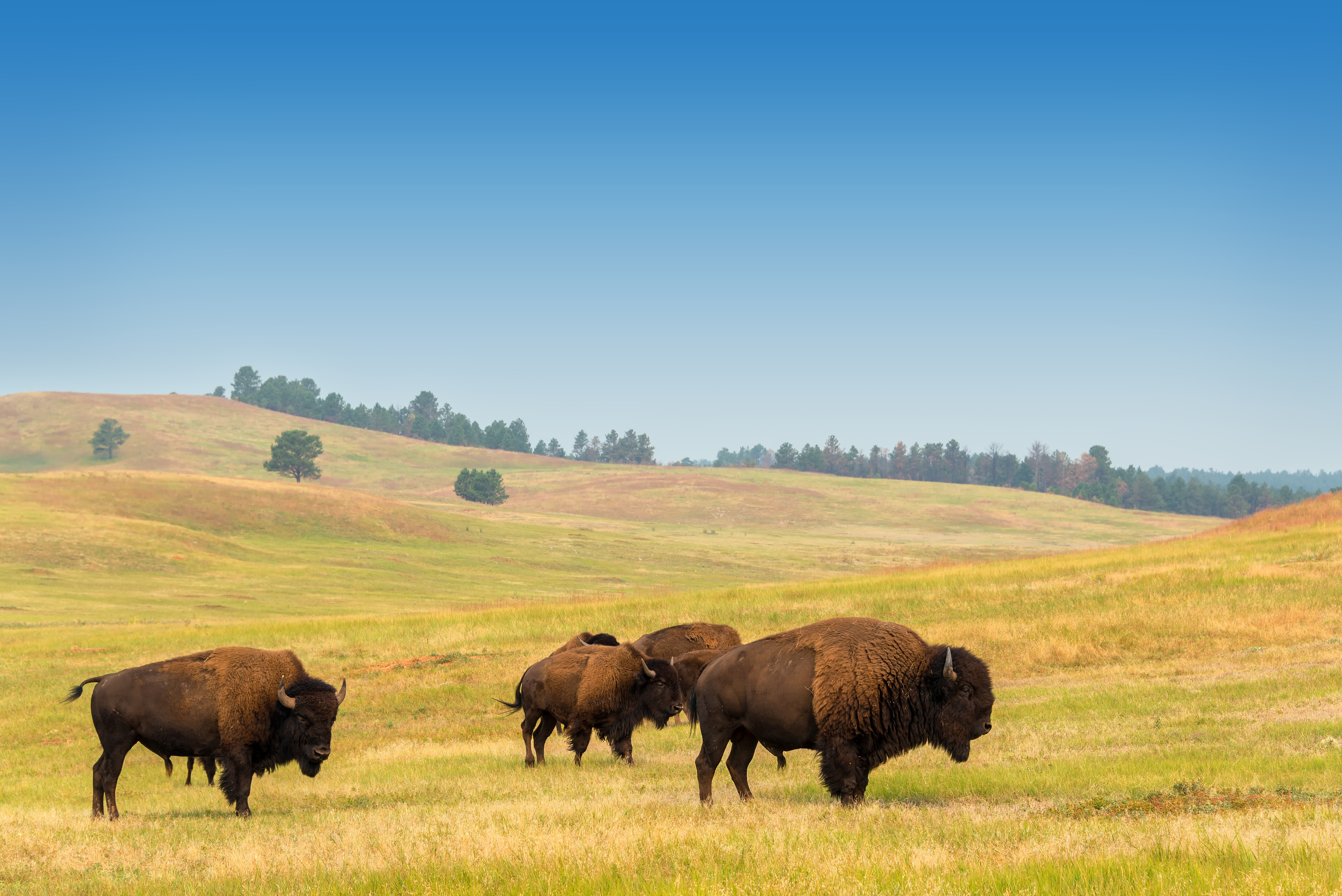
Big strides have been made to save grasslands. For continued progress, however, converting additional prairie to corn and soybeans must be halted. In addition, bison herds can be encouraged to expand and allowed to roam again, more wetlands and buffer strips could be created, and the use of pesticides further reduced to retore healthy populations of bugs and pollinators. Existing trends make all these conceivable today.
Also, it would be helpful for us to adopt a new attitude toward land, one where we see ourselves as part of nature. This would bring about many positive changes and could especially lead to establishing a balance between the natural world and the production of our food.