
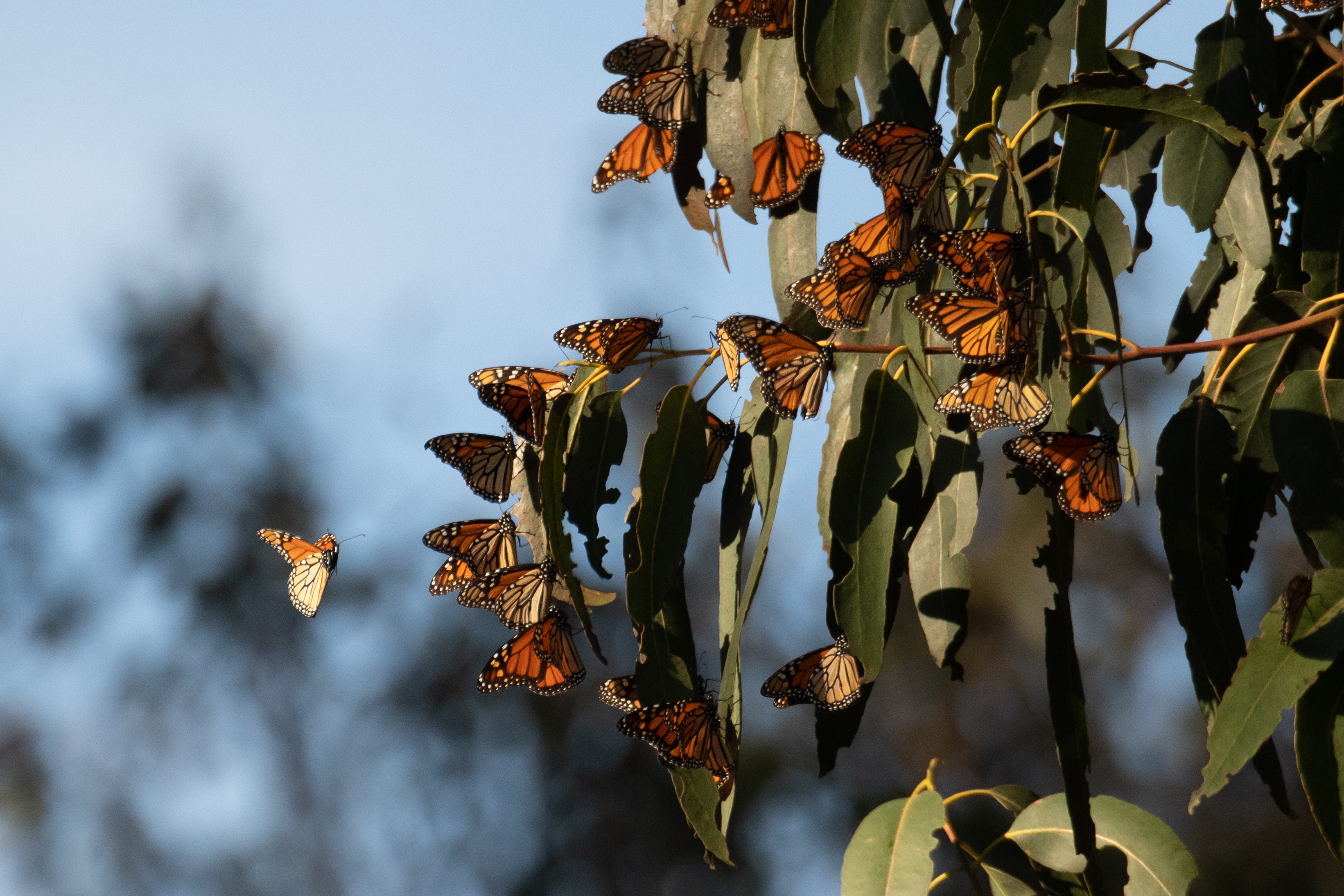
It is now the late season for butterflies in Goleta groves, and the picture is dismal. Only two butterflies were recorded in the city’s official count across all Ellwood Mesa overwintering sites for January.
This season, the highest count for Ellwood was a mere 20 in October, which is when monarch butterflies migrate from their breeding grounds (mainly around the Rocky Mountains) to cluster in groves of trees along California’s coast to wait out the winter. They usually move out by March.
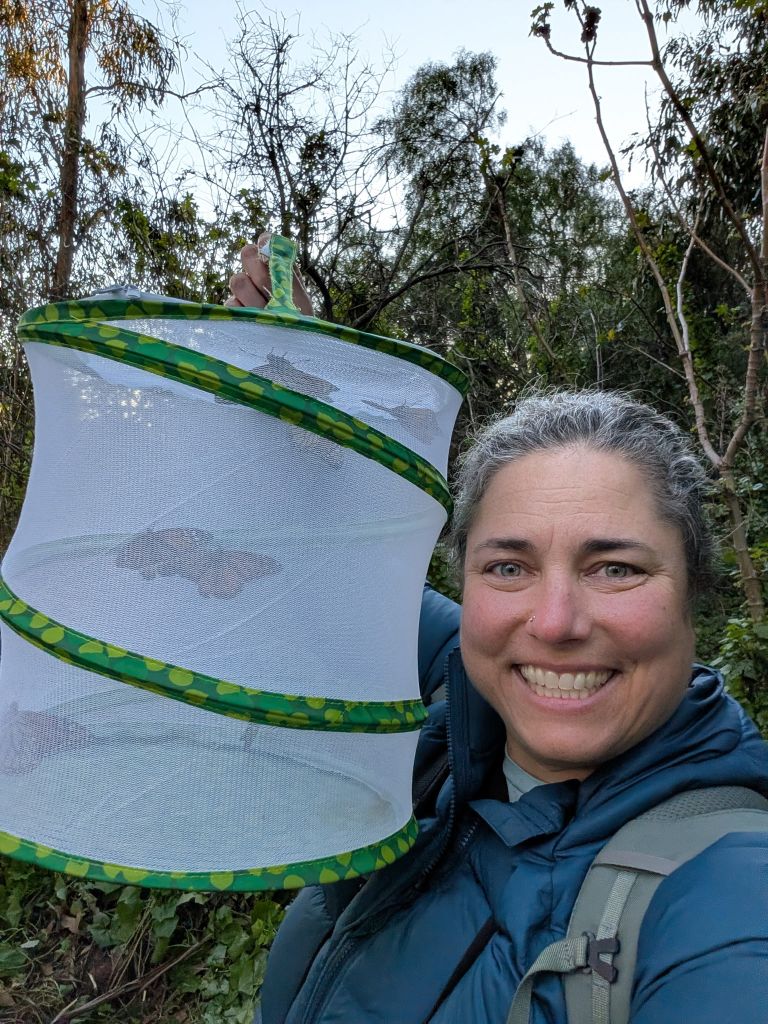
But to see such low numbers in January is “devastating,” said biologist Charis Van der Heide.
“The Western monarch population is really low throughout California right now,” she added. Thousands once clustered in the Goleta grove and others across the state.
The late-season count was initially scheduled for January 2, but was rescheduled due to the significant rainfall that drenched the county over the past two weeks.
Recent storms present an easy scapegoat for increased monarch mortality — when it’s wet, cold, and windy, monarchs can have trouble clinging to branches. But in addition to the rains, other factors are at fault, according to Van der Heide.
For one, it is likely the butterflies were not very successful during breeding season due to prolonged higher temperatures — something caterpillars are very sensitive to. That could compound the effects of the usual suspects, such as loss of milkweed habitat, pesticide use, and logging and development, which have contributed to the butterflies’ decline for years.
It was pushed to the point that in 2024, monarchs were proposed to be listed as an endangered species, a decision which is still in limbo.
Right now, biologists are seeing numbers similar to the very low counts recorded in 2020, when only 10 were counted at Ellwood. But hope is not lost. The next year, in 2021, the population in California unexpectedly bounced back up to almost a quarter million, Van der Heide said.
“It’s so hard to know and predict, because it’s a population that spans a very large geographical area, and we can’t predict what kind of a summer we’ll have, or will the milkweed be flourishing?” she said. “I would say it could go either way. They could bounce back remarkably again, or this could be our new normal, which would be devastating.”
There are still monarchs being detected out at Ellwood, via the solar-powered mini tracking devices attached to the butterflies as part of an ongoing project. Scientists have now tagged 10 butterflies in the area, which allows anyone to see where they are on the Project Monarch Science app.
The activity levels of some tagged butterflies have dropped recently, meaning they may have died, Van der Heide said. “Some have not been detected for a few weeks, but a few are still being very active,” she added.
After last week’s count, there are only two more counts left. The next count is set for Jan. 30. The city will then share the data with scientists to inform ongoing research and monarch conservation efforts, including Goleta’s own work clearing dead and dying trees, restoring habitat, planting new trees, and tracking individual monarchs.







You must be logged in to post a comment.