

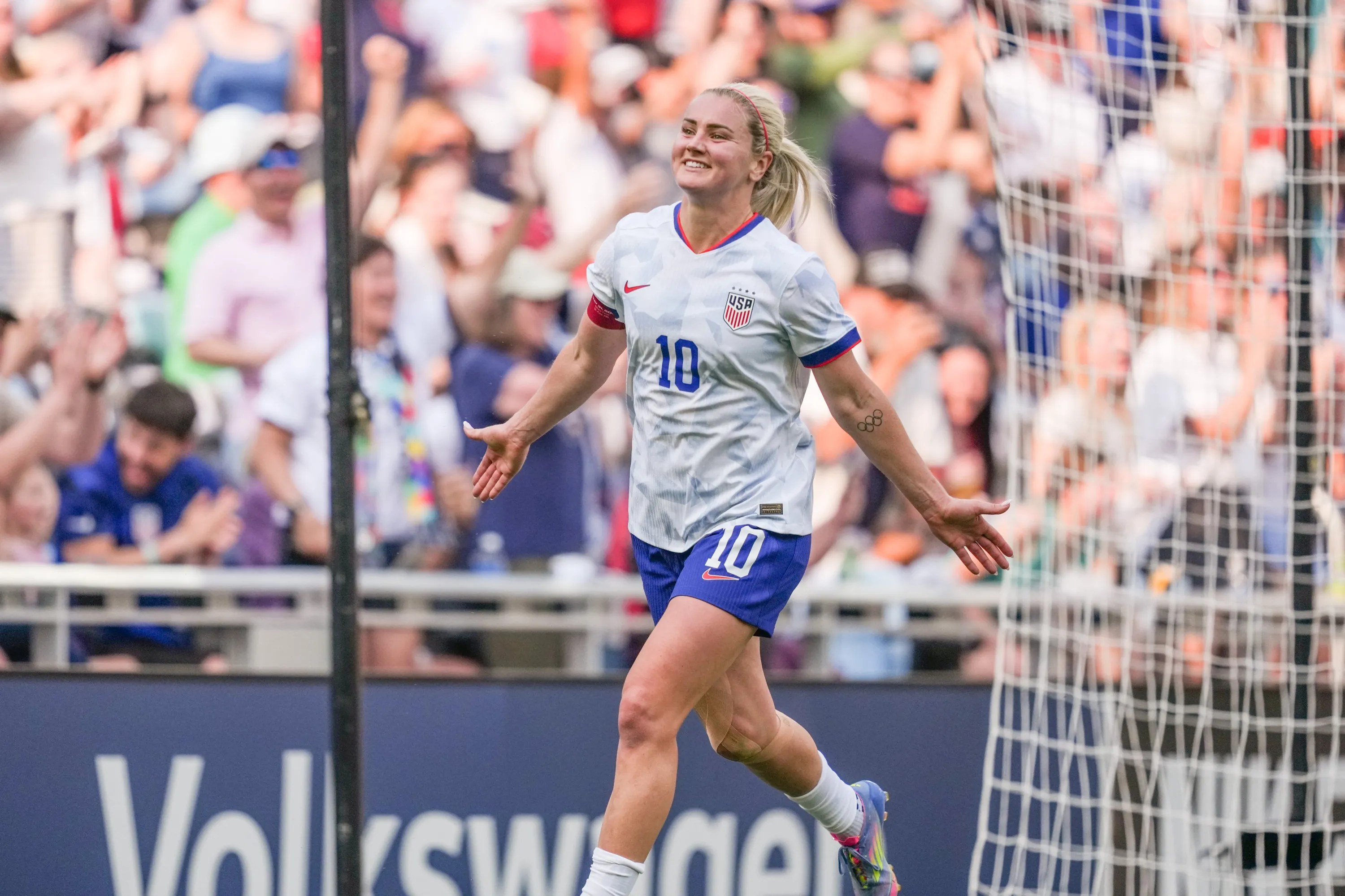
Next Tuesday, January 27, the U.S. Women’s National Team (USWNT) will play a soccer match against Chile on historically hallowed ground.
UCSB’s Harder Stadium was the launch pad for the champions of the first Super Bowl and the first FIFA Women’s World Cup.
In 1967, the Green Bay Packers spent a week running drills on the unfrozen turf of UCSB’s recently built football stadium before decamping to Los Angeles, where they demolished the Kansas City Chiefs in Super Bowl I.
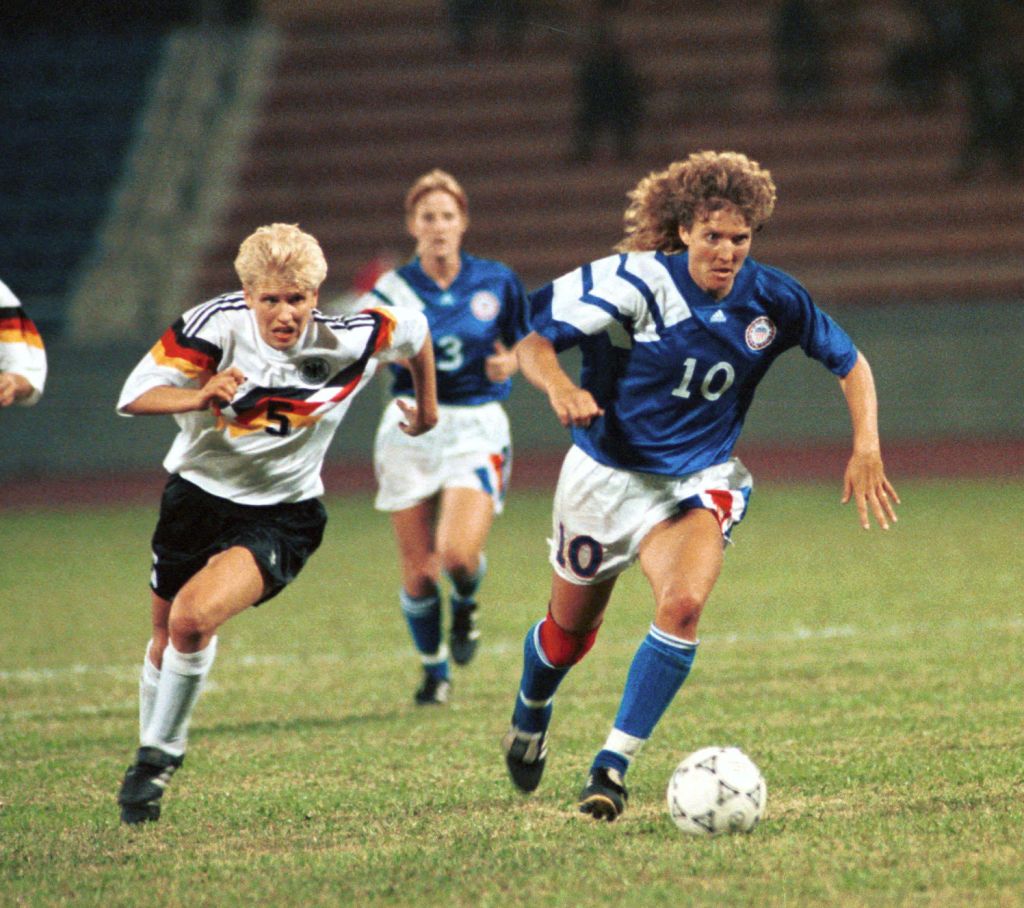
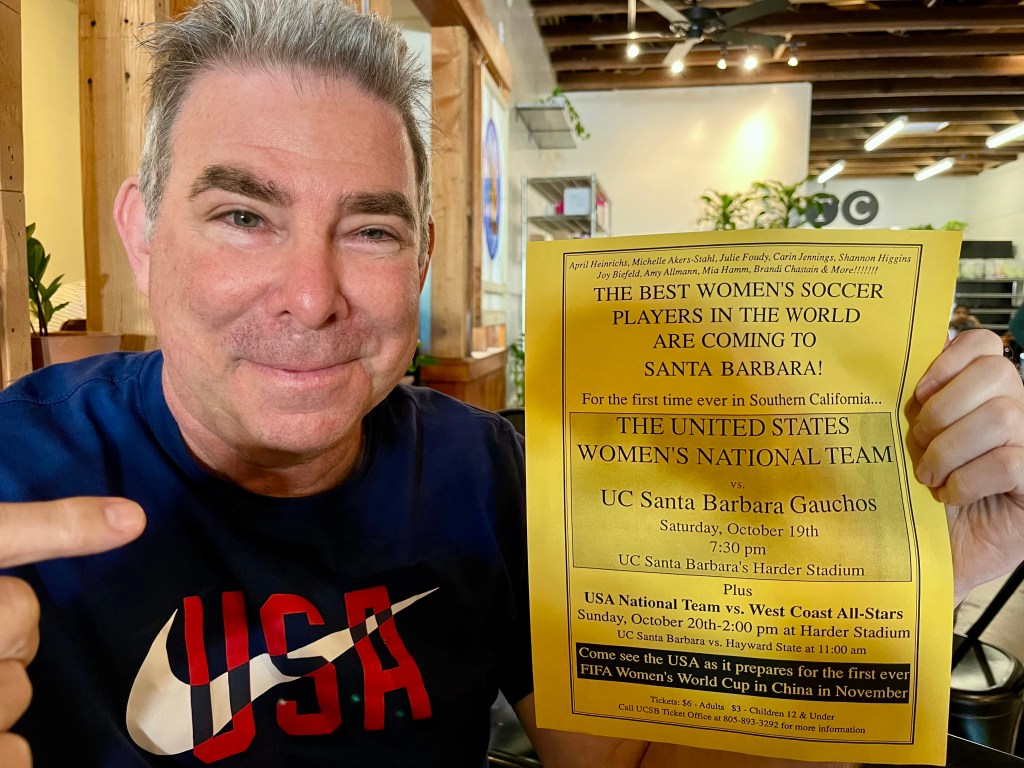
In 1991, after UCSB had dropped football and Harder Stadium was on its way to becoming “Soccer Heaven,” the USWNT held a training camp and played a game on the West Coast for the first time. On October 19, they dazzled a crowd of 3,274 — one of the largest in the national team’s first six years of existence — by scoring a 10-0 victory over the UCSB women’s team.
“It was an awesome event,” said Aaron Heifetz, then a UCSB assistant coach — and a publicist for the program — after watching such legendary players as Carin Jennings, Michelle Akers, April Heinrichs, and Mia Hamm ring up the goals.
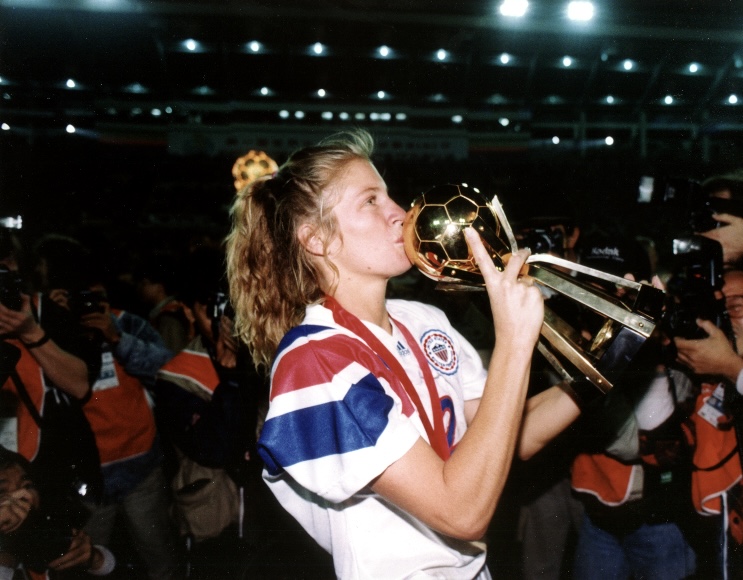
A month later, the Americans went to China and fought their way past Sweden, Brazil, Japan, Germany, and Norway to become world champions. Their achievement was not widely known at the time, as U.S. television ignored the tournament. Fans like Heifetz had to scour newspapers to read that Jennings, who had scored 102 goals as a UCSB player from 1983-86, received the Golden Ball award as the outstanding player of the first Women’s World Cup.
In 1994, Heifetz landed a job with U.S. Soccer Communications, preparing for the prestigious men’s FIFA World Cup. It was a heady time for the 1989 UCSB graduate. He had led a frugal life with Gaucho women’s head coach Tad Bobak, who often slept in the office because his year-round home was in Santa Monica.
“I went from UCSB, making $3,000 a year, directly to the World Cup men’s team in a World Cup year that we’re hosting,” Heifetz said.
A year later, he became press officer for the women’s national team. It was a contract job at first, with modest expectations. “Amazingly, in 1995, we set a record for largest domestic attendance for a USWNT match at 6,145 at a high school stadium in Texas,” Heifetz recalled. At the 1995 Women’s World Cup, hosted by Sweden, the Americans finished in third place behind Norway and Germany.
There was a change in the outlook after Atlanta hosted the first Olympic women’s soccer tournament in 1996. The attendance at the University of Georgia for the gold-medal match — a thrilling 2-1 U.S. victory over China — was 76,481.
“The Atlanta crowd inspired US Soccer to redo the bid for the 1999 World Cup,” Heifetz said. “We decided to use larger stadiums.”
That led to the iconic 1999 Women’s World Cup final at the Rose Bowl — 90,000 spectators, the U.S. and China exchanging forays into overtime, Brianna Scurry’s save, and Brandi Chastain’s winning penalty kick.
“It was on front pages across the country,” said Heifetz, who was director of communications for the tournament. “It changed women’s sports in America forever.”
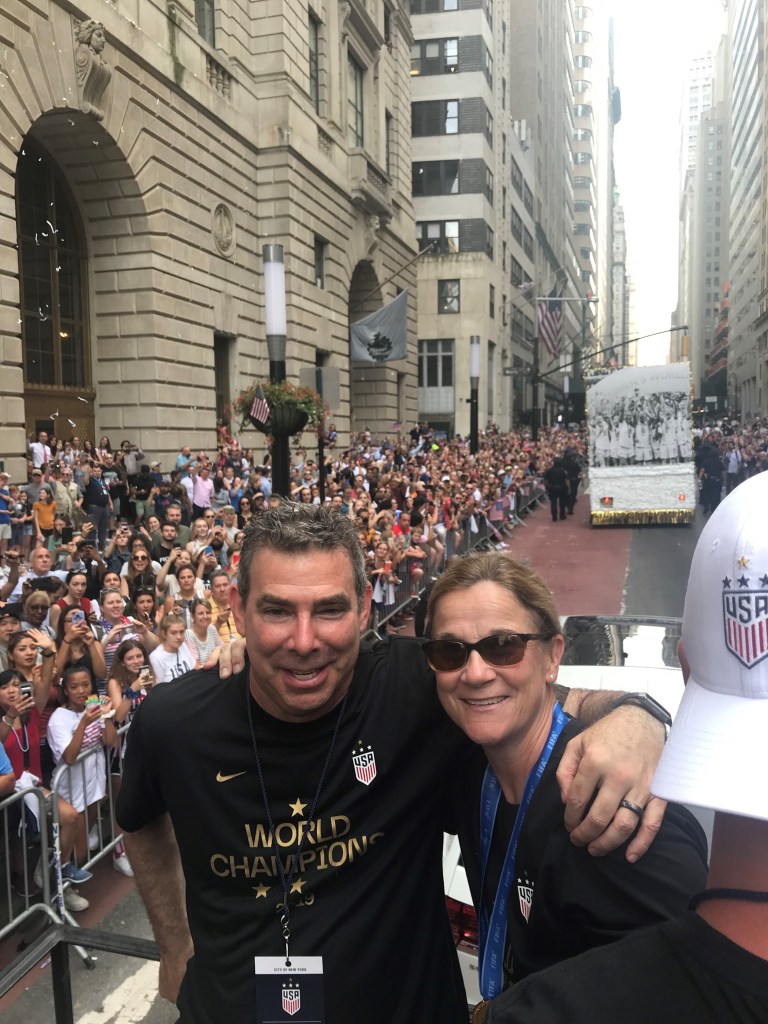
Every time since, when an Olympics or World Cup comes along, America turns its eyes to the soccer women. They finished as champions in the Games of 2004 (Athens), 2008 (Beijing), 2012 (London), and 2024 (Paris); and the World Cups of 2015 (Canada) and 2019 (France).
That brought their haul to nine global championships. Heifetz has been with the team for eight of them, often visible among the players as they celebrate on the field.
“Germany is next with three [world titles],” Heifetz said. “All the wins are special because it’s so freaking hard to do. It takes so many people behind the scenes, so many things that have to go right. It’s the championship of the freaking world.”
The Paris Olympics title was remarkable, Heifetz said, coming as it did after the 2023 World Cup in New Zealand, where an aging USWNT was knocked out in the Round of 16. With a young roster and a new coach, Emma Hayes, the Americans went 6-0 and outscored their opponents, 12-2.
“That was one of the most incredible achievements in women’s soccer history,” Heifetz said. “Not only was the team down emotionally and soccer-wise, Emma came in, and in her 10th game won the Olympic gold medal.”
With the 10th FIFA Women’s World Cup coming in 2027 in Brazil, this is a significant year of preparation for the USWNT. While training in Southern California, they will face off against Paraguay on Saturday in Carson before coming to Santa Barbara for their first match here since 1991. The friendly against Chile will also be their first international match here.
Heifetz will not have to stir up interest as urgently as he did 35 years ago. The USWNT roster includes Trinity Rodman, a star in Paris, and many stars-in-the-making. “They want to show Emma, hey, when you name your top 26, I should be there,” Heifetz said.
Watching from across the country (the match will be televised on TBS) will be Carin Jennings-Gabarra, who would have become a household name for her performance in the 1991 World Cup if women’s soccer had the notoriety it does now.
The former Gaucho has coached women’s soccer at the U.S. Naval Academy for the past 33 years. Her journey started as an unstoppable youth player in Southern California and reached maturity in college. In a recent telephone interview, Jennings-Gabarra said, “The basis for my future success, skills, leadership, character was all that I learned on and off the soccer field at UCSB.”
As a member of the national team during its early years, she said, “I was just fighting to get a jersey to fit me, to get there safely when we go on trips. Today, things are different, the styles of coaching, strength coaches, nutritionists, technological stuff.
“We had high expectations for ourselves as a team,” she continued. “That’s what drove us. We had to show you. I don’t believe in comparing teams, but one thing about our national team [is that] our mentality never wavers. It cares deeply.”
She was excited to return to Harder Stadium in 1991, Jennings-Gabarra said, and next week, “I know the crowd will be fantastic and the players will enjoy being there.”
Related Posts

Premier Events

Sat, Mar 28
12:00 PM
Santa Barbara
Spring Fragrance Release Party

Sat, Mar 28
All day
Santa Barbara
Coffee Culture Fest
Sat, Mar 28
11:00 AM
Santa Barbara
NO KINGS 3!

Mon, Mar 30
6:00 PM
Santa Barbara
Art4Grief Support Group 2nd 2-Week Session
Thu, Apr 02
2:00 PM
Santa Barbara
S.B. Rescue Mission Annual Easter Feast

Thu, Apr 02
5:00 PM
Santa Barbara
Exhibit Opening: The Santa Barbara Independent: ‘Covering 40 Years’

Sat, Apr 04
9:00 AM
Santa Barbara
Mesa Harmony Garden Spring Plant Sale
Sat, Apr 04
9:00 AM
Santa Barbara
Passport Fair, hosted by Congressman Salud Carbajal

Sun, Apr 05
10:00 AM
Santa Barbara
Easter Brunch at Brass Bear

Thu, Apr 09
6:00 PM
Santa Barbara
Chaucer’s Books – Poetry Night
Sat, Apr 11
3:00 PM
Santa Barbara
SB Music Club Free Concert Saturday 🎶
Sat, Mar 28 12:00 PM
Santa Barbara
Spring Fragrance Release Party
Sat, Mar 28 All day
Santa Barbara
Coffee Culture Fest
Sat, Mar 28 11:00 AM
Santa Barbara
NO KINGS 3!
Mon, Mar 30 6:00 PM
Santa Barbara
Art4Grief Support Group 2nd 2-Week Session
Thu, Apr 02 2:00 PM
Santa Barbara
S.B. Rescue Mission Annual Easter Feast
Thu, Apr 02 5:00 PM
Santa Barbara
Exhibit Opening: The Santa Barbara Independent: ‘Covering 40 Years’
Sat, Apr 04 9:00 AM
Santa Barbara
Mesa Harmony Garden Spring Plant Sale
Sat, Apr 04 9:00 AM
Santa Barbara
Passport Fair, hosted by Congressman Salud Carbajal
Sun, Apr 05 10:00 AM
Santa Barbara
Easter Brunch at Brass Bear
Thu, Apr 09 6:00 PM
Santa Barbara
Chaucer’s Books – Poetry Night
Sat, Apr 11 3:00 PM
Santa Barbara


You must be logged in to post a comment.