Roadside encounters with local wildlife are routine — deer dart alongside cars on Santa Barbara’s Riviera, and neighborhood critters like skunks saunter down city sidewalks.
Oftentimes, these animals meet an unfortunate end on the pavement. But how often does this prompt more than a passing thought?
As roadkill becomes increasingly ubiquitous, Los Padres ForestWatch is calling on Central Coast residents to slow down and pay attention. The nonprofit just launched a new mobile survey that asks people to document the animals that live, and die, along local roadways.
ForestWatch says the data collected will help guide conservation efforts and inform planning decisions aimed at reducing wildlife mortality.
Homes Halved
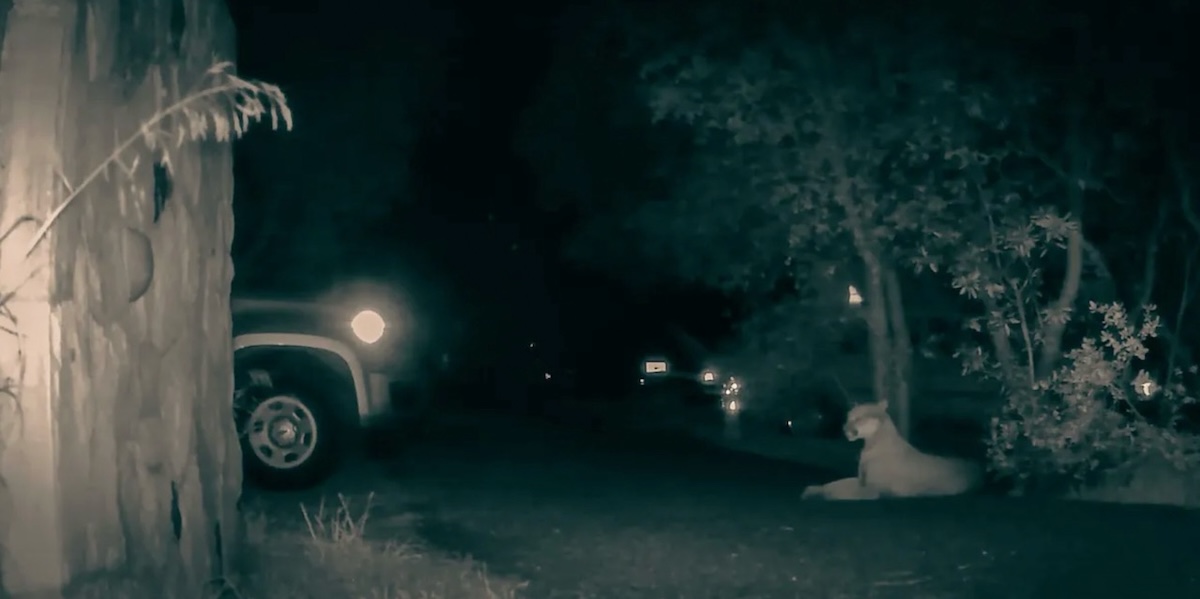
Santa Barbara County’s wildlife, such as mountain lions, are living in habitats divided by development. Vehicle strikes and loss of migration routes are growing threats for these species, noted Carlo Calderon, wildlife program coordinator for ForestWatch.
“These are wildlife that prefer not to come in direct contact with people, but fragmentation prevents them from being able to thrive in their natural habitat,” Calderon explained.
They can’t find suitable prey, they can’t find suitable mates, and it decreases their overall fitness, he said. Animals in these situations are more prone to illness and often fall victim to roadway perils. Under these conditions, their numbers begin to dwindle.
Mountain lions in the Santa Monica Mountains, for example, show reduced genetic diversity as a result of higher mortality rates and shrinking habitat.
Highways 150 and 154, which pass through local mountain ranges, are hotspots for sightings of mountain lions and black bears struck by oncoming traffic.
Why do these animals cross the road? Well, they often have no other choice.
“We’ve used tracker data released by some wildlife agencies, and we looked at black bears,” Calderon said. “You could see as the black bears moved across the Santa Monica Mountains, they’re trying hard to avoid these freeways like the 101, the I-5, the 198, etc. These major transportation routes are definitely where we expect a lot of reports.”
Taking Notes
ForestWatch’s new community science project invites Central Coast residents to document these wildlife sightings and roadkill. Participants download a free mobile survey and upload observations during their daily routines and commutes. People will record details such as the species of animal, whether it was alive, and where and when they saw it. Volunteers can collect data opportunistically or by committing to regular wildlife surveys along local roads and highways.
“One of the biggest challenges we face is that roadkill often goes unreported, leaving dangerous gaps in our understanding of where protections are most needed,” Caldero said. “This project helps fill those gaps by generating reliable, community-driven scientific data.”
The impetus was Assembly Bill 1889, the Room to Roam Act, which requires cities and counties to consider wildlife movement and habitat connectivity when updating local land-use plans. It also requires local governments to reduce barriers created by new development when feasible.
ForestWatch says its citizen monitoring program will help support local planners in implementing the Room to Roam Act by providing real-world data on wildlife movement across roads and landscapes. Calderon said they have already been in talks with Santa Barbara County staff to help guide planning decisions with an emphasis on conservation.
The new app is designed in a way to encourage residents who love animals to contribute relevant data, and feel excited about protecting local wildlife, Calderon said.
“We try to make it simple so that people can generally identify the type of roadkill that they’re witnessing,” he added. “Even if it’s something like a raccoon, if it’s a rabbit, if it’s a raptor, it’s collecting pretty meaningful data.”
He noted that they do want people to participate safely — no observing and driving, in other words.
To introduce the project and provide an overview of participation opportunities, ForestWatch will host two free informational webinars on Zoom:
• Wednesday, January 28, 6-7 p.m.
• Saturday, January 31, 1-2 p.m.
Registration is free at forestwatch.org/events.