

When the Panama Canal was completed in 1914, California was suddenly connected to Europe in a way it had never been before. Perhaps it was this feeling of connection that inspired architects in California to envision what the West Coast might have looked like had we belonged to Spain for a longer period of time. If Mexico had not won its independence from Spain in 1821, the Spanish might have stayed in California longer and built more than just missions. Maybe the Spanish would have built elaborate estates for the upper classes and modest, but attractive, homes for the masses here as they did in Spain. Maybe, maybe.
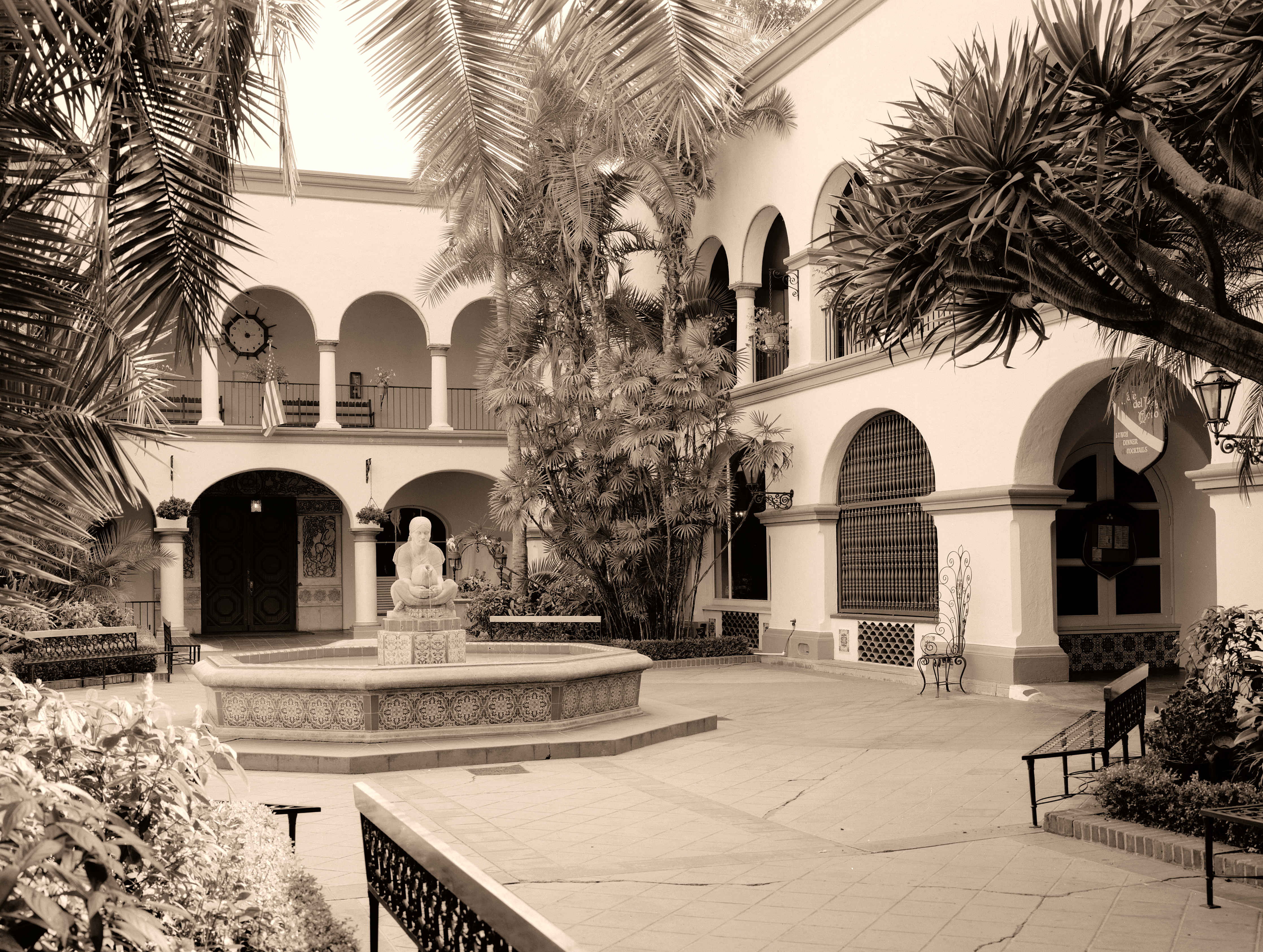
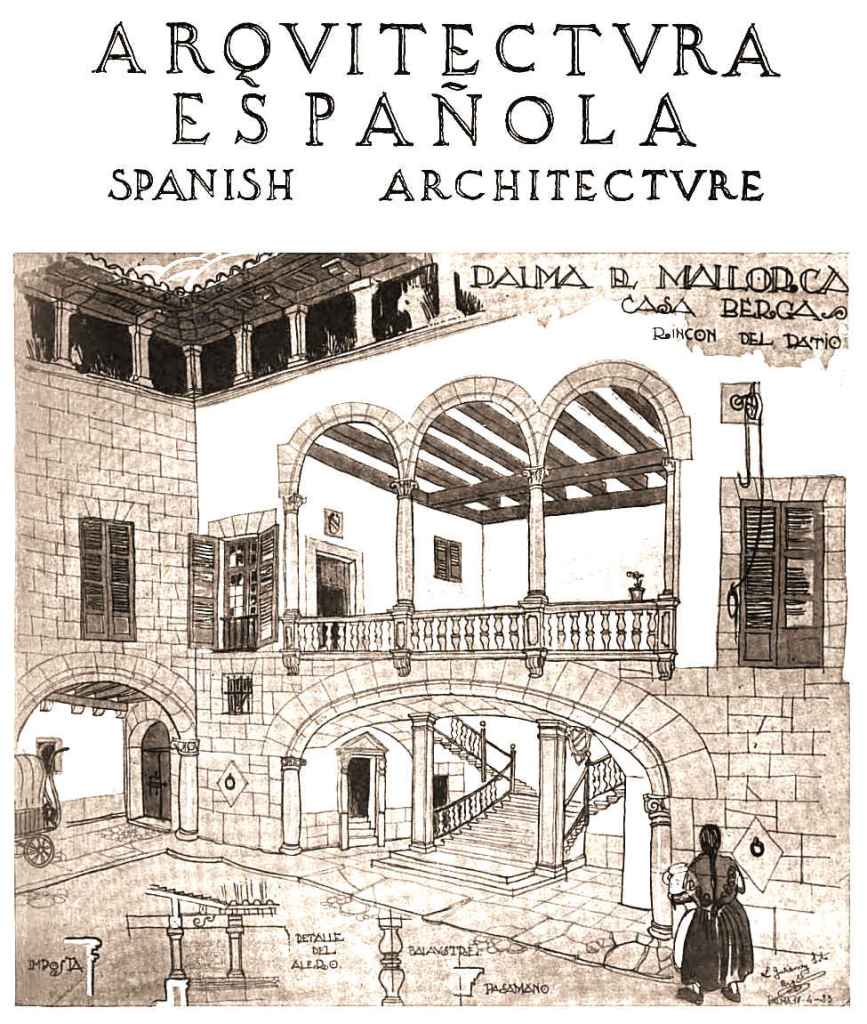
What would California have looked like? In 1915, architects here decided to make it happen. To celebrate the opening of the Panama Canal, a world-class exposition was built in San Diego in a Spanish style to celebrate what might have been and make it come to life in the Panama–California Exposition in Balboa Park. The chief architect of the expo was Bertram Goodhue. In 1902, he had traveled around Spain and Italy with James Waldron Gillespie in order to gain inspiration for the Gillespie mansion in Montecito. Buildings at the expo were based on elaborate estates Goodhue had seen in Spain.
Close to Home
Goodhue later designed some high-end buildings in our area, principally the Montecito Club and the El Fureidis estate in Montecito, but the local architect whose name is closely tied to Spanish Colonial Revival here is George Washington Smith. Smith had also traveled in Spain, where he had relatives. He designed the Lobero Theatre and the newspaper building in De la Guerra Plaza, but some of his designs were for homes that were simpler and more down to earth. In addition, people who wanted build-it-yourself Spanish Colonial Revival homes could choose from models offered by the Pacific Ready-Cut catalog company in Los Angeles.
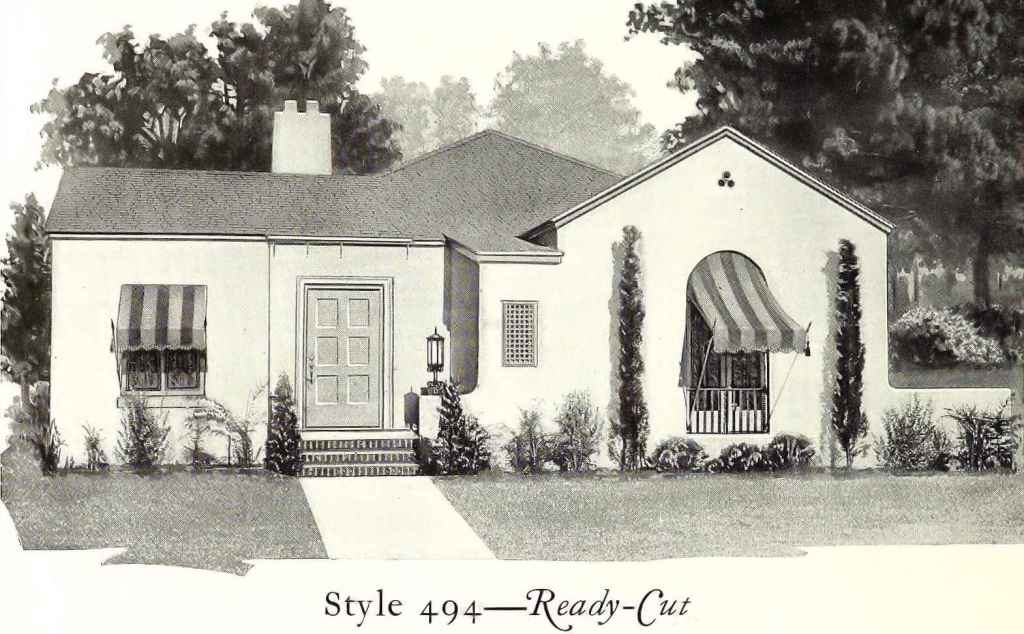
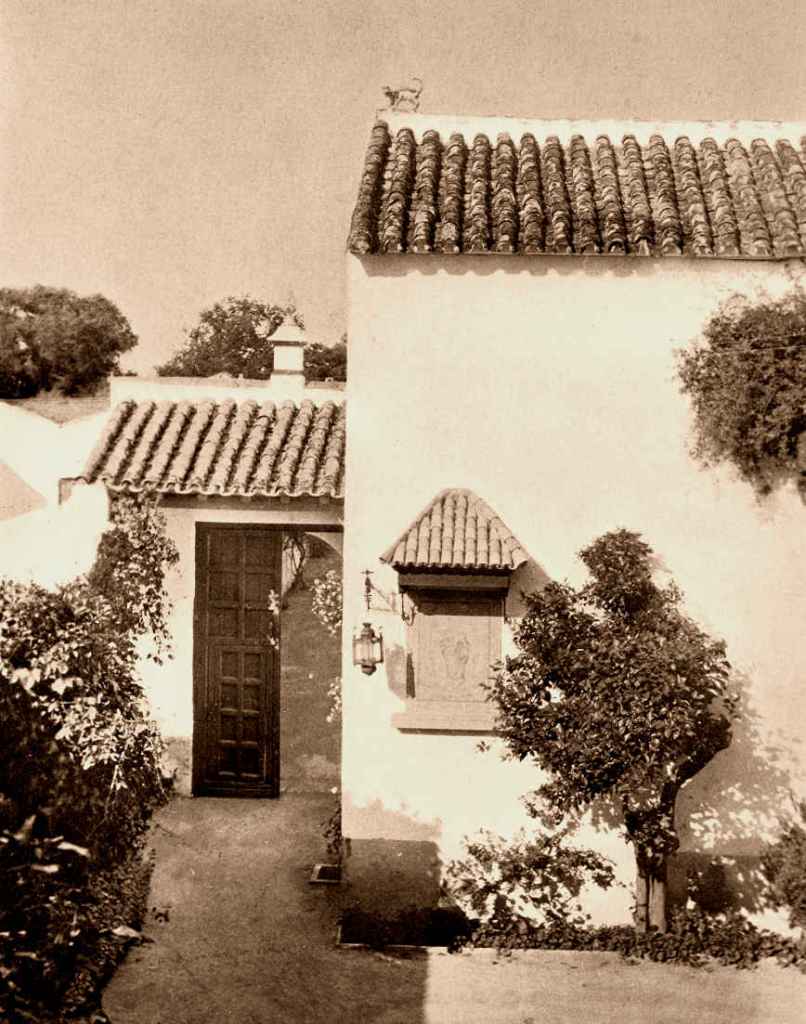
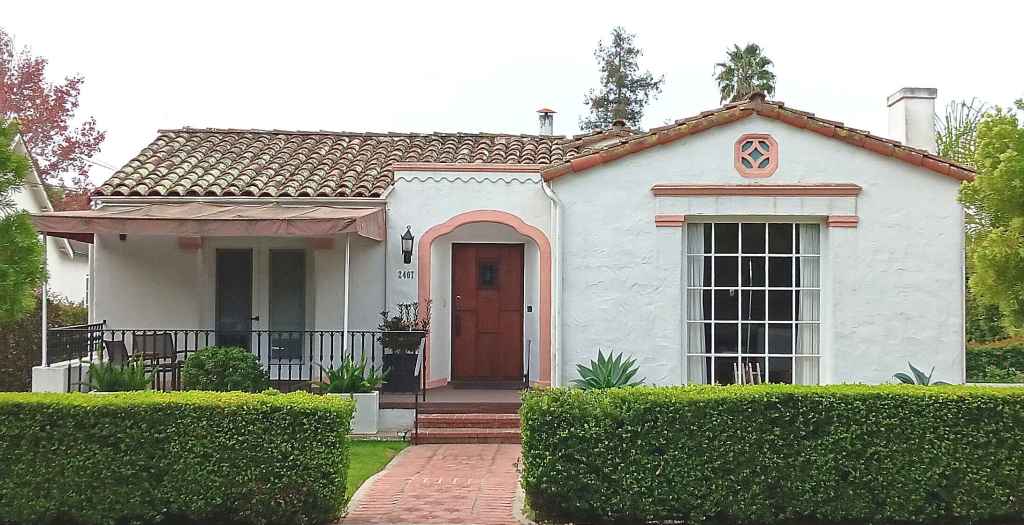
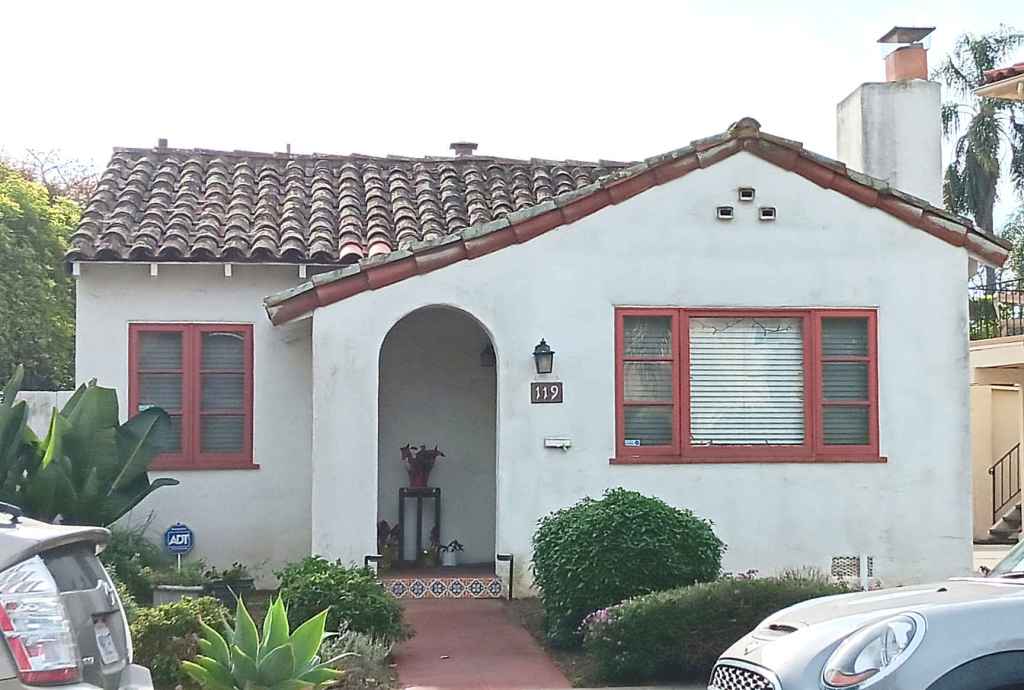
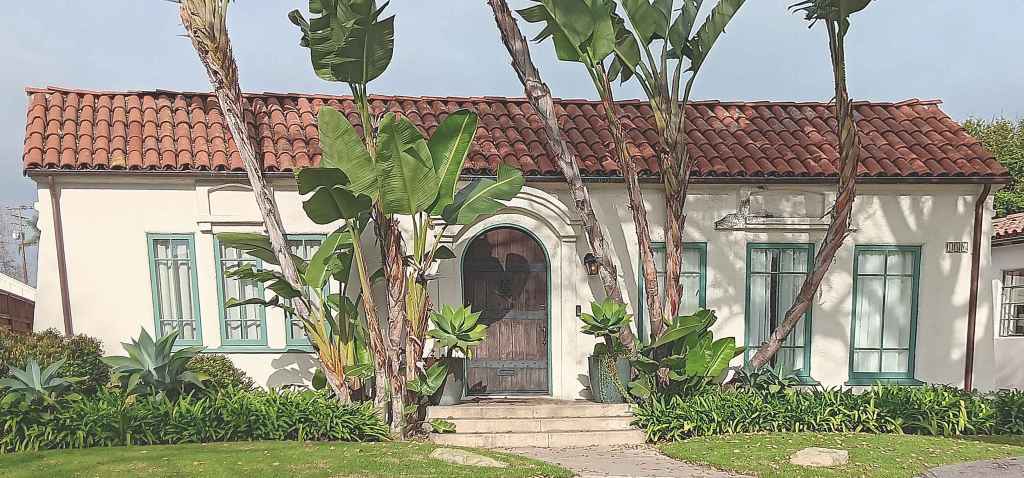
Most homes in Spanish Colonial Revival style have flat stucco walls, topped with gently sloping roofs with red clay roof tiles. The front door, usually wood, is set inside a simple wall opening that is sometimes arched. There may be wooden balconies or decorative tiles to add interest.
Immediately after the destructive earthquake here in 1925, Spanish Colonial Revival became the semi-official Santa Barbara style, although these buildings were usually called Spanish or Mediterranean at that time. The term “Spanish Colonial Revival” did not appear in newspapers until 1940, and it began to appear regularly in the 1960s and 1970s.
A number of architects built homes in this style in Santa Barbara, including Mary McLaughlin Craig, Lutah Maria Riggs, Edwards & Plunkett, Reginald Johnson, Anna Louise Murphy Vhay, Sauter & Lockard, and Carleton Winslow, to name just a few.
Please do not disturb the residents of these homes.
Betsy J. Green is a Santa Barbara historian, and author of Discovering the History of Your House and Your Neighborhood, Santa Monica Press, 2002. Her website is betsyjgreen.com.


You must be logged in to post a comment.