

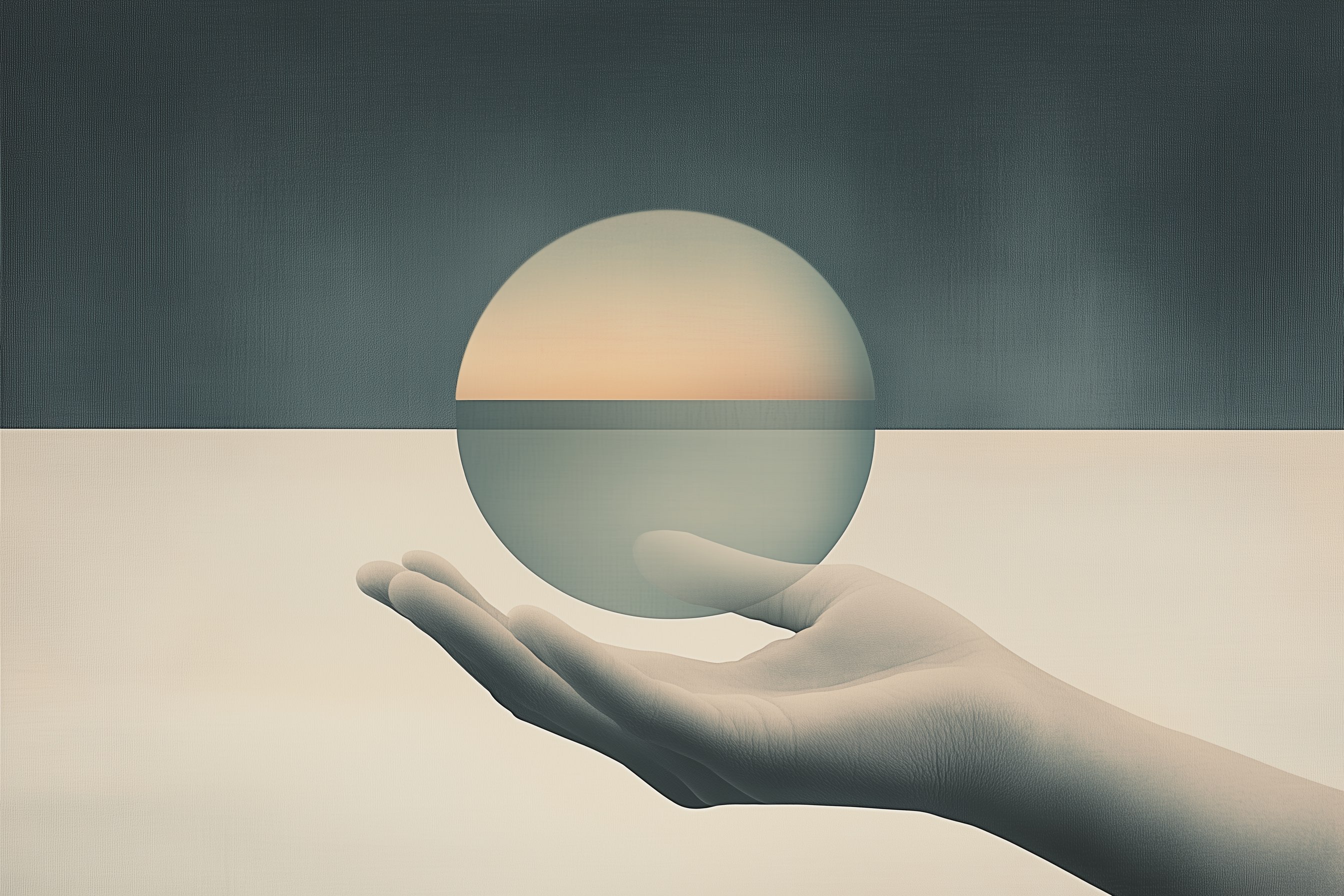
The recent debate over the introduction of AI raises both fear and fascination, especially as AI expands into art and its creative layers. For the Brill Family Foundation, the conversation centers on harnessing the power for the greater good of humanity’s future, adapting to an exponentially growing force.
This interest sparked the creation of the Brill Family Foundation’s AI Artists Alliance, which isn’t quite the traditional residency, but what they’re calling an accelerator, focused on collaboration, experimentation, and the relationship between humanity and technology.
After reaching out to arts organizations, educational departments, museums, galleries, nonprofits, and foundations, the foundation ended up with solid attendance for its AI art exhibition titled Symbiosis or Schism? The AI-Human Odyssey.
Oriana Sanders, the foundation’s executive director, shared that this exhibition was a catalyst for the creation of the alliance, saying, “We just felt like, why stop there? We’ve got this momentum going, there’s clearly an interest in art and technology, especially AI, and so, we wanted to see if there was a way that we could use this momentum and the outreach and artists to see if we could continue the work.”
Sanders emphasized that the definition of the alliance should be carefully considered, not as a traditional artist residency, but instead as an accelerator. What this means is that the foundation is focused on collaborative efforts rather than one individual’s final product.
In a discussion surrounding the common fear that AI will replace human creativity, Sanders shared that she views it less as a threat or a tool and more as something reciprocal. “There’s so many more kinds of AI than just generative, like Midjourney or ChatGPT … There are so many more layers of it,” Sanders said.
“And,” she continued, “there are so many different kinds of AI art, like data visualization,” Sanders stated. “They all still require human vision, and there’s levels of artistic ability that are still required to create good AI … For us, it’s really important to focus on the humans that are creating the art.”
Going further, Sanders described the change as almost inevitable, saying, “At a certain point, people have to stop just living in fear and burying their heads in the sand, and figure out how we can steward this technology so that it doesn’t just replace artists and threaten them.”
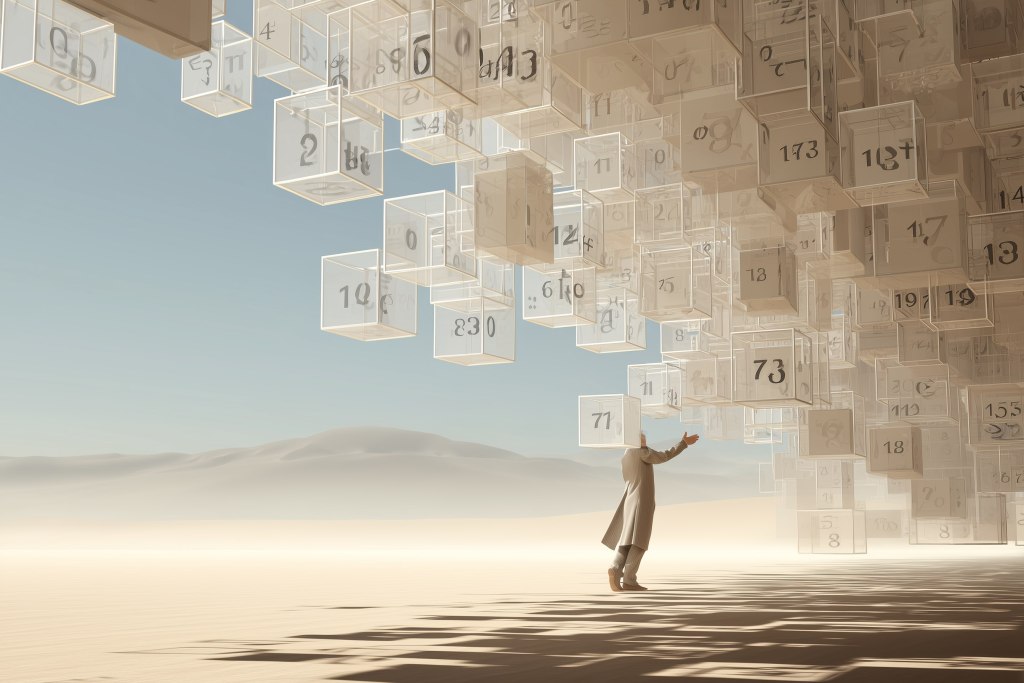
The current cohort of artists includes Ann Cutting, David Mew, and Neal Von Flue, who were chosen not only due to their artistic talents, but more so, their ability to collaborate. “They were definitely not selected solely on their art and their portfolio,” Sanders shared. “Their motivations and inspirations behind what they do, and how their personality would fit together as a group … Those were all actually more important considerations.”
The first in-person meeting, held in Santa Barbara in December, included the artists, curator, and consultant Alice Scope, Channel Islands art and media educator Simon Quiroz, and Peter and Karen Brill, founders of the Brill Family Foundation. Sanders described the day as intentionally designed to build trust among the group. “Artists tend to be very individual and solitary with their practice,” Sanders explained. “Trying to get a group of artists who are very set in their ways [was] really important to establish group dynamics before going ahead with any big plans.”
Once more comfortable with each other, the group then turned to develop a “theme,” as Sanders called it, or something akin to a school of art or a movement. “We wanted to have some unified vision of what the artists are working on as a group,” Sanders said.
Since the first meeting, the AI Artists Alliance has conducted monthly Zoom meetings, with artists sharing their updates and narrowing their collective focus. Sanders noted that there was, surprisingly, a lot of overlap in what they brought to the table, especially in data visualization and crowdsourcing. There are plans to meet again in person at the end of a six-month period, and the foundation hopes for this project to continue for 18 months to a couple of years.
Regarding the foundation’s goals in the broader discussion of AI use, Sanders confirmed they’re “thinking big and starting small,” emphasizing the impact on local communities. “We’re looking to let people know about career pathways that don’t replace artists, but that elevate artists,” she said.
For more information and to follow along with the accelerator, visit peterbrill.net.
Related Posts


Premier Events
Thu, Apr 02
5:00 PM
Santa Barbara
Paintings by Michael Vilkin at ART & SOUL GALLERY
Sat, Apr 04
9:00 AM
Santa Barbara
Mesa Harmony Garden Spring Plant Sale
Thu, Apr 09
7:00 PM
Santa Barbara
Journey Within: Wisdom & Meditation with Gurudev
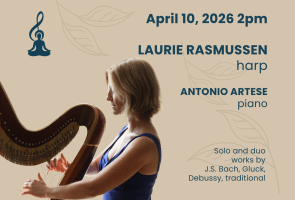
Fri, Apr 10
2:00 PM
Santa Barbara
Music & Meditation SB – Concert April 10, 2026
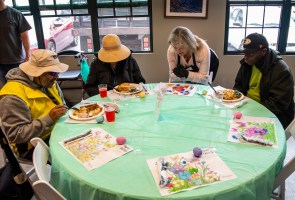
Thu, Apr 02
2:00 PM
Santa Barbara
S.B. Rescue Mission Annual Easter Feast
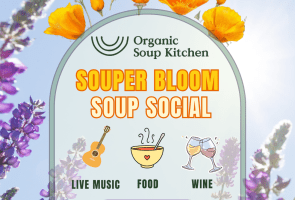
Thu, Apr 02
4:00 PM
Santa Barbara
Organic Soup Kitchen’s Souper Bloom Soup Social!
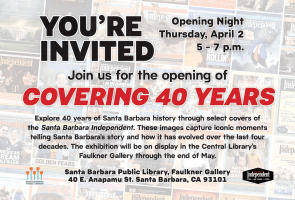
Thu, Apr 02
5:00 PM
Santa Barbara
Exhibit Opening: The Santa Barbara Independent: ‘Covering 40 Years’
Fri, Apr 03
2:00 PM
Santa Barbara
Ensemble Theatre Company Presents “A Night with Janis Joplin”
Fri, Apr 03
5:00 PM
Lompoc
Filipinos’ Contributions to Once Making Lompoc…
Fri, Apr 03
7:30 PM
Santa Barbara
Lahaina: Voices of Change
Sat, Apr 04
9:00 AM
Santa Barbara
Mesa Harmony Garden Spring Plant Sale
Sat, Apr 04
9:00 AM
Santa Barbara
Passport Fair, hosted by Congressman Salud Carbajal
Sat, Apr 04
9:30 AM
Santa Barbara
The Great Egg Hunt
Sat, Apr 04
5:00 PM
Santa Barbara
Classical Guitar at Art & Soul
Thu, Apr 02 5:00 PM
Santa Barbara
Paintings by Michael Vilkin at ART & SOUL GALLERY
Sat, Apr 04 9:00 AM
Santa Barbara
Mesa Harmony Garden Spring Plant Sale
Thu, Apr 09 7:00 PM
Santa Barbara
Journey Within: Wisdom & Meditation with Gurudev
Fri, Apr 10 2:00 PM
Santa Barbara
Music & Meditation SB – Concert April 10, 2026
Thu, Apr 02 2:00 PM
Santa Barbara
S.B. Rescue Mission Annual Easter Feast
Thu, Apr 02 4:00 PM
Santa Barbara
Organic Soup Kitchen’s Souper Bloom Soup Social!
Thu, Apr 02 5:00 PM
Santa Barbara
Exhibit Opening: The Santa Barbara Independent: ‘Covering 40 Years’
Fri, Apr 03 2:00 PM
Santa Barbara
Ensemble Theatre Company Presents “A Night with Janis Joplin”
Fri, Apr 03 5:00 PM
Lompoc
Filipinos’ Contributions to Once Making Lompoc…
Fri, Apr 03 7:30 PM
Santa Barbara
Lahaina: Voices of Change
Sat, Apr 04 9:00 AM
Santa Barbara
Mesa Harmony Garden Spring Plant Sale
Sat, Apr 04 9:00 AM
Santa Barbara
Passport Fair, hosted by Congressman Salud Carbajal
Sat, Apr 04 9:30 AM
Santa Barbara
The Great Egg Hunt
Sat, Apr 04 5:00 PM
Santa Barbara


You must be logged in to post a comment.