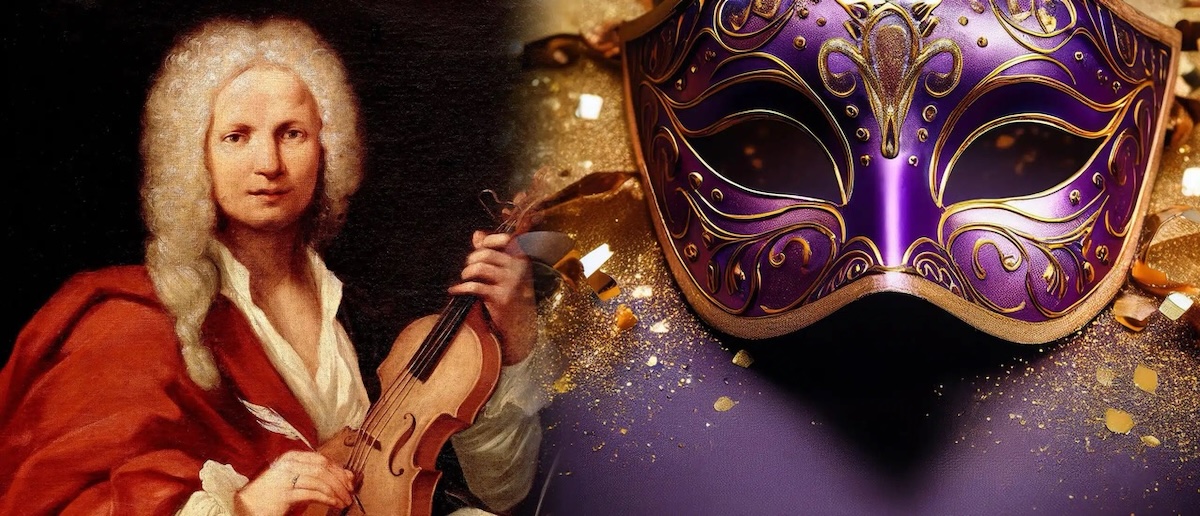
What if they gave a Vivaldi-rich early music concert and avoided his ubiquitous classic The Four Seasons? It almost happened last week at the Lobero Theatre, when the remarkable Venice Baroque Orchestra returned to town, again kindly hosted by CAMA. Three of the five concertos on this program, proper, were by the master Italian composer, and the token visit to his greatest hit came with the energized encore blast of “L’estate” from the Summer portion of the Seasons opus.
But this was no garden variety Seasons moment: The rightfully acclaimed period instrument group, led by violinist Giacomo Catana, gave the music a special and even raucous gusto we’re not used to hearing. It was the perfect finale to a concert demonstrating the unique power and character of early music played with the mastery of this band. With its leaner instrumental tone and attitude compared to later romantic ideals in classical music, good early music can somehow feel both refined and a bit rock ‘n’ roll.
Aside from the purely musical pleasure of hearing this stellar exemplar of early music practice live, this was a loaded and regalia-filled occasion. Going by the marketing moniker “A Venetian Duel of Bows – In Celebration of Carnevale” (after its 2023 album — hear it here), the date itself marked the convergence of Mardi Gras, the Italian Carnevale, and Ramadan, and Venetian masks and capes were welcome attire in the house, making for an unusually festive and vintage atmosphere in the Lobero.
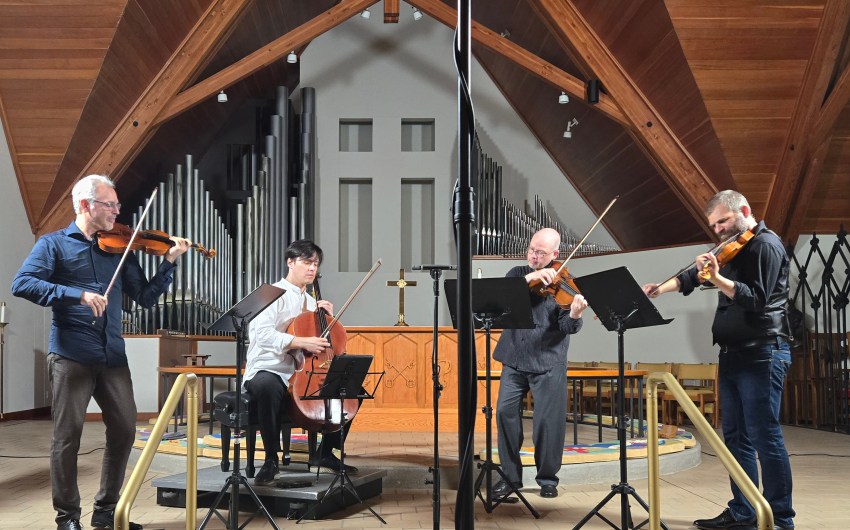
The 11 musicians in the stripped-down ensemble of strings and harpsichord stood up on the job and easily commanded the room throughout the concert. Their distinction is in the details, in the deft phrase-shaping, rhythmic focus to suit the demands of the scores, by Vivaldi, Francesco Maria Veracini, Giuseppe Tartini, and Pietro Antonio Locatelli.
Another cause for specific celebration on this night was the presence of soloist Rachel Ellen Wong, who filled in for originally schedule violinist Paolo Tagliamento (himself substituting for Gianpiero Zanocco). She reportedly had only a week-and-a-half notice, in which time she learned and perfected five demanding scores.
Throughout, the wonder of Wong impressed on impact. Wong boasts a sinewy virtuosity mixed with early music restraint and parsimonious vibrato, a sumptuous tone, and no apparent issue with this repertoire’s sometimes breathlessly speedy passages. Her cadenzas were a treat unto themselves.
(As an aside, the delicate nature of period string instruments requires frequent tuning asides during a performance. That factor was coincidentally reminiscent of open-tuning-minded guitarist Leo Kottke’s concert in this room two nights before, minus Kottke’s ambling stage banter while tuning.)
The group’s tautness — of sound and purpose — and collective resolve was immediately apparent on the opener, Vivaldi’s Concerto in E-flat, “La tempest di mare,” continuing through the finale, Vivaldi’s Concerto in D “Grosso Mogul.”
Wong was in a yet-closer spotlight as the ensemble departed the stage, leaving only violin and harpsichord for Veracini’s Sonata No. 12 in D Minor. An elegant melancholy opens the piece, which alternates between vigorous and languid qualities, and a swooping glissando from Wong. Concertos by Tartini and Locatelli, on either side of the intermission, provided more ripe showcasing for the soloist, while Vivaldi’s Concerto in G Minor for strings and basso continuo was the sole item on this concert menu sans soloist, training a rewarding focus on the ensemble as expressive entity, taking charge with due concerted robustness and inner, baroque-pitched drive.
We’ve heard this powerhouse ensemble in Santa Barbara once per decade. Here’s hoping they make a hastier return next time around.