
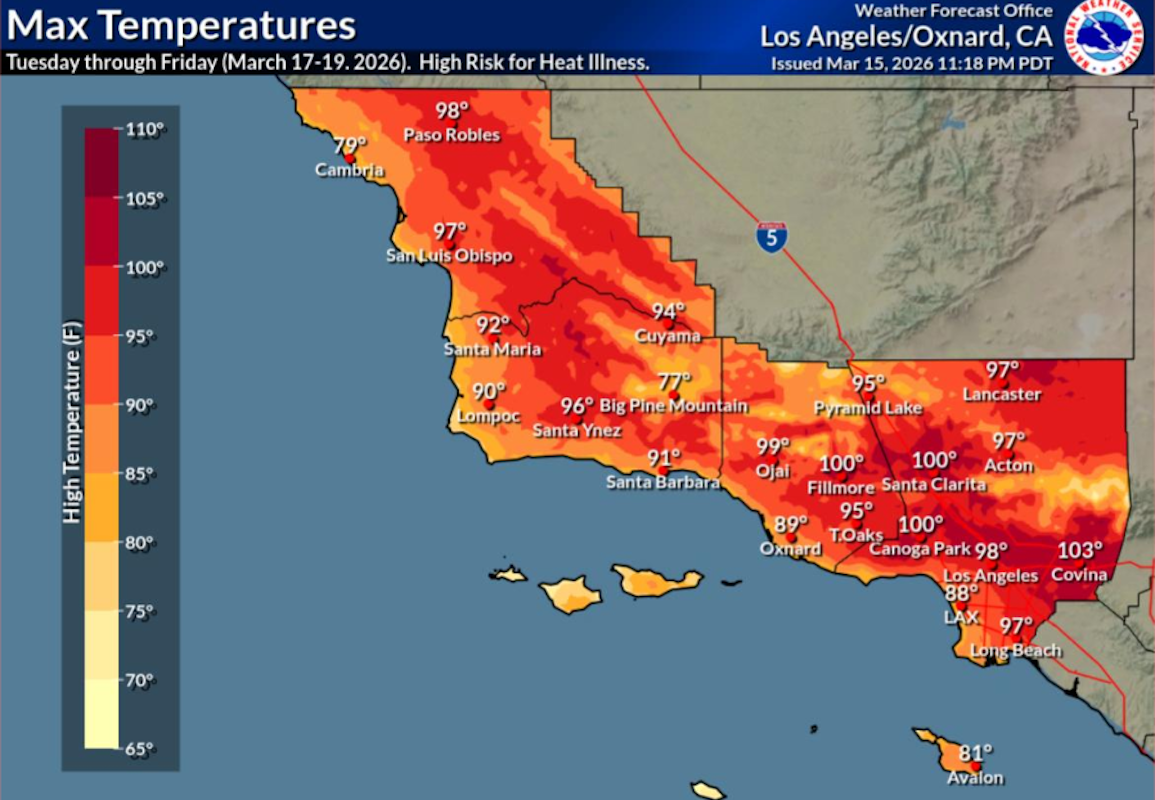
Spring has not yet sprung, but it already feels like summer in Santa Barbara County. A rare heat wave is blazing through the region this week.
Peak heat is forecast for Tuesday through Friday, potentially breaching into the 90s in some areas, according to the National Weather Service (NWS). Temperatures will be 20-35 degrees above normal, making for a week of extremely rare and dangerously high temperatures for March.
An extreme heat warning is in effect beginning Tuesday morning for Ojai and other inland areas of Central and Southern California, forecasting “dangerously hot conditions” with temperatures between 96 and 104. Heat advisories are in effect for the cooler, coastal regions of Santa Barbara County — including Santa Barbara, Lompoc, and Santa Maria, where temperatures between 85 and 95 degrees are expected. Both the warnings and advisories are expected to last until 8 p.m. Friday night. There is a high risk for heat illness this week, the NWS warns.
Check your local forecast here.
The warm-up began last week, leading into temperatures breaking many daily and potentially monthly records for March, the NWS reported. That includes warm overnight temperatures adding to the heat risk, especially in mountain and foothill locations.
This month is likely the hottest March since the 1980s, according to meteorologists.
There is a high risk for dangerous heat illness for anyone, especially the very young, the very old, those without air conditioning, and those active outdoors, the NWS says. People are encouraged to drink plenty of fluids, stay in air-conditioned rooms, stay out of the sun, and check up on relatives and neighbors.
When going outside, take extra precautions. Wear lightweight and loose fitting clothing and try to limit strenuous activities to early morning or evening. Most importantly, the NWS says, take action when you see symptoms of heat exhaustion and heat stroke: including heavy sweating, cold and clammy skin, dizziness, nausea, confusion, and a fast pulse.
Tips to Stay Cool
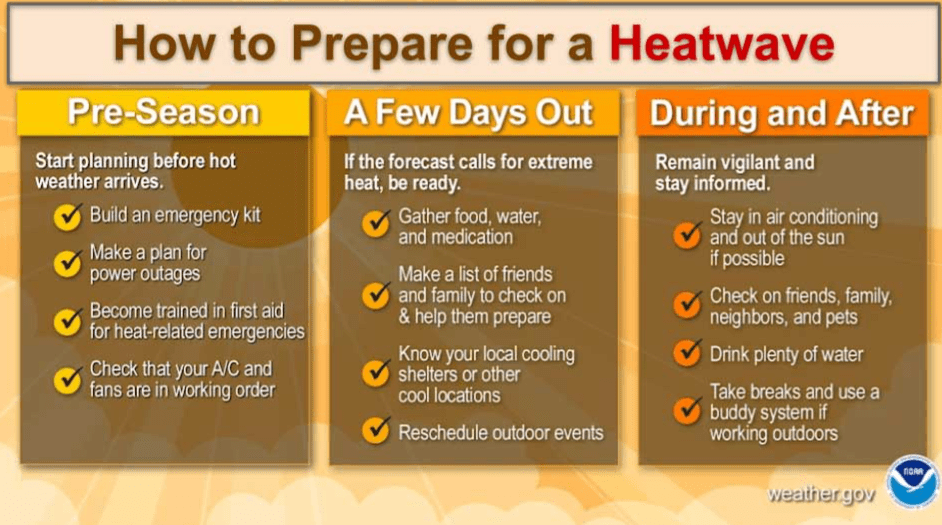
The Santa Barbara County Office of Emergency Management recommends following these steps to stay safe in the heat:
- Drink plenty of cool, non-alcoholic beverages, especially those without sugar or caffeine. Do not wait until you are thirsty to drink. If you have fluid restrictions from your doctor, ask to see how much you should drink while the weather is hot.
- Take care of those who might not be aware of high temperature dangers or be able to react accordingly — especially the elderly, young children, and pets. Check on your neighbors.
- Limit outdoor activity. Try to schedule outdoor activities during the cooler parts of the day, like morning and evening hours. Be sure to wear sunscreen and rest often.
- For those who work outside, be sure to take frequent rest breaks in a shaded area or air-conditioned room, if possible. Stay hydrated and take action by moving to a cooler space if you feel signs of heat exhaustion.
- Take regular breaks in the shade or in an air-conditioned room. A few hours in air conditioning can help your body stay cooler. Taking a cool shower or bath can help too.
- If you do not have air‐conditioning, consider arranging to spend at least parts of the day at another space that is cool. Electric fans may provide comfort, but when the temperature is in the high 90s, they will not prevent heat-related illness.
- Wear appropriate clothing. Lightweight, light-colored, loose-fitting clothing works best.
- Know the signs of heat exhaustion. If someone becomes dizzy, nauseated, or sweats heavily, find a cooler location for him or her immediately.
- Know the signs of heat stroke. Heat stroke is much more serious than heat exhaustion. The symptoms are similar to heat exhaustion, but also include hot, flushed skin. With heat stroke, the person often stops sweating and the skin will be unusually dry. If heat stroke is a possibility, call 9-1-1 immediately. Heat stroke is life threatening!
- Do not leave children (and pets) unattended in vehicles. It only takes a matter of minutes on a relatively mild day for a vehicle to reach deadly temperatures.









You must be logged in to post a comment.