
Dead and dying seabirds are breaking the hearts of beachgoers. An Independent tipster described a scene she saw near Goleta Beach on Saturday, walking from the UC Santa Barbara Lagoon to Campus Point: a mass bird grave. She had never seen anything like it.
First, she and her companion noticed at least 30 dead cormorants — those short, black seabirds — strewn across the rocks and sand. “We actually stopped counting,” the tipster said. Up towards the top of the bluff, there were hundreds more alive, clustered around a rocky dirt path and undisturbed by their presence.
“They didn’t even try to fly away. They just feebly made noise,” she said. “A few were on their stomachs, wings spread [and] gasping for breath…. Heartbreaking.”
There are four local cormorant species in Santa Barbara. That includes the Brandt’s cormorant, known for perching on bluffs overlooking the ocean, and which have been observed moving up and down the coast in large numbers recently. The live birds our tipster saw may not have been dying — they may have just been stressed — but it was still a jarring spectacle.
It was odd for the area, normally abuzz with a variety of living wildlife. To see such a morbid scene was eerie, she said. “I have lived in California all my life walking the beaches,” she noted. “What is happening is crazy.” Others online have noted similar experiences walking along the coast, posting pictures of bird corpses baked into the sand.
But it’s becoming normalized. Seabirds are starving. They are getting sick more frequently.
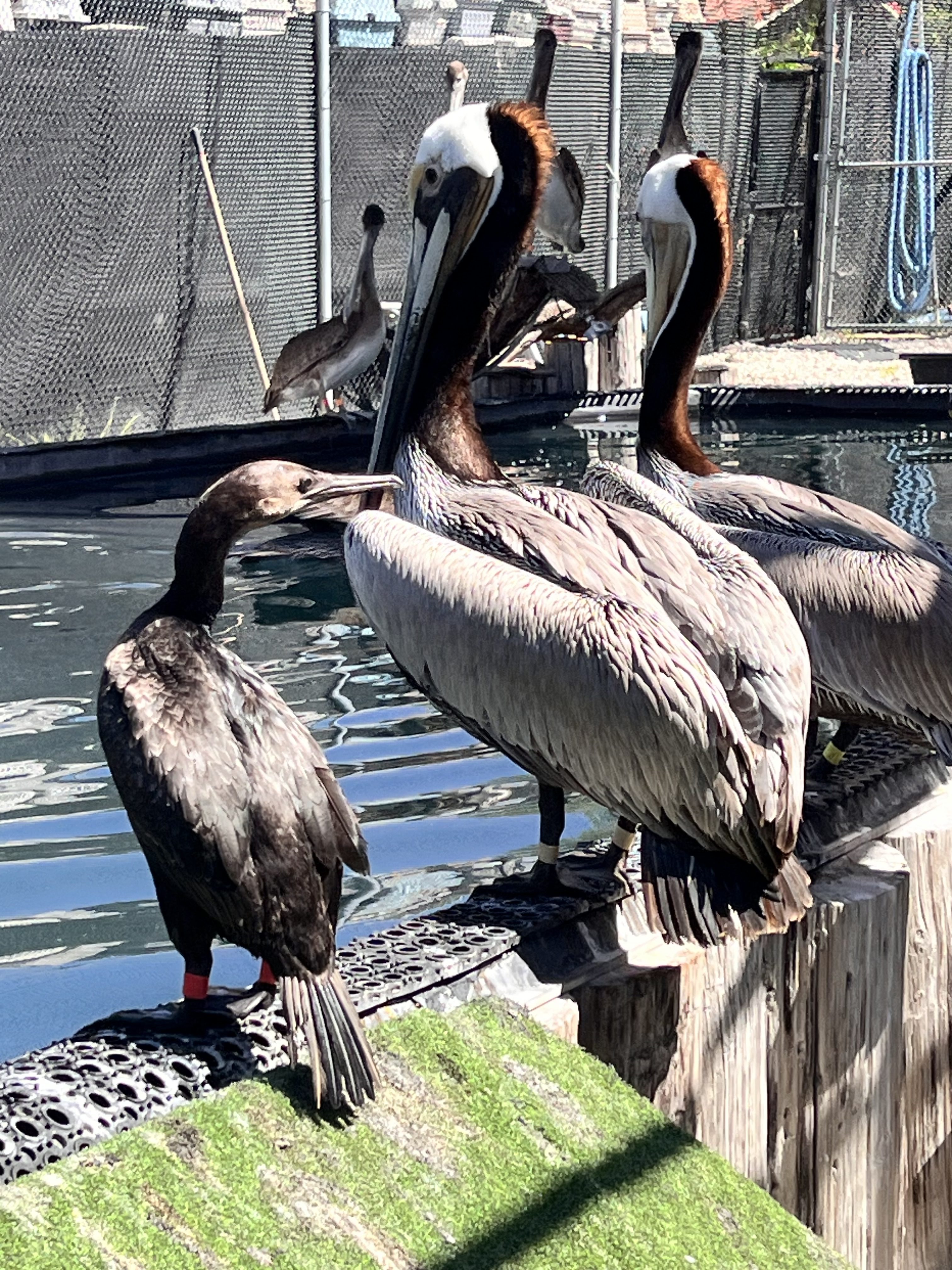
Over the past few years, sick brown pelicans and their avian cousins have been frequent flyers to the Santa Barbara Wildlife Care Network (SBWCN), a nonprofit that tends to the region’s sick animals.
“We are certainly seeing an increase in cormorants, murres, grebes and brown pelicans,” said SBWCN executive director Ariana Katovich. Since the beginning of March, they’ve taken in 40 cormorants, 59 grebes, and 59 pelicans (13 added on to last month’s unusually high count), she said. Unfortunately, “a lot of them are coming in too critical” for treatment, she added.
These birds are often dehydrated, emaciated, and hypothermic. Katovich said they still cannot speculate as to the official cause of the birds’ ailments. “We haven’t heard anything conclusive,” she noted.
But other experts theorize that it could relate to unusually warm ocean temperatures, reduced food supply, exposure to a neurotoxin called domoic acid from algae, or the ongoing outbreak of avian flu that’s affected more than 15 million birds since the beginning of the year. Avian flu was also recently documented in northern elephant seals, the first detection of the virus in a marine mammal in California.
“We don’t have confirmation that it’s related to avian flu,” Katovich said, but if the public does see a bird acting weird — bobbing their head, spinning in circles, that kind of thing — keep a safe distance and give them a call.
When treatable patients arrive at SBWCN, those first 24 hours are critical. They usually start with heat support and fluids. Once the birds begin to regulate their body temperature better, they start on a nutrition plan and can mosey into the outdoor pools.
“The faster we get the animals, the better,” Katovich said. “It’s important that when people see a sick animal, they call right away.”
People can call SBWCN’s helpline here: (805) 681-1080.
If the public sees a larger concentration of deceased animals, they can call SBWCN or the local office for the California Department of Fish and Wildlife: (858) 467-4201.
Katovich advises that no one touches deceased animals, and to stay away from sick birds. Let the experts handle the rescue.
“It’s hard to see these mass events affecting so many species,” Katovich said. “But we see people really caring about these birds and it’s hopeful, and we do everything we can to help them.”
“Im looking right now at a bunch of pelicans flying around in the outdoor aviary, eating a bunch of fish, getting ready to be released,” she added. “So there is some good that comes out of this.”
Related Posts





Premier Events
Thu, Apr 02
5:00 PM
Santa Barbara
Paintings by Michael Vilkin at ART & SOUL GALLERY

Sat, Apr 04
9:00 AM
Santa Barbara
Mesa Harmony Garden Spring Plant Sale

Thu, Apr 09
7:00 PM
Santa Barbara
POSTPONED – Journey Within: Wisdom & Meditation with Gurudev – POSTPONED
Fri, Apr 10
2:00 PM
Santa Barbara
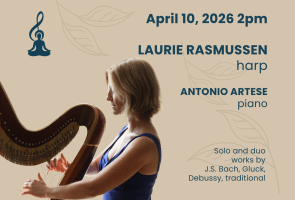
Music & Meditation SB – Concert April 10, 2026
Thu, Apr 02
2:00 PM
Santa Barbara
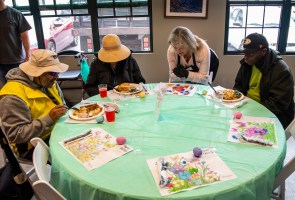
S.B. Rescue Mission Annual Easter Feast
Thu, Apr 02
4:00 PM
Santa Barbara
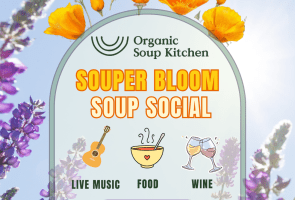
Organic Soup Kitchen’s Souper Bloom Soup Social!

Thu, Apr 02
5:00 PM
Santa Barbara
Exhibit Opening: The Santa Barbara Independent: ‘Covering 40 Years’

Fri, Apr 03
2:00 PM
Santa Barbara
Ensemble Theatre Company Presents “A Night with Janis Joplin”
Fri, Apr 03
5:00 PM
Lompoc
Filipinos’ Contributions to Once Making Lompoc…
Fri, Apr 03
7:30 PM
Santa Barbara
Lahaina: Voices of Change
Sat, Apr 04
9:00 AM
Santa Barbara
Mesa Harmony Garden Spring Plant Sale

Sat, Apr 04
9:00 AM
Santa Barbara
Passport Fair, hosted by Congressman Salud Carbajal

Sat, Apr 04
9:30 AM
Santa Barbara
The Great Egg Hunt
Sat, Apr 04
5:00 PM
Santa Barbara
Classical Guitar at Art & Soul
Thu, Apr 02 5:00 PM
Santa Barbara
Paintings by Michael Vilkin at ART & SOUL GALLERY
Sat, Apr 04 9:00 AM
Santa Barbara
Mesa Harmony Garden Spring Plant Sale
Thu, Apr 09 7:00 PM
Santa Barbara
POSTPONED – Journey Within: Wisdom & Meditation with Gurudev – POSTPONED
Fri, Apr 10 2:00 PM
Santa Barbara
Music & Meditation SB – Concert April 10, 2026
Thu, Apr 02 2:00 PM
Santa Barbara
S.B. Rescue Mission Annual Easter Feast
Thu, Apr 02 4:00 PM
Santa Barbara
Organic Soup Kitchen’s Souper Bloom Soup Social!
Thu, Apr 02 5:00 PM
Santa Barbara
Exhibit Opening: The Santa Barbara Independent: ‘Covering 40 Years’
Fri, Apr 03 2:00 PM
Santa Barbara
Ensemble Theatre Company Presents “A Night with Janis Joplin”
Fri, Apr 03 5:00 PM
Lompoc
Filipinos’ Contributions to Once Making Lompoc…
Fri, Apr 03 7:30 PM
Santa Barbara
Lahaina: Voices of Change
Sat, Apr 04 9:00 AM
Santa Barbara
Mesa Harmony Garden Spring Plant Sale
Sat, Apr 04 9:00 AM
Santa Barbara
Passport Fair, hosted by Congressman Salud Carbajal
Sat, Apr 04 9:30 AM
Santa Barbara
The Great Egg Hunt
Sat, Apr 04 5:00 PM
Santa Barbara

