
Endorsements for the
June 2, 2026, Primary Election
Santa Barbara Independent Presents Its Endorsements for
National, State, and County Races and City of S.B.’s Measure A
By Indy Staff | May 14, 2026

Last week, we didn’t publish our endorsements for this June’s election because we couldn’t make up our minds about the governor’s race. Now we have. Below, you will find not only our endorsement for governor, but also those in whom we have great confidence and whose races are of great importance to California and Santa Barbara County. As always, the Independent only endorses a candidate whom we have interviewed over time and when we are certain in our decision. Thank you for your patience.

Governor
Tom Steyer
We are endorsing Tom Steyer for governor not because he’s perfect but because he has articulated the clearest understanding of California’s housing affordability crisis, why it exists, and the most cogent plan for responding to it. Whether a billionaire with no experience in elected office has the chops necessary to pull this off is, of course, open to doubt. But we are struck by his energy, his creativity, and the audacity — and, yes, perhaps arrogance — of his moral imagination. We are also struck by the existential urgency with which he has thrown himself into the fight to arrest climate change. We are in a now-or-never moment, and he has been expressing this in word, deed, and treasure for many years. We have been impressed by former Congressmember Katie Porter and San Jose Mayor Matt Mahan, but we found their solutions not as on the mark as Steyer’s. We recognize that Xavier Becerra is the frontrunner, and we wish we could have been more impressed by his track record and current understanding central to California’s problems. He was Secretary of Health and Human Services in the midst of the COVID crisis but took a weak leadership role, leaving that to Doctor Anthony Fauci. This gives us doubt about his executive ability and vision at a time when California desperately needs both. We struggled to achieve a sense of clarity on this endorsement longer than ever in our 40-year history. We explain more of our reasoning here.
24th Congressional District
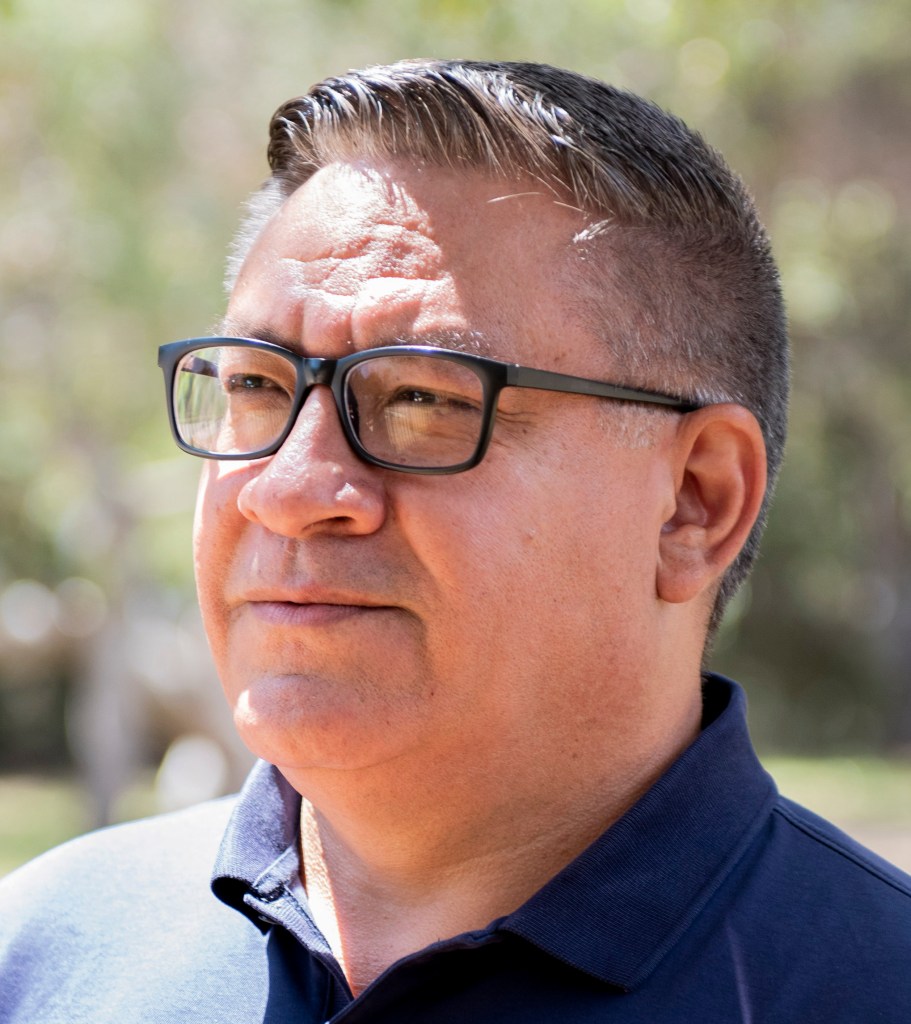
Salud Carbajal
At ths moment of upheaval, we’d be insane not to send Carbajal back for another term in Congress. The Democrat has been representing Santa Barbara and San Luis Obispo in Washington since 2017, having won his seat the same year Donald Trump first won the White House. In many regards, Carbajal, the son of Mexican immigrants who worked the fields of Oxnard, and Trump, who rode down his golden escalator to power by bashing immigrants as “drug mules and rapists,” have been shadowboxing ever since.
With Trump now waging a quasi-jihad against California, we need Congressional representatives who will defend the Golden State. That is definitely Salud Cabajal.
For most of his career, Carbajal has been a reach-across-the-aisle guy. More recently, he’s grown more openly pugilistic, telling Defense Secretary Pete Hegseth to his face that he should resign.
Theatrics aside, Carbajal has a genius for knowing where the money is. He brings home the bacon, and not just as a campaign fundraiser. Across his 10 years in office, Carbajal claims he secured $8 billion in federal funds for his district. Last month, he secured $6.4 million in federal funds to dredge Santa Barbara’s harbor after the federal government proposed cutting $4 million. Without annual dredging, no boats could get in or out of the harbor. By invoking national security — ironically one of Trump’s favorite rationales — Carbajal shook the dredging money loose.
During the Biden administration, Carbajal managed to win passage of a low-cost spending bill to make it easier for law enforcement officials to take guns away from individuals showing intense emotional volatility. A modest bill, perhaps, but it is the only bill that Congress passed in more than 30 years that addresses gun violence. Nobody except Carbajal has come close to getting anything passed. Impressive, yet still very depressing.
One major accomplishment for Carbajal was a wind farm in federal waters off Morro Bay. Carbajal painstakingly put the pieces together, working with dueling stakeholders. A first step, but a giant one. Three weeks ago, Trump killed those leases. He ordered the money returned, but only if the funds were used to pursue oil, natural gas, or coal.
We have our differences with Carbajal, of course. We cringed when Carbajal followed the party line and shrugged off President Biden’s disastrous debate performance against Donald Trump as “a sluggish night.”
We certainly wished Carbajal had shown more moral outrage as Israeli leader Benjamin Netanyahu responded to Hamas’s October 7 terrorist attack with a campaign of wholesale slaughter against Gaza.
But despite these differences, we believe strongly that Salud Cabajal is a conscientious and effective representative in Congress. He deserves our support. We urge a vote for Salud Carbajal.

State Assembly
37th District
Gregg Hart
Gregg Hart has been part of Santa Barbara’s political ecosystem for so long now, they should name a street after him. His long record of public service began when he was a legislative assistant for State Assemblymember Jack O’Connell and then served on the City of Santa Barbara’s Planning Commission. In 1995, he was elected to the City Council, where he served four terms. There, he was seen as a smart, progressive, politically ambidextrous pragmatist who worked hard while avoiding the sharp elbows of then-mayor Harriet Miller. Next, he did a stint on the Coastal Commission. And then he became the resident wizard for the Santa Barbara County Association of Governments (SBCAG), where he worked effectively to keep the freeway widening plans on track.
In 2018, Hart was elected to the Board of Supervisors. Two years later, COVID hit. In response, Hart engineered a weekly news-style podcast where public health officials presented the latest grim stats and answered questions from news reporters. It was a meaningful, informative response in a time of terror.
A few months into the pandemic, George Floyd was murdered, and Hart got religious on criminal justice reform. Serious money could be saved, he argued, and justice served, if nonviolent, low-level offenders, such as those with mental health or addiction challenges, had another option other than county jail.
During COVID, average jail population numbers dropped markedly with no rise in crime. Hart used these findings to further his argument. He and Sheriff Bill Brown butted heads then, and they’re butting heads still. Since getting elected to the State Assembly in 2022, Hart has introduced one bill after another that appears aimed at Sheriff Brown. One got passed requiring that any deaths in county jails would have to be reviewed by an oversight agency rather than the sheriff. Another — not likely to succeed — would allow the county supervisors to contract with someone other than the sheriff to run the jail.
Hart came of age in Santa Barbara when hostility to the oil industry was politically the coin of the realm. And with reason. Hart has seen two disastrous and tragic oil spills pollute the South Coast. Since being in the State Assembly, he has been in the thick of efforts to block Sable Offshore’s efforts to resurrect Exxon’s old plant along the Refugio Coast. He introduced a tricky fine-print bill that would have effectively done just that. Sable, however, played the Trump card. With the aggressive intervention by the White House, Sable now has Exxon’s facilities back online. That battle, however, is far from over. Hart, as always, will be in the thick of it.
Hart will all but certainly win his election. His opponent hasn’t ponied up so much as a ballot statement. But we hope this snapshot of a 40-year career in politics might prove helpful in explaining why we strongly think Gregg Hart should be returned to the California State Assembly. We are lucky to have such a skillful, determined politician representing us in Sacramento. We urge a vote for Gregg Hart.
Second
Supervisorial District
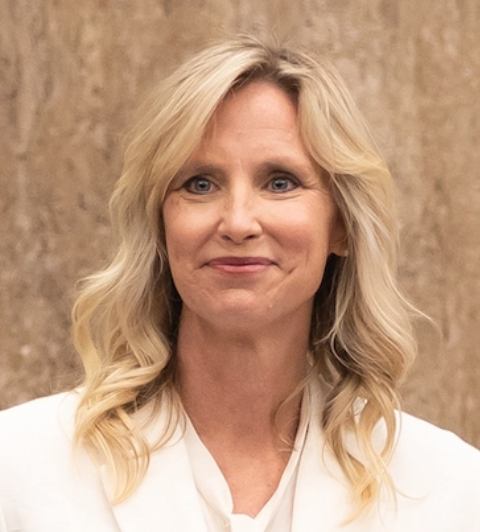
Laura Capps
Since getting elected 2nd District supervisor four years ago, Supervisor Laura Capps has unleashed a blizzard of initiatives — some substantive, some performative, most both — that have consistently moved the needle.
Shortly after getting elected, a new landlord sent eviction letters to tenants occupying 243 apartments in Isla Vista. Capps used the bully pulpit to create a platform for tenants’ rights activists to enact better tenant protections.
When drunken students kept toppling to their deaths while urinating off Isla Vista cliffs, Capps raised hell and found money to install porta-potties. She spearheaded the passage of a pilot program allowing county inspectors to initiate inspections rather than wait for complaints. Landlords of Isla Vista’s notoriously slum-like housing sued. They lost.
Just because you can’t do anything, Capps has repeatedly demonstrated, doesn’t mean you can’t do anything.
Capps, like every California elected official, has repeatedly been notified that she has no constitutional authority to prevent ICE’s strong-arm enforcement methods approved of by the Trump White House. Nevertheless, Capps and her fellow supervisors have passed numerous resolutions seeking reform. When she met privately with Sheriff Bill Brown to ask about the number and location of ICE actions and jail arrests, he declined to say, and she called him out at a rally from the courthouse steps. County administrators have struggled for years to stop the run-away costs of jail overtime and law enforcement in general; Capps joined that effort.
Capps has sought to use the county’s exceptionally limited jurisdiction to put the brakes on Sable Offshore’s efforts to restart the oil pipeline that caused the disastrous 2015 spill. Even though the necessary county title transfers have not been approved, the Trump administration intervened, and oil began flowing early this year. Sable is suing the county for $100 million. That legal battle, however, remains unresolved. And Capps is among the supervisors leading the charge to eventually phase out all oil production.
Capps acts as though solutions to seemingly intractable problems are possible. A major case in point: workforce housing. Why not, she asked, use the county’s significant holdings of surplus or unused properties to build affordable housing for its own workforce? She toured the properties, pressed for more details, and finally, on May 5, the board approved negotiations to partner with a private developer to build 104 units of affordable rental units where the county Probation Department offices now stand on Carrillo Street. The county’s financial contribution will be a long-term lease of the land.
It’s just a start.
The same thing might be said about Capps. With one term under her belt, she’s just getting warmed up.

County
Auditor-Controller
Kyle Slattery
The auditor-controller office is an unheralded, yet essential, county entity that oversees 23 county departments, their payrolls, and their combined budgets of $1.7 billion. The framers of the state constitution clearly thought that the person in charge of paying the county’s bills, collecting revenues owed, and making sure taxpayer dollars are well spent should be accountable to the voters and not beholden to the county supervisors, who are elected to direct where those dollars wind up. Hence this race.
Yet we can’t help but be struck that four of the five supervisors have endorsed challenger Kyle Slattery in his effort to unseat two-term incumbent Betsy Schaffer. (Roy Lee abstained for personal reasons.)
While auditor-controller is a nonpartisan post, the Democratic Party, which had endorsed Schaffer in her past two elections, this time endorsed Kyle Slattery. The Republican Party can’t bring itself to endorse Slattery, a registered Democrat, but they are urging party members to vote against Schaffer. This is as close to bipartisan agreement as can be found in Santa Barbara County.
A few years ago, the County Administrator requested that the Board of Supervisors create an ad hoc committee to bird-dog the county’s transition to a much-needed new computer platform — a multimillion-dollar project. Supervisors Bob Nelson and Joan Hartmann — often the yin and yang on the political spectrum — were appointed. Known as Workday, the new system would deliver more information more quickly than the older system that was designed by Shaffer’s former husband. Under Schaffer’s leadership, the transition to Workday has been excruciatingly, painstakingly slow. Supervisors complain that Schaffer’s direction, so ultra-careful so as to be seen as deliberate foot-dragging, is costing the taxpayer millions for a high-end system that is not being put to use.
Schaffer brings 35 years of experience to the post; she’s undeniably hardworking, conscientious, dedicated, and qualified. She is just not, sadly, a good fit to run the department.
Slattery grew up in Santa Barbara, was a standout baseball player at San Marcos High School, worked as an intern under County Auditor Bob Geis, attended Cal Poly, got his degree, worked for large Los Angeles accounting firms, returned to Santa Barbara County, and in 2012 joined the Auditor-Controller’s Office, where he’s worn many hats, including as chief deputy controller. He’s worked under Schaffer herself, for the County Administrator’s Office, and for the recently created IT department.
Slattery is more than qualified for the job, both in experience, know-how, and temperament. We believe Slattery will show more initiative in launching independent audits to determine whether the county is getting paid all it’s owed in franchise fees by utility companies who rely on county right-of-ways for their gas lines, their electrical lines, and their cable infrastructure. Or to better determine if the county is spending its money as efficiently as it needs to be in departments throughout the county. Vote for Kyle Slattery. He’s got chops.
Clerk-Recorder-Assessor
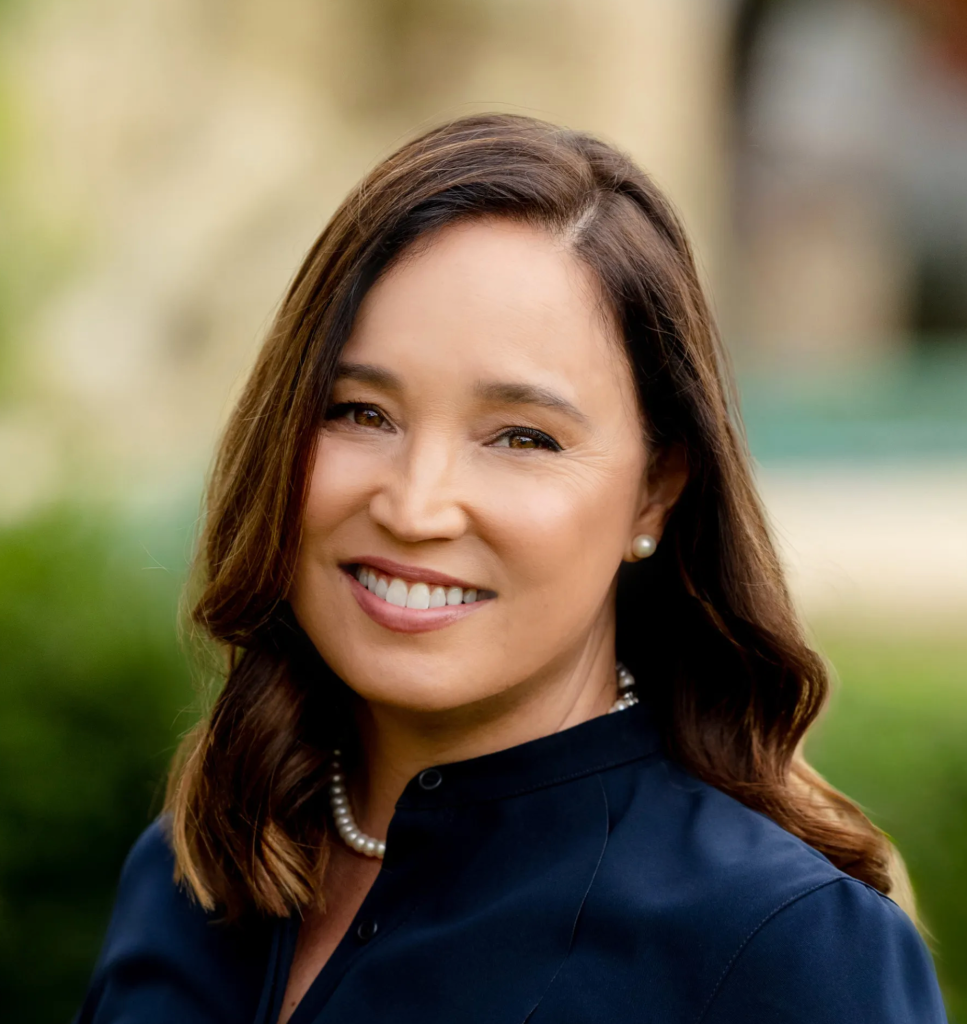
Melinda Greene
Who could have ever imagined in the Year of Our Trump 2026, the hottest local race on the ticket would be for county clerk, recorder, and assessor. Yet here we are.
In this race, we have an unusually energized and experienced challenger, Melinda Greene, who is taking on her boss — the incumbent, Joe Holland, who is so incapacitated by continuing health issues that he has not shown up at the office for 18 months. Holland is eligible for an enviable retirement package. He should take it. The time to hang up his cleats is now.
With due deference to Holland’s many years of diligent, conscientious work, the truth is that if you can’t show up, you cannot lead — especially a department responsible for voting safety, property assessment, and financial records. When Holland told the county supervisors recently that he ran the department successfully from home because he was instantly available by phone, no one bought this argument. All five supervisors endorsed Greene.
Fortunately, we have an exceptionally capable candidate in Melinda Greene. After 12 years as the Chief Deputy Clerk-Recorder-Assessor, she is more than ready to officially take over the leadership of this important office. She has worked in every division, understands the complex IT systems, has a strong working relationship with county department heads, has a deep background in fiscal responsibility, and has encouraged transparent, professional interaction with the public.
At the Independent, we have long been impressed by Greene’s competence, expertise, and initiative. Rarely have we ever encountered anyone — in a public or private capacity — so passionate about the core mission of her office. It is because of her dedication that the department has run so smoothly and has accomplished so much.
Greene oversees, among other things, the issuance of marriage certificates. Sex traffickers are known to use marriage certificates as a tool of the trade. Greene has trained her staff to keep a keen eye out for coercive pressure applied by one party on the other.
When recording real estate deed transfers, she has instructed her staff to be vigilant for elder abuse fraud. As a result, she has referred many cases to the District Attorney’s Office for investigation.
Greene, the daughter of an American father and Japanese mother — who were married at a time when mixed marriages were still banned — launched an initiative to scour through the county’s voluminous recorded deeds for real estate covenants barring certain ethnic groups from owning or buying real estate.
If elected, we’re confident no one will ever ask, “Where’s Melinda Greene?” If past practices predict the future, she’ll be everywhere.
Measure A2026
YES: Allows for More Housing Downtown
While easily the most overlooked item on this June’s ballot, the obliquely named Measure A2026 offers Santa Barbara City voters the magic wand needed to dramatically transform their much-maligned downtown by allowing the development of exponentially more housing there.
For decades now, the planners, visionaries, and hand wringers inside and outside City Hall have known the best way to “bring people downtown” is to have them live there. Yet precious little by way of housing — affordable or otherwise — has actually been built. Measure A would unlock the City Hall’s ability to use its own property in partnership with private developers to build much needed housing while not giving up ownership of its real estate.
By amending the city’s charter — the municipal equivalent of its constitution — it will allow City Hall to lease out its city owned properties, such as the public parking lots, to private developers for as long as 99 years. Right now, the city charter limits such long-term leases to only 50 years.
Sexy stuff, right?
Because of this 50-year limit, the private developers who own most of the built environment within the four corners of Paseo Nuevo — have refused to build housing there, saying they couldn’t recover the costs in such short time. Give us the land, they said earlier on in the negotiations, or sit in the dark for another 20 years with a dead zone mall. Naturally, that elicited strong push back from many in the community, every member of the city’s planning commission, and from this newspaper.
If City Hall were empowered to offer a 99-year lease, the geometry of the deal would tilt dramatically more in City Hall’s favor, making it less beholden to the current offer.
Presumably, this change should satisfy the current developers’ financial concerns as well. But if not, it puts City Hall in an infinitely better position to negotiate.
To be clear, Paseo Nuevo is just one immediate example. But imagine all the parking lots and vacant city-owned properties upon which housing could be built. Look at the deal the County of Santa Barbara just initiated with a private developer to build 104 units of affordable — below market — rental housing at 117 East Carillo Street, now occupied by the county Probation Department. Because the county is not hamstrung by any 50-year limit, it could entice a private developer to foot the bill for construction and development costs with a long-term lease. This is arcane technical stuff, but if passed, it will do more for downtown than bringing cars back to State Street — or banning them forever — ever could hope to.
It’s very simple. If we want more people downtown, then they have to actually live there. For that to happen, we need to build more housing there. None of that’s possible unless we pass Measure A. It truly is that simple.




You must be logged in to post a comment.