
A Future in Full Bloom
The Santa Barbara Botanic Garden
Celebrates 100 Years and Looks to the Next Century
By Callie Fausey | July 2, 2026
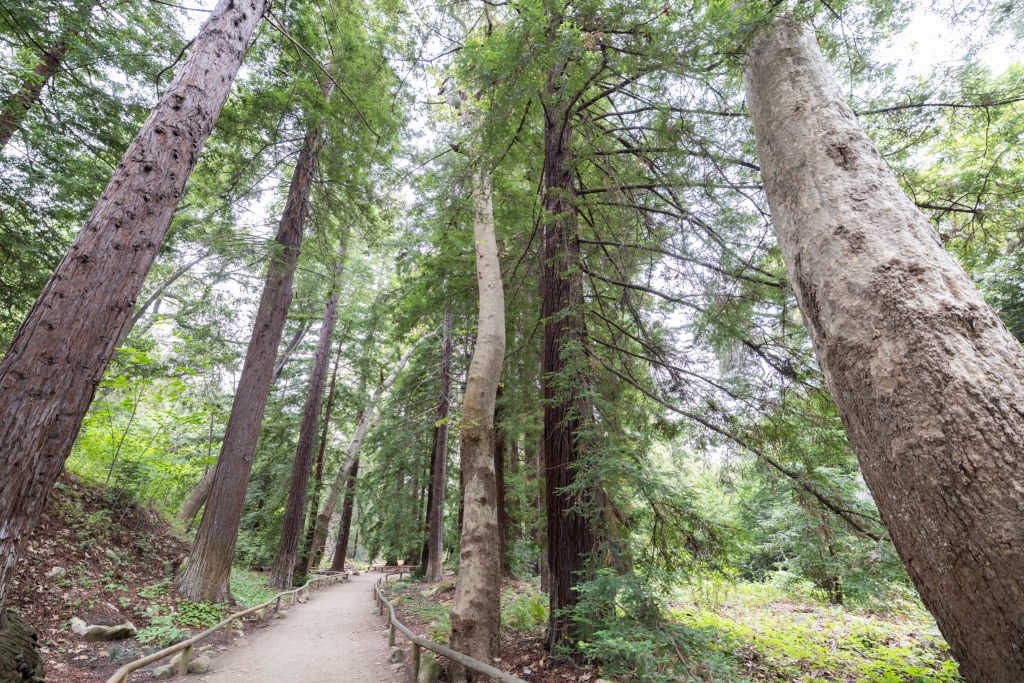
Once upon a time (the 1920s), in a land not-so-far away (Mission Canyon), people planted redwood saplings in coffee cans. With redwoods taking up to 300 years to reach their maximum height, those early gardeners would never see their trees “grow up.”
But they were not searching for immediate gratification. They were planting for the future. They knew that one day, birds would nest and sing among their canopies. Visitors would stand in the shade and marvel at their collective beauty.
And now, the redwoods, due to their longevity, are aiding in the modern fight against climate change by storing more carbon than just about any other tree species on the planet.
Although they may have initially struggled in Santa Barbara’s drier climate, nearly 100 years later, these trees now tower up to 160 feet tall — taller than the city’s tallest building, The Granada Theatre.
They are symbolic of their home’s legacy: The Santa Barbara Botanic Garden, celebrating its centennial this year, has always been on the leading edge of plant conservation. Its forefathers in 1926 had forethought, understanding that California’s plants were more than just pretty faces.
The garden’s staff are now carrying that visionary spirit forward.
The Beginnings
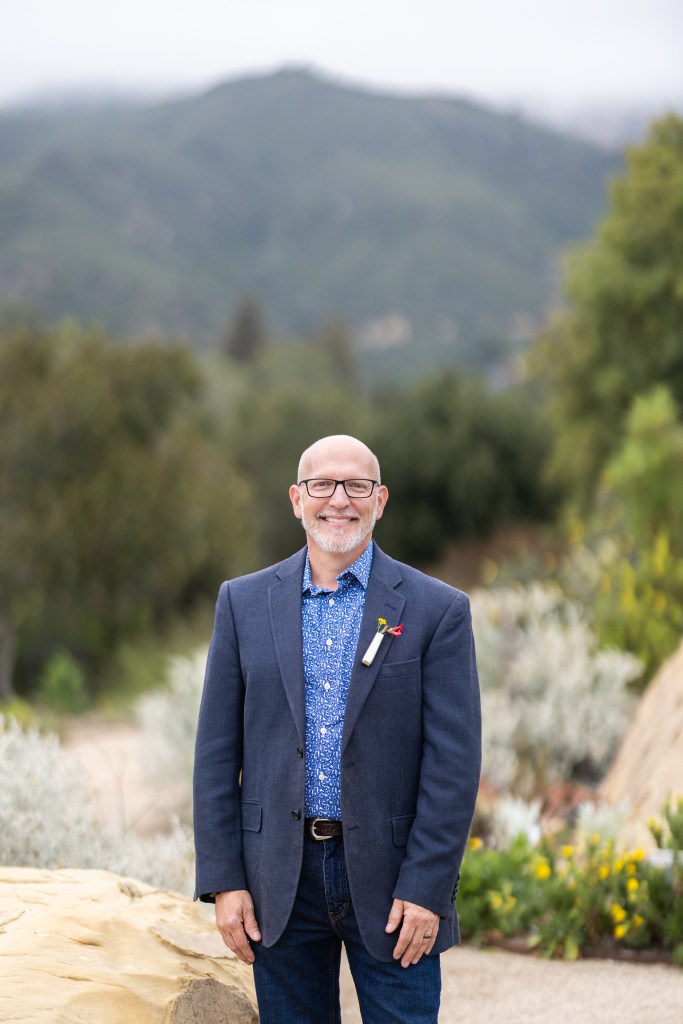
The earliest plant samples in the Botanic Garden’s herbarium were collected by a bunch of amateurs with a curiosity for the natural world, in the words of Executive Director Steve Windhager, a former Boy Scout whose love for the outdoors matured into a commitment to restoration.
And isn’t that just the way? Pure, unadulterated curiosity for our surroundings has driven humanity to our greatest discoveries.
One of the oldest samples in the garden’s collection is the branch of a spice bush (Calycanthus occidentalis, named for its bloom in “the region of the setting sun”) collected circa 1878 near Yosemite by Henry C. Ford (no relation to the industrialist.) Ford’s day job was a landscape painter. The spice bush is a shrub native to stream sides and moist canyons of California, with wine-red flowers that also have a wine-like aroma, which may have attracted him to them.
The species is not uncommon, but to him, it was special enough to stop his landscape sketching, snip off a branch, glue it onto a page, and catalogue it in his own handwriting, which has survived to this very day. Ford went on to help found the Santa Barbara Society of Natural History, which evolved into the Santa Barbara Museum of Natural History, which later established the Botanic Garden.
Today, the garden’s herbarium holds around 230,000 specimens, some collected decades apart, and each telling the story of the condition of the plant on the day it was collected. Every year, 3,000 to 5,000 new specimens are pressed, dried, and catalogued, and a new digital database is now being formed.
Researchers can understand how plants and habitats have changed over time by comparing samples of the same species from the same area, collected a century apart.
“You can actually see things blooming earlier in the year, you can see things moving, changing their range as conditions get warmer or drier,” Windhager said. “You can actually see climate change happening in action.”
Some plants, scientists are finding, may be part of the solution. They are able to collect heavy
metals via bio-accumulation and could be planted next to mining sites as a less invasive extraction method. Sunflowers, for instance, are planted at superfund sites to remove toxins from the environment.
The garden’s oldest documented living accession is a tall Douglas fir, collected from Mount Wilson in the San Gabriel Mountains, that has thrived in its garden flat since 1934. It is visible along the garden’s centennial route.
A 100-Year Walk
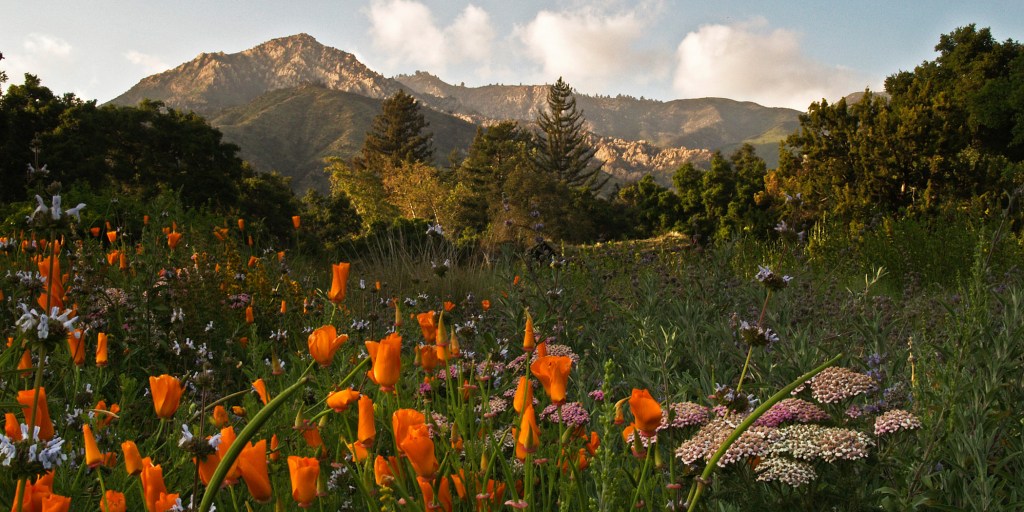
The Santa Barbara Botanic Garden is the holy grail of California’s native plants — more than 1,000 currently grow there. They have evolved in their habitats over millennia, and the organisms around them have evolved to eat, find shelter in, and otherwise depend on them.
The plants have names that date back before Europeans colonized the area, and their namers, mainly the Barbareño Band of Chumash Indians, did not beat around the bush, so to speak.
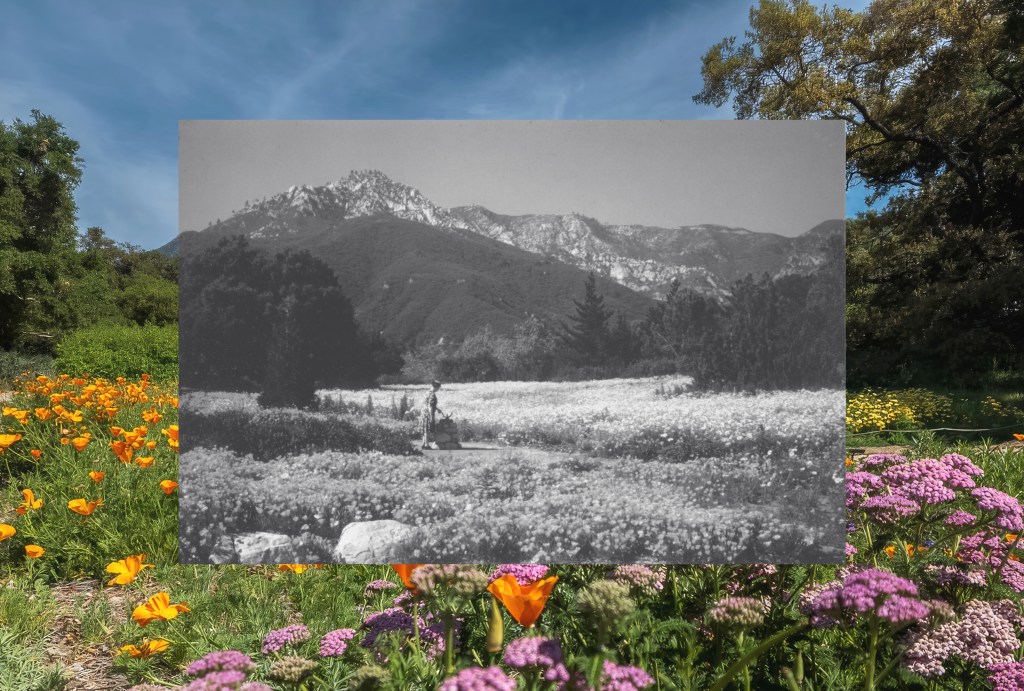
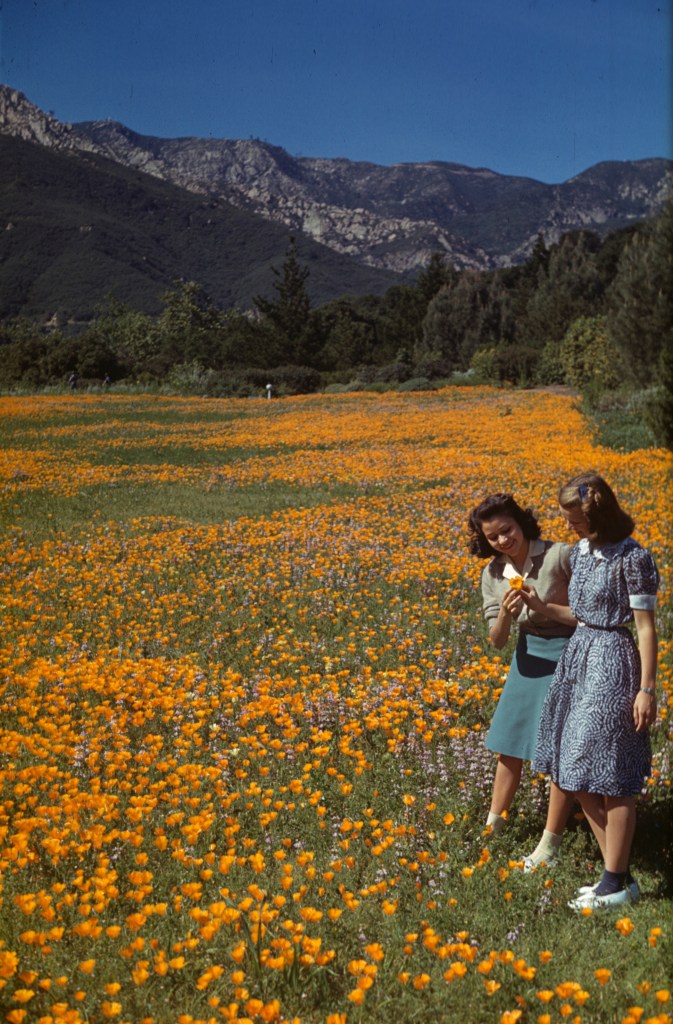
California fuchsia — a stringy subshrub with fiery, tubular orange-red flowers — grows prominently in the garden’s vast, vibrant meadow. It has the Chumash name of S’akht’utun ’iyukhnuts (meaning “hummingbird sucks it,” which explains itself), and was used medicinally as a poultice for cuts, sores, and sprains.
Pre-garden, the area was known to some Chumash as Utapí΄qste, meaning “where the brodiaea bulbs were burned.” Brodiaea are a kind of lily with edible flowers, recalling a cautionary tale in which a character called Coyote rewarded children who shared food and punished those who did not. Conscripted by Franciscan Friars into forced labor, the Chumash built the Mission Dam in 1806, which created a reservoir that stretched for a half mile and still runs partway through the garden today.
“California isn’t just a natural thing; it’s a human thing, because people have been tending this place for millennia,” said Scot Pipkin, the garden’s director of education, who led us on a centennial walk of the property. Pipkin, who wears his love for plants on his sleeve, has worked and lived in the garden for years, raising his two young daughters in a natural playground.
On that hot March day, we passed flowers labeled with their different names, all native to California.
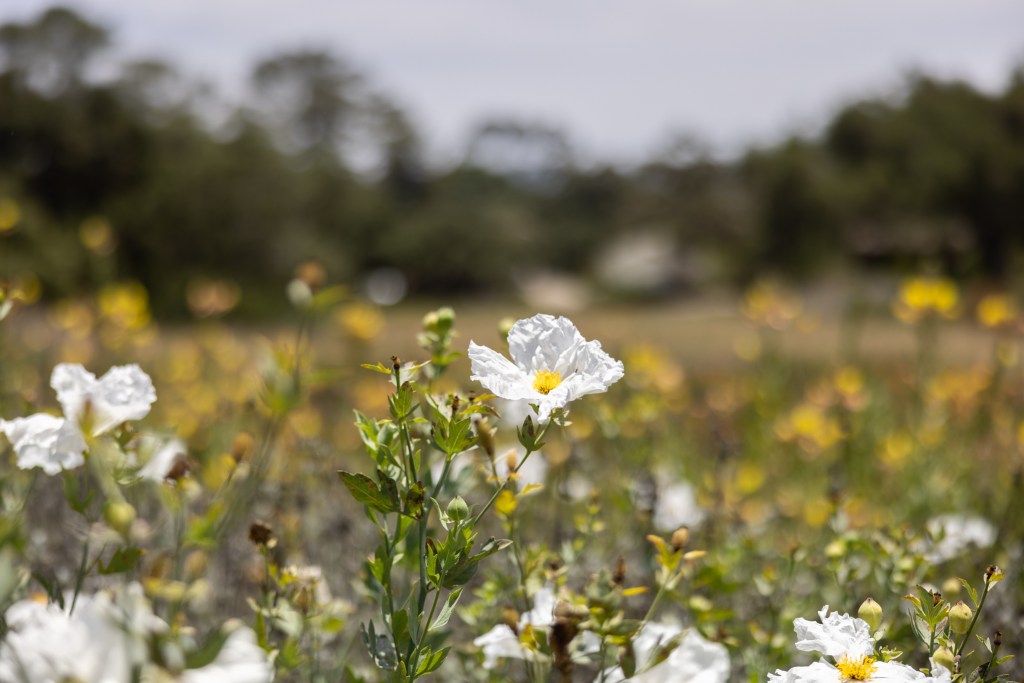
We made a stop at narrowleaf milkweed, the larval food plant for monarch caterpillars. These plants are poisonous to just about everything. But as plants evolved defenses over time, so too did the things that wanted to eat them. Monarch caterpillars became so specialized to digest the toxic milkweed that they now literally cannot eat anything else. It exemplifies the importance of native plants: If you take the milkweed out of Santa Barbara, what will the caterpillars eat?
Next was a slope flowering with native grasses, including purple needlegrass, California’s state grass. It contained the remnants of horticulture experiments as the garden searches for lawn substitutes that are beautiful and functional, not merely decorative. Some grasses are planted in full sun, some in partial shade; some are trampled to see if they can withstand being regularly walked over.
To promote more homegrown natives, the garden recently started its own nano-nursery to supply native saplings to residents, businesses, schools, and other institutions.
“Native plant horticulture, in particular, is an act of conservation, so we’re empowering the public to think about themselves,” Pipkin said, “not just protecting the million acres in Los Padres National Forest, which is important, but also protecting biodiversity in their backyards.”
“We have, like, 150 species of butterfly in Santa Barbara,” he continued, “and they all have a specific plant they want to eat as larvae in order to turn into adult butterflies.”
We walked beside these plants and through the meadow.
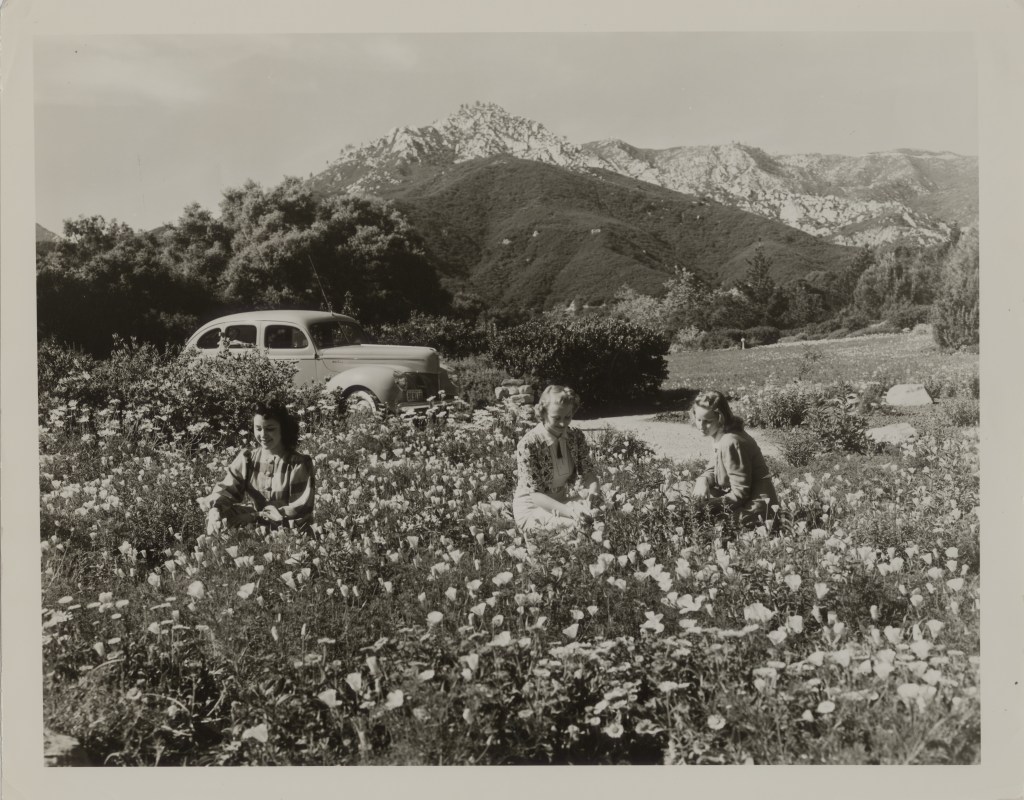
At the bottom of the meadow is a giant boulder, a remnant of the Pleistocene debris flows that deposited boulder fields throughout Mission Canyon. Its name, Blaksley Boulder, honors the garden’s founding supporter, Anna Dorinda Blaksley Bliss, and the garden’s original name of Blaksley Botanic Garden (it was renamed in 1939). The garden was created at the suggestion of the Carnegie Institution as a cooperative effort with the Santa Barbara Museum of Natural History, but it flourished with Bliss’s purchase of the land and creation of an endowment.
The aim of the founders was to establish a garden that would “unite the aesthetic, educational and scientific,” according to a history of the garden written by Mary Carroll and archived by the Santa Barbara Historical Society. It went through many different phases over its time in history.
In 1927, the garden began to be laid out by various habitats, including the desert, with some of the oldest plantings being the jojoba and desert willow. The Desert Section’s designer, Ervanna Bowen Bissell, once said that desert gardens were “a fad which will die out after a while” — but time proved otherwise, the garden has discovered.
“Many of our sections are sort of replicas of a habitat,” Pipkin said. “There are actually four different deserts represented within the geographic boundaries of California, and this is kind of a mash-up of many of them.”
Pipkin explained that Santa Barbara’s climate is expected to become a bit more like San Diego’s — drier, hotter — in the next 30 to 50 years due to climate change. So, the garden is experimenting with planting new species, like the rare and critically endangered Shaw’s agave, a rosette-forming succulent native to coastal San Diego and northern Baja California.
“Can we assist the migration of this plant and encourage people to plant it horticulturally?” he mused. “It’s a beautiful plant.”
There are also living fossils in the garden — trees that are ancient and lived through two fires that ripped through the garden, once in the 1964 Coyote Fire and again in the 2009 Jesusita Fire. That includes the Catalina Island ironwood, native to the northern Channel Islands. Fossil records of plants extremely similar to the ironwood dating back 13 million years were found in Nevada.
“That’s one of the things that makes California’s flora so special,” Pipkin said. “Things go extinct more slowly in California than in other places [due to its climate and other factors], and so we have a lot of living fossils in California, such as the ironwoods, such as the redwoods, such as many of the chaparral plants we see that are actually holdovers from the Miocene period 13 to 10 million years ago.”
An ironwood and oak tree we passed on our walk sustained some damage from the 2009 fire, which burned through 80 percent of the grounds, but were able to recover. Each fire reshaped the landscape and inspired new approaches to restoration and resilience — including the creation of the Pritzlaff Conservation Center, promoting the enduring resilience of native plants.
“It’s just a reminder that California is adapted for fire,” Pipkin said. “Fire is a reality in our region, and our plants are resilient to it.”
A Plant Repository
Among the garden’s towering redwoods grows another type of tree: tanbark oaks. Pipkin recalled seeing swaths of these trees in the Santa Cruz Mountains as a recent college graduate. But when sudden oak death — a disease caused by fungus — became a massive issue in California around 2008, almost all of them disappeared from those forests.
Pipkin said that, for him, it is a “reminder that there is constant threat on these plants, and it comes from really unexpected places.”
“That just reinforces why it’s so important to have organizations like the Botanic Garden, because this is a living repository … some of these plants are almost a living bank of genetic information.”
If the tanbark oaks blink out of existence in the Santa Cruz Mountains, they would have a hard time repopulating them from the garden’s two trees alone, but if other gardens are growing them too, they would have a much better chance. “And that’s what we’re all about,” Pipkin said.
These living banks flourish throughout the garden. Around 1956, yellow pond lilies (Nuphar polysepala) — a striking plant with glossy green leaves and yellow blossoms — were collected from a central coast wetland that was later lost to development. Transplanted in the garden’s Arroyo Section, it now survives mostly in protected or restored habitats.
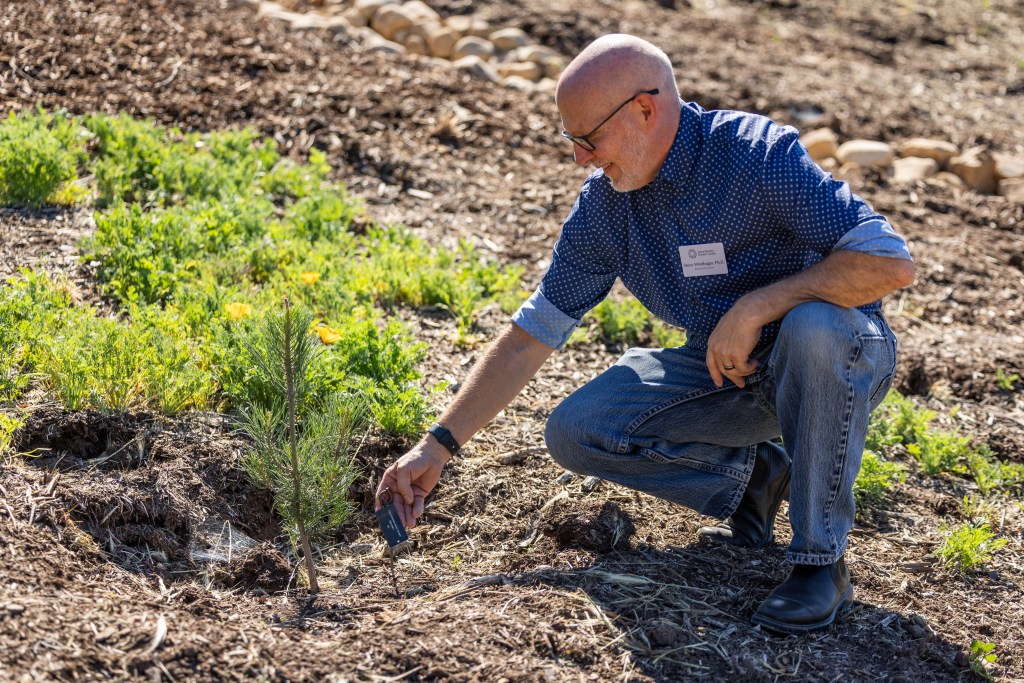
More recently, just this year, a grove of special Torrey pines — one of the rarest pines in the world — were planted on a sloping terrace next to the garden’s conservation center. Grown from seeds collected from 45 maternal trees on Santa Rosa Island, the garden is now one of only a few places in the world where the trees grow.
Cultivating them at the garden means there is another pool of plants available to repopulate natural groves should catastrophe strike — and last month, it did. Nearly 40 percent of Santa Rosa Island burned in the largest wildfire in the Channel Islands’ recorded history, including the island’s roughly 10,000 Torrey pines, which may not fully recover.


[Click to expand] Scot Pipkin leads a group along the garden’s centennial route, featuring markers of the garden’s history. | Credit: Jeff Clark, SB Botanic Garden
Torrey pine nuts do not freeze well for conventional seed banking. But the garden’s living collection could one day be used in recovery efforts. It’s just like the redwoods: The garden does not plant for immediate gratification, rather, it cultivates for the future.
Next door to the Torrey pines is the garden’s seed bank, with nearly five million seeds from 420 rare California plants. “We’re not keeping them for safekeeping,” Pipkin said. “We’re keeping them because we want to germinate them and restore habitats with them. It’s actually closer to 10 million seeds because we send half of them to the national seed bank in Fort Collins.”
Staff return repeatedly to collection areas to ensure good genetics and a diversity of plants that can withstand different conditions, like particularly wet or dry years. Seeds are collected from down in Baja and up through the Eastern Sierras and the Bay Area. It’s critical work, considering roughly a third of the state’s 6,000 native plants are at risk of extinction.
“We’re very careful to only ever take 10 to 15 percent of the total seed on any plant,” Windhager explained about the collection process. “We leave plenty for all the rest of the critters that need it, as well as for reproduction. If we collected all of them, it could be catastrophic.”
For example, the garden collected only eight seeds from the Santa Cruz Island desert dandelion (Malacothrix indecora). But by bringing them back to the center and germinating them (or “giving them a little spa day,” Windhager joked), they can create thousands of seeds to replant. A thousand seeds may only successfully produce 10 to 20 plants — animals eat them or they fail to reach adulthood — but over time, that can significantly contribute to the island’s overall population.
The garden calls its rare seeds “insurance policies against extinction” for plants like those in the Santa Rosa Island burn scar, some of which are found nowhere else in the world. The garden is sending teams of botanists to the island to help the National Park Service assess the damage, including Torrey pine work scheduled for the summer.
“If possible, we want nature to be able to respond,” Windhager said. “Even if the plants look dead, they may have dropped seed already, and they may come back on their own without our intervention. We start by watching how the system recovers and see if our intervention is necessary. If it is, we have those seeds.”
On the wall of the conservation center is a motto: understand, protect, restore. Alongside maintaining a healthy seed bank, they preserve both plant and bug specimens, and undertake research in their genetics lab to understand what needs protection.
For example, the San Clemente Island woodland star is found only on that island. Nowhere else. It grows across multiple canyons on the island (in an active bombing range for the Navy, no less), but in those individual canyon clusters, the plants are essentially clones of each other — not great for genetic diversity and their long-term survival. At the genetics lab, garden staff are working to understand why pollinators are not travelling across canyons. They can use genetic information to guide long-term management efforts and establish new, interbreeding populations.
By “barcoding” genetics — taking a snippet of DNA that is unique to each species — the researchers can follow pollinators and figure out who may be missing. They can follow poop to identify what wildlife eat. They found out, for example, that lactating mother foxes on the islands eat caterpillars by tracking its genetic code in island foxes’ scat. They can use that data to support efforts to promote caterpillar habitat to ensure the moms remain fed.
“We never would have noticed that, because none of the physical parts of a caterpillar make it through the digestive process,” Windhager said.
They’ve also found entirely new species plants from genetic coding — peering past the surface that may look like an existing species and identifying its distinctive characteristics.
Recording and Reversing Decline
As Windhager put it, the garden has been “documenting decline” through its work. Over time, they’ve witnessed ecosystems disappear due to human development, or climate change, or other stressors.
However, the garden has also grown from a destination to a movement by shaping the region into a biodiversity hot spot, encouraging residents to plant native plants, and partnering with local communities and governments to spread the gospel.
“Native plants do a better job of supporting wild biodiversity than anything else,” Windhager said. “And when you take a plant from another continent, it’s leaving all the insects that depend on it back in that other continent. You bring it over here and you might love it as a garden plant, because nothing seems to eat it.”
But that’s the problem.
“It’s not doing any service to anything over here, right?” Windhager continued. “It’s not feeding the insects, and if it’s not feeding the insects, it’s not feeding the birds, it’s not feeding the lizards. And so, we have these gardens that, at their best, are decorative.”
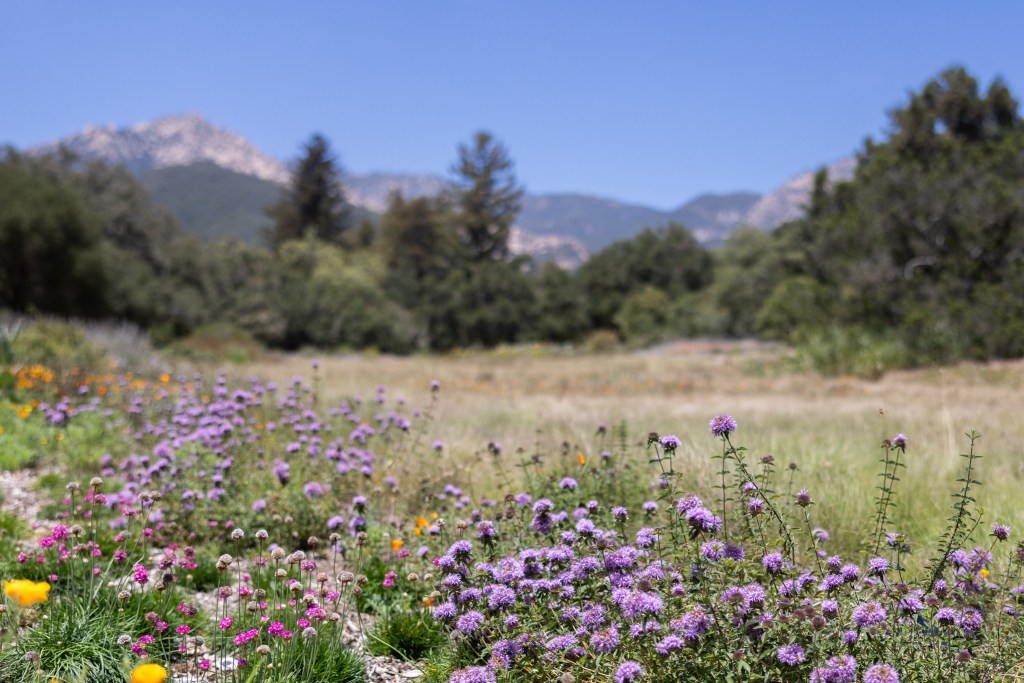
The Botanic Garden encourages residents to introduce at least 30 percent native plants into their gardens for them to bloom with biodiversity. “You’ll see more birds, butterflies, and all sorts of other stuff, and it’s all because you’ve created a habitat for them in your backyard,” Windhager said.
The garden is also transforming local parks, including turning an acre of Elings Park from one overrun by weeds into a top birding destination, and installing a native section at Alice Keck Park Memorial Garden.
Staff is also planting native plants on State Street; training landscapers in drought-tolerant and native landscaping; and starting its nano nursery to remove one of the top obstacles to homegrown native gardens: access and affordability. Thanks to its efforts over the years, the garden was just named nonprofit of the year by Senate President pro Tempore Monique Limón.
“For the past 100 years, we were trying to do it all ourselves, and now we’ve realized we can’t do it ourselves. We need everybody to get involved, and that’s how we’re going to really find success,” Windhager said. “So, that’s the next 100 years: We’re going to change Santa Barbara into a biodiversity hot spot. And that’s going to happen in our front yards, in our backyards, roadsides, and parks now. Not just here at the Botanic Garden.”
Learn more and take the garden’s Native Plant Pledge at sbbotanicgarden.org/grow/join-the-movement.




You must be logged in to post a comment.