

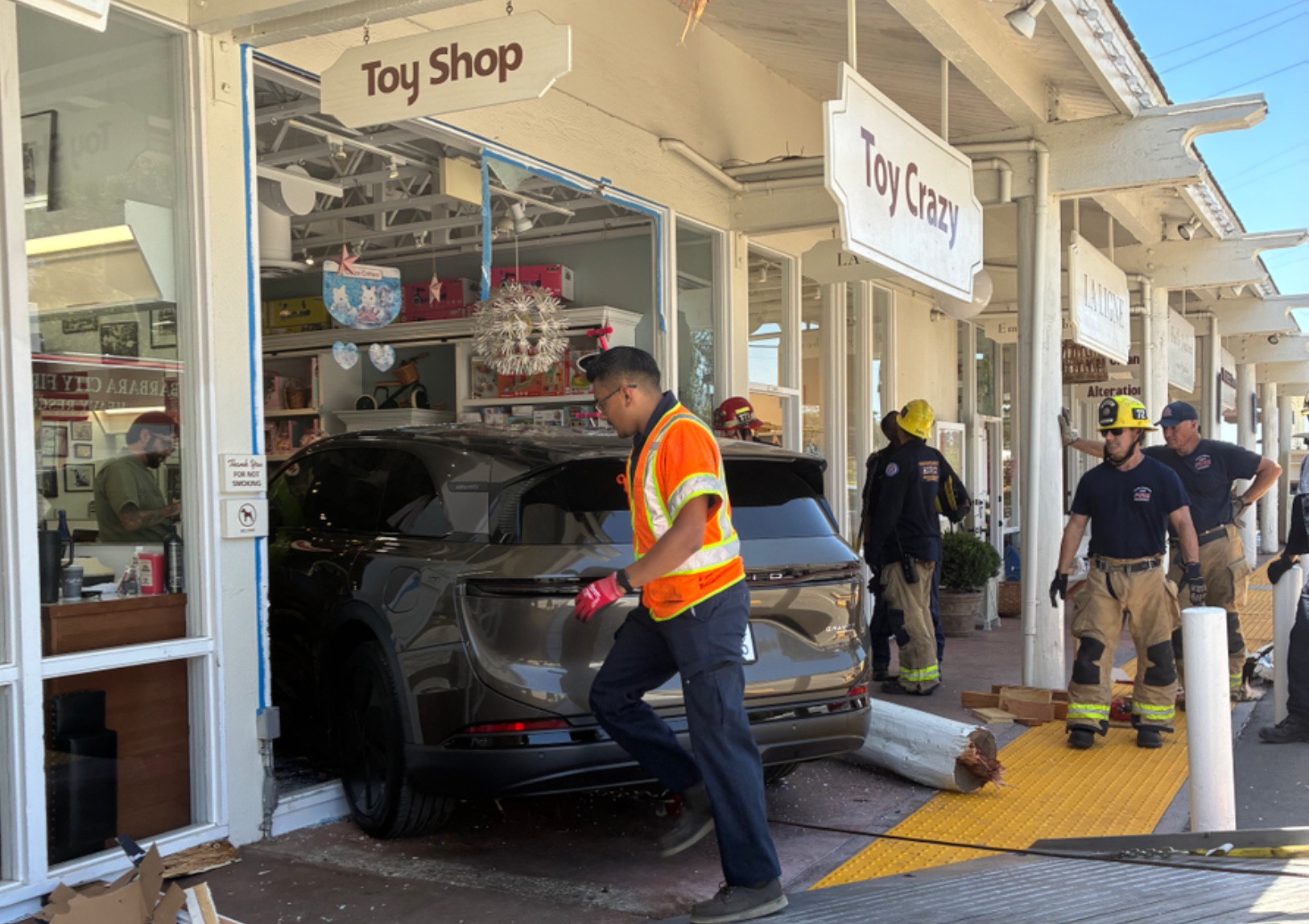
Last week, on Coast Village Road in Montecito, an SUV driver crashed straight through the front of Toy Crazy, a store for children. Three days later, a motorist plowed into a Goleta pet shop. This past Sunday night, a few blocks from the toy store, a driver struck and fatally injured a man crossing the road.
One week. Three dangerous incidents. And not one of them was caused by an e-biker.
If you have followed the conversation about street safety lately, you would think the greatest threat to our community is a teenager on an e-bike. It isn’t. In 2023, drivers killed more than 1,100 pedestrians on California streets. The same year, 145 cyclists of every kind, e-bikers included, were killed, nearly all by people driving cars. The greatest danger on our streets today is what it has always been: motorists going too fast where others are catching the bus, shopping, and crossing the street.
In our alarm about e-bikes, we are about to punish the wrong people for the wrong problem. The real problem is not the e-bike. In California, an e-bike is a precise, legally defined thing: It has functioning pedals, a motor no stronger than 750 watts, and motor assist that cuts out at either 20 or 28 miles per hour depending on its class.
The real problem is the flood of overpowered “imposter bikes” and mini-motorcycles, “e-motos,” dressed up as e-bikes and sold to consumers. Many leave the factory with no working pedals, capable of speeds far exceeding 40 miles per hour, already beyond every limit set by law. Others start out legal and get modified after purchase to defeat their speed governors. Either way, the result is a motorcycle in bicycle’s clothing, marketed straight to children, often sold to parents who have no idea they just bought their 14-year-old a vehicle that belongs in an entirely different legal category, with the license requirements, citations, and liability that come with it.
That is a consumer protection failure, and it is why I am asking our state lawmakers, and everyone reading this, to support Senate Bill 1167. Authored by Senator Catherine Blakespear, SB 1167 draws a clear line: If a device is too fast and too powerful to be a bicycle, it cannot be marketed or sold as one. It protects honest riders, it protects families from deceptive sellers, and it keeps legal e-bikes accessible and affordable.
Getting the definitions right is only the start. Here in Santa Barbara County, we still have to decide how we respond to keep everyone safe on quickly evolving e-mobility devices, and the answer is education, not punishment.
When a young person rides unsafely, a citation does little but saddle their family with fines and fees. Teaching is what changes behavior. MOVE wants to see diversion programs that route young riders toward culturally specific instruction instead of the courts, and mandatory e-bike education for all of our middle schoolers, reaching them before they age into driving, so the first vehicle they learn to operate responsibly is a bike, not a car. Teach safe bike riding, helmet use, and the rules of the road early, and we build a generation that is safer operating every kind of vehicle, for themselves and everyone around them.
And the heaviest responsibility remains where the heaviest danger lies: with the drivers operating the fastest, largest machines on our streets. It means enforcing speed limits, and designing streets that protect someone crossing on foot, even after dark. We are asking a lot of 14-year-olds on e-bikes right now. We should ask at least as much of adults driving two tons of car.
Operated legally and safely, an e-bike is not a menace but an opportunity. Here in Santa Barbara County, more than one in three households have no car or just one shared among everyone in the home, according to Census figures. For a family stretching a single vehicle across too many people, or an older neighbor living alone without a car, a legal e-bike is a lifeline to their job, school, doctor, or grocery store. That is why we should put funds to work expanding e-bike access and ownership for low-income households countywide. Freedom from car dependency should be a basic transportation solution, not a luxury.
It was car drivers who crashed through the storefronts last week, not e-bikers. Let’s answer the danger we actually have, protect the families we claim to worry about, and build streets where a kid riding an e-bike and an adult crossing the street both make it home at the end of the day.
Sarah Iannarone is executive director of MOVE Santa Barbara County.

