

The square block now occupied by Alice Keck Park Memorial Garden was once the site of a grassroots community battle that determined the soul — and the skyline — of Santa Barbara for generations.
Both Pearl Chase and Thomas M. Storke remembered around the turn of the century when the downtown adjacent location — bounded by Micheltorena, Garden, Arrellaga, and Santa Barbara streets — served as a pasture where horses grazed. As a schoolgirl, Pearl had lived across the street in a rental house located at 1530 Garden Street, where she loved gazing out her bedroom window at the pastoral scene.
Multiple Owners of the Property
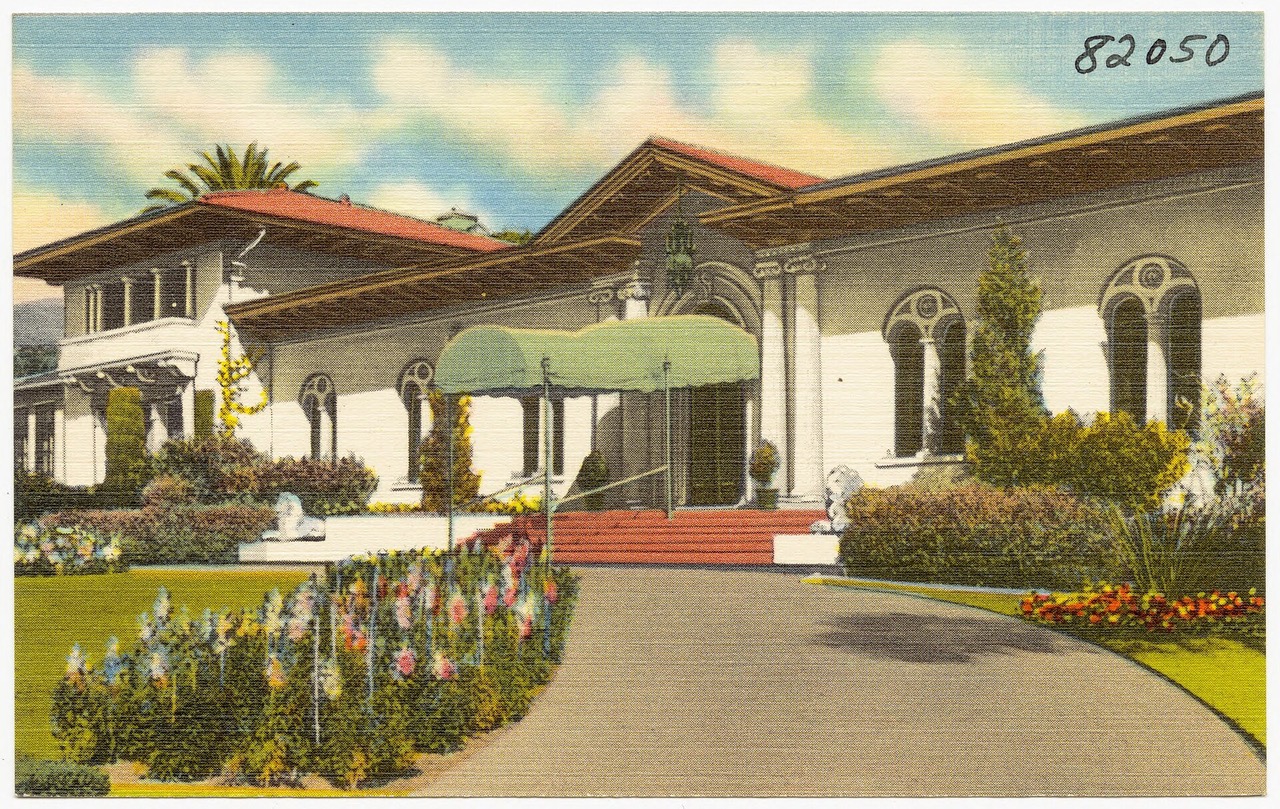
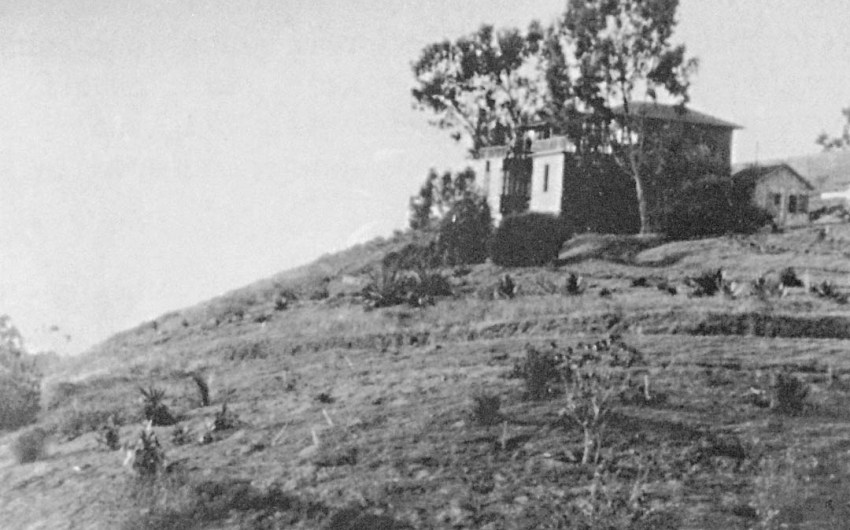
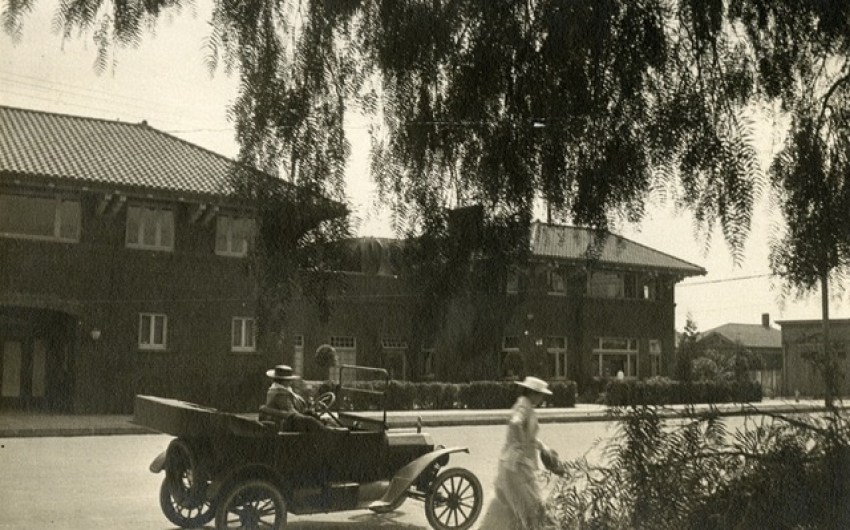
In 1904, Mary Miles Herter, the wealthy widow of New York City interior designer Christian Herter, purchased the entire block and commissioned an extravagant mansion built, and beautiful gardens planted on the spot. At her passing in 1913, her son, Albert, and daughter-in-law, Adele, both artists, repurposed the mansion to serve as the lobby and headquarters for a luxury hotel, named “El Mirasol” (The Sunflower) with several guest bungalows built on the property. Among the prominent guests who vacationed at the resort were Rockefellers, Vanderbilts, and the Guggenheims.
After the Depression and over the decades, the hotel was bought and sold by a number of hoteliers, and the luxurious accommodations lost their luster. The final owner, Jacob Seldowitz, fell on hard times, and when two electrical fires in one week in 1966 devastated the ancient wiring, the old hotel was no longer viable. Seldowitz and his wife came up with other plans: They made a pitch to the city and proposed three different large potential projects.
They hoped the city would approve the needed variances so they could build one of them: a high-rise apartment complex, a 2,500-seat conference center, or a luxury hotel with five 11-story towers. When all their proposals were denied, the Seldowitzes put the property up for sale — warning that a potential buyer, a Los Angeles developer, would build what they termed a “three-story ghetto” near downtown. The couple held a sale of hotel items at the end of 1967, and moved on after they managed to sell the property as well.
Business Leaders vs. the Grassroots Movement
Enter the Santa Barbara business community and the formation of the El Mirasol Investment Company. In 1968, the group announced it had purchased the El Mirasol property with the intention of building a luxury high-rise condominium project.
Led by publisher Thomas M. Storke, banker Louis Lancaster, and developers Jerry Beaver and William Alexander, the group of investors — which also included prominent doctors, dentists, and attorneys — described themselves as “29 longtime local citizens who represent more than 1,000 years of residence in Santa Barbara.” They added, “They are vitally concerned with the future of Santa Barbara and have made many important contributions in terms of civic duty and service to our fellow citizens.”
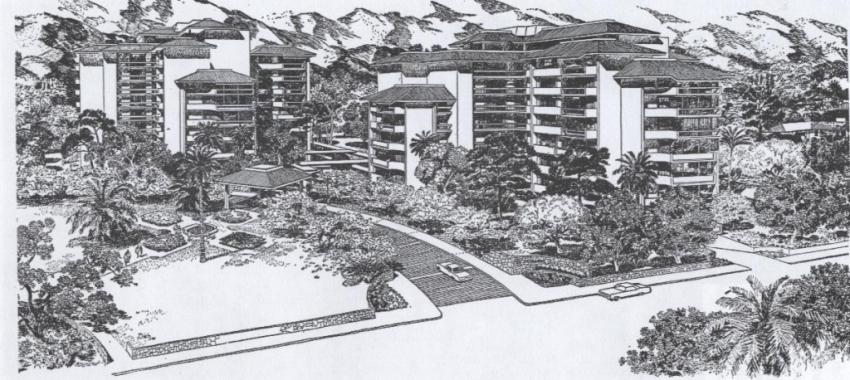
The list of respected and influential community members was used in their advertisements to gain favor for their project: two nine-story, 107-foot condominium towers housing 162 luxury units with a penthouse on top of each tower. The 360-degree view penthouses were reserved for two of the wealthiest and most influential investors, Storke and Lancaster.
But the zoning for the property only allowed three stories at 45 feet. For the project to be built, the proponents would have to obtain a height variance from the city. As prominent members of the community, they expected to receive it.
A News-Press editorial (undoubtedly influenced by publisher/investor/potential penthouse resident Storke) appeared the day before the hearing. Its final two paragraphs:
The News-Press traditionally avoids taking editorial stands in zoning or variance controversies, but the El Mirasol issue is important enough to deserve comment. We feel that in this case the City Planning Commission should concern itself with imaginative planning as well as zoning, and ask itself these questions:
Would El Mirasol project constitute a good use for the land, would it be compatible with the surrounding neighborhood, and would it be good for Santa Barbara? We believe that it would.

When the investors presented their case to the Planning Commission on February, 20, 1969, the community packed City Hall and many turned out to speak out about it — nine in favor and 13 opposed it in the three-hour meeting.
Pearl Chase, who was the last community member to speak, commented on the architect’s drawings of the proposed project: “It is not a view that any one of us would see except from an airplane.” Smiling, she added, “I believe it is one of the tricks of the trade.”
When the variance was denied by the Planning Commission on a vote of 4-3, the investment group appealed to City Council.
Inevitable Progress or the City at Stake?
The opposition was strong and swift as word spread about the potential high-rise development in the neighborhood that had been built around the historic hotel with its graceful gardens and relatively modest-sized bungalows scattered on the property.
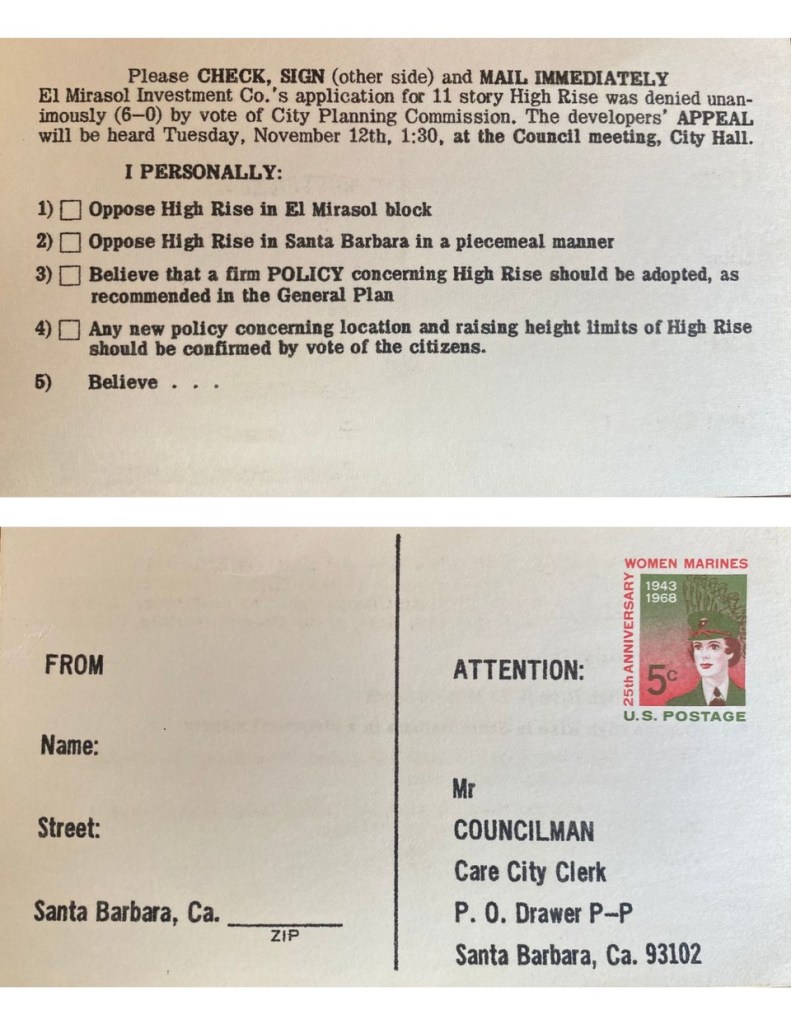
They ran a low-cost campaign of small classified ads and wrote numerous letters to the editor. They distributed postcards and went door to door with a petition stating their opposition to the high-rise — contending that granting a variance to the General Plan on a case-by-case basis was not a sound community planning.
The investment company ran full page ads in the News-Press and created its own television program to push the project and gain momentum. The ads referred to the opposition as “an extremely small but highly vocal minority” and ridiculed their protests, stating its purpose was “dedicated to obstructing this proposal and shortsightedly handicapping the entire community.”
Investors also asserted that the city’s tax base and downtown economy would be enhanced by the wealthy occupants of the luxury development and that the nine-story buildings were actually highly desirable high-rises whose time had come. Those who opposed it were accused of stopping inevitable progress, and warned, “The alternative is to develop 200 cheap, mass-produced small apartments with only profit in mind.”
The crowd at the meeting at City Hall on March 25 was described by reporter Barney Brantingham: “The 4.5-hour drama was played before a standing-room-only audience that at times stood three deep at the rear of the council chamber, along the side aisles and out into the hall and anteroom.”
On March 25, City Council heard the appeal, and they overruled the Planning Commission and approved the variance on a vote of 4-2 (with one council member who disqualified himself from voting because he had inadvertently publicly opposed the project).
Context and Assertions
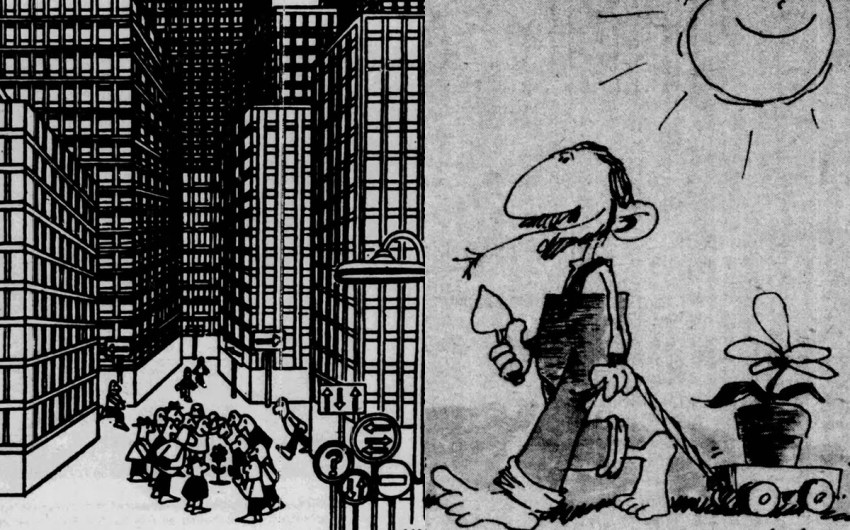
In response to the approval of the project, community members joined together in a grassroots group, “Save Our City” (SOC) and immediately filed suit to appeal the Council’s decision. They were convinced that if one high-rise were built in that location, nothing would keep additional variances from being granted, and the city would be changed forever.
Today’s reader should be reminded that this occurred right after the horrific oil spill of in January and community members were already feeling under assault, protective of Santa Barbara — and skeptical of the assurances of members of the establishment. Many members of the newly formed grassroots group had also joined “Get Oil Out “(GOO) as a response to the environmental disaster. They idea of this high-rise development was seen as just another indicator of the ruination of the city and its long-held ideals. As SOC and GOO member Bud Bottoms stated, “Like oil platforms, it won’t stop with one.” He added that the city would become an extension of Los Angeles, “victims of visual pollution.”
Members of SOC countered by asserting that property rights of the ordinary citizen were no longer protected by zoning, that City Council had “created special privilege for the El Mirasol syndicate,” and posed the question: “Why should 29 people be given special privilege over 69,498 other citizens?” Without deep pockets to fund their effort, they appealed to the community to donate whatever they could; they hoped to raise $10,000 to hire a lawyer; they raised $30,000.
Judge Harold Underwood from Trinity County — located in northwestern California, with its county seat in Weaverville — was assigned to hear the case to prevent any appearance of conflict of interest. He presided over the hearing on May 8, 1969.
Arguments at the Hearing
John Sink, the lawyer representing Save Our City, argued the developers did not comply with the General Plan requirements and that City Council acted illegally when it overruled the Planning Commission.
Willard McEwen, the lawyer representing El Mirasol Investment Company, argued the developers were not the typical syndicate and “If the public support were not there, the project would have been dropped.”
Stanley T. Tomlinson, Santa Barbara City Attorney, argued the project qualified for the “unusual circumstances doctrine,” and asserted that the “attitude of the opponents was unrealistic.”
The Judge’s Ruling
On July 9, 1969, Judge Underwood ruled in favor of Save Our City and against the El Mirasol Investment Company and the City of Santa Barbara. He found:
“The variance granted does complete violence to the Comprehensive General Plan.”
“Reliance on profit motive, attractive architectural features and benefit to the community lack legal relevance.”
“Since City Council failed to make the required findings its act of granting the variance application is now invalid.”
The project was denied.
Coming next month, Part Two: The Aftermath.
Cheri Rae is a longtime neighborhood advocate and the author of A String of Pearls: Pearl Chase of Santa Barbara. She is a board member of the Pearl Chase Society, and the longtime editor of the society’s newsletter, “The Capital,” where this article first appeared. Email Cheri at pcs@pearchasesociety.org or visit pearlchasesociety.org.




You must be logged in to post a comment.