
Written Off:
Men in Santa Barbara County Jail
Learn to Tell Their Own Stories
Indy Reporter’s Journey Leading a Writing Group
Inside a Men’s Unit at the County Jail
By Ryan P. Cruz | August 20, 2026
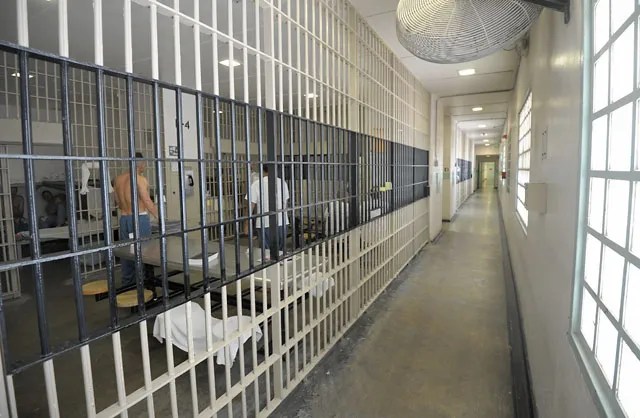
Writing for a living has allowed me a certain level of freedom and gotten me to places I’d never imagined I’d find myself, from flying down a mountain on a zip line to paddling in the Pacific in a Chumash tomol. But last year it brought me back to the one place I’d vowed never to return to: the Santa Barbara County Jail.
It happened one morning over breakfast, when Alice Perez, Santa Barbara Sheriff’s Office program manager, asked me to lead a creative writing group inside a men’s unit at the Main Jail. I asked myself, did she really think that I could stand in front of these guys? Would they even want to be in a class about writing? I already knew what it was like inside.
In my mid-twenties, I was a college dropout working as a dishwasher before I moved my way up to work as a line cook. I fell in love with cooking, but I also fell into the late-night lifestyle that comes with a high-pressure kitchen. Before long, heavy drinking turned into light drug use and then full-on addiction. I was spiraling, had lost my driver’s license flipping my car while intoxicated, and found myself in and out of Santa Barbara County Jail about a half-dozen times.
During the final stretch, I ended up in the barracks known as the Honor Farm (an aging section of the South County jail that has since been closed), where I spent weeks reading and scribbling on scraps of paper I scrounged together. Out of boredom, I sat in on a spiritual study group that happened to be led by Alice’s husband, Eddie Perez — whom everybody called Pastor Eddie.

Eddie told us all about his life, his traumatic youth, his 38 years behind bars, and his path to rebuilding his life. He told us how, long before he became Pastor Eddie, he had received a life sentence, where he spent most of his time in solitary confinement in California state prisons. Somehow, he made a miraculous shift inside himself, founding a men’s group for fellow inmates he called Criminal Gangs Anonymous (CGA).
By 2014, Eddie was released and enrolled in a program for formerly incarcerated students at Santa Barbara City College. There he met Alice, a dean at the school who would eventually become the love of his life. He said that following his intuition placed him exactly where he needed to be.
Those words flipped a switch inside me, and as soon as I got out, I joined the same program, spending the summer studying at SBCC with a GPS monitor strapped to my ankle.
I listened to Pastor Eddie and followed my intuition, believing in a wild idea that I could maybe make a living as a writer. I signed up for the school newspaper, and with the encouragement of advisor Josh Molina, I became the paper’s editor within a year. I began freelancing around town and, somehow, caught the attention of Independent Executive Editor Nick Welsh, who offered me the opportunity to join the staff full-time in 2021.
I kept in touch with Alice and Eddie, who were now working at the jail, introducing a more human-centered approach to the Sheriff’s Office programs. They added and expanded art classes, counseling sessions, and an updated version of Eddie’s personal development courses.
I began helping them stuff Christmas goodie bags for the more than 800 people spending the holidays in county jails. I wrote about jailhouse graduation ceremonies and interviewed them both when they were selected as Independent Local Heroes in 2024.
So, when Alice suggested the writing group over breakfast that morning, I moved past the self-doubt and agreed to start in spring 2025.
Breaking Through
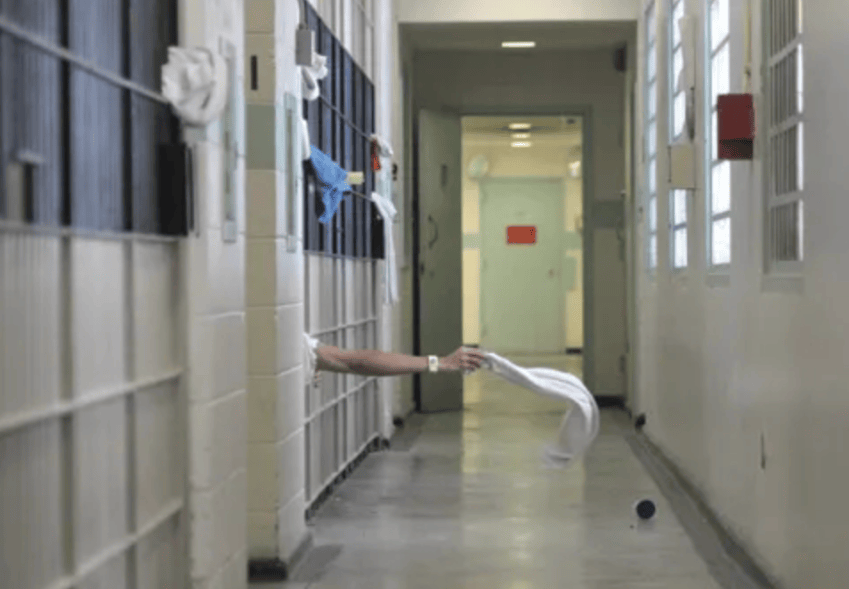
The first day of our writing group, I was nervous as I walked back into the labyrinthine halls of Santa Barbara County’s Main Jail, the custody deputy’s keys jangling as they opened each door. I flinched as the barred cell door clanged behind me; it was a sound I never thought I’d have to hear again.
The tank, where the men spend most of their days, was bustling with activity; some guys were working out, watching TV, or snacking on packs of noodles. It felt as if every eye were on me. I asked the men to gather around in the middle of the day room. I explained that I would be leading a creative writing group once a week for anybody who wanted to join. I began opening my bag, pulling out a stack of composition notebooks and a supply of fresh, tiny golf pencils (the only writing utensil allowed in the jail and not the best for lengthy writing). The skeptical looks started to fade.
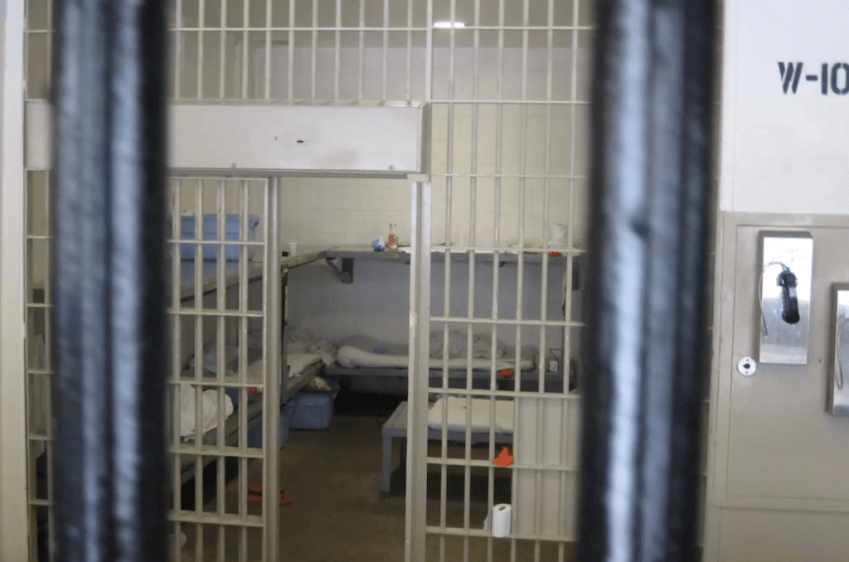
I told them my story, how I was right where they were just a few years ago. I told them that writing was an outlet that helped me take control of my own narrative. I told them that by following my dream to write, I can now Google my name and instead of my criminal record popping up, I get to see hundreds of bylines. I told them that I would be there to help them find their own writing voice, whether it was their dream to write or not. I told them that they were the only experts in their lives.
I told them about one of my favorite writers, Hanif Abdurraqib, who wrote in his essay collection They Can’t Kill Us Until They Kill Us: “The truth is, if we don’t write our own stories, there is someone else waiting to do it for us. And those people, waiting with their pens, often don’t look like we do and don’t have our best interests in mind.”
I read a Charles Bukowski poem, “The History of One Tough Motherfucker,” about a cross-eyed, tailless, run-over cat the poet takes in and cares for despite being told the cat is damaged and unlikely to survive. When the poem finished, one of the men remarked, “Damn, I didn’t know you could write poems like that.”
It turned out these men were eager to let their stories out. They had lived hard lives, with emotional scars that had never been healed. Instead, they’ve built up walls, calloused themselves, and played the characters everybody thought them to be. But behind their walls was a wealth of lived experience waiting to be shared with the world.
Alice said that people who have experienced the worst traumas are, in a way, closer to reality than those who have a smooth path through life.
“We spend so much time trying to shield ourselves from something, and these guys weren’t able to shield themselves from it.”
Getting to Work
At first, it was a mixed bag. Some immediately seemed engaged, while others sat listening and leafing through the books quietly. But, after a few weeks of class, the men really started to open up. Even the guys who had been quiet began to participate in discussions and complete our weekly free writes.
I structured the 90-minute class in blocks, starting with a free-writing period where I gave them short topics to write about — telling them it would warm up their minds. They wrote about their favorite movies, current events, or what was holding them back from achieving their goals. This took up the first 15 minutes.
Next, we read short stories, poems, plays, movie scripts, essays, and excerpts from books. I brought examples of fables, creation myths, and classic literature. I tried to find them voices from low and high, everything from Robert Frost to Mark Twain to an unexpectedly beautiful piece about the Carpathia — the ship that rescued the survivors of the Titanic — written by an internet author known only by their username “mylordshesacactus.”
They connected with Bukowski’s raw and vulgar poetry and were fascinated by the serene and rugged world of Henry David Thoreau’s Walden. Around Halloween, we read ghost stories, and the week before Christmas, we read Charles Dickens’s A Christmas Carol (another ghost story). Every piece sparked questions on the technical aspects of writing, about symbolism behind the words, and the things the writers were hinting at between the lines. They loved Ernest Hemingway’s sparse, powerful prose in “A Clean, Well-Lighted Place” and were inspired by the fiery fury of Hunter S. Thompson’s Gonzo reporting on the big bad biker gang, Hell’s Angels.
I asked them to dig deeper, whether we were reading scenes from the film scripts of Training Day and Godfather — examples of how to create memorable characters — or lyrics from rap songs, written by street poets such as Tupac Shakur, Nas, and Kendrick Lamar. I passed along my belief that these writers could spin a phrase just as powerful and substantive as Walt Whitman, James Joyce, or any other author who was able to tap into the pulse of their generation.
I found it apt that this year, a working-class Chinese delivery driver and poet Wang Jibing was awarded China’s prestigious Lu Xun Literature Prize. It was affirmation that wisdom and the ability to connect with people through words isn’t exclusive to highbrow academic settings. Jibing, who grew up poor in rural China and works full time as a driver, scribbled 5,000 poems in between food deliveries. His award-winning collection Low Flights describes the suffering and quiet happiness of ordinary working folk.
“Who prescribes that with wings spread one must fly high? Low flight is also a flight,” Jibing writes in the title poem of his collection.
It was eye-opening to see how the men in the group responded to the pieces. They were quick to pick up on subtle cues in the writing and were able to relate what they were reading to their own lives. After our discussions, they were always eager to get working on their own writing projects, experimenting with the techniques they just learned and letting their words break loose.
These were some of my favorite moments, during the second half of our weekly sessions, watching the guys with their heads down, hands flying across the pages of their notebooks. Some would hunch in their bunks with their notebooks propped up against their legs. One of the youngest guys in the class stuck headphones in his ears every time he wrote, listening to instrumental music on a tablet to “get the words flowing,” he later told me.
I brought them magazines and literary journals to read during this quiet time. I told them our goal was to put together a magazine of our own, featuring the pieces they felt ready to share. Each week, while the group worked, I would sit at one table and meet with the men one-on-one to work on their personal writing project.
Many of them have been through hardships and traumas that few people see with their own eyes — the extremes of life. There’s immense pain, shame, and guilt about their lives, and heavy feelings about the world around them. I watched as they grew more comfortable with writing and gently nudged them to keep getting to the bottom of what they were feeling.
It’s all part of the process, Alice had told me, that allows men who have dealt with extreme trauma — death, abandonment, and abuse — to accept themselves and find a way to be whole again.
“That’s the thing about creative expression: You kind of have to write your way into and through a deeper understanding of what’s happening,” Alice said. “Your feelings are not even known to you; everything’s sort of inchoate in a jumble inside us until you then realize, ‘Oh, that’s how I feel.’ You write your way into seeing what you’re dealing with.”
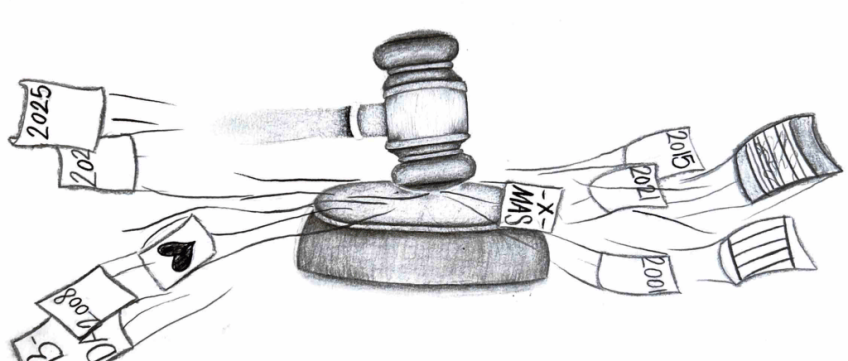
The work they began to turn in shattered my expectations. There were poems about how it felt to be on the other side of the gavel, in a justice system that “throws years” at young Latino men who are rarely given the second chances that more wealthy defendants receive: “They wanna throw the book at us / Without a single look at us / What if we shook it up / And we all changed positions?”

Another young man, a 25-year-old from Santa Maria, wrote an essay about what a perfect day outside jail would look like versus his day-to-day reality for the past several months locked up. In the first part, he describes a simple morning with his wife and son, with a nice breakfast and a kiss goodbye before taking his son to school and heading off to a construction job. The slow-paced day is filled with small moments that fill him with gratitude, where a movie on the couch is the cherry on top of an all-too-perfect day.
“Some would call this boring but I call it rich — rich because I have my freedom, and I’m able to spend it with my loved ones,” he writes.
In the second half, this dream of a simple life is replaced by his cold reality in county jail. A cell door slams and startles him awake at 4:45 a.m., and he spends the morning trying to make the best of his highly regimented schedule. The day is filled with counts, chores, and a strict program that people in the unit follow like clockwork. The details make the piece, and he shows an early talent for using description to evoke emotion.
“I’ve learned that, depending on the way you write something, you can make the reader believe, think, maybe even feel what you’re trying to explain in words,” he told me in a one-on-one interview during one of the final weeks of our group. “In writing stories or poems, the details are what matter because they help readers to envision what they’re reading.”
Many of the pieces they wrote explored the pressures of street life, of growing up in environments where violence and betrayal are normalized. They often wrote of feeling stuck, being misunderstood, and struggling with post-traumatic stress. Their writings were filled with anti-heroes and characters who have an underlying faith despite the odds stacked against them.
It was great to read the work written by a bright-eyed 20-year-old with a tattoo on his left cheek, who approached me after our first group session with a tattered notebook in his hand. He told me it was his sci-fi novel that he had been working on for the past year. He had been incarcerated since he was 15 and said he fell in love with reading fantasy and sci-fi series as a way to escape.
He let me take his notebook home to read, and I was blown away at the world he created. His story was full of class warfare, family rivalry, intergalactic diplomacy, and a hero plagued by traumatic visions. I typed up a copy with a few notes and brought it back, and over the next few months, he rewrote scenes, scrapped entire sections, and filled up another two notebooks with additional chapters.
Making Connections
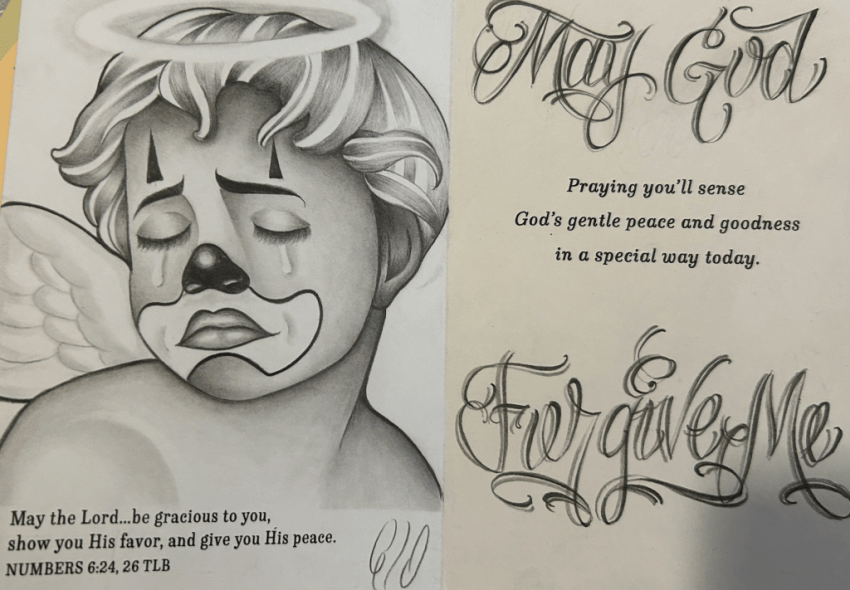
As the weeks went by, more of the guys started to finish their pieces. A few of the men stepped up as co-editors of the magazine, helping me arrange stories and recruiting some of the artists in the unit to come up with some illustrations to go along with some of their writing. It was inspiring to watch the guys work together and to get to know each of them over the months I spent visiting their unit.
There was a deep sense of camaraderie during these sessions, and I enjoyed learning about their lives and sharing about mine. These men are some of the toughest I’ve ever been around, but they’re also some of the most caring. They would light up when I returned each week and ask about my job, the news, and what I’d been working on. When I bought a ring to propose to my now-fiancée, the guys in the group were among the few people I told.
I often thanked the men in the group for being willing to talk about things such as writing and art. Being vulnerable takes a lot of courage in these settings, where being perceived as weak can make you a target for others. I was grateful they bought into the program and were willing to work, even on days when it wasn’t easy. There were times our group was interrupted or cut short by jail staff for security reasons; there were days when half the group was missing due to court or attorney visits. Other times, men were dealing with bad news or family troubles that kept their minds elsewhere.
It can be tough living with these big things over you. Some of these men have caused great harm or are on trial for serious crimes. They often don’t get the chance to speak for themselves. But these programs, and caring folks such as Alice and Pastor Eddie, offer a chance for these men to process their traumas and mistakes and find worth in themselves.
When I told people I was working with a group of men in the jail, I was occasionally met with some pushback from those who feel that somebody charged with a crime doesn’t deserve a creative outlet or entertainment. I was actually shocked when one man said to me, “They’re criminals. Why even give them the time of day?”
I posed that question to the group, and one man wrote his response in a letter he shared with me before he was released: “Many people might believe that men in our situation don’t deserve these types of liberating experiences, but I disagree. I deeply feel like each and every person in here has knowledge and insight that they need to share with the entire world.”

After nearly a year’s worth of group sessions, our time together came to an end. As is the nature with county jails, most men are fighting court cases, trying to earn release, or awaiting transfer to serve lengthier sentences upstate. Many of the men who were part of the group are now scattered across different facilities, moved up north to Santa Maria or into another unit in the Main Jail. I still receive calls from some of the guys, and we work on editing pieces over the phone.
Several of the men wrote letters to reflect on their time in the group. One man, who spent the first several weeks sitting in class without saying a word, wrote about how he came out of his shell through poetry.
“I learned that deep inside myself there is a talent to where writing came natural to me,” he wrote. “After everything I’ve been through, instead of taking anger out on others, now I just pour all my emotions onto paper and let my writing speak for itself.”
Another, whose writing is included in this issue, wrote that the group helped to “free his mind” and find a new way to express himself.
“Even if I’m locked in a cage, this class helped me find strength in my creativity while reflecting on my weaknesses and shortcomings,” he said. “It gave me hope even when I felt hopeless, and peace even when living in what feels like a war zone. I’d like to share my gratitude with the entire class for encouraging me to keep going, especially during all the times I felt like calling it quits…. The time with us will be cherished by myself and others for a long time. We need more teachers in life, and not just in academic settings.”
I’m working with Alice to complete the magazine with the work completed by our group. The booklet will include drawings, poems, stories, and interviews with the writers themselves. It’s become a passion project, and I reread their work with a great sense of pride. We are planning to expand more groups in the future, with the support of Alice, Eddie, and the Sheriff’s Office.
Who Am I?
I’ve been trapped for longer than I care to remember. Confined by the darkness of what can only be described as a tomb. I’ve yet to experience the sunshine nor have I ever seen the moon and stars. Shit, I couldn’t even tell you what the sky looks like anymore…. Those that I have met, they don’t care to see my smiling face or merely acknowledge that one is there. I’m just another number on a list.
When the gloved hands found me, they did not greet me with salutations as we met; neither did they bid me farewell as they handed me off to become someone else’s personal property. We just parted ways as if I was never there to begin with. Where will this journey take me? Who am I? Do you know?
Though many of us share a similar origin story, we all don’t go out the same way. A few of us come in different colors and vary in pigments, which makes it easy for most people to tell why we don’t share the same taste in life. It isn’t long, though, before we all end up in the “Belly of the Beast.” From the box to the bag, that’s how it goes for a lot of us. While being tossed around with little to no care, I watch those around me slowly disappear — one by one, day by day — until I’m the last one left.
It’s not often, but there are those like me that may be able to make it in here longer than a week. But tell me, what’s the point of existing, if one is not fulfilling one’s purpose for existing?

I can’t breathe in here. Let’s just get this over with before I lose my noodle and expire. I’d blow my own top back if I had the means to. At last the day is here. The hands that placed me in here have decided it’s finally my time to go … but not before they slam me down hard on the floor. Is this a test? Are they trying to break me? I quickly learn the answer as I’m picked up and bashed again — two, three, four more times, and then a fifth. One more time for good measure. Assurance to my handlers that I am completely broken apart and I will never reform to who I once was. Their moves calculated; their intentions clear.
They try not to puncture my skin and have my insides burst all over the crowd. But let’s not be foolish — this isn’t for my safety. This is to avoid having to clean up another mess. I’m the least of their concern now. I’m shattered and I will never be complete or whole again. These wounds are permanent. At least now I get to take a warm bath. Maybe that will help me regain some of my dignity.
“Be ready in three minutes” — I am clearly instructed. Though this is my final day, I am eager to see it end. I can feel their eyes impatiently staring, waiting for me to finish so they can sink their teeth into me. Before the water in the sink is even drained, they flip me upside down and toss me head first into the fish bowl of judgement. But I know my fate oh too well. The end is near — I’m cooked.
I see the executioner walk toward me with his utensil of death. This is it. He strikes down hard and fast and with a few quick flicks of his wrist I am no longer recognizable. I’m but a sliver of what I once was.
I remember back when I was first fresh out. I had dreams of feeding hungry children somewhere in the world — kids who couldn’t afford a decent meal — and saving them from starvation. I fantasized about maybe going to a fun party or even a potluck. I spent nights hoping and praying I would make it home to my beautiful bright accountant, helping her save money to pay her tuition through business school. Knowing we would treat each other well and she would appreciate me the most on those cold lonely nights where I would be there to keep her warm.
But that’s not my life. I didn’t get to live out those dreams. Instead, I spent my final moments suffering inside a dark dirty cell. My final trip was to jail, but this is not where my story ends. For it is here I will forever be remembered. My legacy will outlast all the others who may have come before me, and they will know my name long after I am gone — say it with me now: Maruchan!
(The Life and Death of a Top Ramen Noodle)
Written while incarcerated inside Santa Barbara County Jail, 2025





You must be logged in to post a comment.