

The top part of Valerio Street, on its eastern end where it meets Grand Avenue, was one of the steepest streets of Santa Barbara in the early 1900s. Technology has allowed us to pave and drive on much steeper streets now, but in 1914, the city wasn’t quite sure how to transform this dirt street into asphalt. Some folks recommended that the top of the street, called Valerio Hill, should have “brick in the center of the street…. The brick [10 feet wide] was planned because of the steep grade, and as it would enable horses to pull heavier loads without liability of falling in rainy weather” (Santa Barbara Daily News, September 9, 1914). Eventually, the road was paved with asphalt.
Setting a Record
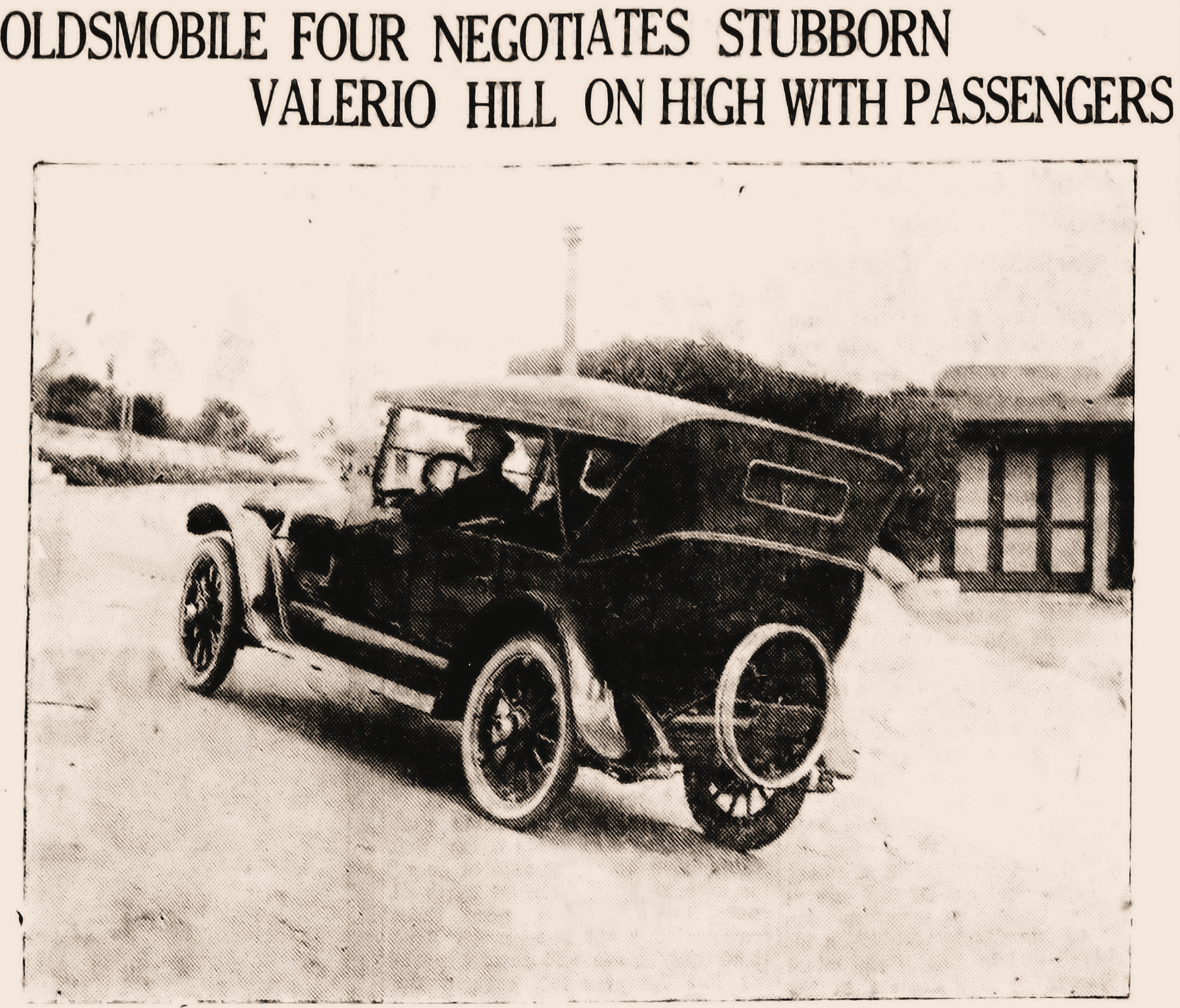
It was a tough climb for horses, and the steep portion of the street was also used as a test for early automobiles. In 1921, the local paper published a photo of Valerio Street being used to demonstrate the power of a new car. “Climbing the steep Valerio Street hill on high is some job. But a stock Oldsmobile Four did this trick a few weeks ago … it is the second time any automobile has accomplished such a feat” (Santa Barbara Morning Press, May 15, 1921).
Climbing the hill was a challenge, but traveling downhill attracted another group of drivers who may have used the street name (named after a Chumash outlaw) as inspiration.
“Too Much Speed. The Valerio Street hill, which seems to be the place most motorists select to test the speed of their cars, proved the downfall of E. Croft yesterday. Speed Officer Tatreau nabbed Croft as he was making 28 miles an hour down the hill” (Santa Barbara Morning Press, June 25, 1918).
A year later, another speed demon was charged with traveling 34 miles an hour down Valerio Hill. (Back in the 19-teens, the speed limit in Santa Barbara was 15 miles per hour.)
First Soapbox Derby
Fast-forward 20 years, and speeding was judged a good thing when Santa Barbara’s first soapbox derby took place on Memorial Day in 1939. “Hammer and nails are due for overwork during the next few weeks as youngsters between the ages of 10 and 15 years begin work on their ‘racing jobs’…. The track has been set up from the top of West Valerio Street hill [State Street].
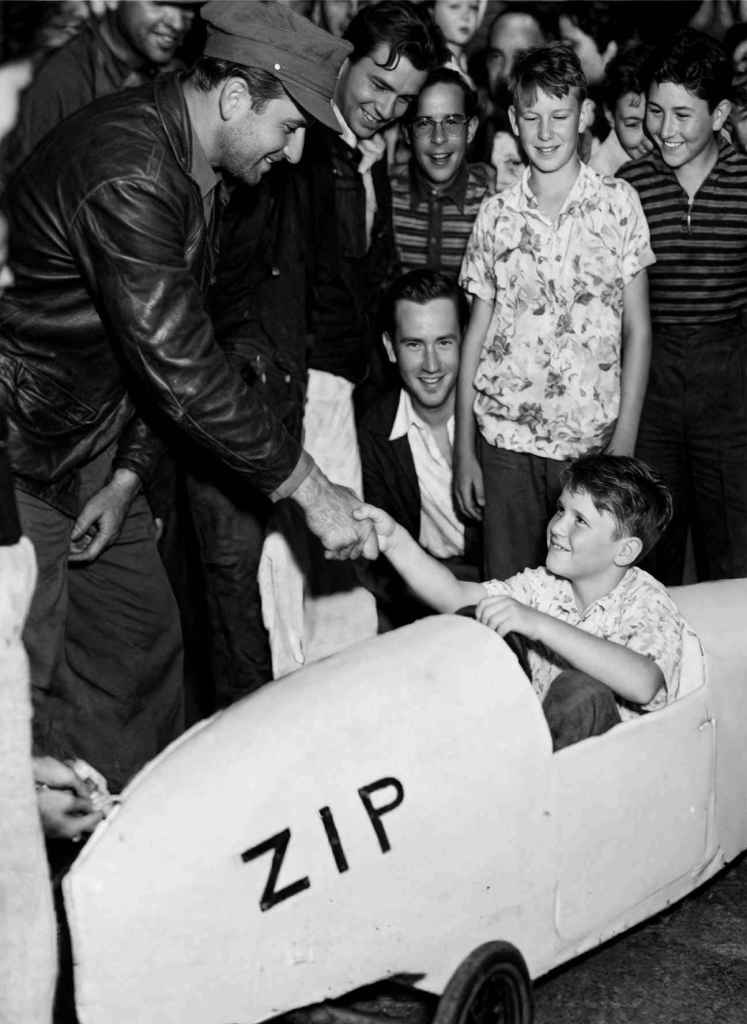
“Rules for the derby are that the materials for construction should not cost more than $5 and must be constructed by the boy or girl entering…. Specifications for construction include a wheelbase of not less than 3 feet 8 inches, width between front wheels, not less than 2 feet ½ inches, the weight of entire car and driver must not exceed 175 pounds, steering mechanism must be in good condition and some type of brake must be included in the equipment…. The Police Department has promised cooperation” (Santa Barbara News-Press, May 7, 1939).
Things got more serious as the weeks went by. “Construction costs have been raised to $10 and the weight of racers to 250 pounds. Wheels are limited to 12 inches. The new specifications were deemed necessary to ensure more safety for the driver” (Santa Barbara News-Press, May 19, 1939).
“More than 15 young boys, with their home-built replicas of the Indianapolis racers, are expected to enter the race. The course is one-half mile long and some of the contestants have already tested the ‘track,’ being clocked at 30 miles an hour” (Santa Barbara News-Press, May 30, 1939).
And the Winner Is …
“A freckle-faced little fellow named Lawrence Wathey … was declared winner in Santa Barbara’s first Soap Box Derby … several hundred persons watched the event. Eleven-year-old Lawrence won over stiff competition and negotiated the West Valerio Street course at a speed of 36 miles an hour” (Santa Barbara News-Press, May 31, 1939).
(Please note: Your trusty Street Stories columnist does not recommend speeding on Valerio Street in any vehicle — commercial or homemade!)
Any ideas for future Santa Barbara streets for this column? Anyone have any interesting Santa Barbara street stories to share? Contact Betsy through her website: betsyjgreen.com.



You must be logged in to post a comment.