

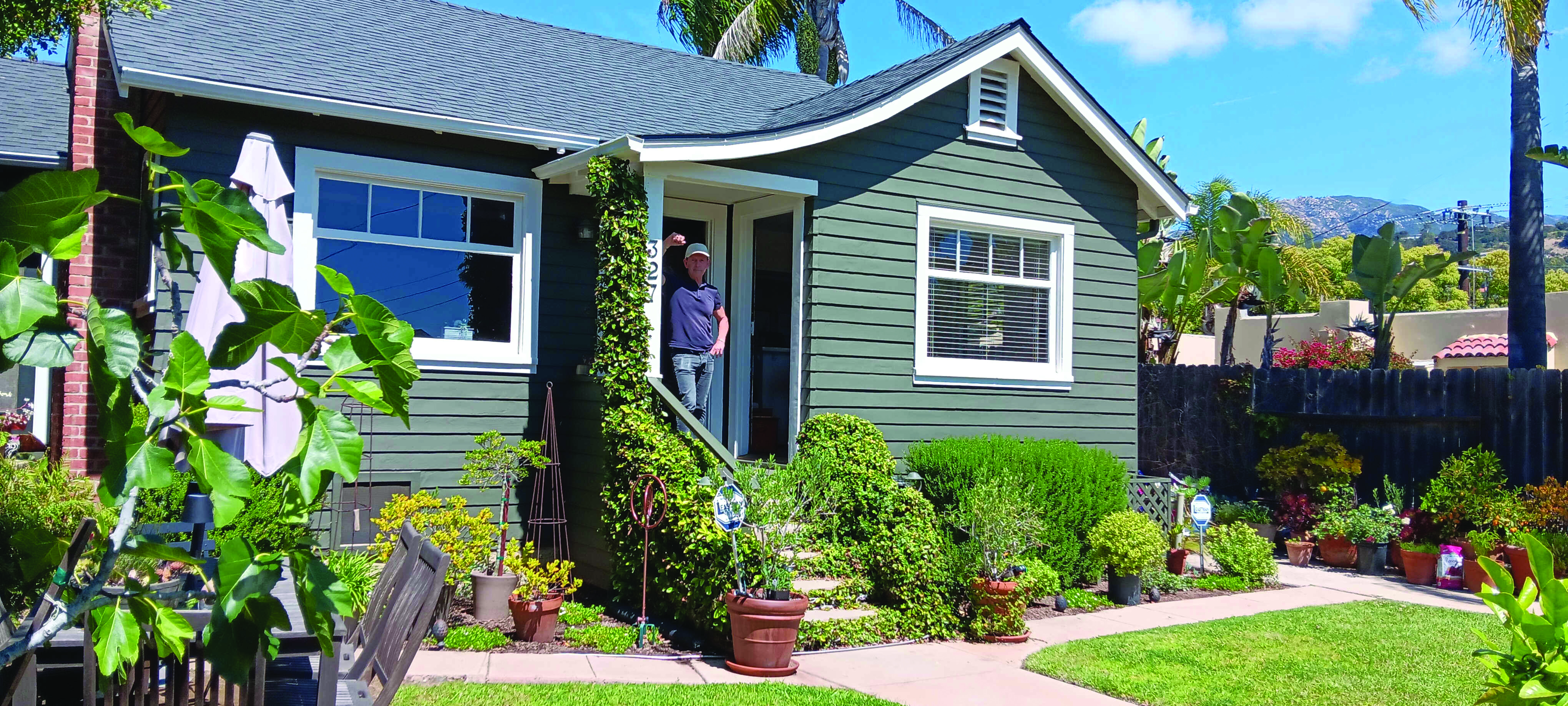
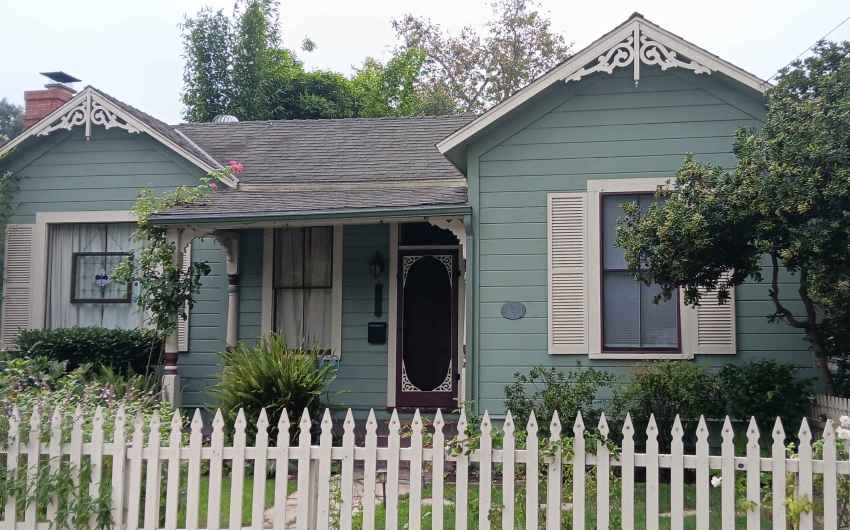
Nestled among the hedges on one of the smallest streets in Santa Barbara, it’s not surprising that this cozy home appealed to an artist from a small town in England. More about him in a minute.
Most residential streets in the central area of our fair city are 60 feet wide. Only a handful are smaller. Loma Vista Avenue, for example, is a mere 30 feet wide. “Loma Vista” in Spanish means “mountain view,” and the home does have a view of the foothills. This street and nearby Carmelita Avenue are actual streets, not alleys. These streets were drawn inside a block and were created when Santa Barbara was smaller and less formal than now — these two tiny routes appear (see block 87) on an 1884 map of our city.
An early landowner on this block was Charles A. Storke, a prominent attorney and one-time mayor of Santa Barbara. These streets seem to have remained informal passageways until 1916 when a group of local property owners, including Storke, petitioned to have the streets given names.
Paved Streets
Storke was no longer living on this block in 1926 when the two narrow streets were finally paved. No doubt, a paved street is what drew dressmaker Gertie P. Wynes to this area, and in 1927, she had the house and garage built for $3,800. Gertie rented part of the home to various people over the years, including Norman Gudgeon and his wife, Jean MacTavish. Norman was from a small town in England and Jean was from Scotland. The quiet street may have reminded them of their home countries. Eventually, the Gudgeons bought the home and lived here for the rest of their lives. Norman passed away in 1974.
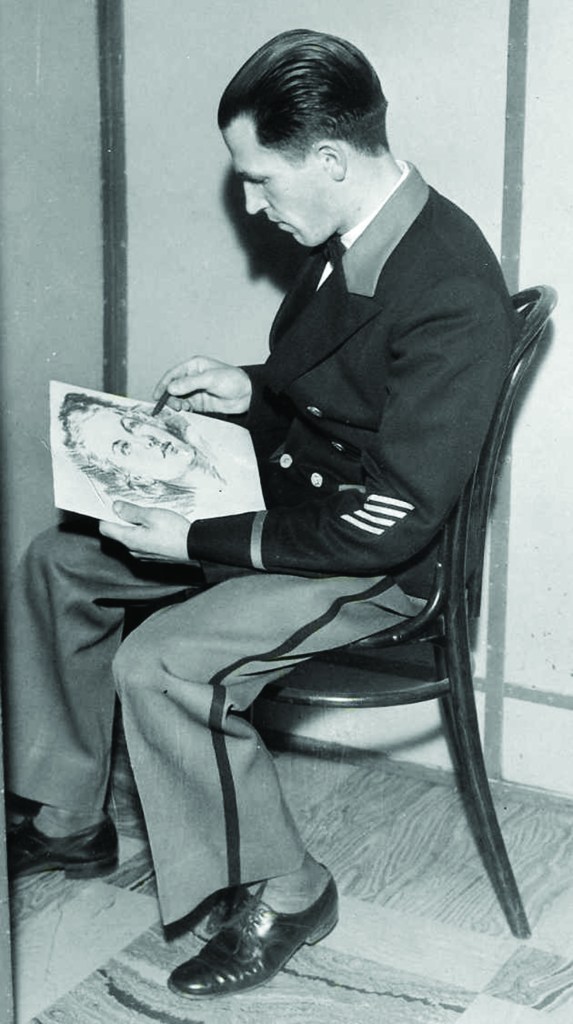
Norman Gudgeon worked in several different occupations. During the Depression, he worked as a bellhop at night so that he could paint during the day, and later, he owned a furniture shop. But his heart was clearly in his art. I located a photo of him sketching while he was wearing his bellhop uniform, and I found a newspaper article from 1972 that talked about his art exhibit at a local bank in which he was described as a “well-known artist.”
Distinctive Roof
The home is accented with a distinctive curved roof in front, slightly reminiscent of English Tudor style. This may have been what attracted the Gudgeons to this home. Although some people have suggested to the present homeowners that this is a Sears catalog house, this is not correct. Sears Roebuck catalog homes were not built on the West Coast. However, there was a catalog house company in Los Angeles called Pacific Ready-Cut Homes, and some homes from that company were built in Santa Barbara in the 1920s. I looked at some catalogs from that company, but did not see any that had this model.
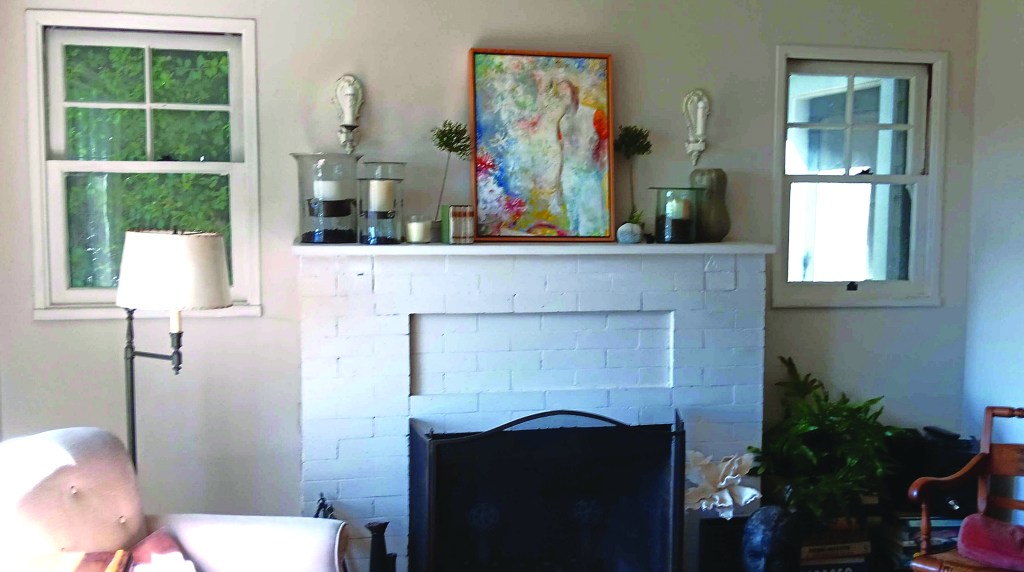
Another possibility is that this home was built from plans sold by a local lumber company. This can be one reason why identical homes appear here. In fact, when I was researching this home, a home in Montecito came up for sale that is nearly identical to this home, so they may have been built from the same set of plans.
Homeowners Sharon Krautkremer and Ron Hillas say they enjoy the quiet neighborhood and being close to downtown.
(Please do not disturb the residents of these homes.)
DIY House History
Want to research your home’s history yourself? Betsy J. Green will share her sources and other tips and tricks on May 28 at the Architecture Foundation of Santa Barbara. Register at afsb.org/news-events.
Betsy J. Green is a Santa Barbara historian, and author of Discovering the History of Your House and Your Neighborhood, Santa Monica Press, 2002. Her website is betsyjgreen.com.







You must be logged in to post a comment.