

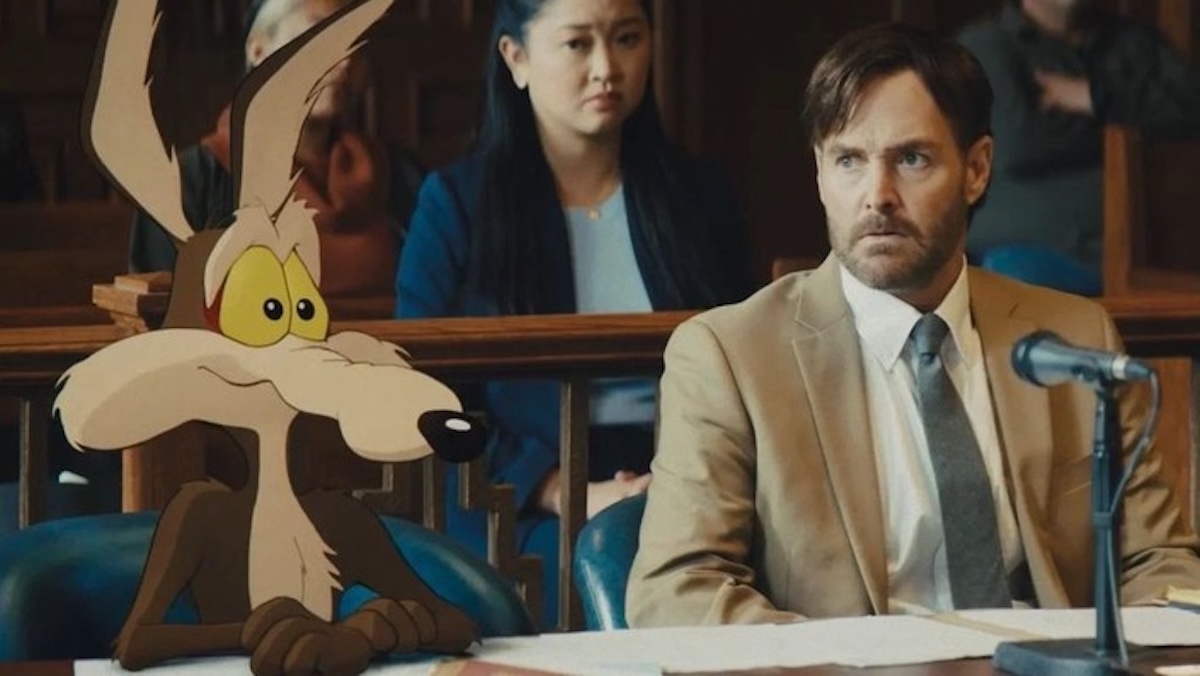
Coyote v. Acme is this year’s boldest statement on kids’ stuff bleeding into adult stuff, in a wit-lined fashion. The very slippery definition of the kid/adult duality is at the core of the enterprise: Boomers will be channeling childhood memories in the Looney Tunes mythology of Wile E. Coyote’s endless, feckless pursuit of the roadrunner, while appreciating the postmodern legal twist of the story; kids, meanwhile, will presumably soak up the friendly mayhem of the movie on a purer entertainment level.
In other words, it is deceptively innocent family fun for everyone, with its ulterior motives hidden beneath bright and bubbly surfaces. The film, made in an animation-meets-live-action format reminiscent of Who Framed Roger Rabbit?, was written by Samy Burch and inspired by Ian Frazier’s humor piece in The New Yorker (where a flattering review recently appeared, not surprisingly). It proposes an adult-world scenario for a kid-world premise.
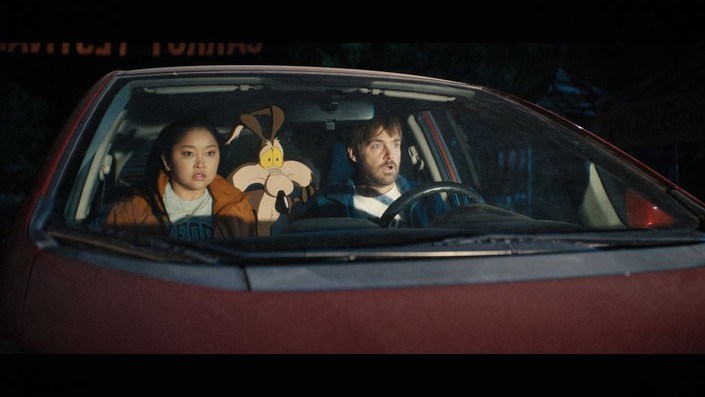
As we fondly recall, Mr. Coyote’s valiant and fiendishly inventive schemes to capture the roadrunner are often foiled by faulty equipment made by the infamous, generic Acme Corporation. In the story, the aggrieved and frequently injured (though quickly healed) canine party takes litigious action against the offending mega-corporation. It’s a “David fights Goliath” tale, aided by the bumbling lawyer with a backstory, played by Will Forte, one of the production’s live-action elements.
In the crosshairs of Coyote — nothing if not dogged and determined, as we know from the cartoon, dating back to 1949 — is the behemoth monopoly of Acme, which launched its business humbly as a cartoon anvil manufacturer but grew ever more all-consuming and increasingly Machiavellian in its manufacturing standards and practices. On a mission that takes him from corporate legal action to congressional intervention in D.C., Coyote is joined by Loony colleague plaintiffs, including an extra-daffy Daffy Duck (“Acme? Ac you!”), the stammering Porky Pig, and the rooster known as Foghorn Leghorn, who points out, in his authoritative Southern drawl, that “cartoons are resilient.”
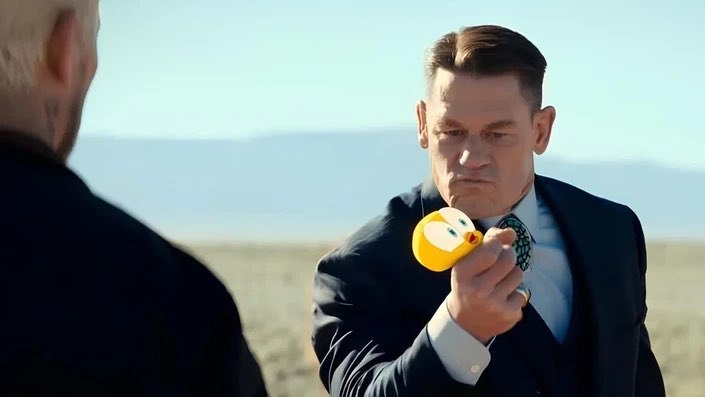
So, though, the archetypally resilient roadrunner “meep meeps” his way into the picture, with that same pasted-on “what me worry?” resting face (and everything face), and wins some points regarding Coyote’s own morally suspicious intentions, since 1949. It all adds up to a unique and delectable romp, speckled with in-jokes and cultural backflips, and aimed straight for the heart of the “kidult” demographic.
At the film’s end, I stayed to the literal end, past the inevitably epic credits for complex animation features such as this. Part of the reason was that, given the cheeky irreverence of the approach to the material, I half expected the filmmakers to toss out one finishing touch of a bonbon, post-credits, in which the roadrunner adds a final “meep meep.” No such luck. Might be a good idea for the sequel. You’re welcome, Warner Brothers.







You must be logged in to post a comment.