

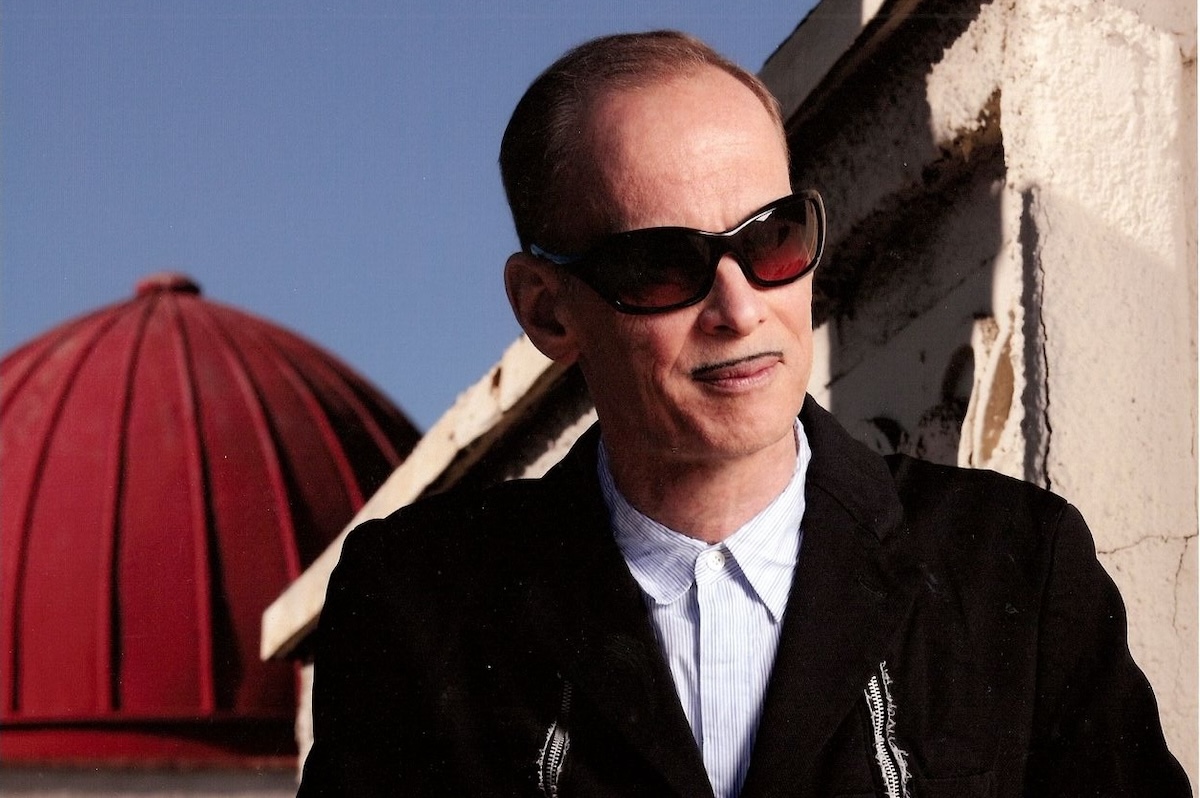
Fans of little-known factoids may be pleased to learn this tidbit: John Waters discovered his signature “pencil moustache” in Santa Barbara. The famous and infamous director of the indie film smash Pink Flamingos, the box office boffo Hairspray, Polyester, and many other left-of-mainstream films, was briefly living in Isla Vista when the “aha moment” arrived.
On the phone from his hometown of Baltimore, Waters explained the origin of the ‘stache: “I did it for the first time in [former Santa Barbara Museum of Art director] Ron Kuchta’s house and Sique, Mink Stole’s sister and his wife. And I was trying to grow it, but when she just put a little eyebrow pencil on it, I thought, ‘Oh my God.’ And ever since, it’s been there. This was in their guest bedroom in Santa Barbara, probably in 1970.
“The thing that makes me laugh the most is that my friend showed me something. People don’t usually write that much mean stuff about me on the snarky comments. But one said, ‘What’s that line on his face?’ which made me laugh so hard. And every time when I look in the mirror in the morning, I say, ‘What’s that line on your face?’ It started the first time I ever looked in a mirror and saw that line on my face was in Santa Barbara.”
Waters functions as a kind of American renegade in plain sight, having put his stamp on subversive films with Hollywood’s blessing (mostly), along with a legacy of books, appearances, LGBTQ advocacy, and other résumé bullet points. Now 80 and proudly brandishing William Burroughs’s description of him as the “pope of trash,” Waters has returned to the area various times over the years, moustache and one-man showings in tow, including with his one-man shows A John Waters Christmas and The Naked Truth to the Lobero. He returns to the 805 with the one-man show Let’s Take Over the World, in the gloriously-reborn Ojai Playhouse, on Thursday, October 8.
As a special add-on, the Hotel El Roblar and Condor Bar are offering a customized pre-show dinner at La Cocina on Wednesday, October 7. According to sources there, Chef Brandon Boudet “has curated a playful three-course menu as a culinary portrait of John, drawing from his Baltimore roots, films, favorite foods, and famously particular tastes before guests head across the street for the performance.”
Get your Baltimorean cuisine while it’s hot!
We checked in with Waters recently for an update on all things John Waters.
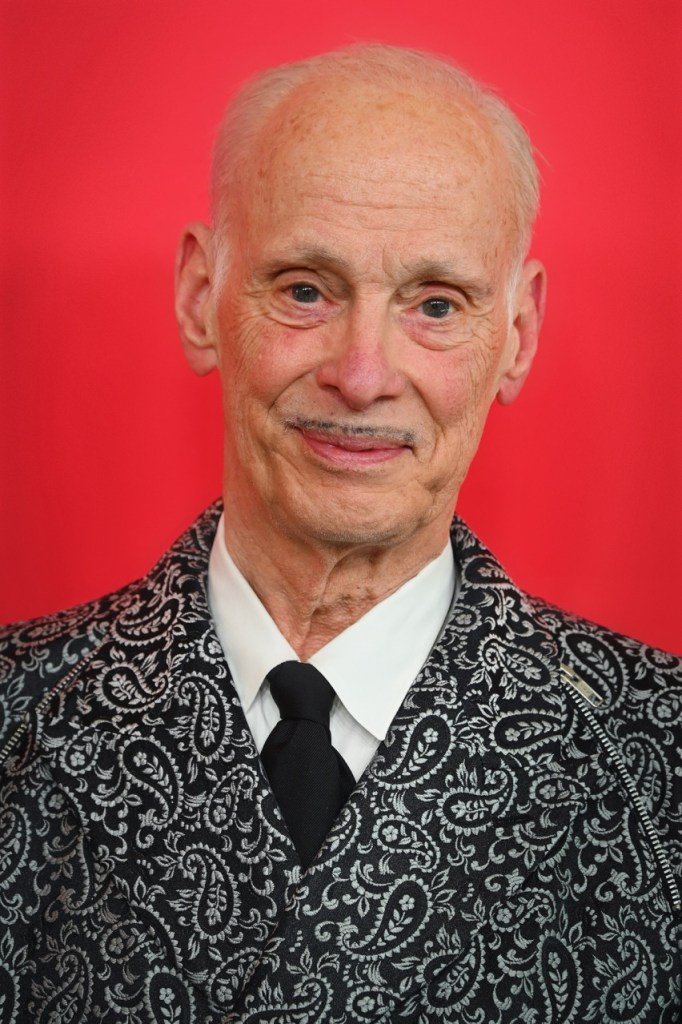
How long has this one-man show been in existence?
I’ve been doing it for 50 years, but every year, I write a completely different show. This particular show, we take over the world. I’ve only done it — this week was the second and third time. Every October, I rewrite the entire show.
You have brought one-man shows to the Lobero Theatre in Santa Barbara….
Let me tell you my history in Santa Barbara. Mink Stole’s sister married the curator, Ron Kuchta, of the Santa Barbara Art Museum, in the ’60s. I went there and they got me the first screening of Multiple Maniacs in a theater where you sat in inner tubes on the floor, in Isla Vista. After the Bank of America was burned down, I always joke that I wanted to go to that burning and now my money’s in the Bank of America. I did spend some time, really early in Santa Barbara in my career, but later I came back and I’ve done shows there. It’s like vaudeville — I’m a carney. I did 59 shows last year. I have 19 Christmas shows this year, amazing. So, I’m on the road a lot, yes. I always say I have a fear of not flying.
I was just gonna ask you about the art and practice of a one-man show, which would seem the polar opposite of making a film, I would guess. Or is it?
Well, it’s the same — making a film is even worse in a way, because if you’re making a film from the moment you wake up to the moment you go to sleep, you’re at work. If you’re writing a show, if you don’t work, it’s okay. I work on weekends sometimes, but still, yes, I work a lot, but I have time off. You can never have too many careers. So, I’m always writing a new show. I never made a movie I didn’t write. All my books, I wrote my first poem, which was just published in the Atlantic. I continue to pick up new careers. I’m in American Horror Story, which premieres Thursday night. So many different ways to be with the public.
And this is something that goes back to your seminal days in Baltimore?
In the very beginning, when the only place you could really see weirdo movies and midnight movies was at colleges. It used to be a huge circuit, but it really isn’t anymore. But Divine and I would go to all the colleges. It came out where I would introduce Divine, who would come out. We’d have fake police that would try to arrest us and Divine would strangle the cop and the hippies would cheer, and then the movie would begin.
I have some audience participation in this show now. I’m bringing it back. I’m not telling you what it is.
Secret’s safe with me.
Nope, no it isn’t. That’s your job. You’re writing an article.
I guess I’m supposed to pull the secrets out of you….
No, that’s called a spoiler alert.
I’m very sensitive to that as a film critic: I hate spoiler alerts.
I kind of miss the power of film critics, because in the old days, I mean, it really mattered. Today, even if you get a great review in The New York Times for an art film, it doesn’t mean it’s a hit. If you get a bad one, it means it’s still a flop. I miss the power of the critics, even the ones that hated me. I made a career from bad reviews.
Generally, they’ve been favorable, wouldn’t you say?
Oh, in the beginning they most certainly were not. But that’s great; we used them all in the ads. All my screenplay books just came out, and they did quite well. And the back quote for Desperate Living is, I think, one from Janet Maslin in The New York Times that said, “You can look far and wide for a film this ugly, but really, why would you?” It’s great, and that was the quote we used.
Bad reviews, in the old days, I used. Variety said the famous one — “The most hideous movie ever made” — and they wrote an article last year saying it was one of the best American comedies and they were wrong, which I thought was really hilarious and funny and nice.
There are a lot of films like that that, in hindsight, that gain power and respect.
Even though they’re worse. It’s worse now than when it came out because of political correctness. You can’t even say, “Happy birthday, fatso” anymore. When I started, the F-word was “fascist.” Now it’s “fat.” The American Registry picked Pink Flamingos as one of the great American films. How could that be? I think it’s wonderful, but it’s astounding to me. The Academy Awards gave me a 12-room show of my stuff. How is that possible? But it’s great. I find it no irony to be really pleased that that all happened at the same time. But the films themselves are actually even worse than they were when they came out as far as being offensive to some, but nobody ever gets mad at me because people come to my shows. I make fun of myself first and I think that makes a big, big difference.
Well, it is grandfathered in thanks to its history. Blazing Saddles is like that. You couldn’t make that today.
No, you’re right. You’re right. Yes, but to see it today, it’s even more alarming because you realize, oh my God, you could never get away with that, right? But I do continue to get away with it. I mean, in this new show I’m doing, well, it’s pretty rude.
Do you have a bit of the preacher in you?
Oh, on this show, I’m really like a preacher. I’m behind a pulpit. This is a spiritual moment for some, for the unchosen people.
And you are also including what’s called a sideline “therapy session.” What’s that all about?
That’s just a nice way to say “meet and greet.” I don’t do selfies anymore ’cause I got COVID from doing it. You know, you have to remember every big girl in America wants to hug me because of Hairspray.
But I got COVID twice, so we call it group therapy. It’s where you can tell things that you maybe don’t wanna talk about with the whole audience. I do a real question and answer with the full audience, but at the end, you get special treatment. And also, we get to do pictures, but they do it. They stand around the stage and I’m behind them and they do a selfie, so I’m behind them. So, it’s like the red carpet in reverse. I don’t get COVID. But it is like group therapy, which I’ve never been in because I was afraid people would tell everything I said. But I believe in psychiatry and I would have been a good psychiatrist. So, I think I’m, it’s a little bit like a psychiatric session.
You are famously a champion for your hometown of Baltimore. Is it a pure love, or a love-hate situation?
No, it’s not hate at all. I love Baltimore. Still, I mean, the mayor and everyone says, “How can we make it better?” I said, I think you should have bumper stickers that say “The Wire (shot in Baltimore).” It’s still like that. It is kind of scary, but it’s cheap and there’s a real Bohemia there. There’s lots of great kids here. There is a great music scene. You can get great apartments. They might be in scary neighborhoods, but so what? That’s, you need scary neighborhoods for a fancy new restaurant. You need scary neighborhoods where rich gay people can move in and rehab them and change the neighborhood. So, I think Baltimore is ripe right now. I think it’s better than it’s ever been. And I live in five different places. But Baltimore is my home. That’s where my house is and my office and everything.
So, it’s one of those underrated or underappreciated cities in America?
Well, I don’t know about anymore. I don’t think we have an inferiority complex. We used to, yeah, but I think after Barry Levinson, David Simon, not anymore. We all make movies and TV shows and books about extremes of Baltimore, even if it’s nice extremes. And I think that’s why people in Baltimore are proud of their being not like everybody else. And we can make fun of it, you can’t. It used to be like Cleveland and Cleveland still has an inferiority complex. Baltimore doesn’t. We don’t want to go to Washington.
I think I’ve seen pretty much all your films, although probably not some of the early underground ones that are hard to find. Among the lesser-known ones, I loved Pecker.
That’s my nice movie, even though it does have teabagging and talking virgin mothers. But it’s kind of my nicest movie.
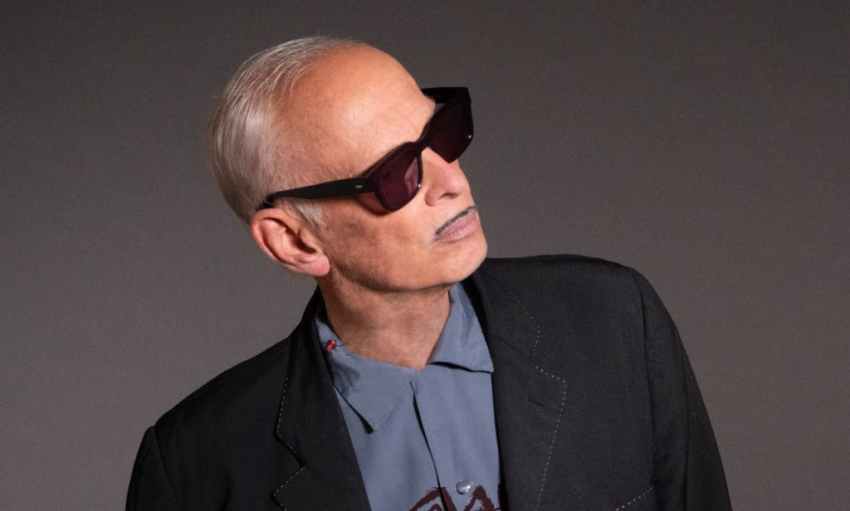
You’ve been in the air in Santa Barbara lately: They showed Hairspray at the big outdoor Sunken Gardens, part of the big UCSB summer series, and then Pink Flamingos recently screened at the new Film Center here. Your stamp continues to be made.
And there are the roots of Multiple Maniacs, one of the first showings that ever had was in Santa Barbara. So, I certainly feel like I have a history there. So, I’m happy the old ones are still playing and causing trouble. Because now, I mean, when I go to my shows now, there’s kids there that are reciting lines from Pink and Linguists. They weren’t even born when I made my last film. And they say things like my parents showed me, they did, they should be in jail. How old were you?
Hairspray is amazing. I mean, it still plays in grade schools in Florida and nobody gets mad. It’s such a Trojan horse that even racists like Hairspray. They’re so stupid. They just don’t realize it’s against them.
Hairspray and Pink Flamingos, very different films, are certainly two of your signature films. Hairspray is the one that really drew you into the mainstream Hollywood world, wasn’t it? Or were you already there by the time that came out?
No, they knew about the other movies, but they were scared of me about them. But with Hairspray, yes. And that was when I made Crybaby, was the first time all the studios wanted to do it. They were giving me raises and sending me presents and everything. And it was not a success at the box office. But it is now, but it just sometimes takes a while with my films. But yes, in Hollywood from ever since Hairspray and Cry Baby on, I had a development deal in Hollywood for every movie I made. I got paid, I went and pitched it and got the upfront salary to write it. That would be much harder today. That doesn’t happen nearly as much as it used to. The movie business as I know it is over.
But there’s a new one and kids are figuring it out how to do it.
It’s a lot easier to adopt the DIY approach now.
It is, but the problem is that I don’t want to do that. So, when you see this kid that made a film for $150,000 and grossed $35 million, I’m happy for him, but I don’t want to do it. And they say, “Why can’t you do that?” Because I’m 80 years old, I don’t feel like making an underground movie at 80.
But there must be some feeling of validation that, you know, there are ways that indie films can.
Oh, there always will be. There always will be. And that’s the films. And it’s going to be, it’s always a horror film these days. So pretty rude, this is going to be all horror movies. It’s going to be the only movie you can ever see will be a horror movie. Because as soon as they have any kind of hit, they try to think that. know they do it over and beat it to death until it’s no longer at all one ounce of originality left in it.
This is true. But I wondered if you always sort of appreciated your role as this subversive in Hollywood who was always pushing the envelope.
Well, I tried to set an example for people, and I think I have. And I wrote a book called Role Models about the people that did that for me. So, people come up to me all the time and say, “Oh, without you, it’s really moving.” I would have never been able to be what I wanted and all. And I’m happy for that. I always was unashamedly proud of not fitting in. And I think my audience today is that also. They don’t even fit in their own minorities.
Who would be on a short list of who would have inspired you to go in that route?
I wrote a whole book on that. Certainly Tennessee Williams, Walt Disney, Howdy Doody, Kenneth Anger, Warhol, Russ Meyer. Yeah, I think those would be some of them. I always just wanted to be a beatnik. And then after that, I was a hippie, but I made fun of hippies. I was much more comfortable in the punk movement and still am. Punks are my people because they hate everybody in the world except themselves.
And I took all the drugs. I never had a problem with it. I was lucky. I stopped taking drugs the minute I had success. Usually, it’s the other way around. And also, the drug that really made me stop was ecstasy, a drug that made you love everybody. That sounds like the most horrible high I could ever imagine.
Sounds like hell on earth.
Yeah. Cuddle pile ain’t for me.
At this point in your life, you’re kind of looking back, but you’re also forging ahead. Is that a happy balancing act for you?
No, I’m not looking back that much. I mean, I’m proud of everything. I look back and I, you know, I’m proud. But there’s less and less people to look back with, as people die. But at the same time, I have lots of young friends. You need youth spies. And I’ve said that so much that I actually get in the mail, job applications as youth spies. It does make me laugh.
What’s on the horizon after this?
Oh, I have so many things on the horizon, but a lot of them you can’t announce yet. You know what I mean? So yes, I have another book. I have another TV show. I have two more TV shows that I’m in, but I’m not allowed to talk about them yet or you get fined. You have to sign all these papers. Believe me, I’m in the present now. Because every show I do is in my contract. I have to do two to three interviews to promote it. So, I mean, have you ever seen a documentary I’m not in?
That’s true. You’re an ever-present face and voice in America. Whether you like it or not.
Yeah, whether others like it or not.
See tinyurl.com/mpme55uw for show details.
Related Posts
Premier Events
Fri, Oct 23
2:00 PM
Santa Barbara
Music & Meditation: Clarinetist Nancy Mathison & Pianist Antonio Artese

Tue, Oct 20
7:00 PM
Santa Barbara
Get Out the Vote Night @ SOHO, Music Performance by Loyal Defense Workers
Wed, Oct 21
6:30 PM
Santa Barbara
Teflon Comedy/Non-Schtick – Evening of Comedy
Thu, Oct 22
5:30 PM
Santa Barbara
Best Fest: A Celebration of the Best of Santa Barbara® Readers’ Poll 2026
Thu, Oct 22
6:00 PM
Santa Barbara
Chaucer’s Books Author Talk & Signing- Daniel M. Jaffe “Russian Silhouette: A Memoir of Activism and Identity”
Fri, Oct 23
5:30 PM
Solvang
Solvang Haunted House and Street Fair
Fri, Oct 23
7:00 PM
Santa Barbara
Beth Amine’s 20th Anniversary Wildcat Dance Variety Show
Fri, Oct 23
9:00 PM
Santa Barbara
Casa de la Raza Fundraiser: Brasscals! with DJ Darla Bea
Sat, Oct 24
10:30 AM
Santa Barbara
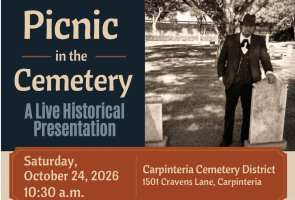
Picnic in the Cemetery: A Live Historical Event
Sat, Oct 24
11:00 AM
Goleta
2nd Annual Charger Cup to Benefit DP High Golfers
Sat, Oct 24
12:00 PM
Santa Barbara
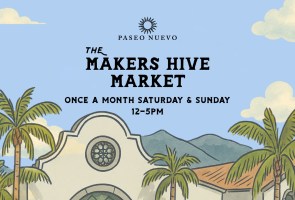
Makers Hive Market
Fri, Oct 23 2:00 PM
Santa Barbara
Music & Meditation: Clarinetist Nancy Mathison & Pianist Antonio Artese
Tue, Oct 20 7:00 PM
Santa Barbara
Get Out the Vote Night @ SOHO, Music Performance by Loyal Defense Workers
Wed, Oct 21 6:30 PM
Santa Barbara
Teflon Comedy/Non-Schtick – Evening of Comedy
Thu, Oct 22 5:30 PM
Santa Barbara
Best Fest: A Celebration of the Best of Santa Barbara® Readers’ Poll 2026
Thu, Oct 22 6:00 PM
Santa Barbara
Chaucer’s Books Author Talk & Signing- Daniel M. Jaffe “Russian Silhouette: A Memoir of Activism and Identity”
Fri, Oct 23 5:30 PM
Solvang
Solvang Haunted House and Street Fair
Fri, Oct 23 7:00 PM
Santa Barbara
Beth Amine’s 20th Anniversary Wildcat Dance Variety Show
Fri, Oct 23 9:00 PM
Santa Barbara
Casa de la Raza Fundraiser: Brasscals! with DJ Darla Bea
Sat, Oct 24 10:30 AM
Santa Barbara
Picnic in the Cemetery: A Live Historical Event
Sat, Oct 24 11:00 AM
Goleta
2nd Annual Charger Cup to Benefit DP High Golfers
Sat, Oct 24 12:00 PM
Santa Barbara



You must be logged in to post a comment.