
It wasn’t exactly a smooth landing, but after another set of tense deliberations and a pair of split votes — with City Council nearly failing to come to agreement about affordable housing exemptions — the City of Santa Barbara’s rent stabilization ordinance is moving forward, and on track to meet the City Council’s intended launch date of January 1, 2027.
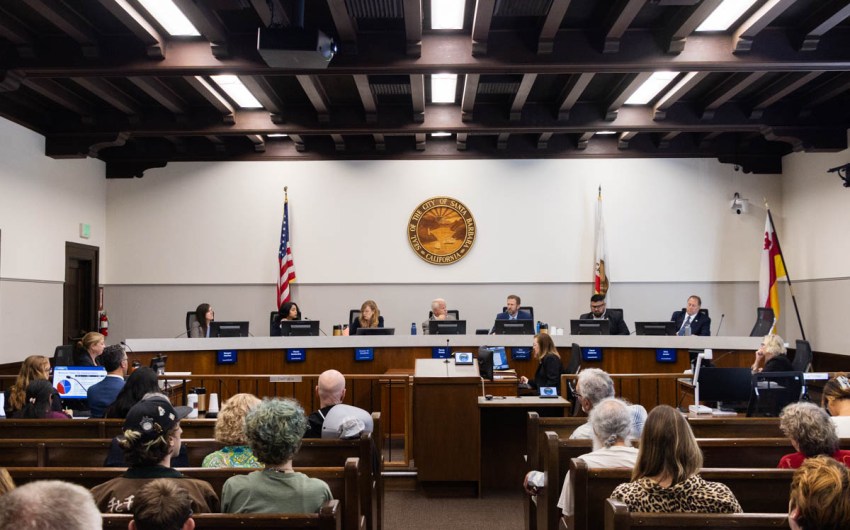
Tuesday’s council hearing was expected to be another showdown over the city’s much-debated rent stabilization ordinance, as the council and city staff were working on an extremely tight deadline to complete the ordinance by the end of this year. Barbara Andersen, senior assistant to the city administrator, made it clear the city was in its now-or-never moment, after years of background planning and at least 10 months of public hearings since the city began developing the current drafted ordinance.
This current version started with a work plan in December 2025, followed by an outreach effort that gathered the combined input of community focus groups and stakeholder meetings in February and March, which was sculpted over public meetings in April and May, shaped into a working draft released in June, then refined over marathon City Council hearings in July until the ordinance was ready for council approval.
Now, city staff needed clear buy-in from the council to officially get the program started with final direction, first reading of the ordinance, and approval of $500,000 from the city’s Measure I Flexible Housing and Homelessness Fund to pay for implementation-related expenses. To put it plainly, the city had a lot riding on the outcome of the September 22 hearing.
“As you can imagine, there is a lot of work that is happening simultaneously to this ordinance process, and even more work ahead of us,” Andersen said. “We cannot emphasize enough the time sensitivity around council deliberations this afternoon if we want to meet your expectations of a January 1 launch.”
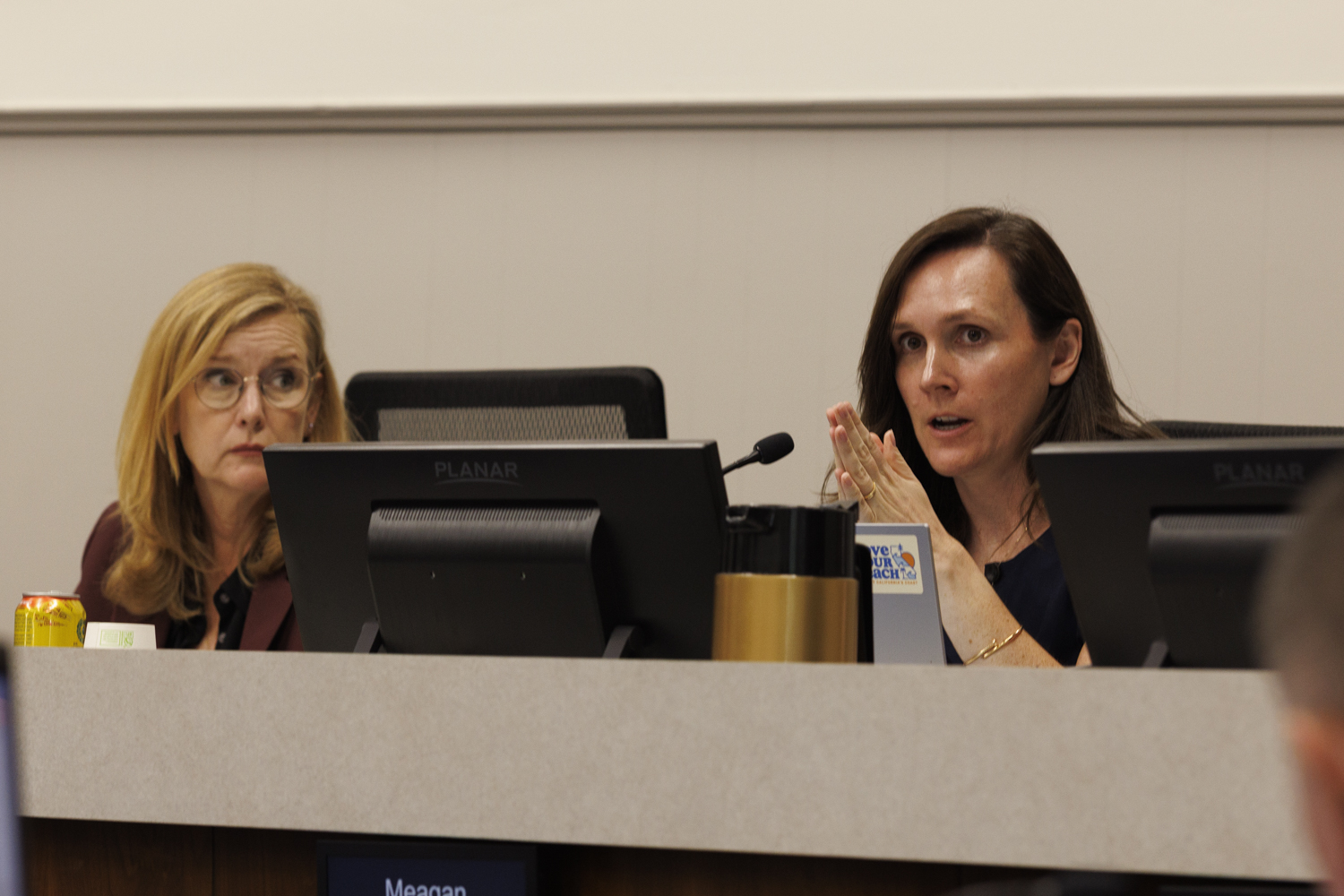
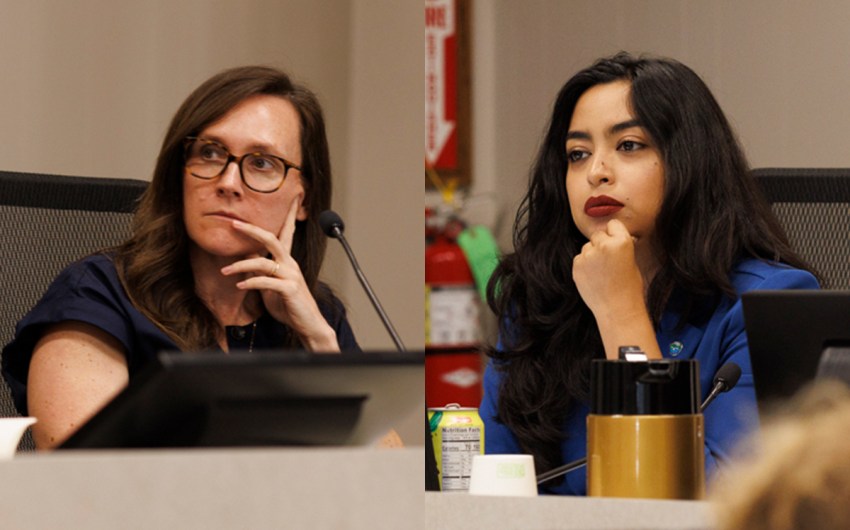
During early discussions, the council consistently had four votes in support of rent stabilization. In recent hearings, however, debates regarding the exemptions for deed-restricted affordable housing forced a split between Councilmembers Meagan Harmon and Wendy Santamaria — who agree on the program as a whole but differed on the details of affordable housing exemptions.

“My support for rent stabilization has been clear over the years,” Harmon said. “My support is still strong. But this ordinance, specifically — for me to vote yes — must include those two exemptions.”
Harmon wanted the city’s ordinance to include two exemptions recommended by the city’s Housing Authority, arguing that units managed by Housing Authority and deed-restricted Section 8 voucher units were already regulated and should not be subject to additional restrictions. She said she would not vote for the ordinance if it didn’t include the exemptions, saying it was her “red line.”
Santamaria, who was elected on a campaign centered on rent stabilization, worried that broadly exempting all affordable housing units could leave tenants without protections should their deed-restricted units fall into disrepair. She said she would support the exemptions, but only if the ordinance allowed for these tenants to file petitions for habitability concerns.
When Santamaria proposed including a petition process for these tenants, Harmon stood firm and it seemed as if the long-planned ordinance might fail at the finish line. Santamaria pushed back, asking Harmon: “So we’re saying we don’t want to protect tenants in Section 8 and affordable housing units when it comes to habitability?”
“No,” Harmon replied. “What we’re saying is there’s already a system to access and deal with habitability concerns that currently exists.”
Santamaria snapped back: “That isn’t working, unfortunately.”
The council attempted a series of votes, with Santamaria’s suggestion of exempting affordable units but allowing petitions for the tenants failing 3-4. Councilmembers Santamaria, Kristen Sneddon, and Oscar Gutierrez voted in favor, but Councilmember Harmon joined Mayor Randy Rowse and Councilmembers Eric Friedman and Mike Jordan in voting the motion down.
The next two votes produced 4-3 votes, but with two different groups voting in favor.
The first vote, to simply approve the ordinance as recommended by staff (with small tweaks to language, including directions to not collect personal information and number of tenants in the proposed registry, requiring a member of the rent board to be a senior tenant, and restrictions on corporate-owned properties) was approved by Councilmembers Harmon, Santamaria, Sneddon, and Gutierrez.
For the second vote, to add the exemptions as recommended by the Housing Authority without the petitions, a new majority of Councilmembers Harmon, Friedman, Jordan, and Sneddon voted in favor. Councilmember Santamaria and Gutierrez voted in opposition with Mayor Rowse.
It was a strange twist to a grueling planning process, forcing councilmembers to take opposing sides on issues they might usually agree upon. Councilmembers Santamaria and Gutierrez voted in favor of the ordinance, but against the exemptions as proposed by Harmon. Friedman and Jordan both voted against the ordinance, but supported the affordable exemptions.
Mayor Rowse voted against both. Harmon and Sneddon were the only members of the council to vote yes on both motions.
Sneddon, who is running for mayor, has been consistent in her support of rent stabilization since she was first elected to council in 2017. During Tuesday’s hearing, she said she understood the risk of not earning approval and said she was willing to be flexible if necessary to get the ordinance approved on schedule. She was in favor of the Housing Authority exemptions, with the assurance that any unit that went above affordability standards would automatically be subject to the ordinance.
“I want to see this pass,” she said.
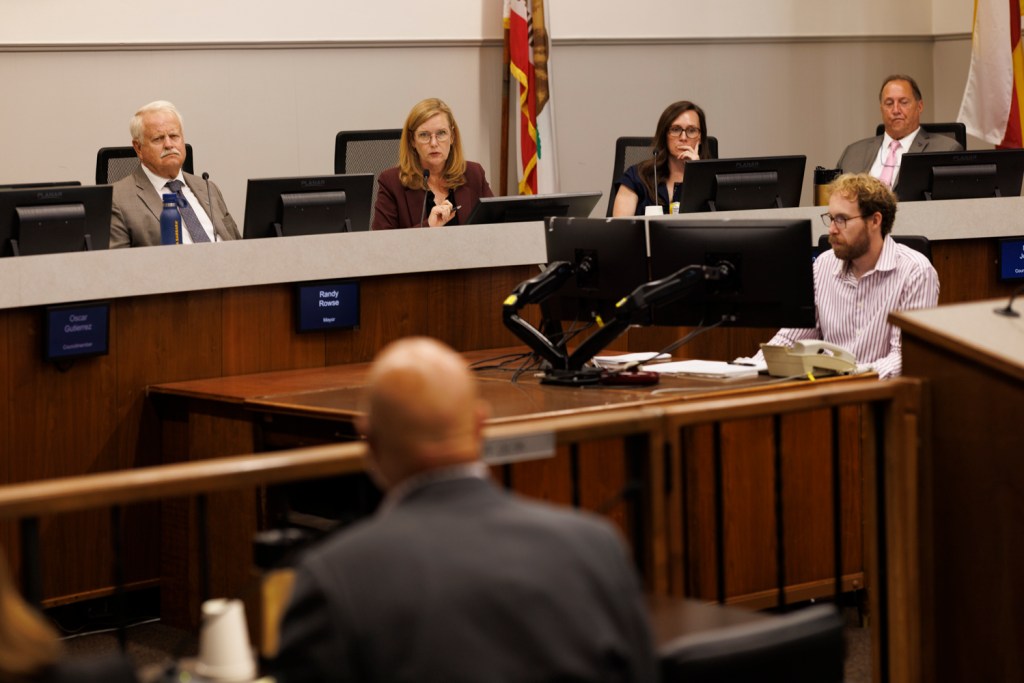
During deliberations, Sneddon said she would even support a less strict flat 3 percent cap rate — a last-minute change that had been discussed around City Hall but never officially pursued. Sneddon didn’t go as far as proposing the change in a motion, and the version approved by council included the previously agreed-upon rate set at 60 percent of the Consumer Price Index, or 3 percent, whichever is lower.
While the council approved the first reading of the ordinance, there is still a mountain of work ahead for city staff to implement the program, and many details to be worked out regarding the projected rate for units in the rental registry. The council is scheduled to officially pass the ordinance and newly added affordable housing exemptions at next Tuesday’s meeting.
The rent stabilization program is expected to launch in January and covered units will need to register by April 2027. All other rental units will need to register by October 2027, and enforcement would begin in 2028.
The program could require seven staff members and is expected to cost anywhere from $2 million to $2.5 million dollars, with the registry expected to cover about as much as 80 percent of costs. The remaining $500,000 per year may need to come from the city’s general fund.
The city will be using a portion of the startup costs to conduct a fee study and contract a consultant to help with program launch. City Council will continue to meet to officially adopt the ordinance, appoint members to the rent stabilization board, and consider eviction amendments.
Editor’s Note: This story was updated to clarify that the council is scheduled to vote next Tuesday to officially pass the ordinance and the newly added affordable housing exemptions.
Related Posts




Premier Events

Fri, Oct 23
2:00 PM
Santa Barbara
Music & Meditation: Clarinetist Nancy Mathison & Pianist Antonio Artese

Wed, Oct 21
6:30 PM
Santa Barbara
Teflon Comedy/Non-Schtick – Evening of Comedy

Thu, Oct 22
5:30 PM
Santa Barbara
Best Fest: A Celebration of the Best of Santa Barbara® Readers’ Poll 2026 – Rain or Shine

Thu, Oct 22
6:00 PM
Santa Barbara
Chaucer’s Books Author Talk & Signing- Daniel M. Jaffe “Russian Silhouette: A Memoir of Activism and Identity”

Fri, Oct 23
5:30 PM
Solvang
Solvang Haunted House and Street Fair

Fri, Oct 23
7:00 PM
Santa Barbara
This & That Performs at Roy

Fri, Oct 23
7:00 PM
Santa Barbara
Beth Amine’s 20th Anniversary Wildcat Dance Variety Show

Fri, Oct 23
9:00 PM
Santa Barbara
Casa de la Raza Fundraiser: Brasscals! with DJ Darla Bea

Sat, Oct 24
10:30 AM
Santa Barbara
Picnic in the Cemetery: A Live Historical Event

Sat, Oct 24
11:00 AM
Goleta
2nd Annual Charger Cup to Benefit DP High Golfers

Sat, Oct 24
12:00 PM
Santa Barbara
Makers Hive Market
Fri, Oct 23 2:00 PM
Santa Barbara
Music & Meditation: Clarinetist Nancy Mathison & Pianist Antonio Artese
Wed, Oct 21 6:30 PM
Santa Barbara
Teflon Comedy/Non-Schtick – Evening of Comedy
Thu, Oct 22 5:30 PM
Santa Barbara
Best Fest: A Celebration of the Best of Santa Barbara® Readers’ Poll 2026 – Rain or Shine
Thu, Oct 22 6:00 PM
Santa Barbara
Chaucer’s Books Author Talk & Signing- Daniel M. Jaffe “Russian Silhouette: A Memoir of Activism and Identity”
Fri, Oct 23 5:30 PM
Solvang
Solvang Haunted House and Street Fair
Fri, Oct 23 7:00 PM
Santa Barbara
This & That Performs at Roy
Fri, Oct 23 7:00 PM
Santa Barbara
Beth Amine’s 20th Anniversary Wildcat Dance Variety Show
Fri, Oct 23 9:00 PM
Santa Barbara
Casa de la Raza Fundraiser: Brasscals! with DJ Darla Bea
Sat, Oct 24 10:30 AM
Santa Barbara
Picnic in the Cemetery: A Live Historical Event
Sat, Oct 24 11:00 AM
Goleta
2nd Annual Charger Cup to Benefit DP High Golfers
Sat, Oct 24 12:00 PM
Santa Barbara


You must be logged in to post a comment.