
Saving Naples, Once and for All
With a Purchase Agreement in Place,
the Land Trust Faces a $16 Million Fundraising Push
to Secure a Permanent Preserve
By Callie Fausey | October 8, 2026
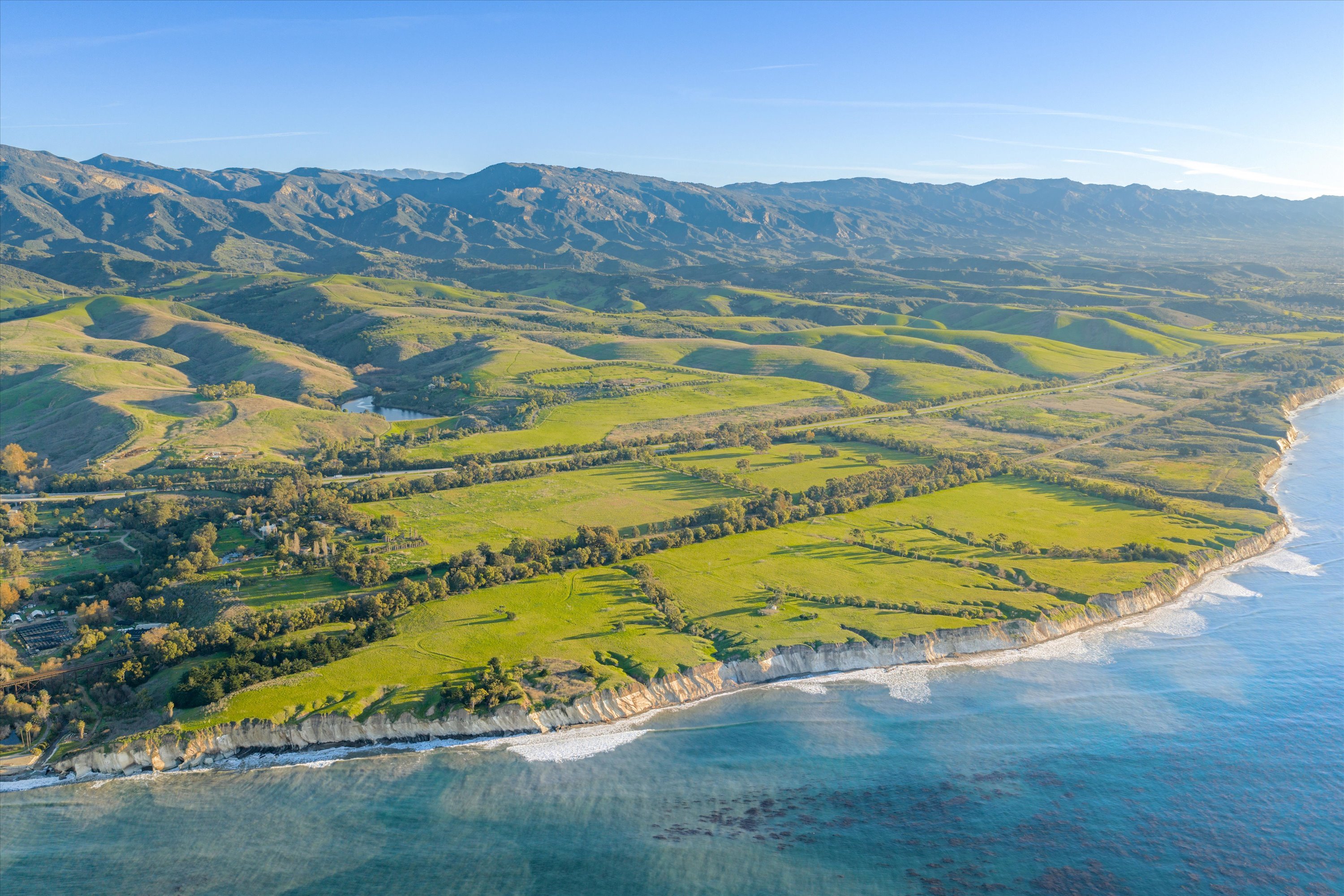
A cherished and wondrous piece of the Gaviota Coast has held its breath fo r 140 years under the pressure of development. It is now very close to exhaling a sigh of relief.
The people and organizations who have spent generations protecting it are now on the cusp of not only buying the land, but preserving it in perpetuity and eventually opening its gates to the public.
The Naples property (officially known as Santa Barbara Ranch), comprising more than 1,000 acres just west of Goleta, went up for sale last year.
Again.
It had been put on the market many times before. Ambitious developers came and went. Conservationists — and even the land itself, open-minded eccentrics believe — have long played defense.
If all goes according to plan, the fought-over landscape will never see the proverbial pickax. The aforementioned conservationists are working to procure the whole $81 million enchilada.
The buyer is the Land Trust for Santa Barbara County, a nonprofit organization dedicated to preserving open land against development interests. To date, that amounts to nearly 60,000 acres across Santa Barbara County, including the Arroyo Hondo Preserve, just a stone’s throw away from Naples.
“The Land Trust has been around for 40 years, and working to conserve the Gaviota Coast has been a part of that the whole time,” said Executive Director Meredith Hendricks. The organization views Naples as part of its next chapter.
The budding, but not yet final, sale begs the question: Is this the end of the Naples saga? Or is this just the beginning of a marvelous future?

The Town that Never Was
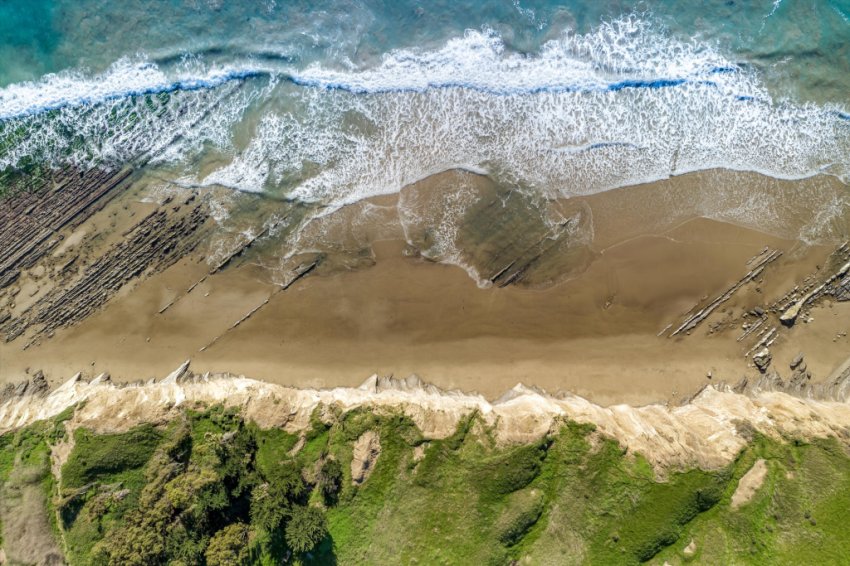
Naples has been dubbed the “gateway” to the Gaviota Coast. It comprises rolling hills, coastal terraces, sweeping views, and unmatched charm. It is an open space of grand beauty and, in scientific terms, a biodiversity hotspot. It’s teeming with critters, including those of the endangered variety. They hide within its tall grasses, wildflowers, oak trees, and sage scrub. Offshore, a coral reef sways with giant kelp and marine life. It is a living bridge between land and sea that’s attracted simple admirers, surf-seeking trespassers, valiant protectors, and wealthy homestead-builders.
To the Chumash, it was sacred land, home to ancient villages, and one of the last outposts against violent Spanish colonizers. It does have spirit, some say — forces beyond human comprehension.
Despite all the lengthy and expensive efforts to tame it, the landscape remains wild. IIt holds a sea of mustard grasses and unrealized dreams. It was always too big a fish — speculators, like osprey, dug in their talons, but none could complete the heavy lift. In summary: no infrastructure, no water, no public support, no dice.
Right now, the Land Trust says, there is a rare opportunity to permanently deflect that relentless pressure to build — to let the land simply exist, to invest in helping it flourish in all its undeveloped glory.
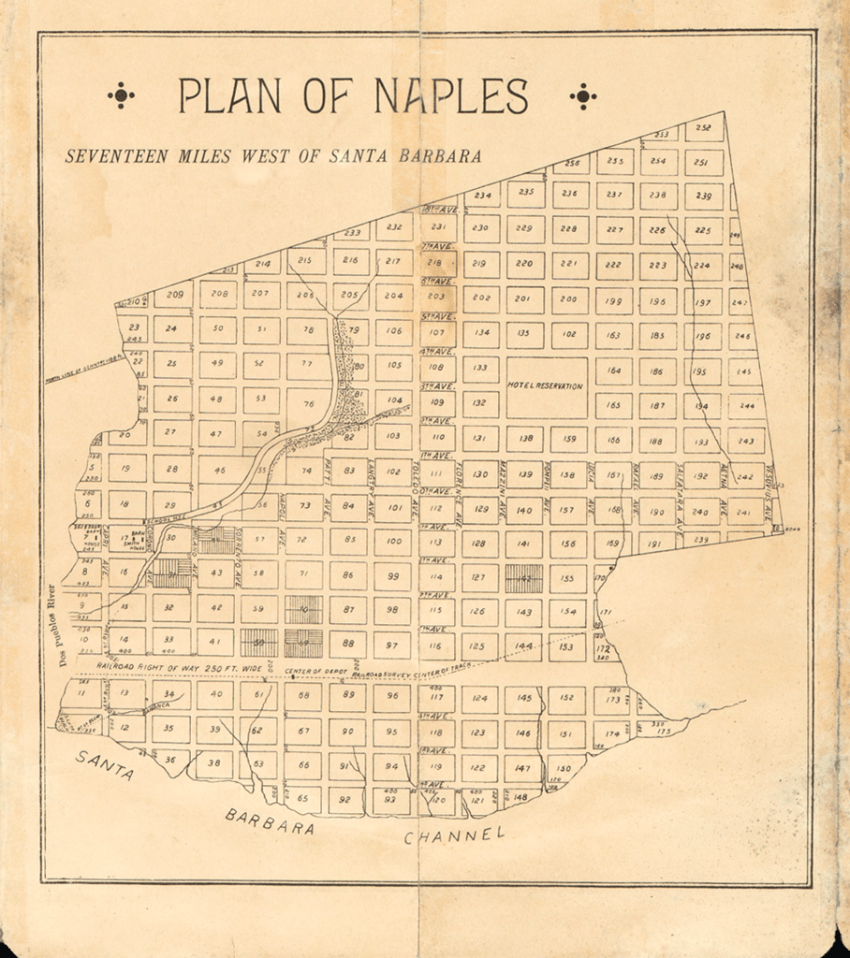
The urge to turn Naples into something different dates back to the late 1800s, when hand-drawn maps envisioned more than 400 townsites. But the railroad tracks that were meant to bring people there never materialized, and the city was never built.
More than a century later, the idea resurfaced. In 2008, after a decade-long judicial process, the county approved Naples for 71 lots primed for seaside mansions, called “Santa Barbara Ranch.” That never materialized either, despite the exhaustive efforts of Orange County developer Matt Osgood and land-use consultant Mark Lloyd.
An article written at the time by veteran Indy reporter Matt Kettmann described a ping-pong match between Kettmann and Osgood, showing how competitive the real estate developer was. But even he couldn’t seal the deal — despite his real-estate finesse and his ability to “whoop” Kettmann in table tennis.
Amid local opposition, financial pressures, and land constraints, the project went belly-up and the property was foreclosed upon by First Bank. It was then purchased by David Liu, a wealthy investor based in Arcadia, for an undisclosed sum in 2015. In all, he invested $80 million in the property, according to lister Kerry Mormann, a broker who specializes in coastal ranch sales.
Mormann has described Liu as a “quiet guy” and said he could only speculate about why Liu is selling now, or whether he ever seriously considered development.
When the property went on the market, the Land Trust — in partnership with their brand-new conservation ally Wild America Fund — got to work. Their motivation went beyond this particular site.
With the acquisition, Naples would become a “conservation transition between Goleta and the Gaviota Coast,” connecting a mile of coastline with low hills that almost reach Los Padres National Forest, Hendricks says. Beyond its local significance, a leading biodiversity meta-analysis identified the land as a national conservation priority.
In total, the property covers 1,027 acres on both sides of the highway, including about 470 acres of the historic Naples townsite, as well as an 18-acre freshwater lake and a private cabin set within the ranch. Two homes and a few other parcels that are independently owned were excluded from purchase. One, dubbed “DMF,” is owned by a doctor from Diamond Bar, California, who has fought his own decade-long battle to build a seaside estate.
All in all, it is a momentous purchase, a literal and symbolic buffer against urban sprawl.

Deal or No Deal?
The purchase agreement itself is $65 million, and in partnership with the Wild America Fund (WAF), $40 million is already secured. The fund was established last October, catalyzed by long-brewing frustration among procedurally slow-moving conservation groups over how they could possibly contend in hyper-competitive real estate markets.
Michael Bell, WAF’s cofounder and CEO, started his career at the Nature Conservancy, a national environmental nonprofit.
“When I first started in conservation doing deals, I was always sitting across the table from a family,” Bell recounted. “In my last years of the Nature Conservancy, it felt like I was always sitting across the table from a hedge fund.”
The WAF was conceived as a sophisticated, “capital-ready partner” to do deals on behalf of biodiversity and “move at the speed of business,” putting a real dog in the fight for natural spaces.
Six months before the property hit the market, the two groups were figuring out ways to partner with each other, Hendricks said.

“We were just in the beginning of those conversations and figuring out how we could work together to get some big things done in Gaviota, and boom, this thing hit the market,” she said.
The groups moved quickly to secure the purchase agreement with money in hand. Donors — a combination of foundations and philanthropic individuals — have played a large role, made up of “people who get it” in terms of valuing conservation and understanding what it takes to compete in the modern real estate market, Bell said.
“It’s not going to be all the funding needed for a deal, but we have a significant starting place that therefore allows us to compete with other buyers,” Bell explained. The plan is to assign the property to the Land Trust before entering escrow, so the Land Trust will own and manage the property.
“If conservation didn’t have a competitive, compelling offer as compared to other offers on the table — which there were — there would be no deal,” Bell said. “That’s not commentary about anyone on the other side of the table. But that’s just the nature of it.”
Out of a total price of $81 million — $65 million for the land acquisition and $16 million for startup costs and ongoing stewardship — the Land Trust still needs to raise $16 million. It’s a big chunk of change.
The last few months have been spent studying the property and getting ready to own and manage such a high-profile stake of the Gaviota Coast, Hendricks said. Though they are now seeking public funding, “the project will be primarily privately funded,” she noted.
Bell said they are not celebrating, yet. They’re thinking about the long road ahead. Job one, he said, is unwinding 140 years of development drama — legal work, water agreements, and the like — and then establishing a preserve, which is a significant undertaking.
The target closing date is the end of December, with possible extensions and pending grant applications to the Wildlife Conservation Board and State Coastal Conservancy. Even with state aid, they will need help from the community.
“We are aiming to get this done quickly,” Hendricks said.

What’s Next
The Land Trust’s vision is to create a nature preserve at Naples to protect its biodiversity and cultural resources, while restoring habitat and coastal access. The organization would also partner with Chumash communities to support “Chumash access, connection, and leadership, guided by respect for Indigenous knowledge, history, and ongoing relationships with the land.”
“We recognize the historic use of this space and of the importance of the near coastal areas for surfing and other forms of recreation,” Hendricks said. “But it’s going to take us a little bit of time to figure that out. So, we do need people to be patient while we work out the best way to honor and take care of this property.”
The Land Trust expects a multiyear planning process involving tribes and stakeholders. Future trails, gathering areas, and other opportunities to experience the preserve will be thoughtfully considered in relation to public safety, sensitive habitats and species, cultural resources, and the unique character of the landscape, Hendricks said.
These efforts will build upon a legacy of advocacy established by the Save Naples Coalition, the Surfrider Foundation, and, prominently, the Gaviota Coast Conservancy. Prior to pursuing the deal, Hendricks said, she checked with the GCC to make sure they were not “duplicating efforts.”
“Once we get through acquisition, I would fully expect GCC to be part of the stakeholders process for preserve design,” she added. They expect to establish relationships with their neighbors, including the few with private estates in the Naples area, as well as Naples and Dos Pueblos ranches.
“We really need people’s help,” Hendricks said of the $16 million they must raise. “We have 16 million reasons why this isn’t done yet.”
It feels a bit unreal, she added.
“Our work is so difficult. These deals are hard; the real estate market in Santa Barbara is tough,” she continued. “These things don’t happen overnight. It’s a long time of holding our breath for everything to work out. And right now, we’re just focused on this hard job we have ahead of us to finish this campaign, and we will not celebrate until we are done.”
The Long Afterlife of Naples
From Chumash Villages to a Victorian Resort Scheme
By Tyler Hayden | October 8, 2026
The name “Naples” sprang from the mind of an Ohio real estate speculator in 1888, during a feverish California land boom. John H. Williams was vacationing in Santa Barbara with his wife, Alice, when they purchased a 900-acre piece of the original Los Dos Pueblos land grant. The price was $50,000, or roughly $1.8 million today.
John and Alice had a vision: They would build, from the ground up, an Americanized version of the ancient Italian city of Naples, a favorite among wealthy U.S. travelers. They drafted a gridded map with more than 250 city blocks with street names like Capri, Florence, and Pompeii.
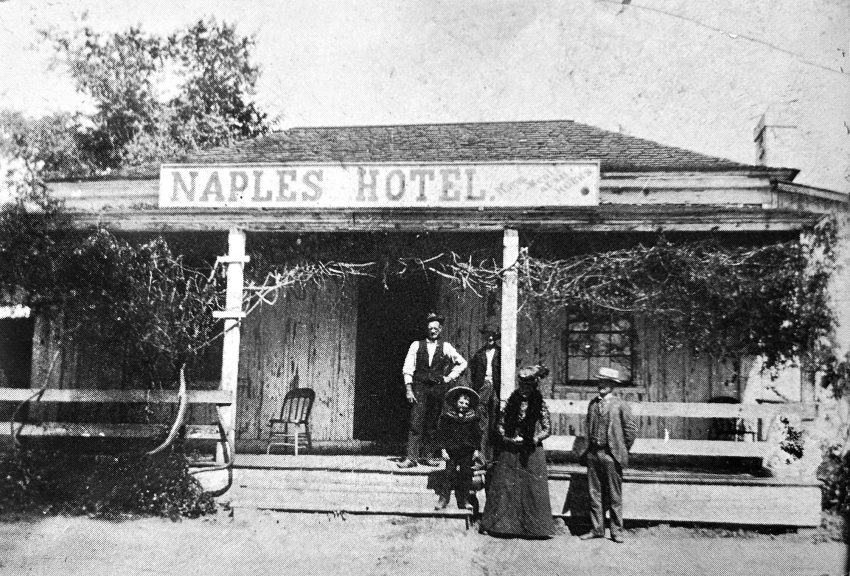
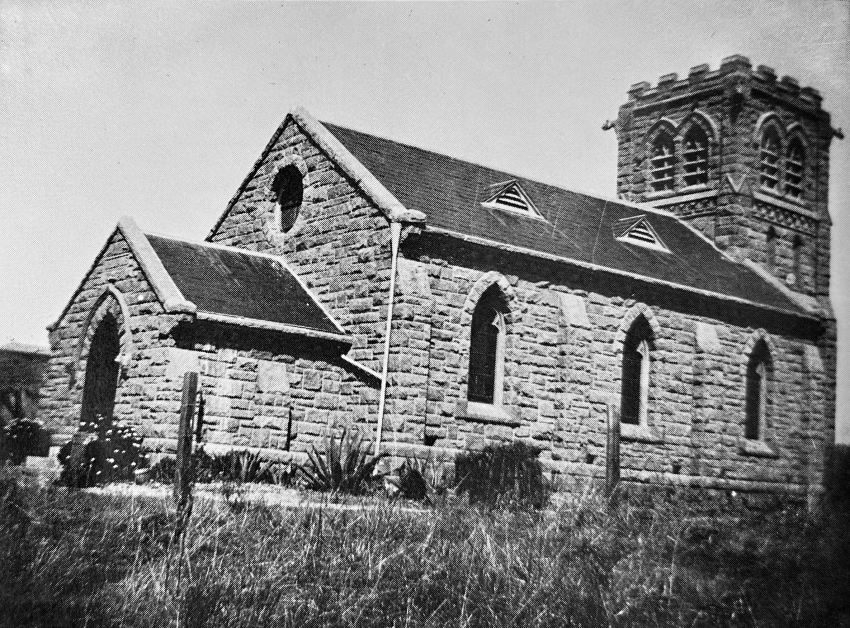
The resort town, they told investors, would feature an Italian-themed dance hall, post office, schoolhouse, livery, and chapel, all anchored by the posh Crescent Beach Hotel at its center. Some Victorian-era buildings were even constructed, including a Wells Fargo barn and a smaller Naples Hotel, which still stand today.
But the couple miscalculated. Their pitch didn’t attract enough financing, and the train tracks to the area that the Pacific Railroad Company had promised were long delayed. By the time the tracks reached the townsite in 1901, the speculative boom had collapsed and Williams had died. His map, however, lived on and set the stage for the development tugs-of-war that would follow.
A Coast Before Colonization
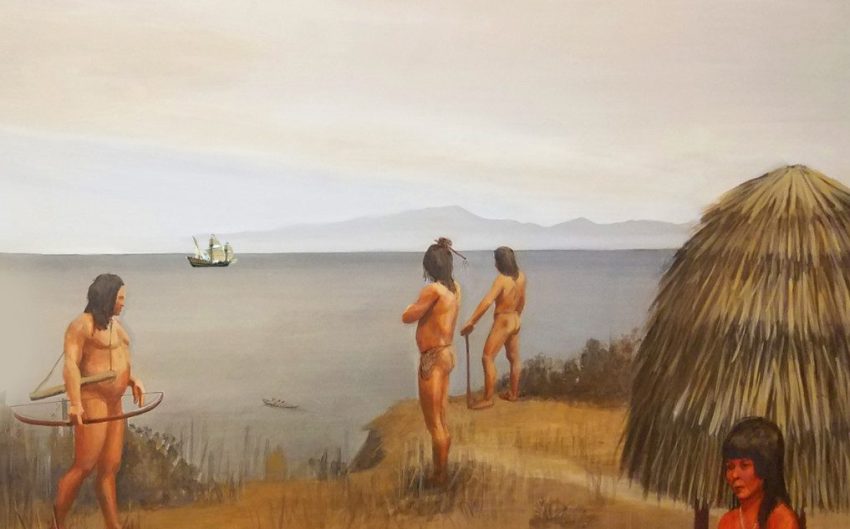
Five hundred years before anyone thought to call the place Naples — and for centuries before that — the Chumash people occupied two separate but interlinked villages on either side of Dos Pueblos Creek. The inhabitants of Mikiw and Kuya’mu spoke a distinct “Dos Pueblos dialect” and the exposed cliffs below the bluffs provided a steady stream of asphaltum that sealed their mighty fishing vessels, called tomols.
Unlike most early Californians, the Chumash slept in framed beds raised off the ground. Their villages were meticulously arranged with windbreaks, storage structures, and sweat lodges built near fresh water for post-ceremonial plunges. When they weren’t occupied with hunting, gathering, and trade, they played a competitive sport resembling field hockey, gambled with marked bones and dice, and convened to sing, dance, and tell stories.
On October 16, 1542, Juan Rodríguez Cabrillo, a Portuguese explorer sailing under the Spanish flag, dropped anchor in the waters off Mikiw and Kuya’mu. The entry in Cabrillo’s log that night read: “anchored in the evening opposite dos pueblos.” The name stuck and is one of the oldest surviving monikers in the county.
Cabrillo and his men watched as the Chumash paddled through the surf to greet them. Their tomols were loaded with gifts of dried fish and acorn meal. The Europeans reciprocated with glass beads and brightly colored cloth. With the pressure of winter approaching and their supplies dwindling, Cabrillo had to decline the Chumash’s invitation to come ashore, and he set sail the next day.
Two hundred years passed before Spanish colonization of the region began in earnest. Gaspar de Portolá’s overland expedition in 1769, comprising 63 people and 100 mules, stopped and camped at the mouth of Dos Pueblos Creek, where the Chumash entertained them late into the night.
Franciscan missionary Juan Crespí wrote in his journal that the site would be an excellent location for an outpost with plenty of fresh water and limestone for construction. He noted, with some curiosity and horror, that Chumash chiefs were allowed two wives. He also complained the festivities were “sufficient to rip our eardrums to pieces.”
Mikiw and Kuya’mu did not survive the bloody Mission era, when Chumash communities throughout the Santa Barbara Channel succumbed to disease, relocation, and forced labor wrought by Christian invaders. After Mexico secularized the California missions in the 1830s, enormous sections of the territory were converted into private ranchos.
The Map That Wouldn’t Die
In 1842, Mexico granted approximately 15,000 acres along the coast to Irish-born physician Nicholas A. Den. The rancho stretched from what is now western Goleta to present-day El Capitán State Beach. Den had become a Mexican citizen the year before and would go on to run Rancho Dos Pueblos as a cattle operation.
Den’s claim survived the lengthy federal process for confirming Mexican land grants after California’s transfer to the United States. But when Den died in 1862, leaving his wife, Rosa, and 10 children, disputes over the estate, combined with economic upheaval and the devastating drought of the 1860s, helped break the vast rancho into smaller holdings.
Out of that fragmentation emerged the piece of land that would become Naples. Enter the aforementioned John H. Williams and his dream of the city that never came to be. Williams’s widow eventually sold the property in 1917 to an oilman, who a few decades later passed it to Samuel B. Mosher, founder of Signal Oil and Gas.
In 1977, Carpinteria-based Morehart Land Company purchased a large portion of the old Naples townsite, reviving a legal question that had been dormant for decades: Were the lots drawn on John Williams’s subdivision map still valid parcels?
At the time, Naples was zoned for agriculture, generally allowing one home per 10 acres. That restriction became even tighter after passage of the California Coastal Act. By the early 1980s, much of Naples had been rezoned to require roughly 100 acres per residence.
Santa Barbara County officials tried to resolve the resulting conflict between Williams’s old subdivision map and modern planning regulations through a new set of rules. The Morehart family challenged those rules, and the dispute eventually reached the California Supreme Court.
In the 1994 case Morehart v. County of Santa Barbara, the court struck down the county’s guidelines. The decision did not automatically validate every lot shown on the 1888 map, but it weakened the county’s effort to neutralize the old subdivision, and it gave subsequent landowners far more leverage in future development negotiations.
By the late 1990s, developer Matt Osgood had acquired about 485 acres of Naples containing 219 of the recognized lots. Rather than simply rebuild Williams’s old street grid, Osgood began pursuing a plan to consolidate development rights into a smaller number of large estates.
And by 2000, the central conflict at Naples was firmly established: an open, rural landscape on the ground, and a century-old town still very much alive on paper.





You must be logged in to post a comment.