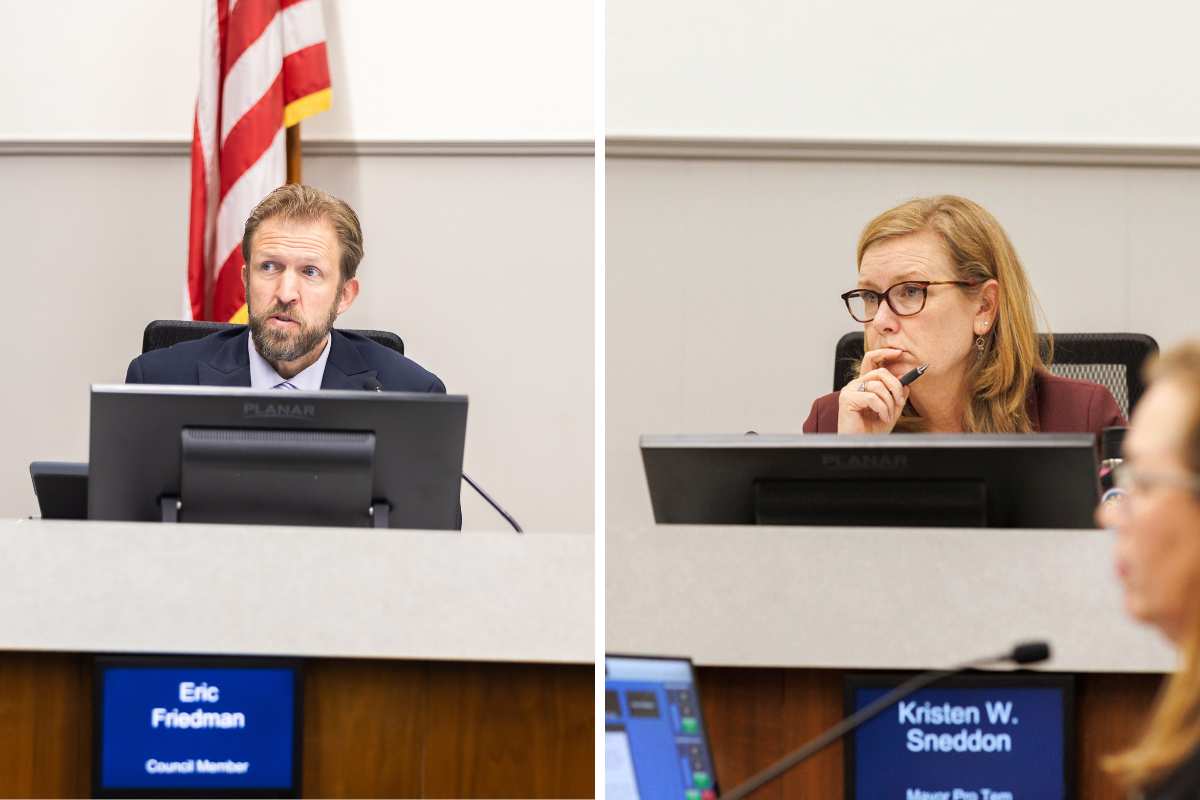
Heading into the final stretch before Election Day, money continues to play a major role in Santa Barbara’s mayoral race, as the campaigns for the two leading candidates — Councilmembers Eric Friedman and Kristen Sneddon — are pulling in thousands of dollars toward a last-minute push on advertisements, campaign mailers, and lawn signs.
According to public campaign filings, Friedman and Sneddon have far outpaced challengers Wendy Sim-Moten and Matthew David Kilrain, neither of whom has claimed any funding at this point in the race. From the beginning of the year through mid-September, Friedman had raised more than $185,000, while Sneddon reported $95,000 through the same period. Since then, Friedman has received more than $30,000 more in donations, while Sneddon has added another $10,000.
But the sources of the funding for Sneddon and Friedman give a glimpse into just how different the two candidates are, both in their policy decisions and in their respective supporter base.
Friedman’s financial contributors range from local leaders, such as Mayor Randy Rowse and Councilmember Mike Jordan, to well-known housing and real estate developers and industry insiders. Notably, Friedman received a donation of $4,996 from the SIMA Corporation — whose founder Jim Knell is one of the largest property owners in the city — and a maximum donation of $5,900 from billionaire real-estate developer and Indiana Pacers majority owner Herb Simon, whose former wife, Diane Meyer Simon, donated another $3,000.
More recently, Friedman received a flood of large-scale donations, with filings showing $32,326 in contributions from September 28 to October 9. These include $1,000 donations from Realtor Errol Jahnke, property designer Sean Black, and Santa Barbara Capital partner Wayne Siemens; a $2,500 donation from capital investor Bruce Savett; $3,000 from the Southwest Regional Council of Carpenters; and maximum donations of $5,900 each from the South Coast Business Action Fund and the California Real Estate Political Action Committee.
Sneddon’s contributors include local leaders (including three former mayors), nonprofit organizers, educators, academics, and housing advocates. These include $5,000 from Friends of State Street president Sharon Rich; $3,950 from prominent attorney Laurie Ashton; and another $1,000 from philanthropist Sara Miller McCune.
Sneddon raised another $9,150 from September 24 to October 18, with several large donations of $1,000 or more each. These include $1,000 donations from community organizer Hilary Licht, movie producer and Holes director Andrew Davis, and public affairs principal Alex Tourk, who formerly served as Gavin Newsom’s deputy chief of staff when he was mayor of San Francisco. Sneddon also received a maximum donation of $5,900 from Santa Barbara’s city employee union, SEIU Local 620.
Friedman says his backers represent a “broad coalition of support” and that he is “proud to have support from longtime friends, colleagues, small business owners, unions, environmental leaders, and organizations who believe in my ability to unite the city and get things done.”
Sneddon said she made it a point not to accept any developer funding. Her supporters, from longtime housing advocate and retired professor Richard Flacks to County Supervisor Laura Capps, have praised Sneddon’s scrutiny of campaign donations and raised concerns about the potential implications of Friedman’s financial support.
Supervisor Capps — who joined her colleagues Supervisors Roy Lee and Joan Hartmann in endorsing Sneddon — said that any local leader should be very careful about accepting funding that could influence future decisions.
“As an elected official, it’s really important to always put the public first and be extremely mindful of the agenda of special interests,” Capps said. “Yes, there’s money in politics — I wish it weren’t that way — but you have to scrutinize your donations to make sure there’s no correlation between the way you vote and the profits that your donors make. That is plain wrong to me.”
Capps raised the issue of State Bill 1439, a law intended to prevent conflicts of interest in government decisions. The “pay-to-play” law was updated in 2025 to prohibit any local elected official from taking part in a vote in which a principal party or their agent has contributed $500 to their campaign.
Capps said she was a major supporter of the bill as it made its way through state legislation, and Flacks (who contributed $250 to Sneddon’s campaign, according to filings) referred to potential SB1439 conflicts in his letter opposing the Independent’s endorsement of Friedman.
Flacks pointed to the contributions made by Knell, an owner of a large number of State Street properties, as a “glaring example” of the conflicts. The state law says that an elected official must recuse themself if they have reason to believe the participant has a financial interest in the vote, and Friedman’s opponents argue that Knell stands to benefit if there is vehicular traffic flowing in front of his properties. (Real estate experts contend that vehicular traffic is often a considerable factor in the valuation of commercial property.)
“Were [Freidman] to become mayor,” Flacks wrote, “he might have to recuse himself from deciding some of the most consequential matters facing the community’s future.”
It is unclear at this time whether Friedman would legally have to recuse himself from any specific items if elected mayor. The law is written narrowly and would only apply to votes involving direct contributors for up to a year.
Friedman responded to questions about potential conflicts of interest by saying that he encourages voters “to focus on how we can bring the community together and solve problems, and not what divides us.” He also asked voters to judge him on his previous voting record in favor of the State Street Master Plan.
“On SB 1439, it’s a good law that strengthens public trust in local government and holds every elected official to the same clear standard,” Friedman said. “I follow it, and I’ll keep following it as mayor. If any contributor has a permit, contract, or project come before the council, I’ll disclose the contribution publicly and step away from that decision whenever the law requires it.”
Related Posts

Premier Events
Fri, Oct 23
2:00 PM
Santa Barbara
Music & Meditation: Clarinetist Nancy Mathison & Pianist Antonio Artese
Wed, Oct 21
6:30 PM
Santa Barbara
Teflon Comedy/Non-Schtick – Evening of Comedy

Thu, Oct 22
5:30 PM
Santa Barbara
Best Fest: A Celebration of the Best of Santa Barbara® Readers’ Poll 2026
Thu, Oct 22
6:00 PM
Santa Barbara
Chaucer’s Books Author Talk & Signing- Daniel M. Jaffe “Russian Silhouette: A Memoir of Activism and Identity”
Fri, Oct 23
5:30 PM
Solvang
Solvang Haunted House and Street Fair
Fri, Oct 23
7:00 PM
Santa Barbara
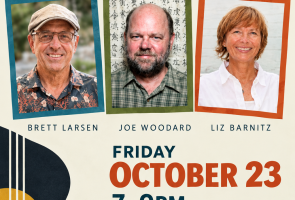
This & That Performs at Roy
Fri, Oct 23
7:00 PM
Santa Barbara
Beth Amine’s 20th Anniversary Wildcat Dance Variety Show

Fri, Oct 23
9:00 PM
Santa Barbara
Casa de la Raza Fundraiser: Brasscals! with DJ Darla Bea
Sat, Oct 24
10:30 AM
Santa Barbara
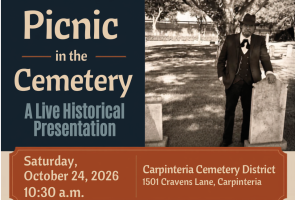
Picnic in the Cemetery: A Live Historical Event
Sat, Oct 24
11:00 AM
Goleta
2nd Annual Charger Cup to Benefit DP High Golfers

Sat, Oct 24
12:00 PM
Santa Barbara
Makers Hive Market
Fri, Oct 23 2:00 PM
Santa Barbara
Music & Meditation: Clarinetist Nancy Mathison & Pianist Antonio Artese
Wed, Oct 21 6:30 PM
Santa Barbara
Teflon Comedy/Non-Schtick – Evening of Comedy
Thu, Oct 22 5:30 PM
Santa Barbara
Best Fest: A Celebration of the Best of Santa Barbara® Readers’ Poll 2026
Thu, Oct 22 6:00 PM
Santa Barbara
Chaucer’s Books Author Talk & Signing- Daniel M. Jaffe “Russian Silhouette: A Memoir of Activism and Identity”
Fri, Oct 23 5:30 PM
Solvang
Solvang Haunted House and Street Fair
Fri, Oct 23 7:00 PM
Santa Barbara
This & That Performs at Roy
Fri, Oct 23 7:00 PM
Santa Barbara
Beth Amine’s 20th Anniversary Wildcat Dance Variety Show
Fri, Oct 23 9:00 PM
Santa Barbara
Casa de la Raza Fundraiser: Brasscals! with DJ Darla Bea
Sat, Oct 24 10:30 AM
Santa Barbara
Picnic in the Cemetery: A Live Historical Event
Sat, Oct 24 11:00 AM
Goleta
2nd Annual Charger Cup to Benefit DP High Golfers
Sat, Oct 24 12:00 PM
Santa Barbara