
[Updated: Wed., Nov. 4, 2026, 2026, 11:50am]
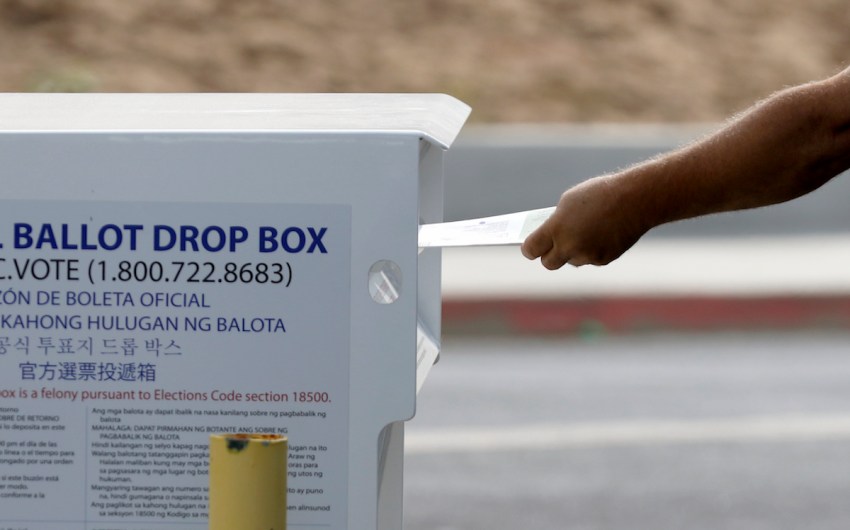
What happened Tuesday night was seismic. It was tectonic. It will go down in history as one of the most foundational power shifts in American political history — as Democrats succeeded in winning back sizable majorities in both the House and the Senate, majorities that will only continue to grow. They took Texas — for the first time in 40 years — and not just the Senate seat, but the governor’s mansion, the lieutenant governor’s as well, and even the state’s attorney general. They took Kansas — the first time in 94 years. They took Maine, South Carolina, North Carolina, Iowa, and Ohio, and, yes, they took Michigan. Voters went to the polls in droves to repudiate, in the most certain terms imaginable, the chaos, cruelty, corruption, incompetence, and inexhaustible self-glorification that for the past two years has defined every second of the Donald J. Trump presidency.
Trump, himself, of course should be indicted as co-conspirator to his own undoing, waging — among many things — his impetuous, unthought-out, unexplained, and all-but-unwinnable war on Iran, thus sending the price of oil, gas, and diesel spiraling skyward. With the Strait of Hormuz shut down or impeded as a result — an outcome predictable to any West Point cadet — the same oil companies from which candidate Trump brazenly begged for a $1 billion campaign donation have experienced a windfall of staggering dimensions. In the first six months of the war, the industry made $130 billion more than at the same time the year before. Today, that number has grown to $147 billion. Trump’s response? “I don’t give a damn,” he famously gloated. “I’m going to say it: We’re making a freaking fortune.”
In Santa Barbara, the price of gas jumped from $4 a gallon before the war started to $5.89. Diesel fuel jumped from $5.10 to $8.14. Do the math yourselves. Any way you slice it, it’s not affordable.
At Validation Ale in the Funk Zone on Election Night, Santa Barbara’s Democratic faithful gathered to celebrate their victories. Congressmember Salud Carbajal, Santa Barbara’s highest-ranking Democratic elected official and who has served in office since Trump was first elected in 2016, called Tuesday night’s results “a reckoning for America.”
“Tuesday was Judgement Day,” he said. “We took the House!” he exclaimed, his voice dripping with disbelief. “We took the Senate!”
In terms of the “what now,” Carbajal said he and his colleagues would be spending 85 percent of their time lightening the economic burdens the Trump White House imposed on ordinary citizens. The other 15 percent, he said, would be spent investigating corruption and abuse of power. “We’re going to impeach Pete Hegsteth,” he promised, referring to the so-called Secretary of War with whom he has uncharacteristically, spectacularly, and publicly sparred verbally on multiple occasions.
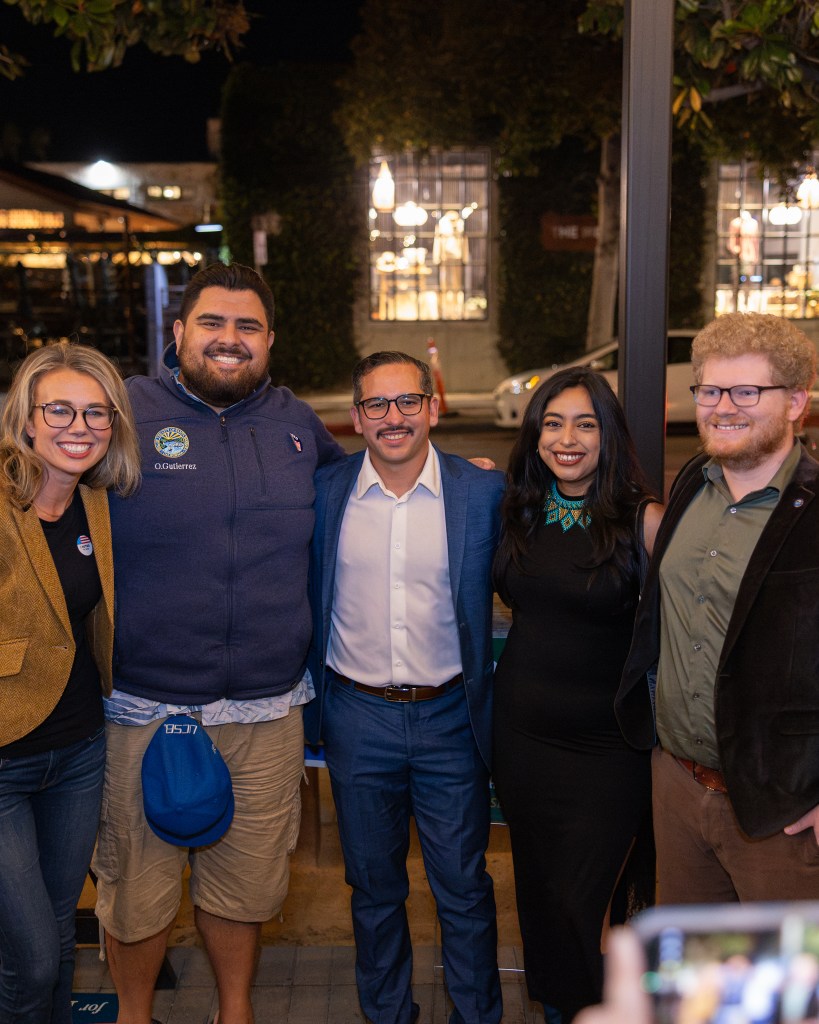
In Santa Barbara County — like much of the country — the Democratic tsunami appeared to lift pretty much all candidates with the letter “D” next to their name. With many votes still left to count, the three Santa Barbara City Council candidates backed by the Democratic Party — Devon Wardlow (ahead with 51 percent), Ian Baucke (62 percent), and Gabe Escobedo (68 percent) — all seem to have amassed strong enough leads to withstand reversal as all the late-arriving ballots are tabulated. Combined, these three candidates represent a striking generational shift at City Hall. Making them different will not be just their relative youth compared to prior councils, but their openly progressive brand of politics.
On Election Night, Escobedo, who will be representing the city’s downtown District 6, said their agenda would be the “most progressive council in city history” when it comes to “keeping people in their homes,” a reference to the city’s recently passed rent stabilization ordinance.
Wardlow — who won the city’s District 4, representing the upslope mountain side of the city — vowed to get to work on fire evacuation and figuring out how to get businesses back on State Street. While Wardlow strongly believes the city needs a rent stabilization ordinance, she has also been outspokenly critical of the measure that just passed, describing it as a bad case of legislative overreach.
District 5 councilmember-elect Baucke — at 27, the youngest member of the new council — said he felt humbled and honored by the vote and that he was eager to get to work. All three have served on various city boards and commissions; only one — Escobedo — has been elected to office before, in his case the Santa Barbara Unified School Board.
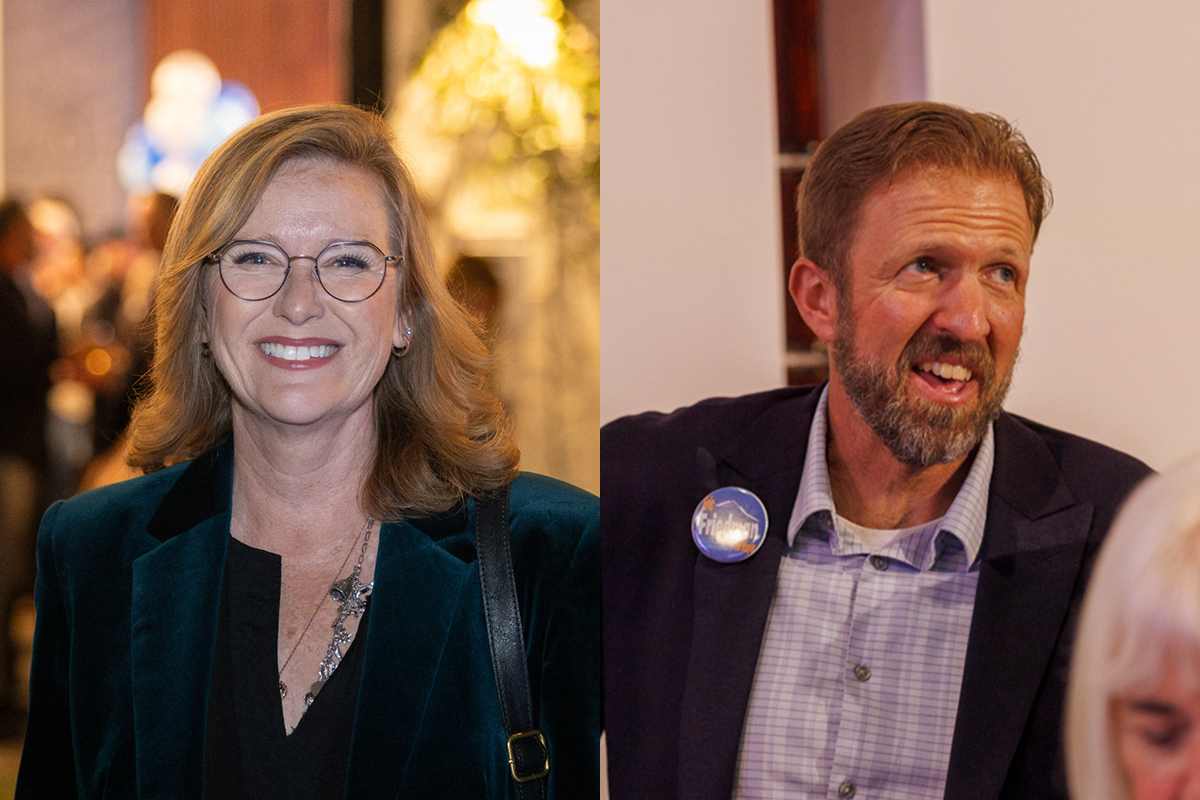
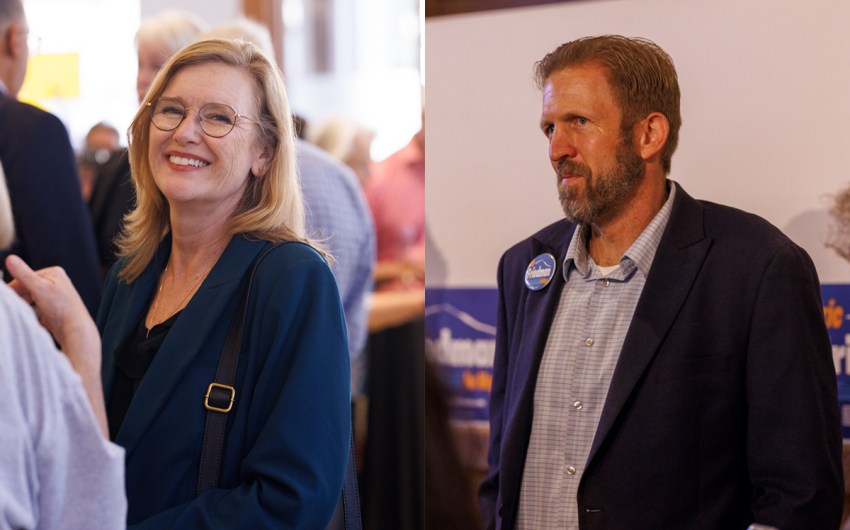
Still conspicuously unresolved is the outcome of the city’s mayoral contest. While there were four candidates’ names on the ballot, in reality, the race was a showdown between two two-term councilmembers, Kristen Sneddon and Eric Friedman. Both are Democrats, but each represents distinct segments of the party’s ideological wavelength.
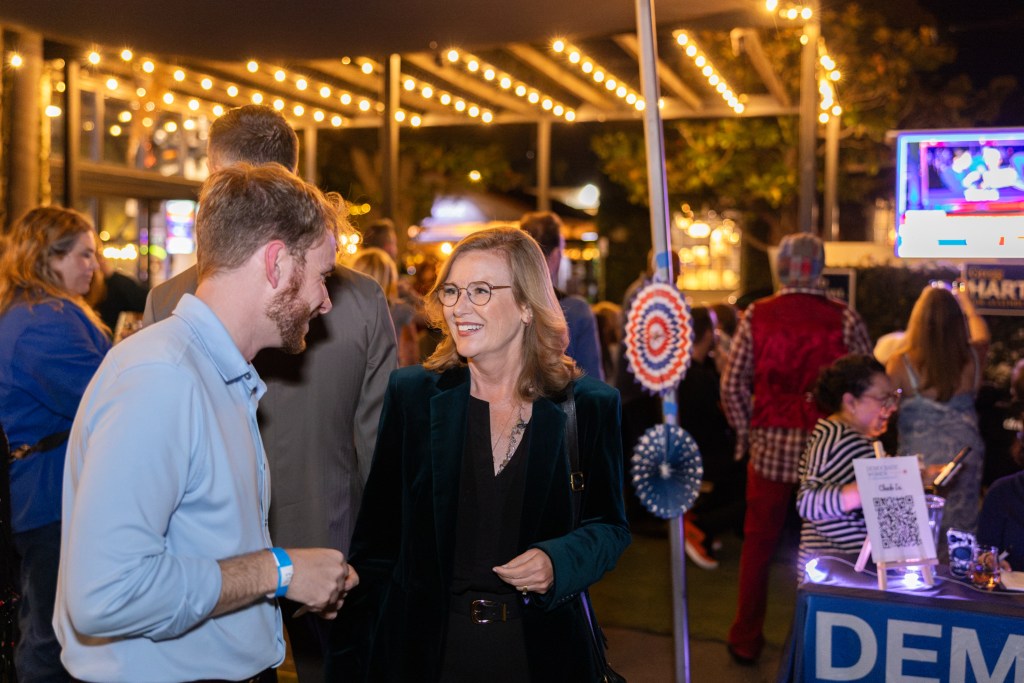
Sneddon — an all-out progressive who supports affordable housing but also maintains the city’s defining historical character — won the endorsement of the party.
Friedman, by contrast, is a nuts-and-bolts policy wonk and fiscally conservative moderate. Unlike Sneddon, he does not support the rent stabilization ordinance as it is written, which likely will soon appear on a citywide referendum election ballot, assuming the crews of paid signature gatherers — $9 a signature — who stood in front of downtown polling places, clipboards in hand, are able to get their required number to qualify.
Likewise, Sneddon and Friedman disagree over the city’s State Street Master Plan — the focus of five years’ worth of public meetings and endless deliberations — which will definitely appear before voters in the months to come in the form of yet another referendum. Sneddon was an early, enthusiastic supporter of the eight-block car-free zone on State Street; Friedman pushed for a four-block-long compromise but got nowhere for his efforts.
Because of these differences, Friedman had no prayer of getting the party endorsement. Instead, he was bankrolled generously — some might say extravagantly — by downtown and out-of-town real estate interests — opposed to rent stabilization and to the State Street Master Plan. In fact, one of his biggest donors, commercial real estate titan Jim Knell, bankrolled the signature-gathering effort for the Master Plan referendum. Friedman has expressed hope that he can broker some kind of interim understanding between Knell and others who want cars back on State Street and his council colleagues who want State as a car-free street.
At last count, Friedman had a razor-slim edge over Sneddon. Tuesday night, he had a 500-vote lead. On Wednesday morning, it was slightly more than 300. The race remains too close to call, and both Sneddon and Friedman find themselves caught in a state of suspended agitation.
Sneddon has sought to score points by highlighting how much real estate money Friedman has received. Friedman and his real estate PACs responded by flooding voter mailboxes with endorsement mailers by Salud Carbajal, for whom Friedman worked when Carbajal was still a county supervisor. Both Friedman and Sneddon expressed admiration for the campaigns waged by the three victorious progressives.
“I think the City Council is going to be a really exciting place to be,” said Sneddon.
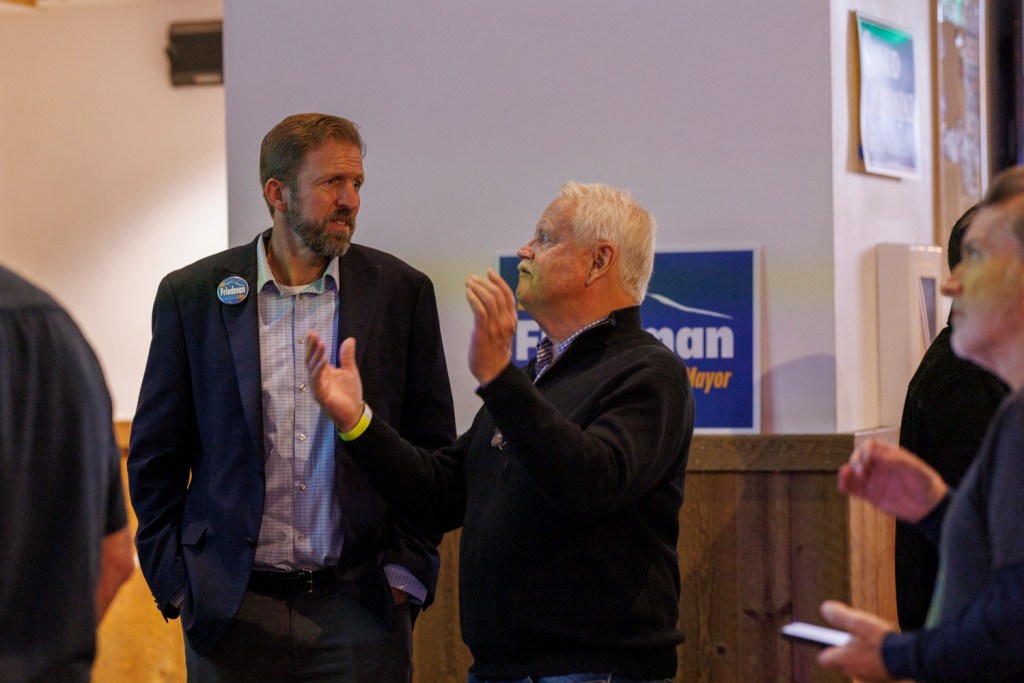
Friedman congratulated all who ran, and said of the three, “It looks like the council is going to be in a new direction with the three new councilmembers.”
Both find themselves stuck in an uncomfortable hiatus. “You know I’m just glad a lot of people voted,” Friedman said. “And there’s a lot of votes to be counted.”
Whoever is elected will replace Mayor Randy Rowse, who won the job four years ago against a field of five candidates with 10,000 votes. Rowse, a no-nonsense fiscal conservative whose sharp sense of humor was badly strained during his years in office, frequently found himself the odd man out on the future of State Street, rent stabilization legislation, and how much the council should dip into the city’s strained reserves. Before becoming mayor, Rowse, who owned a popular restaurant and voted for both Barack Obama and Mitt Romney in his lifetime, served nine years on the City Council. As mayor, Rowse worked hard, was one of the few to show up regularly at City Hall, and ran crisp, orderly meetings. But to the extent his job description included the herding of cats in pursuit of getting to yes, it’s safe to say not many council cats got herded.
How well Friedman or Sneddon might engage cohesively with the soon-to-be new majority and constructively with city staff — apprehensive about what might be seen as the fiscal largesse and relative inexperience of the new council majority — remains for the time being a matter of intense speculation.
While the race for the 5th county supervisorial district — centered in the City of Santa Maria — might seem far afield from South Coast political sensibilities, its outcome is probably the most consequential of local races when the sweep, scale, and impact of the county’s vast array of safety-net services and first responder public safety functions is factored in. The election pitted Ricardo Valencia, a loud and proud political progressive, high school teacher, and Santa Maria school boardmember, against Maribel Aguilera, a declined-to-state middle of the roader. Sable oil donated more than $100,000 to a political action committee dedicated to keeping Valencia out of office. By press time on Wednesday morning, Valencia’s lead had tightened marginally, and the race remained too close to call.
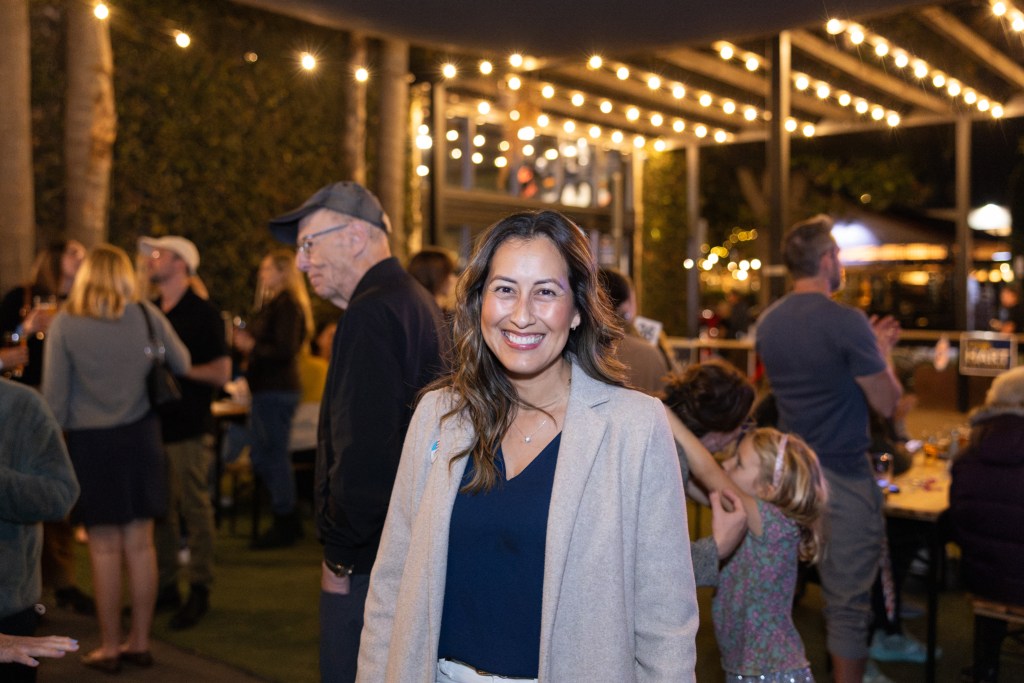
The race for the two seats on the Santa Barbara Unified School District begs the age-old question about dogs that chase after cars: What do they hope to do with them if and when they ever catch one? Multi-term incumbent Rose Muñoz — praised more for the comity of her presence than for contributions made during board meetings — was defeated by challenger, corporate and nonprofit CEO and school mom Valerie Amparan, who campaigned on the platform she knew the tough questions to ask and had the fortitude to demand answers. All that sounds not just promising but necessary, though it begs the toughest question yet: How does the district do more with less?
The other seat in a two-way race was Jacqueline Inda Karlsen, a longtime community activist who seems to have chased after pretty much every car on the freeway. Most recently, she’s been involved with efforts to feed immigrant families fearful of ICE. Several decades ago, Inda Karlsen was one of the plaintiffs in the lawsuit that led to district elections in Santa Barbara. Inda Karlsen—endorsed by the Democratic Party —beat out Mark Philibosian, a business-minded bean counter and number cruncher whose sense of community service is infused with a strong Christian viewpoint.
At the Validation Ale victory party, Inda Karlesen stressed her ability to provide a voice to those who presently are not heard. “I believe that it takes working with the community in order to represent the community, and I’ve worked with this community for decades,” she said.
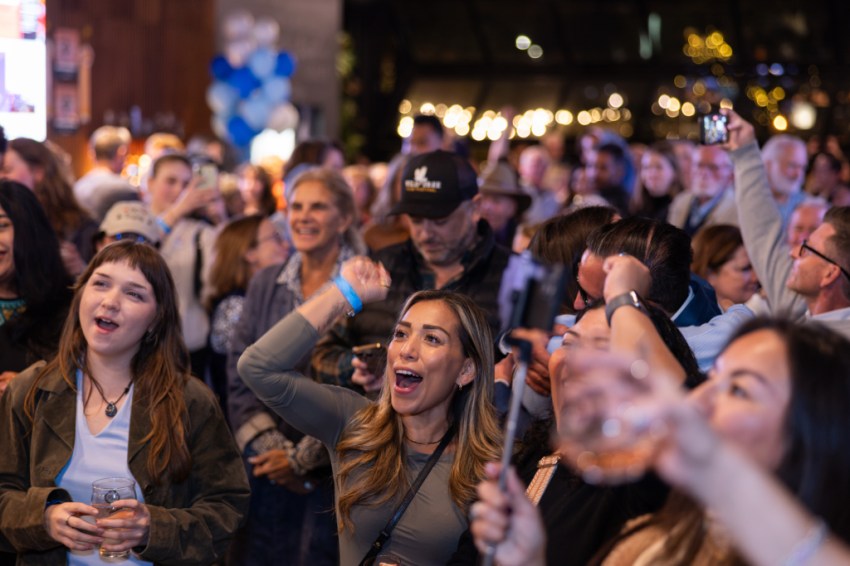
The Big Blue Tide appears to have helped efforts to create a new council majority on the Lompoc City Council and unseat incumbent mayor Jim Mosby. Mosby was decisively beaten by challenger and fellow city councilmember Jeremy Ball. County Supervisor Joan Hartmann, whose 3rd District includes Lompoc, backed Ball as well as Sarah Anne Read, a longtime nurse married to a retired air force officer, who prevailed over incumbent and Mosby ally Nick Gonzales. But efforts to replace Victor Vega, a longtime incumbent also tight with Mosby, with political newcomer Sharlameigne Segovia, fell short. Lompoc and the County of Santa Barbara have many bridges to mend. City Hall has been resistant to county entreaties to take a more proactive role — one might say less hostile — with regard to the large number of homeless people living in the riverbed.
With Elon Musk’s SpaceX at Vandenberg expanding its satellite launch program exponentially, so, too, has the size of the workforce required. Base commanders are projecting a workforce population growth of 10,000 in the years to come. Whether those numbers are real — and some question their accuracy — the growth is happening and will require significant planning.
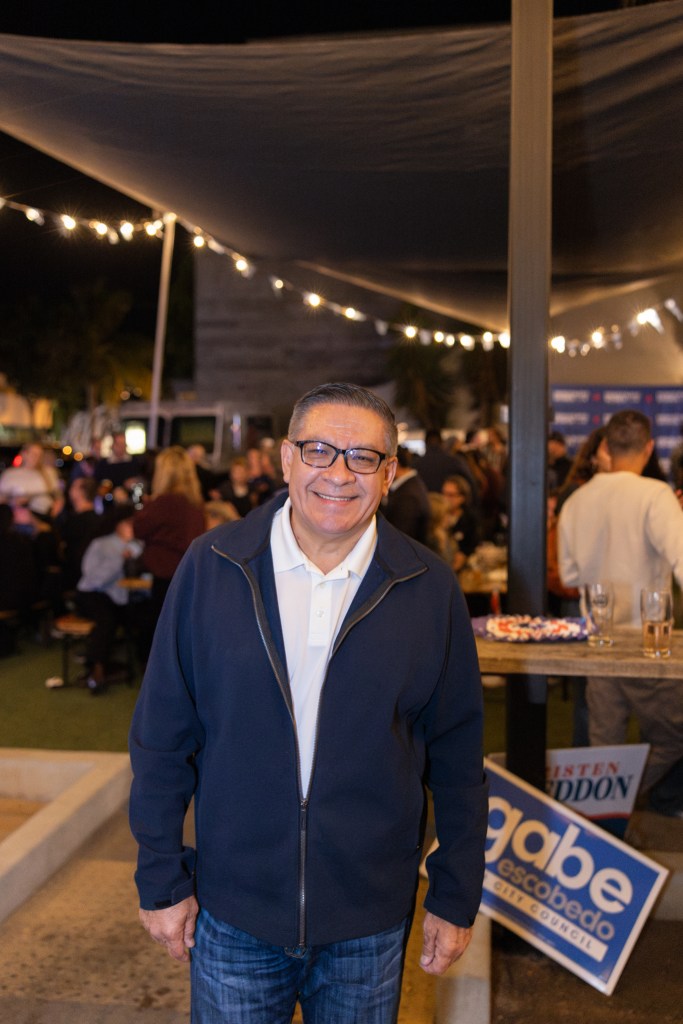
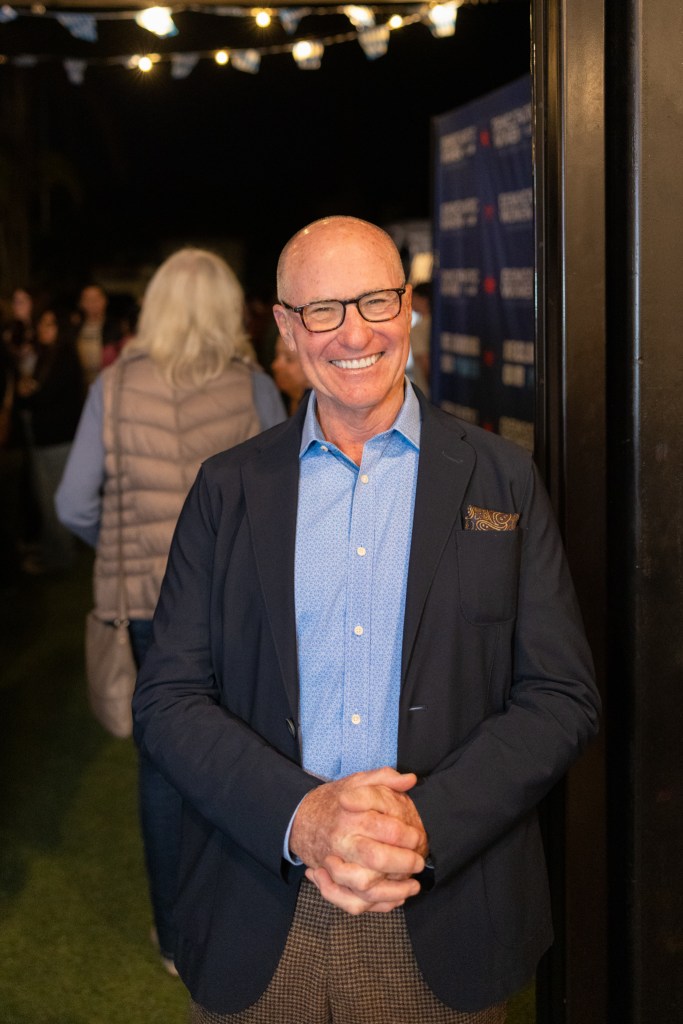
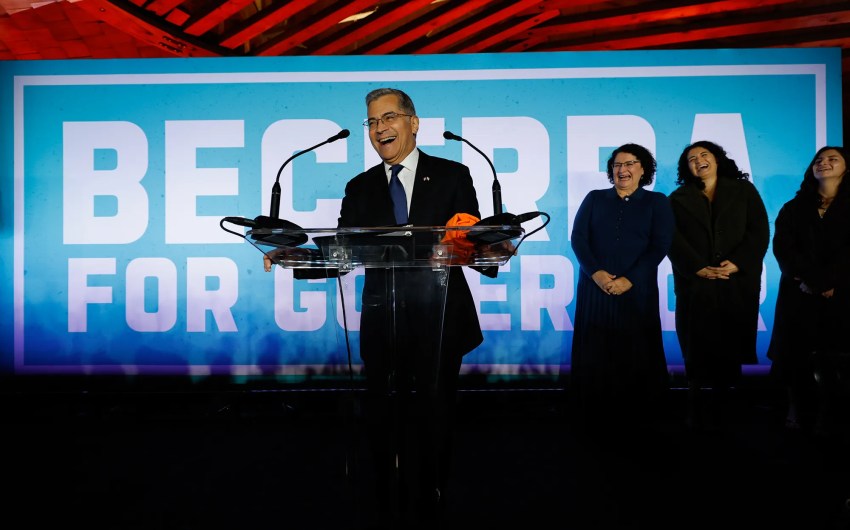
Other Democratic Party stalwarts, Congressmember Salud Carbajal and State Assemblymember Gregg Hart both easily won reelection by early margins exceeding 67 percent. Likewise — and predictably — Santa Barbara voters overwhelmingly supported Democratic Gubernatorial candidate Xavier Beccera over the Trump endorsed Republican, Steve Hilton.
In the meantime, Santa Barbara, like much of the country, is still waking up from what feels like a cosmic pinch-me moment. What comes next, we will find out when we get there.
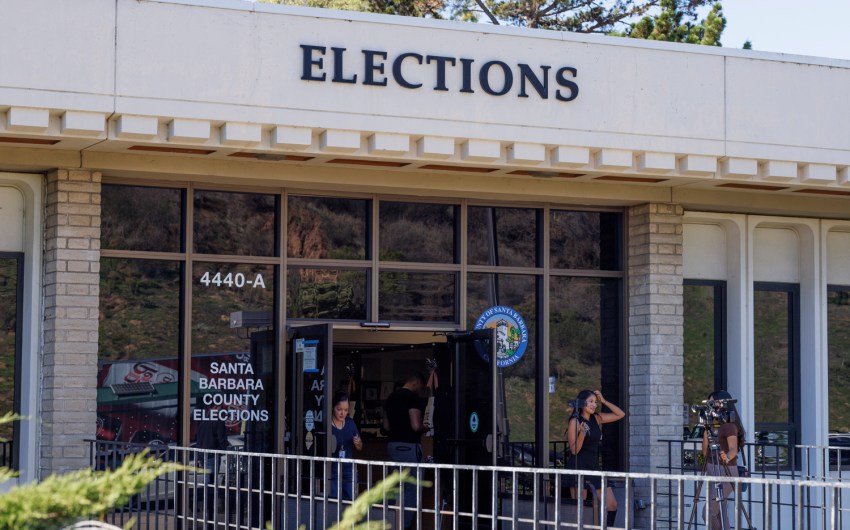
For the latest results in these races and others, see our live election results page. The county is expected to release the next round of updated results on Thursday afternoon.



You must be logged in to post a comment.