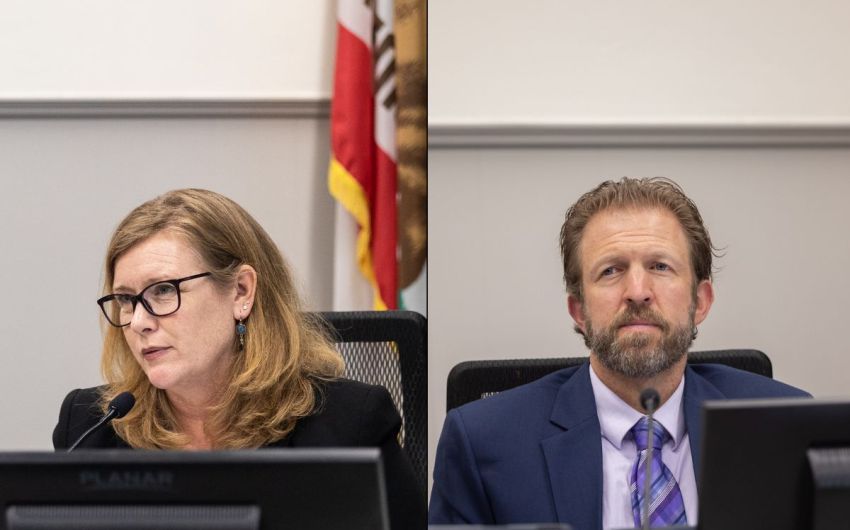
The countywide 9-1-1 outage on July 22-23 that affected emergency phone calls and airport operations for less than 24 hours is still under investigation, said Kelly McAdoo, Santa Barbara city administrator.
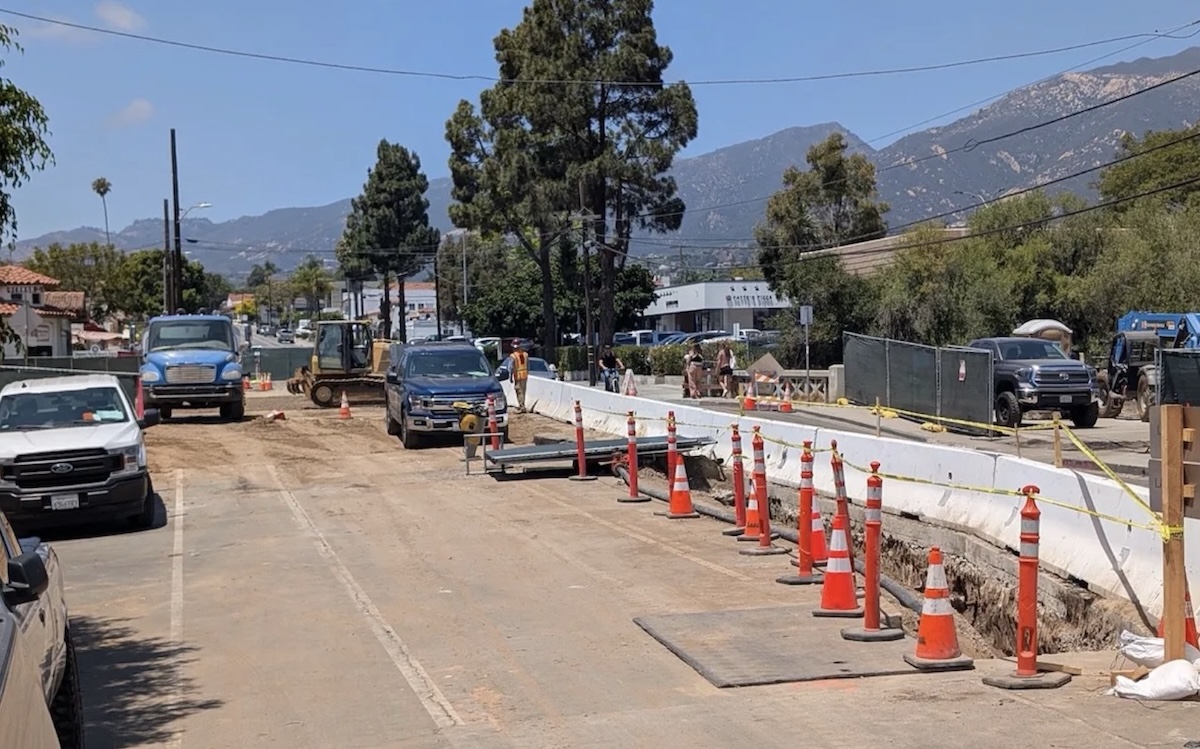
What they do know is that trenching work at the reconstruction site of the De la Vina Street bridge had cut the Frontier Communications fiber line. According to the county — quoting the state Office of Emergency Services — it was two lines. In order to prevent a recurrence, however, McAdoo said that she, county executive Mona Miyasato, and Frontier leadership were meeting to discuss a redundant system to prevent a similar outage.
Once the loss of services was confirmed, emergency agencies countywide immediately sent out alternative phone numbers for the public to call and also reminded them that 9-1-1 accepts text messages. All the first responder agencies contacted recently indicated that little disruption occurred.
Cottage Hospital spokesperson Cristina Cortez said its team had planned and trained to respond to an emergency like this, and that no patient-care disruptions had occurred. There had been no unusual number of calls for ambulance service, said Dave Schierman, director of operations for AMR in Santa Barbara County. “From a field perspective, there was a slowdown in the first 30 minutes or so, but things switched over to cell phones pretty quick and there was no discernible difference after that.”
At Vandenberg Space Force Base, the TRACERS solar wind and Earth magnetic field mission was delayed by one day. A power outage had “disrupted telecommunications at Los Angeles Air Route Traffic Control Center,” a k a L.A. Center, which manages air traffic over the Pacific Ocean, the FAA’s Office of Communications stated. The launch delay was for “the safety of the traveling public.”
Santa Barbara Airport was closed for the duration, redirecting or canceling about 20 flights and 2,000 passengers. The severing of the fiberoptic line caused air traffic control at the tower to go down. More importantly, SBA’s flight tracking facility was also inoperable. This could have affected radio frequencies used exclusively for Santa Barbara Airport traffic, but it also could have affected the ground-based aircraft positioning stations.
In San Luis Obispo, the airport relies on SBA’s flight tracking equipment, but it was able to resume operations after 90 minutes after switching over to LA Center’s flight trackers.
City Council has not requested a report into the incident, though it is expected that the results of McAdoo’s investigation will be made public.