

Soundtrack to this column: Daniel Lentz, Point Conception (Cold Blue), featuring Arlene Dunlap link; Daniel Lentz, Missa Umbrarum (New Albion) link.
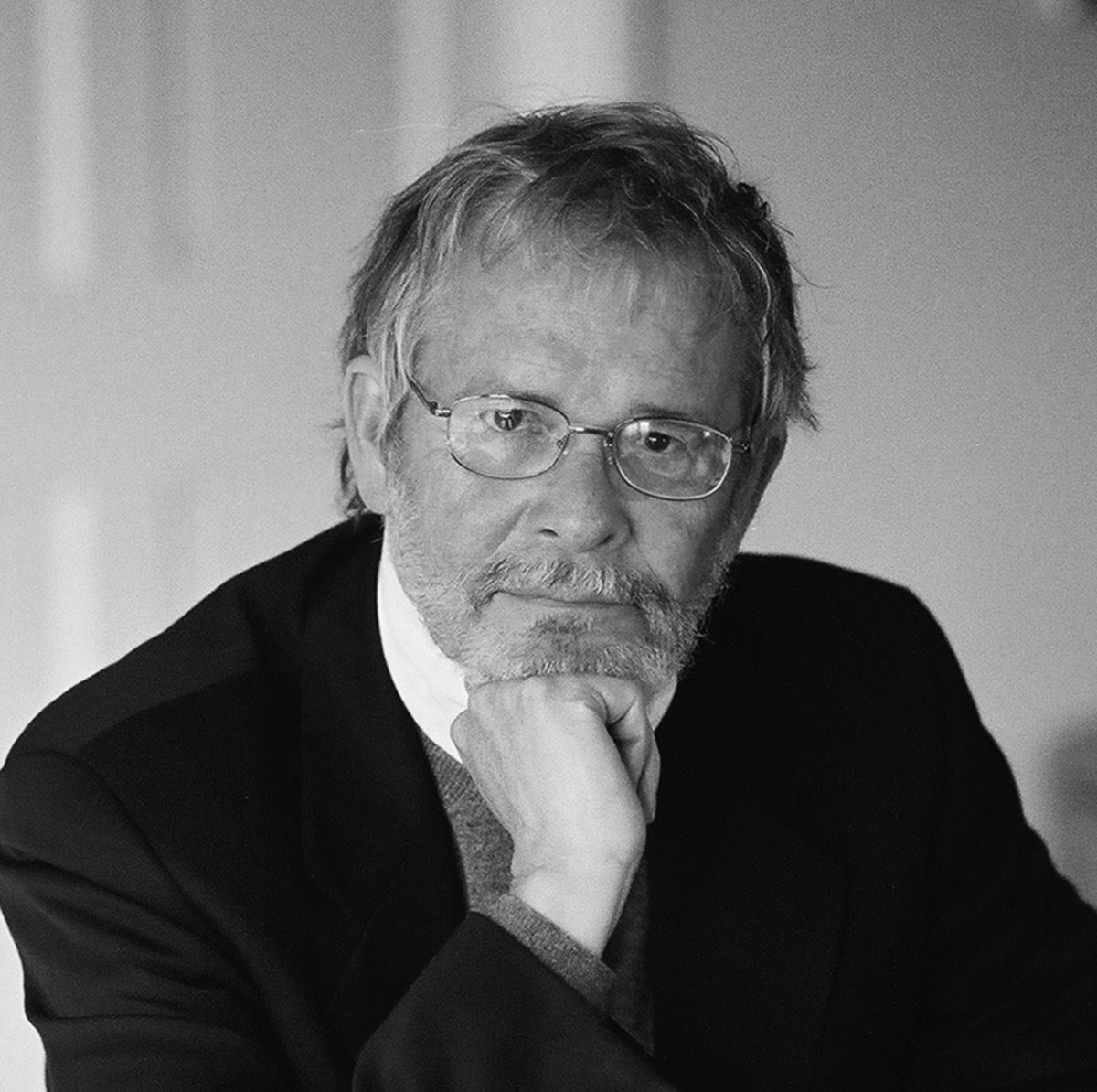
The sad news came late last week that distinctive composer-thinker Daniel Lentz had reached the other side of the hyphen. Lentz (1942-2025), an artist with many links to Santa Barbara over the past 50-plus years, died of congestive heart failure at age 84, in hospice at Serenity House.
It was somehow a fitting final stop for a composer whose massive body of music could often blend elements of contemplative beauty with experimental verve and visceral magnetism with intellectual gamesmanship. He was a meditative maverick, whose body of work deserves to be re-appraised for its originality of form, attitude, and sense of adventure … and yes, serenity, after a fashion.
Although often linked to the mothership style of minimalism, at one point considered a prime mover in the West Coast school of minimalism, Lentz brought his own private and category-evasive approach to his music. His background was in electronic music, earning a Fulbright and studying in Stockholm in the late ‘60s, before landing at UCSB as a visiting lecturer. He deployed electronic elements in many of his pieces, as well as a deep connection to liturgical traditions and musical forms. Born in Latrobe, Pennsylvania and raised a Catholic, Lentz lapsed in terms of Godly belief, but his strong ties to the musical elements were funneled into such pieces as the lovely “Missa Umbrarum,” first performed at the Old Mission in Santa Barbara before heading to Europe and a moving recorded incarnation.
He could also be a conceptualist wildcard composer, who once staged a piano recital at UCSB in which the performer and page turner wound up in apparently carnal embrace on the piano by work’s end. He wrote hypnotic music for carefully fingered wine glasses, whose ethereal effect melded with the fuzzy sensation of wine’s effects.
Lentz, long a friend and artistic ally with Santa Barbara’s power couple Dick and Arlene Dunlap, spent some years living in Los Angeles and held a post at Arizona State University. After landing in L.A., Lentz explained that, “My music is getting very much faster as time goes on; every year, it seems to pick up about 10 or 20 beats per minute. It’s true. I guess it’s the effect of living in L.A. In Santa Barbara, everything moves slowly. Now, the only time I have something slow is over the top of something fast. If you’re writing slow music in L.A. there’s something strange. It’s not a mellow place. You hear about mellow California, but it’s a hyper city.”
But the pull of Santa Barbara was hard for him to shake (as it can be for many). He recorded at Santa Barbara Sound Design, with inspired engineer Daniel Protheroe at the controls, and lived back in town for several years in his final chapter. During that time, he unveiled the visual side of his creative impulse, with a 2012 exhibition of his illuminated manuscripts at the old Funk Zone–based location of the Arts Fund, a show in collaboration with Dick Dunlap called Seeing Hearing.
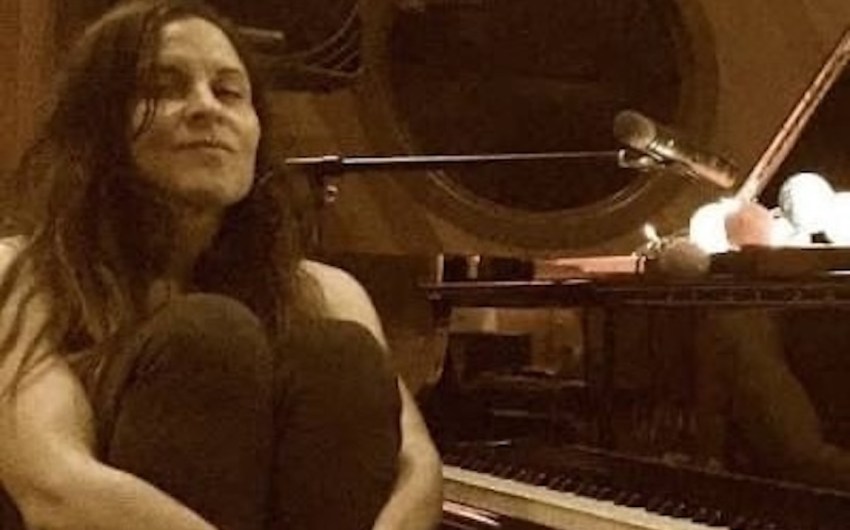
Arlene, who herself passed on earlier this year, was the spotlight — or house of mirrors–like series of spotlights — in the dazzling multi-tracked piano work Point Conception, released on the Cold Blue (which put out many a Lentz title). This humble scribe penned these words in the Independent years ago: “Point Conception is Lentz’ back-handed answer to the cool purr of ambient piano music. Such is the Lentz touch, tossing knuckleballs into extended musical traditions, but doing it with disarming grace.”
Fast forward to several years back, and Lentz’ skill with solo piano music was lustrously represented on the album In the Sea of Iona (link), with bold Los Angeles pianist Aron Kallay on the recording and in the 805 house of the Jim Connolly–run Piano Kitchen on Rose Avenue. The temperamentally “Pacific” album includes the piece “Pacific Coast Highway,” and, in epic pieces “51 Nocturnes” and the closing title track, we can even detect trace influences of Brian Wilson (speaking of important West Coast musical visionaries).
I did a long and winding interview with Lentz in Santa Monica back in 1987 upon the release of his Angel Records release of Crack in the Bell, which was also performed by the L.A. Phil’s New Music group. He spoke about the inherent impact of jazz — he was a former jazz trumpeter — on modern composers. “To pretend otherwise, for any American,” Lentz said, “they’d be a fool unless you haven’t listened to anything your whole life. The same with rock and roll. They’ve had a most definite influence on me. I don’t go out and say `I like this lick’ and do it. It’s more a matter of consciousness. All the radio play and what we hear in restaurants gets in there (points to his head). It’s no accident that Muzak and New Age music are popular. I like Harold Budd’s quote: `When I hear the term New Age, I reach for my gun …'”
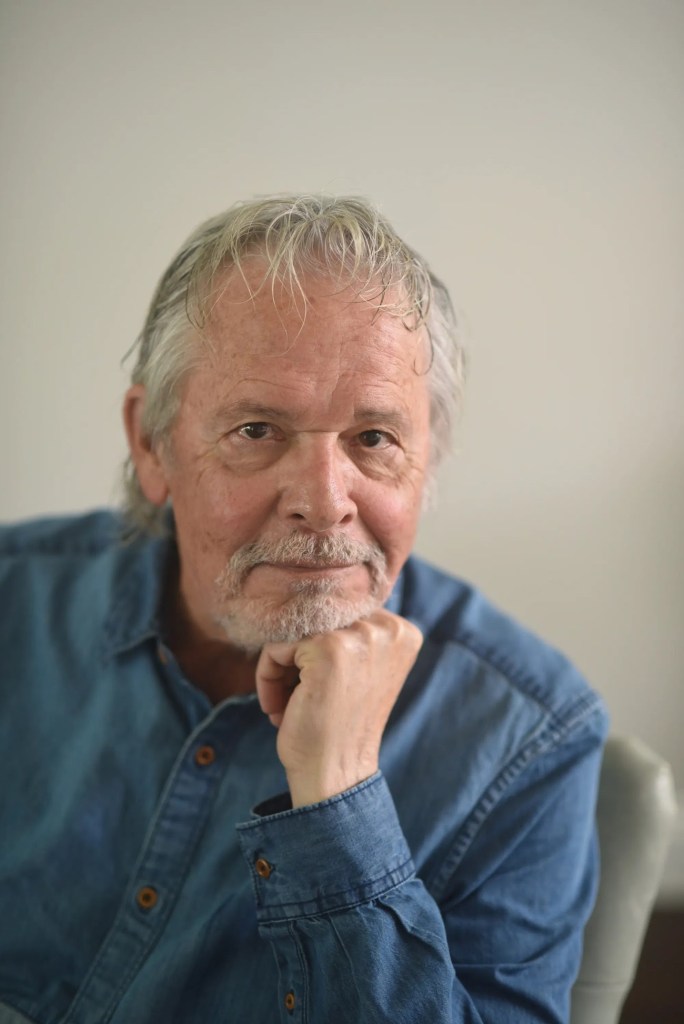
He later expanded on the subject, suggesting, “It’s all folk music. If you want to be unkind, you could call rock peasant music. It’s on that level and mentality, but it doesn’t make it less elegant. Sometimes it’s very beautiful. So is `Greensleeves.’ What’s a prettier melody than that?”
I mentioned that his vocal piece ‘On the Leopard Altar” could be viewed, from one angle, as a kind of artful pop ballad. “I wouldn’t be opposed to hearing somebody arranging it that way. The Kyrie melody; that’s out of the Middle Ages, practically. It’s Phrygian. It ends on the Mixolydian mode. Anyway, I’m not saying that this is in the class of `Greensleeves,’ but I like it a lot. It’s hard to write something a capella that will hold its own. It stands by itself. You can’t harmonize Phrygian without killing the melody.”
“`Norwegian Wood’ is great. It’s sort of an inverted version of ‘Greensleeves.’ Another great song is `Send in the Clowns.’ Sondheim’s a great composer.”
For Lentz, the topic of where he fit into the musical cosmos and marketplace was both an enigma and a source of bemusement. He just went about his ways, damn prevailing mindsets or the Man. “There are different names for these different camps,” he commented on that day. “Maybe there’s a third camp, that maybe I belong to. I’m not saying I belong to one club or the other. I hope I belong to the Cro-Magnon — mellow and non-aggressive. The Cro-Magnon was obviously weaker than the Neanderthal physically, but he had the smarts on his side. Over 20,000 years, it’s paid off. I don’t know if we have time, because the Neanderthals do have the bombs. It only takes a button to end the whole show.
“I’m kind of an elitist, I guess. I’ve called rock and roll `rock and prole’ for years. The Beatles had it. It was better than this stuff,” he points to the David Sanborn music spewing out of the speakers in our restaurant.
“The wolf eats the lamb, too. And vice versa. There’s a paradox there.”
Lentz himself was a walking, restlessly creative, composing paradox. The man is gone, but the music lives on. Taking a deep dive into his wealth of recorded material confirms the unique power and poetry of Lentz musical thinking, transcending genre and fashion. His time seems to be an ever-present now.
To-Doings:

Whatever trepidations we might feel about the dubious cultural and historical underbelly of “Old Spanish Days” (“Old Conquistadores Days?”), there are self-evident pleasures afoot in this Fiesta week. Gastronomy of the Mexican kind beckons at the Mercados, and stages bump and bustle with action, along with dancing of Spanish/flamenco and Mexican flavors.
But one of the highlights of the long weekend transpires up Anapamu (Chumash for “the rising place”) at the Santa Barbara Bowl for its Saturday night Mariachi Festival soirée, a great heap of music with proceeds going to scholarships for Hispanic youths. Now up to its 28th year and featuring Angeles Ochoa, Mariachi Nuevo Tecalitlan, and Leonardo Aguilar, the festival is known far and wide as a showcase for some of the finest mariachi action anywhere. You heard it, and will hear it again, here.
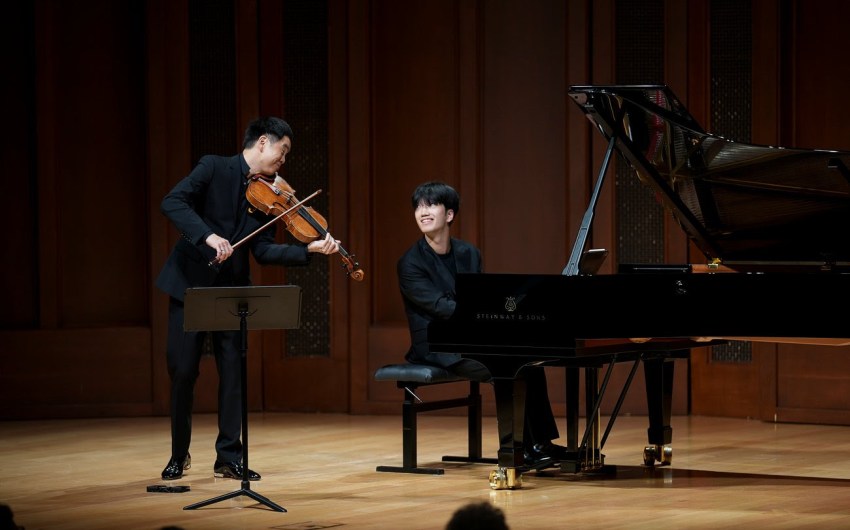
Meanwhile, on more “serious” musical grounds, the Music Academy of the West moves forward into the final phase of its eight-week summer smorgasbord. This week’s highlights include an entry in the welcome new tradition of “Composers in Context” concerts, this one featuring the music of composer inti figgis-vizueta at Hahn Hall on Friday, August 1. Also on the program is music by Caroline Shaw and Hungarian modernist master György Ligeti (making up for the Ligeti music jettisoned from Jeremy Denk’s recent “Beethoven Plus” program).
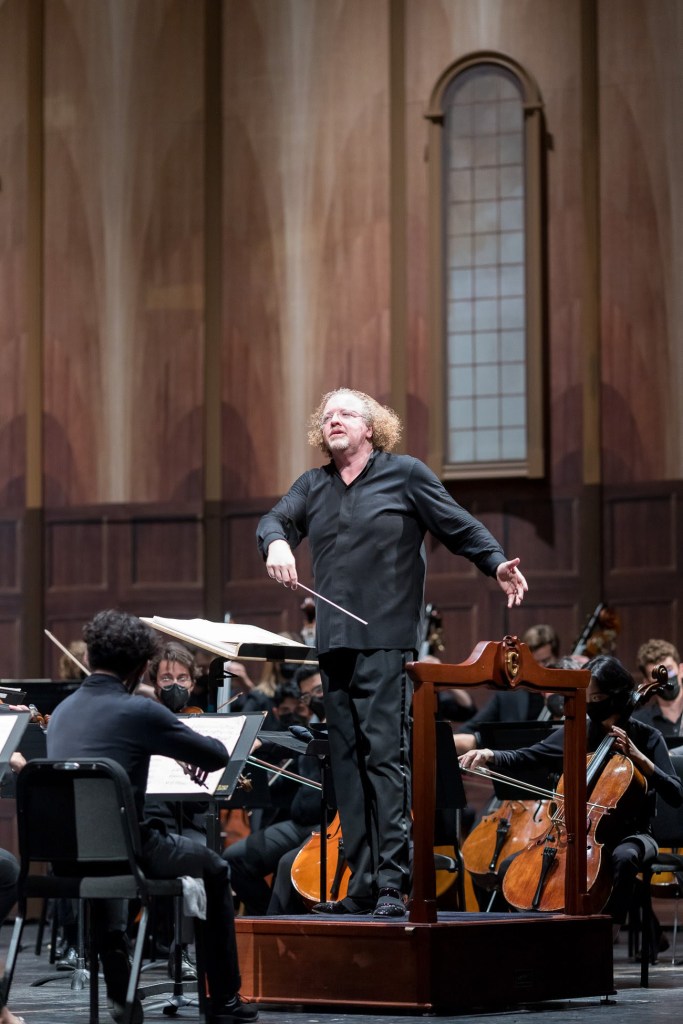
A broader and more general audience appeal (not to mention Bo Derek fans) is attached to this Saturday’s Academy Festival Orchestra concert at The Granada Theatre, featuring Ravel’s ever-popular Boléro. The crack young orchestra will be conducted by Frenchman Stéphane Denèuve and fleshed out by French music of Berlioz and Albert Roussel.
Related Posts



Premier Events
Fri, Oct 23
5:30 PM
Solvang
Solvang Haunted House and Street Fair
Fri, Oct 23
7:00 PM
Santa Barbara
Beth Amine’s 20th Anniversary Wildcat Dance Variety Show
Fri, Oct 23
7:00 PM
Santa Barbara
This & That Performs at Roy
Fri, Oct 23
9:00 PM
Santa Barbara
Casa de la Raza Fundraiser: Brasscals! with DJ Darla Bea
Sat, Oct 24
10:30 AM
Santa Barbara
Picnic in the Cemetery: A Live Historical Event
Sat, Oct 24
11:00 AM
Goleta
2nd Annual Charger Cup to Benefit DP High Golfers
Sat, Oct 24
12:00 PM
Santa Barbara
Makers Hive Market
Sat, Oct 24
2:00 PM
Santa Barbara
Japanese Sacred Architecture: Shinto and Buddhism

Sat, Oct 24
2:00 PM
Santa Barbara
Thriller 2026 – Get Scary for Charity!

Sat, Oct 24
3:00 PM
Santa Barbara
Downtown Santa Barbara Trick-or-Treat
Fri, Oct 23 5:30 PM
Solvang
Solvang Haunted House and Street Fair
Fri, Oct 23 7:00 PM
Santa Barbara
Beth Amine’s 20th Anniversary Wildcat Dance Variety Show
Fri, Oct 23 7:00 PM
Santa Barbara
This & That Performs at Roy
Fri, Oct 23 9:00 PM
Santa Barbara
Casa de la Raza Fundraiser: Brasscals! with DJ Darla Bea
Sat, Oct 24 10:30 AM
Santa Barbara
Picnic in the Cemetery: A Live Historical Event
Sat, Oct 24 11:00 AM
Goleta
2nd Annual Charger Cup to Benefit DP High Golfers
Sat, Oct 24 12:00 PM
Santa Barbara
Makers Hive Market
Sat, Oct 24 2:00 PM
Santa Barbara
Japanese Sacred Architecture: Shinto and Buddhism
Sat, Oct 24 2:00 PM
Santa Barbara
Thriller 2026 – Get Scary for Charity!
Sat, Oct 24 3:00 PM
Santa Barbara



You must be logged in to post a comment.