
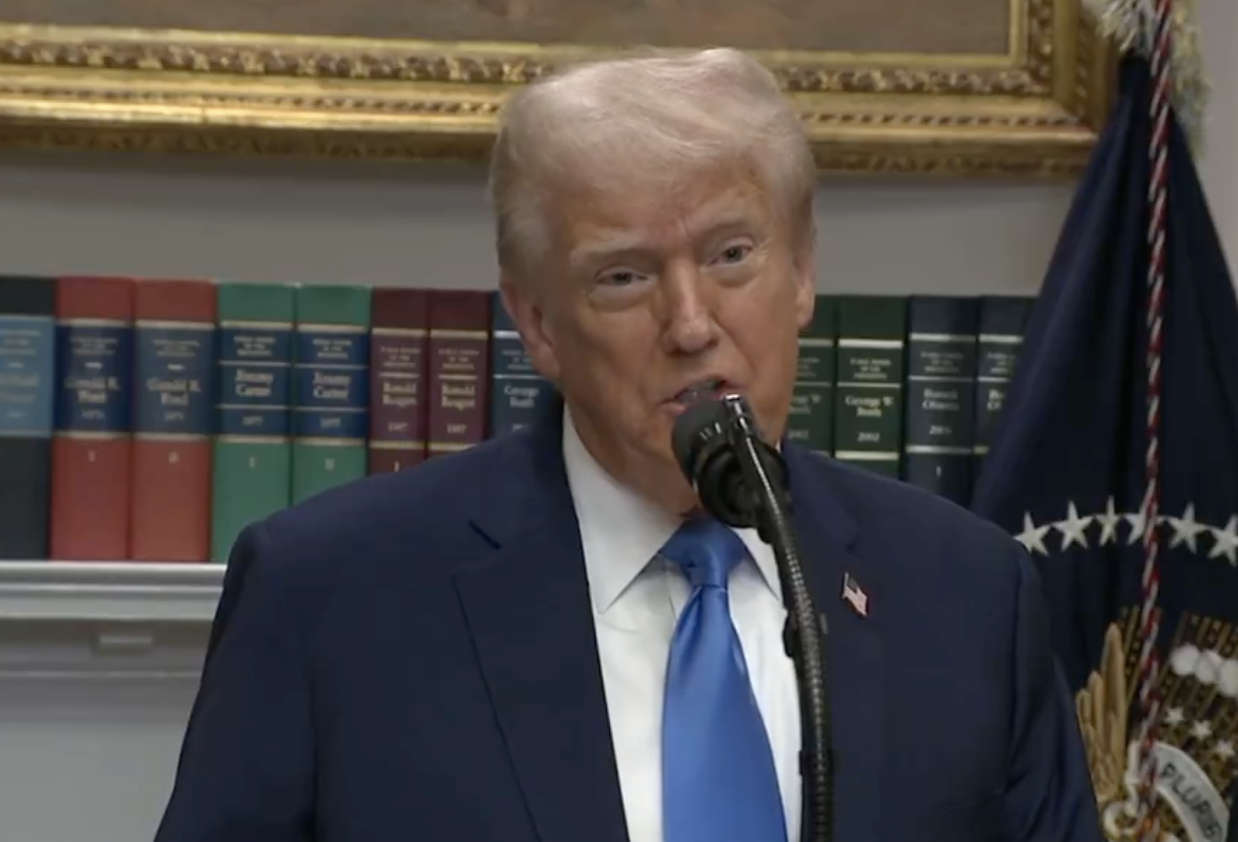
President Donald Trump advised pregnant women against taking Tylenol during a press briefing on Monday, warning of an unproven link between the pain relief drug and autism.
In lieu of taking Tylenol, and its active ingredient, acetaminophen, the president suggested that women instead “tough it out.”
However, Tylenol has long been the safest pain management option for pregnant women — when used in moderation — especially considering the risks of birth defects and miscarriage already associated with generic ibuprofen and brand-name versions such as Advil.
Tylenol-maker Kenvue told reporters in a statement that “sound science clearly shows that taking acetaminophen does not cause autism,” citing previous scientific reviews, including past studies by the Food and Drug Administration (FDA).
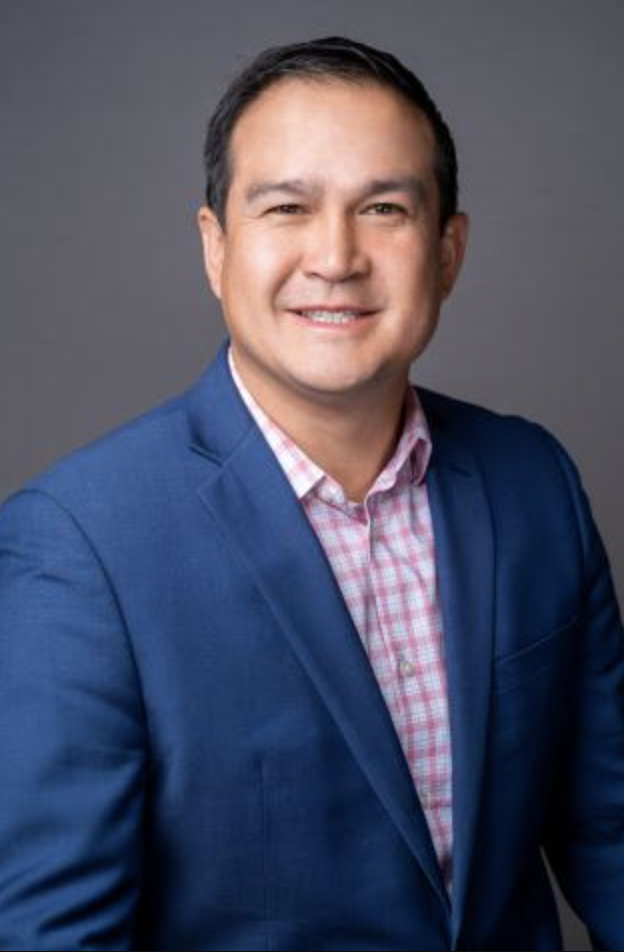
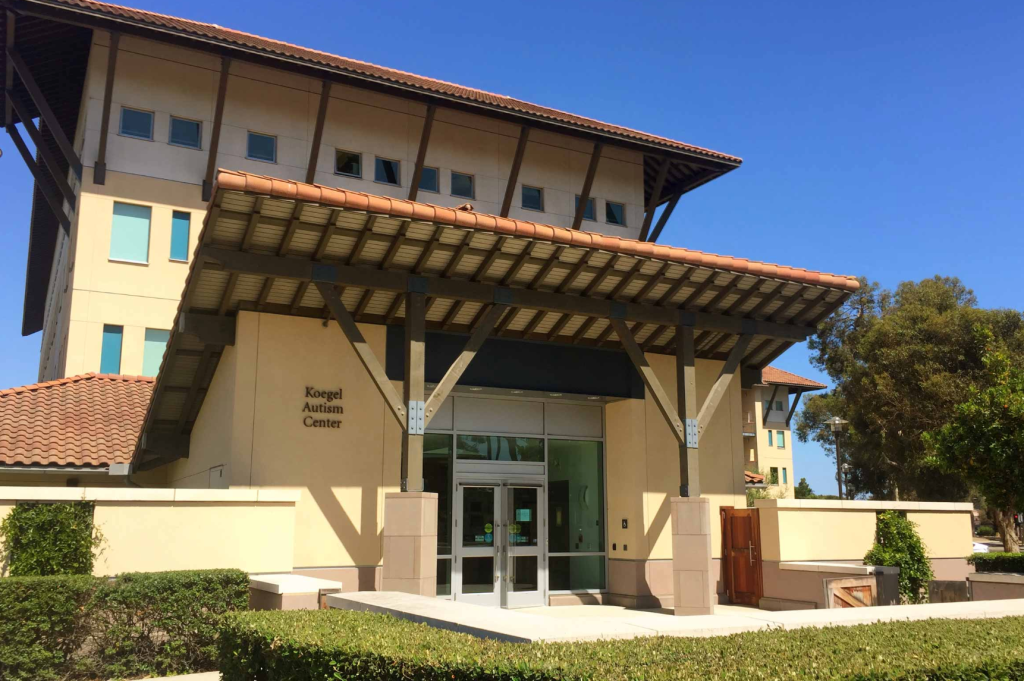
Dr. Ty Vernon, the director of UC Santa Barbara’s Koegel Autism Center, cautioned against going back to the “Dark Ages” of mothers constantly blamed for any sort of difference that emerges in their child.
It’s the same kind of thinking that fueled the idea of the “refrigerator mother,” the now-discredited notion that a child’s autistic traits could be blamed on their mother’s perceived lack of emotional warmth, Vernon explained.
Health Secretary Robert F. Kennedy Jr. and the federal administration are pushing the Tylenol link as they seek to address rising autism rates.
According to The Centers for Disease Control and Prevention, autism prevalence in the United States has risen from about one in 150 children in 2000 to about one in 31 children in 2022.
But Tylenol is likely not the cause. The administration cites no new studies for their conclusion. Some studies show a loose association between expectant mothers using Tylenol and an increased likelihood of having children with autism, but causation has not been proved.
The FDA itself reported that it would update labels on Tylenol and its generic versions to point to a possible link between using Tylenol during pregnancy and certain neurological conditions such as autism, but emphasized that no causal relationship has been established.
Higher-quality studies comparing siblings born to the same mothers found no additional likelihood of having a child with autism when taking Tylenol versus not — pointing instead to a genetic argument.
“Then we also know that maternal health during pregnancy can influence the emergence of neurodevelopmental conditions like autism,” Vernon said. “And so we have to look at why the mother was taking Tylenol — likely there was a fever or an infection or something else going on.
“So unless we can kind of separate out the contribution of those kinds of illnesses on fetal development, versus Tylenol by itself, we can’t jump to a false conclusion that there’s this link,” he continued. “Because correlation doesn’t necessarily equate causation there.”
Scientists say that autism in children is likely the result of a mix of genetics and environmental factors, such as in-utero exposure to pollutants, according to The Society for Developmental and Behavioral Pediatrics.
Rising autism rates may be better explained by increased public awareness and attention — such as more representation of autism in media, better access to resources, and an increase in availability to support services and changing diagnostic criteria.
“Autism has always existed,” said Vernon. “It’s natural human variation. It’s not a disease. It’s not something that needs to be cured or eradicated. It needs to be understood, accepted. And we as a society have come a long way in order to embrace that people have different brains and think differently about the world.”
But “misinformation spreads like wildfire,” Vernon said. That was especially true in the case of a single 1998 study that falsely suggested a connection between the measles, mumps, and rubella (MMR) vaccine and autism.
The study by Andrew Wakefield was retracted, discredited, and disproved in a multitude of ways, but stuck in the collective subconscious nonetheless. It fostered a baseless anti-vaccine sentiment that Trump has repeatedly espoused across his two terms in office.
Many agencies, including the California Department of Public Health, have spoken out against the federal Administration’s claims. In a news release, the American College of Obstetricians and Gynecologists (ACOG) called the administration’s opinions “irresponsible.”
Vernon suggested we stop hunting for a cause — as the president has been doing, employing shock value and provocative statements — and help individuals identify how to leverage the strengths they do have and use them to acquire new skills, as the Koegel Center seeks to do.
“I think the silver lining is that autism is being talked about,” he said. “I’m hoping the narrative then shifts to, ‘Hey, we have a huge population of individuals on the autism spectrum that can thrive, but they need support,’ right?’”
Related Posts

Premier Events

Sat, Oct 03
9:00 AM
Santa Barbara
Fall Plant Sale and Master Gardener Workshop

Sat, Oct 03
7:00 PM
Santa Barbara
Clean Comedy at Carrillo Recreation Center
Sat, Nov 14
7:00 PM
Santa Barbara
Clean Comedy at Carrillo Recreation Center
Sat, Dec 05
7:00 PM
Santa Barbara
Clean Comedy at Carrillo Recreation Center
Thu, Oct 01
11:00 AM
Santa Barbara
In Studio: Julie Anderson Mathias

Thu, Oct 01
7:30 PM
Santa Barbara
Robert Plant with Saving Grace and Suzi Dian

Fri, Oct 02
5:30 PM
Santa Barbara
Pet Blessing at Trinity Episcopal Church
Fri, Oct 02
8:00 PM
Santa Ynez
Comedian Ron White Performs at Chumash Casino Resort
Sat, Oct 03
9:00 AM
Goleta
Out of the Darkness Suicide Awareness Walk

Sat, Oct 03
10:00 AM
Santa Ynez
Chumash Intertribal Powwow Returns
Sat, Oct 03
10:00 AM
54th Santa Barbara Old -Time Fiddlers’ Festival

Sat, Oct 03
11:00 AM
Santa Barbara
OktoBEERfest at Dutch Garden Restaurant!
Sat, Oct 03
12:00 PM
Santa Barbara
Reclaim Your Radiance Fall 2026 Healing Arts Faire
Sat, Oct 03
12:00 PM
Santa Barbara
CWC Docs: “SURFILMUSIC” (2026)
Sat, Oct 03 9:00 AM
Santa Barbara
Fall Plant Sale and Master Gardener Workshop
Sat, Oct 03 7:00 PM
Santa Barbara
Clean Comedy at Carrillo Recreation Center
Sat, Nov 14 7:00 PM
Santa Barbara
Clean Comedy at Carrillo Recreation Center
Sat, Dec 05 7:00 PM
Santa Barbara
Clean Comedy at Carrillo Recreation Center
Thu, Oct 01 11:00 AM
Santa Barbara
In Studio: Julie Anderson Mathias
Thu, Oct 01 7:30 PM
Santa Barbara
Robert Plant with Saving Grace and Suzi Dian
Fri, Oct 02 5:30 PM
Santa Barbara
Pet Blessing at Trinity Episcopal Church
Fri, Oct 02 8:00 PM
Santa Ynez
Comedian Ron White Performs at Chumash Casino Resort
Sat, Oct 03 9:00 AM
Goleta
Out of the Darkness Suicide Awareness Walk
Sat, Oct 03 10:00 AM
Santa Ynez
Chumash Intertribal Powwow Returns
Sat, Oct 03 10:00 AM
54th Santa Barbara Old -Time Fiddlers’ Festival
Sat, Oct 03 11:00 AM
Santa Barbara
OktoBEERfest at Dutch Garden Restaurant!
Sat, Oct 03 12:00 PM
Santa Barbara
Reclaim Your Radiance Fall 2026 Healing Arts Faire
Sat, Oct 03 12:00 PM
Santa Barbara


You must be logged in to post a comment.