
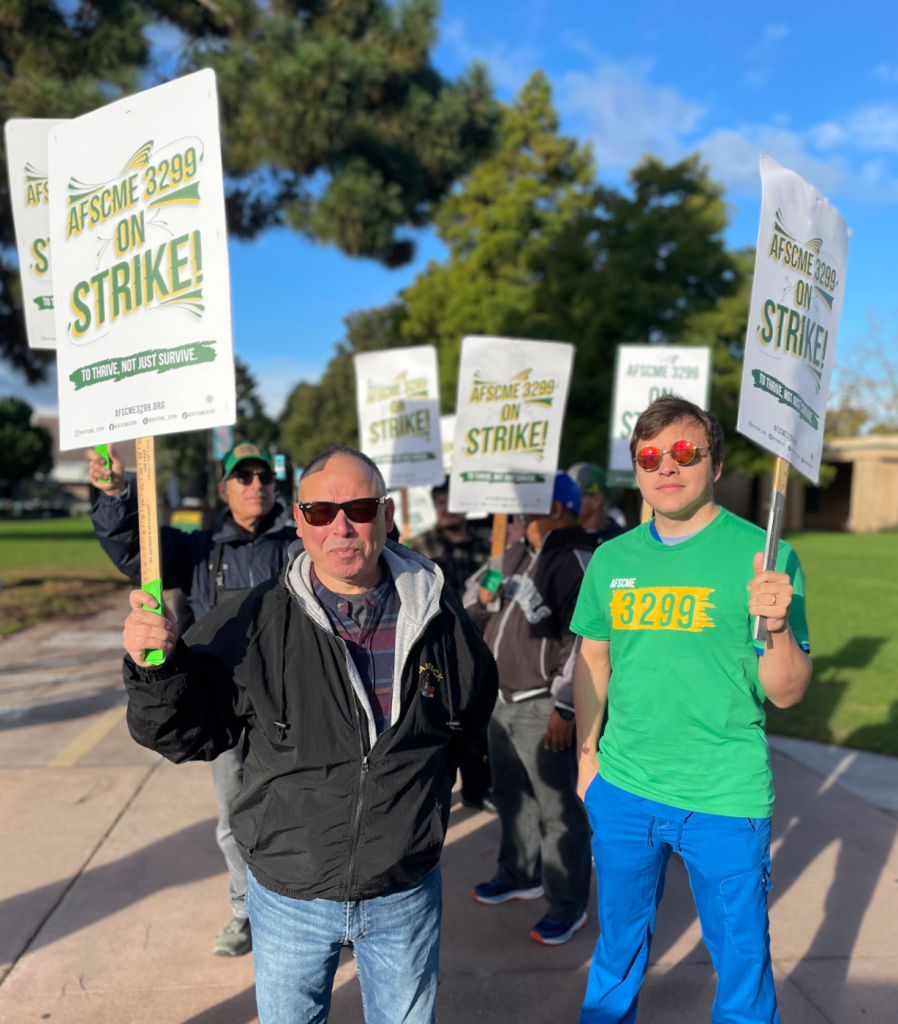
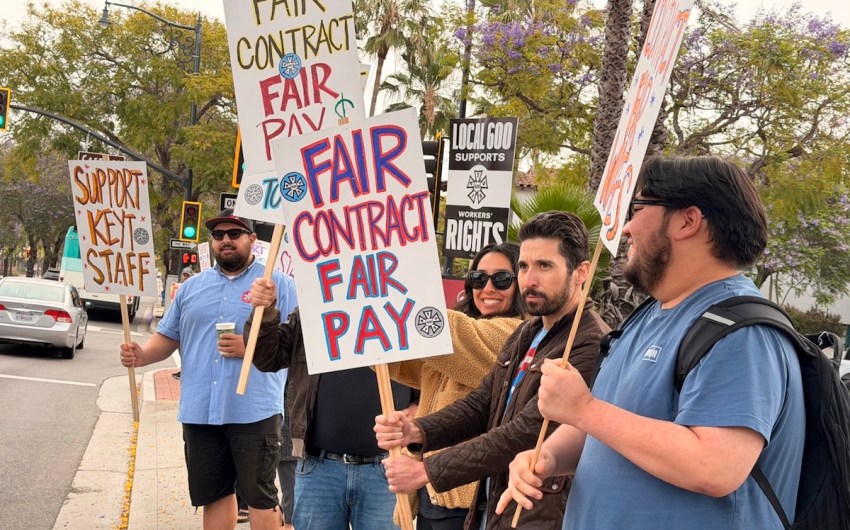
On Monday and Tuesday, tens of thousands of University of California service and patient care workers walked off the job across California — including at UC Santa Barbara — as part of a two-day strike protesting low wages, rising healthcare costs, and what many workers described as a shocking culture of inequality inside the UC system.
“Today is not the end,” said Serafin Zamora, a groundskeeper at UCSB for more than two decades and an executive board member with AFSCME Local 3299, the union leading the walkout. “We don’t want to stop until we can get a good contract. If we don’t see a settlement, if UC doesn’t come to the table with a good offer, we want to continue pushing.”
The union — American Federation of State, County and Municipal Employees Local 3299, which represents about 40,000 food service workers, custodians, hospital technicians, and patient care assistants across the UC system, including around 600 at UCSB — has been in contract negotiations with the university for 22 months. Members of the California Nurses Association who work at UC hospitals also went on strike in solidarity. The key issue: affordability.
The union says average frontline workers, who make between $40,000–$60,000 a year, now earn 10 percent less in real wages than before the pandemic. Many report being priced out of the very communities they serve, forced into extreme commutes, overcrowded housing, or, increasingly, their cars.
“Low wages and skyrocketing housing costs have left workers sleeping in their cars, and struggling to survive,” said AFSCME Assistant Director of Communications Trey Conaty. “Instead of addressing this dire economic crisis, UC has imposed a real wage cut, significantly higher healthcare costs, and excluded frontline workers from the housing assistance that the university gives each year to its army of wealthy executives.”
Those optics were especially galling to workers at UCSB this week — just days after the university closed escrow on a $7.8 million estate for its new chancellor. While the sale was funded by private philanthropy, the juxtaposition wasn’t lost on striking employees, many of whom say they cannot afford rent in the place they serve. “The new chancellor has been here for six months. I have been here for 23 years. We work for the same institution,” said Zamora. “Why do executives get access to housing loans and we don’t?”
Zamora said the housing benefit disparity is just one example of a broader disconnect between UC administrators and the campus workers who keep the system running — many of whom are overworked, underpaid, and suffering injuries on the job due to short staffing.
“They don’t cover the people that retire,” he said. “They try to piece it together, but they don’t hire. It’s an overload of work all the time.”
Francisco Garcia, a senior lead in UCSB’s custodial department, echoed the concern. “Basically, the strikes are the same [as last year],” Garcia said. “They don’t want to bargain in good faith and give us raises that go with the economy around us. We’re still fighting for what we deserve — medical, housing, and fair wages.”
Garcia, who also sits on the bargaining team, said the strike was scheduled to end Tuesday afternoon after two planned days of action, but “we don’t know anything yet” about when UC might come back to the table.
Contract negotiations have stalled since April. UC’s current five-year offer includes a 5 percent raise in 2025, followed by 4 percent in 2026, and 3 percent increases in 2027, 2028, and 2029. AFSCME seeks a steeper curve: 8.5 percent this year and 7.5 percent the next two years. On November 14th, UC defended its proposal, noting that all AFSCME-represented workers now earn at least $25/hour and receive up to $1,500 in annual healthcare premium credits. “Despite UC’s continued outreach, AFSCME has not presented any substantive counterproposals since April,” the statement read.
In solidarity with AFSCME, nurses from the California Nurses Association also joined strike lines across the state, as did some members of UPTE-CWA, a separate union representing UC technical and research professionals. UPTE recently reached its own tentative agreement with the university and called off further strike action.
According to AFSCME 3299, more than 13,000 UC frontline workers — about a third of the service and patient care workforce — have voluntarily left their jobs in the last three years, citing poor pay and conditions. The union says this staffing exodus is creating unsustainable strain across departments.
“During the pandemic, UC administrators routinely called us ‘essential heroes,’” said AFSCME President Michael Avant in a statement. “Today, we’re being excluded from housing assistance, told to accept wages that offer less purchasing power than we had seven or eight years ago, and being told to pay twice as much for health insurance. It’s time for UC to get its priorities straight, and to treat us with the respect we’ve earned.”
AFSCME has voluntarily exempted some critical care workers from the strike and formed a “patient protection task force” to respond to emergencies during the action if needed.
Related Posts



Premier Events

Sun, Oct 04
11:00 AM
40th California Avocado Festival

Sun, Oct 04
1:30 PM
Goleta, CA
📚 Library Card Day
Tue, Oct 06
All day
Santa Barbara
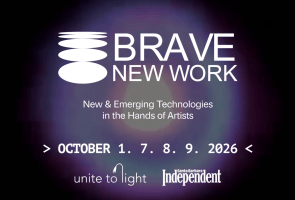
New and Emerging Technologies in the Hands of Artists: Brave New Work 2.0
Tue, Oct 06
6:00 PM
Santa Barbara
Chaucer’s Books- Horror Stories with Joseph Fink

Wed, Oct 07
7:30 PM
Santa Barbara
The Theatre Group at SBCC Presents: “CLUE”

Wed, Oct 07
7:30 PM
Santa Barbara
Ensemble Theatre Company Presents: “Buyer & Cellar”

Fri, Oct 09
7:00 PM
Santa Barbara
Paseo Nuevo Spooky Movie Nights

Sat, Oct 10
1:30 PM
Goleta
🌴 Another Day in Paradise at S.B’s Premier Ice Rink

Sun, Oct 11
7:00 AM
Ojai
Flamenco Guitarist Tony Ybarra

Sun, Oct 11
10:00 AM
Santa Barbara
18th Annual Domestic Violence Solutions Brunch
Sun, Oct 04 11:00 AM
40th California Avocado Festival
Sun, Oct 04 1:30 PM
Goleta, CA
📚 Library Card Day
Tue, Oct 06 All day
Santa Barbara
New and Emerging Technologies in the Hands of Artists: Brave New Work 2.0
Tue, Oct 06 6:00 PM
Santa Barbara
Chaucer’s Books- Horror Stories with Joseph Fink
Wed, Oct 07 7:30 PM
Santa Barbara
The Theatre Group at SBCC Presents: “CLUE”
Wed, Oct 07 7:30 PM
Santa Barbara
Ensemble Theatre Company Presents: “Buyer & Cellar”
Fri, Oct 09 7:00 PM
Santa Barbara
Paseo Nuevo Spooky Movie Nights
Sat, Oct 10 1:30 PM
Goleta
🌴 Another Day in Paradise at S.B’s Premier Ice Rink
Sun, Oct 11 7:00 AM
Ojai
Flamenco Guitarist Tony Ybarra
Sun, Oct 11 10:00 AM
Santa Barbara


You must be logged in to post a comment.