

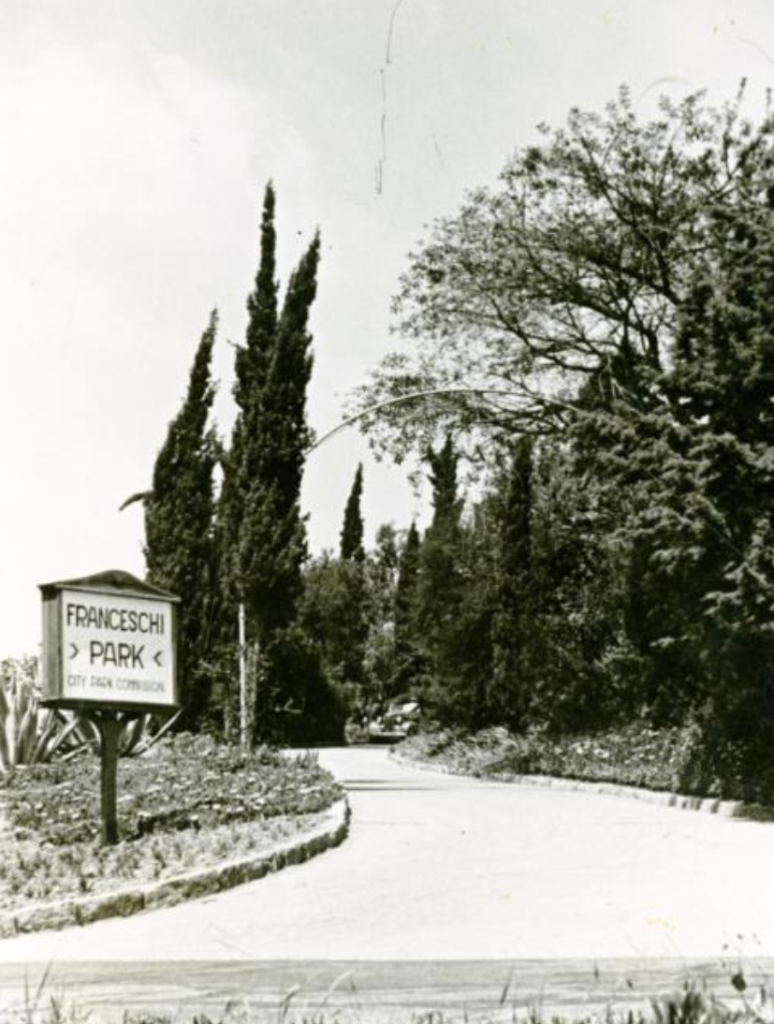
Note: Part One focused on the beginnings of Montarioso, the property on Mission Ridge, as it served as a family home, a nursery, and was eventually donated as a gift to the city with the intent that it became a world-class botanical garden showcasing exotic plants. Unfortunately, that vision was never quite realized, as we note in the rest of the story.
The Characters
Francesco Franceschi, born Emanuele Orazio Fenzi, was a wealthy and accomplished banker and botanist in Italy. When he and his family moved to America in 1891, he continued his work as a horticulturist in another Mediterranean climate. He is credited with introducing hundreds of successful species to Santa Barbara, including helping A. Boyd Doremus plant the seeds for the Italian stone pines on East Anapamu Street. Although he hoped to establish a public garden with his plant collection on his property on Mission Ridge, the City of Santa Barbara was not supportive of the idea.
In 1913, he reclaimed his Fenzi name, returned to Italy and eventually ended up working for the Italian government in Libya, where he introduced new species to the then-Italian colony in North Africa. He died in Tripoli in 1924. His son Camillo Fenzi sold the estate to philanthropist Alden Freeman in 1927.
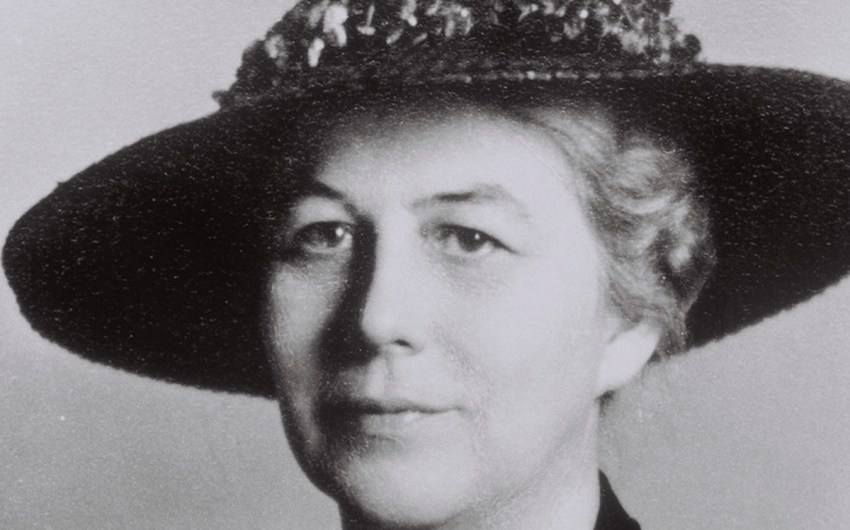
Alden Freeman was named for John Alden, who arrived on the Mayflower. His wealth came from his father, the treasurer of Standard Oil who was good friends with John D. Rockefeller. His approach to life was strictly original, a wealthy philanthropist who embraced socialism, free thinking, and a style of his own. He startled polite society in 1909 when — after his friend notable anarchist Emma Goldman was prohibited from speaking by New York police — he invited her to a luncheon for the staid New Jersey Society of Mayflower Descendants. He also allowed her to give her undelivered speech on his own property. His membership in the organization was immediately terminated.
Frequently termed an “eccentric,” described as “colorful,” and referred to as “peculiar,” his penchant for unusual dressing was frequently cited in newspaper and magazine articles. In the popular “I Saw” column in the Morning Press, the author described, “Alden K. Freeman in his purple shorts, blue polo shirt, red, white and blue necktie and sandals, wearing a cane in the Barbara hotel.” Another article revealed, “Because Freeman was something of a physical-culturist, and thought nothing of hiking all over the Riviera in purple scanties during the early morning…. He installed violet ray windows in one room. It is that glass that does not frustrate the health-giving violet ray qualities of the sun; and it is still an expensive article.”
A 1909 New York Times article offered, “If anybody has the idea that Alden Freeman is a ‘sissy’ he should revise his opinion. He has got the lower jaw of a bulldog and the upper jaw of a philosopher. He looks like a cross between Herbert Spencer and Pete, President Roosevelt’s bull terrier. There is a gleam of humor lurking all the time behind his earnestness, and he is the sort of man that a real man warms to.”
All this is to say that in the context of the times, Freeman’s gay sexual orientation was taboo to discuss, but inferred, instead. Will Durant, noted his longtime friend and generous benefactor was, “a homosexual, ill at ease in the heterosexual society that gathered about him as the son of a Standard Oil millionaire.”
An important postscript to Freeman’s story is that in 1930, he moved to Miami Beach and built the Mission Revival–styleCasa Casuarina. The castle-like structure was inspired by the Alcázar de Colón, in the Dominican Republic. At his new home in Miami, he installed duplicates of the medallions that decorate the exterior walls of Montarioso in Santa Barbara, and in a courtyard stands an installation of “The Pillars of Democracy,” duplicates of which are stored in the basement on the West Coast. The Miami Beach property was once owned by Gianni Versace — where he was famously, tragically gunned down — and it is now a high-end luxury resort.
A Community Gift Put to Good Use
During Franklin D. Roosevelt’s administration, community members found new opportunities at Franceschi Park.
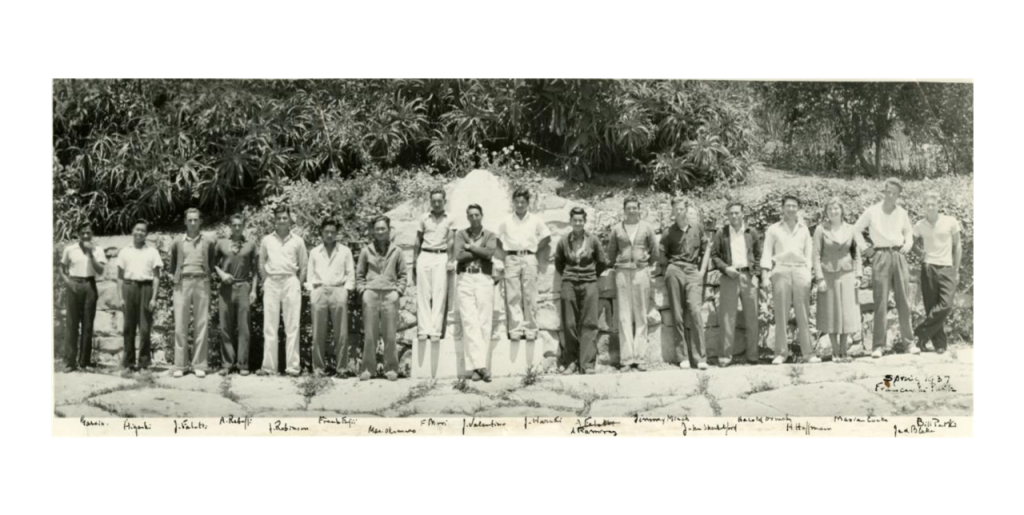
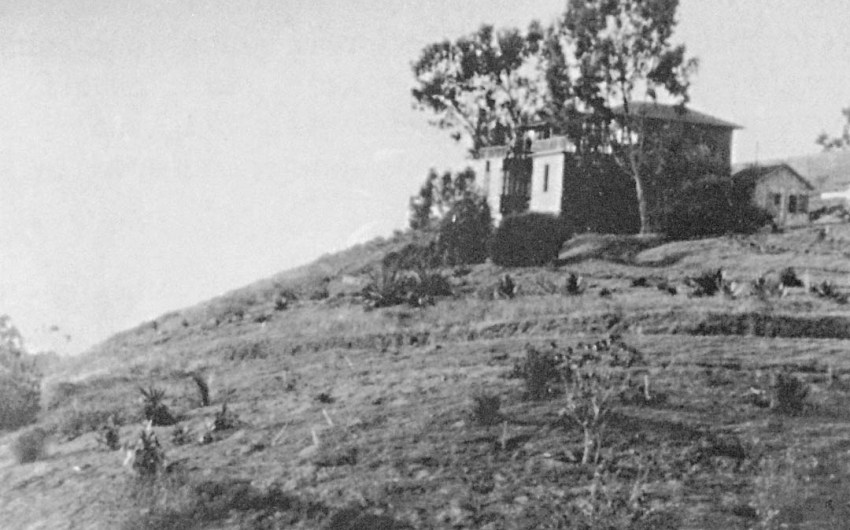
A Teaching Facility: In 1934, just three years after the park was donated to the city, it was described in the local press as “a white elephant park site on Mission Ridge.” And the house was described as “the half tumbled-down home.” Hardly the intention behind the donation or an accurate description of the newly remodeled structure. However, Peter Riedel, a local horticulturist who had worked with Franceschi at Montarioso, seized the opportunity to create a horticultural center on the hillside. He established an intensive course of vocational training for Santa Barbara High School and was hired by the school board to use the park as the site for hands-on training. The house served as classrooms, and students built a lath house, where they nurtured seedlings, and they tended and improved the grounds and garden while learning a career path. (Note: Riedel and his wife eventually lived in the house, and he conducted Adult Education classes that were especially valuable to post-war veterans who wanted to learn a new trade. In 1948, a caption in the News-Press referred to the classrooms held in “the old Francesco Franceschi house.”)
The WPA Orchestra: In 1941, the 24 members of the Works Projects Administration’s (WPA) symphony orchestra were allowed to practice in the house and performed series of popular regularly scheduled concerts at local parks that included Plaza del Mar on Saturday afternoons, Cabrillo Pavilion on Sunday afternoons, Wednesday evenings at the Sunken Gardens, and Thursday evening picnics at Oak Park. And on Tuesday evenings, community members were invited to gather at Franceschi Park to cook their meals in the barbecue pits and enjoy them seated at the picnic tables, before the Symphony Under the Stars rehearsals at 8 p.m.
As an article in the News-Press reported, “With the opening of the new season, the orchestra also is opening new headquarters at Franceschi park where the rambling, picturesque residence building has been made into suitable offices and rehearsal rooms. The orchestra also will hold outdoor rehearsals in the afternoon and the public is invited to gather in the attractive little park overlooking the city and harbor to hear them.”
Community Concerns Addressed
During the Truman administration, in 1946, a study issued by the Riviera Association reported on conditions at Franceschi Park: “The City of Santa Barbara should develop this park in accord with plans worked out several years ago. The condition of the park is deplorable. No real effort is being made to maintain it for the use of the public. The drive and the parking area should be paved and the various outlooks developed. No finer views of the city and the waterfront can be obtained from any other location. Few citizens know that the park exists. If facilities to enjoy the park were developed, such as outlooks, walks, benches, shade trees, proper barbecue pits, and tables, the visitor could be made to realize the views and other advantages to be obtained from living on Mission Ridge. A toilet building also should be put up.”
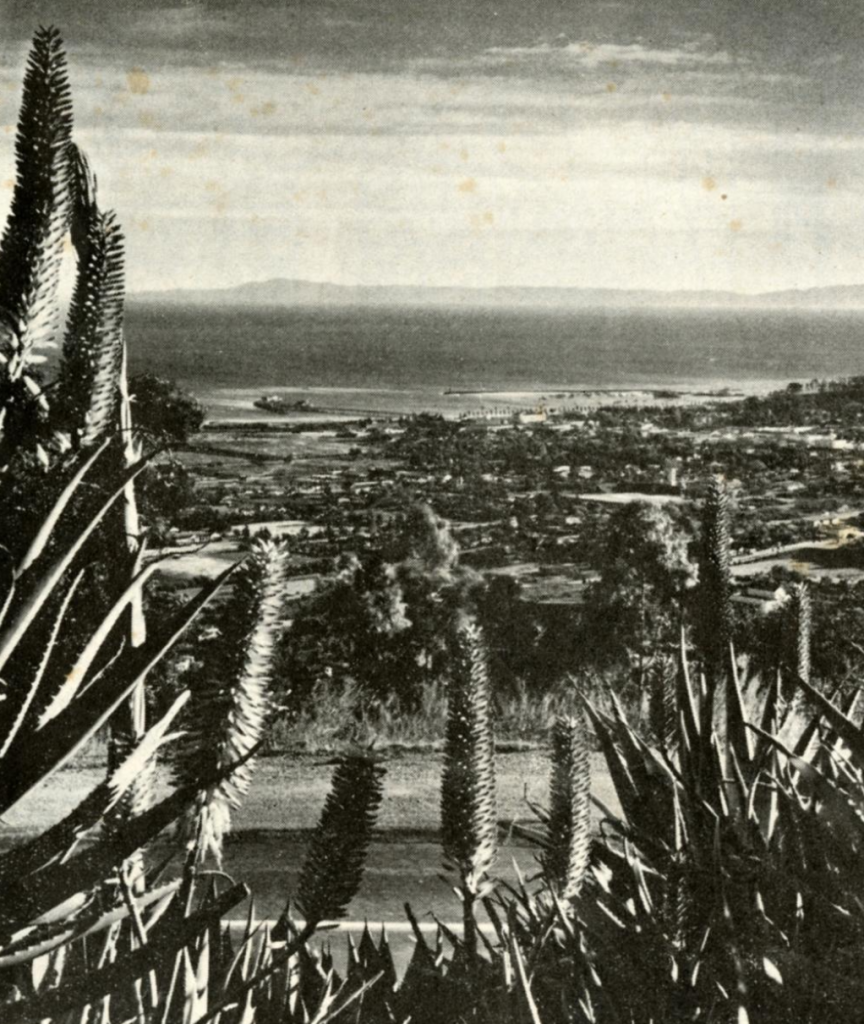
In 1950, Park Superintendent Finlay MacKenzie termed it Santa Barbara’s “best view park” and proudly announced that the rest rooms had been installed as requested. The News-Press article added that in addition to the rest rooms, “the installation of an outdoor kitchen, a barbecue area for a good 150 and lighting for night use, will make Franceschi Park — in MacKenzie’s opinion — Santa Barbaran’s favorite outing spot. With the scattered barbecue pits suitable for family gatherings and the spectacular view across the city to the ocean, MacKenzie also figures this is the ideal place to entertain out-of-town visitors.
Organized Efforts for Improvement
In 1962, during John F. Kennedy’s administration, Pearl Chase, acting on behalf of the Plans and Planting Committee, requested a study after city officials and the Park Commission recommended the house — referred to in the press as “the old dwelling” — be demolished. In December, the News-Press revealed that the mansion “would not be economically sound or necessary to demolish the old Franceschi mansion” [at that time, it was 57 years old], adding that a study by a special committee of six individuals in the business trade unanimously agreed “that the building is basically sound,” and concluded that “with some repairs and proper maintenance will last for many years.”
At that time, the cost to repair the dry rot and termite damage to preserve the house for historical purposes, was estimated at $40,000. [In today’s dollars, that would be $429,300.]
Friends of Franceschi Park organization was formed, and it regularly raised and donated funds. Pearl Chase spearheaded the group; as the News-Press reported, “She said that Franceschi Park, once one of the most unusual parks in the country because of its horticultural wealth, has been largely neglected by recent city administrations, especially in planning for its future.”
In 1969, the Los Angeles firm of Cornell, Bridgers and Troller was hired to prepare a master plan for Franceschi Park, but it continued its decline.
The house was designated a Structure of Merit in 1981, but the following year, local columnist Barney Brantingham observed the graffiti, broken bottles, overgrown weeds, and plans to “rehab the old house.” He added, “Off the Beat wishes residents would treat the park with the respect its former owner would have expected.” In 1983, the headline read, “Franceschi Mansion Project Lacks Funds” with a reported price tag of $600,000 to restore the 83-year-old house.
We can go on, with the well-intentioned efforts at preservation of the house in the 1990s that intensified with the leadership of various groups, including Save Franceschi House!, Franceschi House Rehabilitation Committee, and the Pearl Chase Society, which worked closely with the city and raised funds to support a proposal for community center complete with tours, classes, and events. But that idea raised the inevitable concerns of traffic, noise, and pollution and ran into predictable opposition by the neighbors.
About that time, there was an interesting shift from concerns about saving the house from demolition to one promoting it. As one neighbor was quoted, “If you restore this house, you will destroy our neighborhood.”
In the spring 2017 issue of Preservation, the National Trust for Historic Preservation reported on Franceschi House, noting “The debate over whether to raze the Franceschi House or preserve it has been a longstanding one in Santa Barbara, California.”
The final decision came in 2018 when the City Council determined once and for all that the house must come down. That was eight years ago. Learn more about the city’s plans for “re-visioning” the site here. sbparksandrec.santabarbaraca.gov/projects/reimagining-franceschi-house.
The Inevitable End, but When?
Despite the nearly a century of effort to preserve and protect it, countless hours volunteered by dedicated advocates, and no accounting at all for the amount of taxpayer dollars that has gone into endless staff time and studies by consultants of that house and its gardens, its ultimate fate is not up for debate anymore. But it’s obvious that a final resolution is a long way off, with hefty price tags for demolition and “reimagining” that increase by the year, losing chapters of the story along the way. It’s just one of the saddest, most costly, and least understandable of all Santa Barbara stories.






You must be logged in to post a comment.