
On day eight of the Santa Rosa Island Fire — the largest wildfire ever recorded on any of the Channel Islands — patrols are now transitioning to the “mop-up” phase as more than half of the fire perimeter has been contained. Crews are extinguishing any remaining burning material along or near the control line.
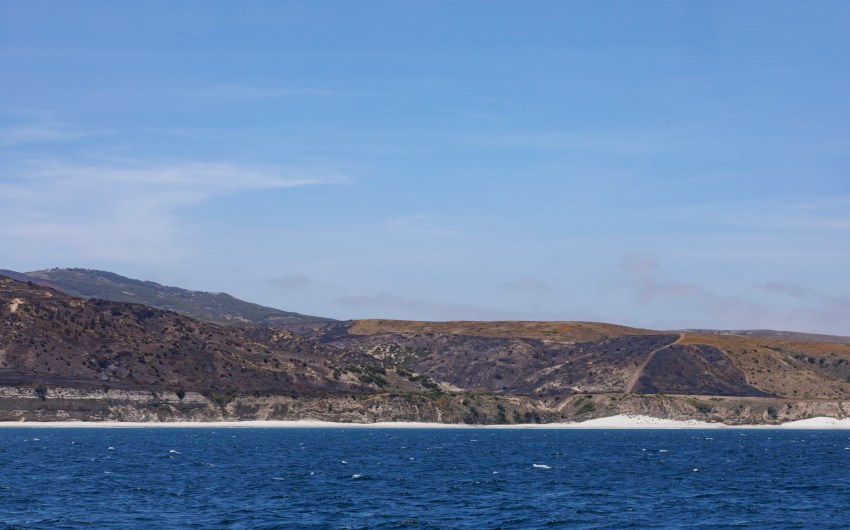
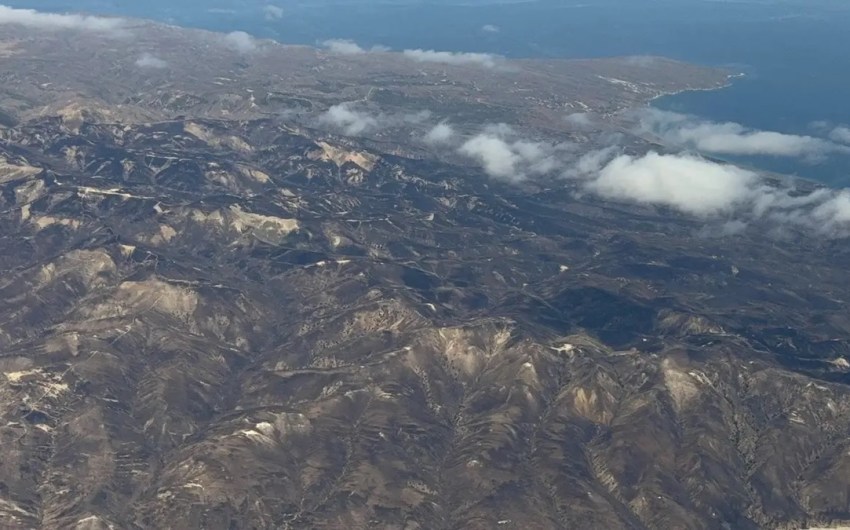
Flames were seen from the mainland reaching into the sky as the fire progressed, and blackened areas now stretch across the island after burning more than a third of its area.
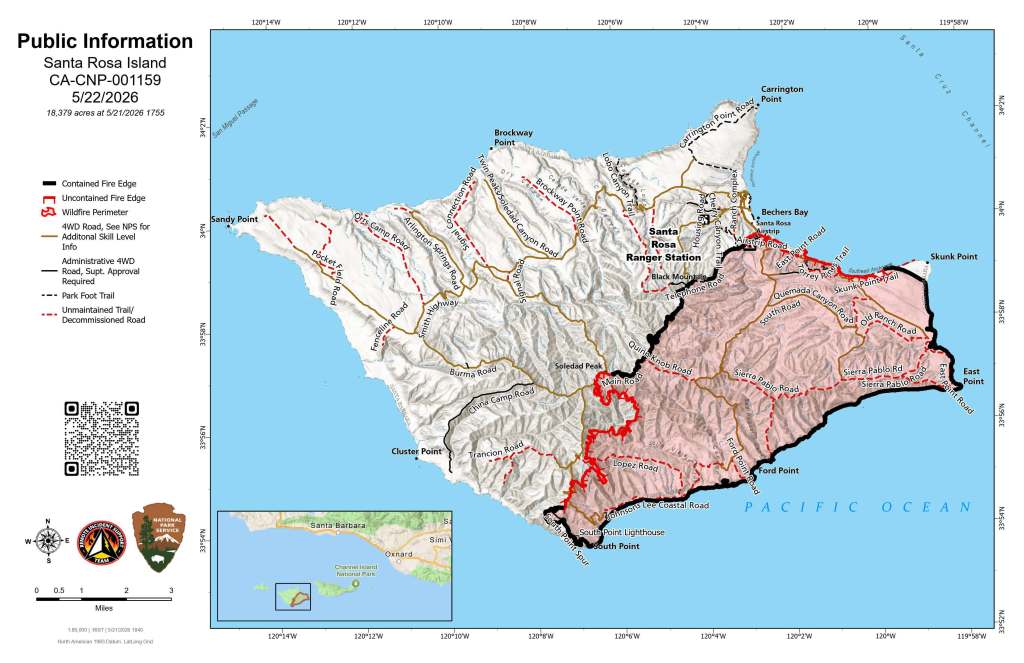
It was first reported on May 15, after a 67-year-old mariner crashed his boat into the rocks on the island the previous night. The fire — the “human-caused” outbreak of which is still under investigation by authorities — has now burned 18,379 acres and is 59 percent contained, according to a Friday morning update by officials (via InciWeb).
Ongoing work includes cooling or removing hot spots, breaking apart smoldering debris, and securing the perimeter to prevent the fire from reigniting. “Where it is safe to do so, crews will also access and extinguish lingering heat in the interior parts of the fire,” the update said.
An unmanned aircraft will check on the conditions of historic and remote corrals located around the island, it said.
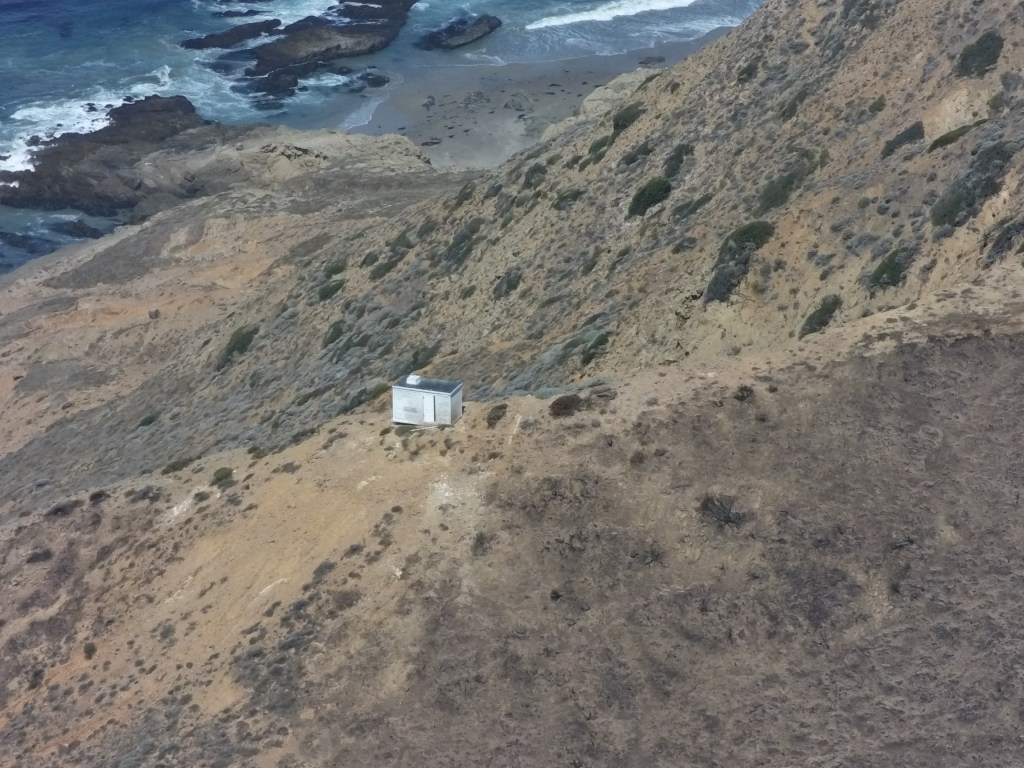
On Wednesday evening, aircraft found that the historic South Point Light Station — built in 1937 to replace a former beacon and restored in 2020 by the National Park Service — was still standing.
Two other historic structures — Johnson’s Lee Equipment Shed on the western edge, and Wreck Line Camp Cabin on the eastern edge — were not so lucky. Those structures, along with a third structure near the equipment shed and a wind shelter at Water Canyon Campground, were confirmed destroyed.
However, much of the island, it seems, remains intact. That includes many of the rare Torrey pine trees within the island’s main grove.
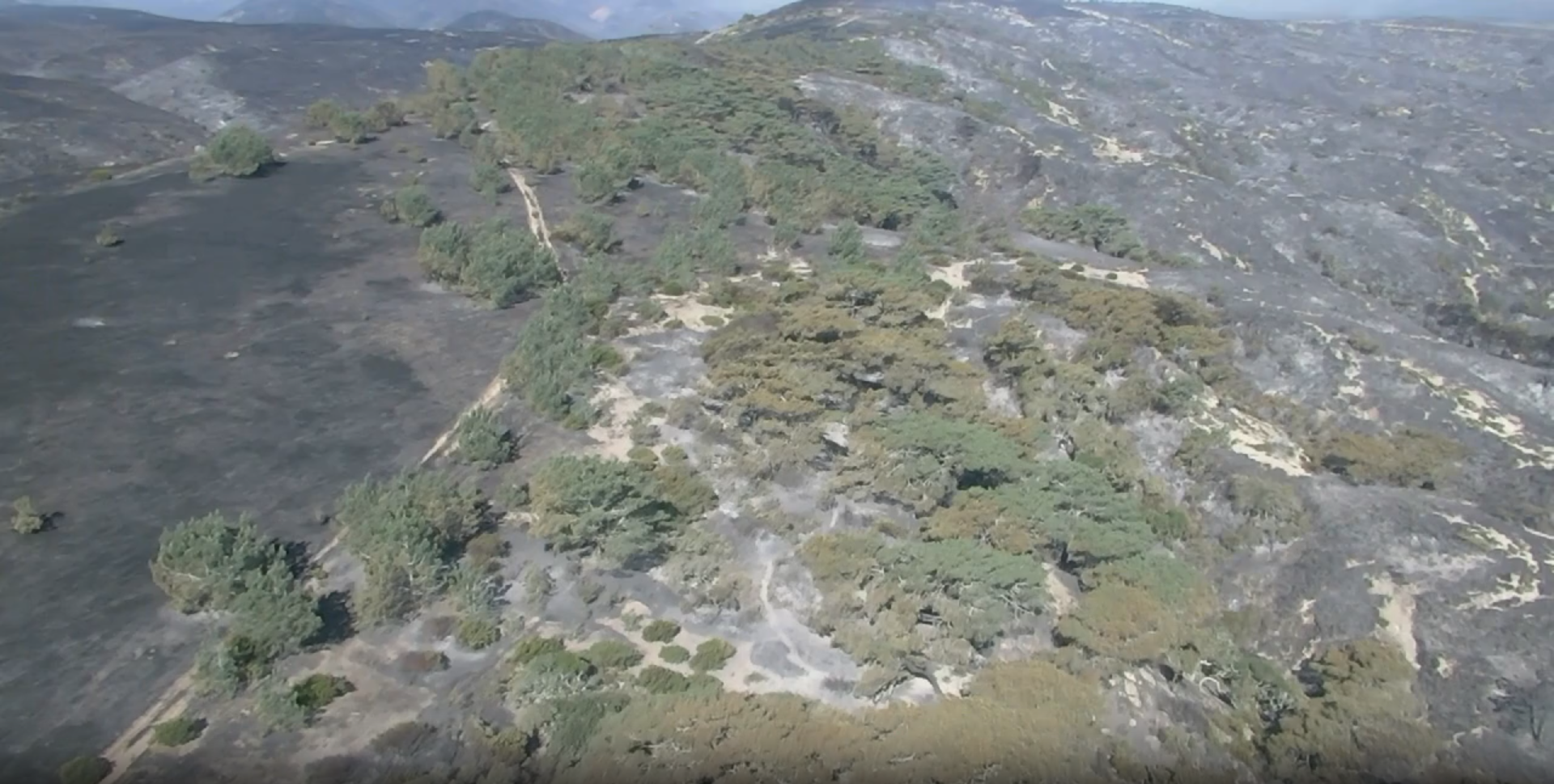
Based on initial assessments by firefighters and the flight imagery from an unmanned aerial module, the Torrey pines “still exist and remain largely intact,” according to officials. The fire came from south to north and appears to have lost energy after burning through the non-native grasses downslope of the trees, the update said. By the time it reached the ridge along Upper Torrey Pines Road, it lost intensity and moved downhill toward the ocean.
“This type of fire tends to consume the understory vegetation and leaves the canopy largely intact,” officials said.
However, it does appear that some small pockets of the Torrey pines did burn — likely in short, uphill runs by the fire. This is typically caused by material like logs rolling down hill and carrying flame down, where it then burns up the slope with more vigor, officials said. Such activity is common in areas with steep and rugged terrain like Santa Rosa Island.
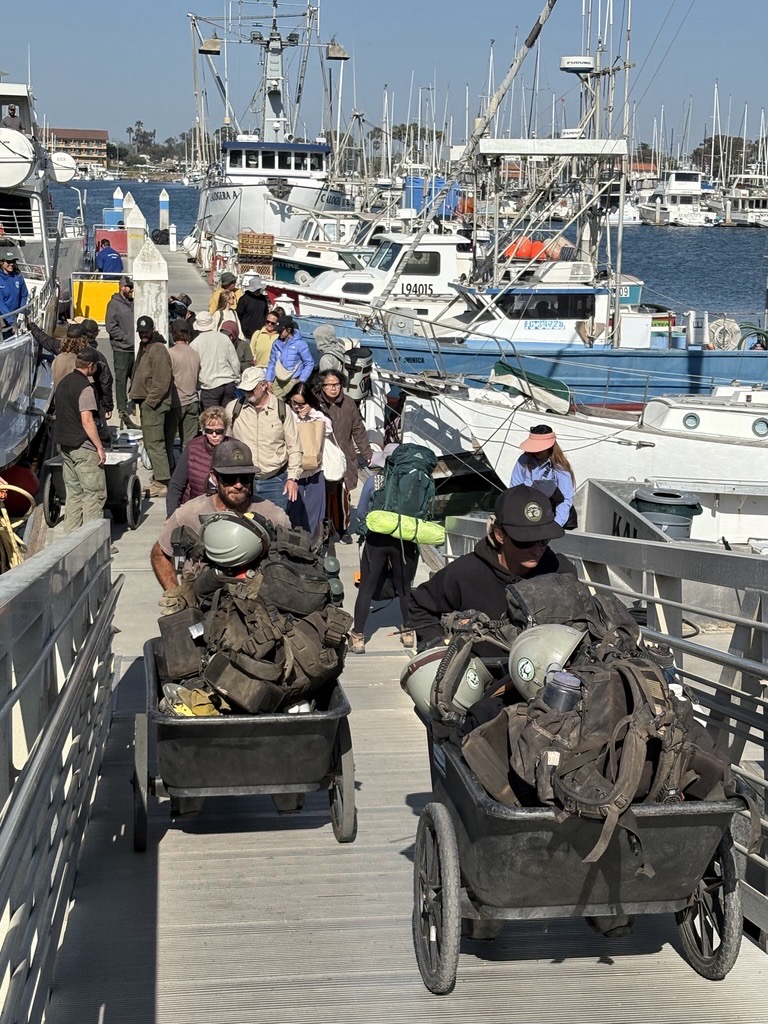
The National Park Service will be deploying “special firefighters,” known as fire effect crews, who will go into the area to take measurements on the fire severity and impacts. “This is not just a single snapshot but will be part of long-term monitoring of effects to better understand fire in this ecosystem,” officials said.
Additionally, resource advisors will continue assessing the ecological and cultural assets throughout the island, and work side-by-side with fire crews to minimize impacts from firefighting efforts. Their assessments will be “vital” for park managers and researchers to begin the process of assessing long-term effects, officials said.
Whether the other rare and endangered flora and fauna on the island have suffered significant damage — some species’ entire global range rests within the burn scar — is to be determined.
Other than the unmanned modules, all aircraft support, including water scoopers and air tankers, have been released from the fire. They will still be available if conditions change and they become necessary, but will otherwise be ready to go for any new ignitions or emerging incidents within the area, according to officials.
Santa Rosa Island will remain closed through at least June 6, 2026, due to the wildfire. All Water Canyon Campground reservations have been cancelled through this date and visitors have been notified by email, officials said. Campground reservation holders with bookings through August 14, 2026, have also been informed that the wildfire may affect their stay. If additional cancellations are needed, they will receive follow-up emails.
Related Posts

Premier Events

Mon, Oct 26
7:00 PM
Santa Barbara
Beauty and the Origins of Electrophysiology, Telecommunications & the Global Theater

Wed, Oct 28
5:30 PM
Santa Barbara
Coastal Well Woman SB: “Own Your Menopause Journey”
Mon, Oct 26
5:00 PM
Montecito
Halloween at The Speakeasy at San Ysidro Ranch

Mon, Oct 26
6:00 PM
Santa Barbara
Chaucer’s Book Talk & Signing with Jennifer Chassman Browne “See Us, Know Us: Profiles of Disability”

Wed, Oct 28
5:00 PM
Santa Barbara
Fundraiser for Domestic Violence Solutions
Wed, Oct 28
5:30 PM
Santa Barbara
Coastal Well Woman SB: “Own Your Menopause Journey”
Wed, Oct 28
6:30 PM
Carpinteria
Carpinteria Community Spotlight – El Niño Disaster

Wed, Oct 28
7:00 PM
Santa Barbara
Reel Rock 20 Climbing Film Tour

Wed, Oct 28
7:00 PM
Goleta
IVRPD Presents : Halloween Pumpkin Patch

Thu, Oct 29
12:00 PM
Santa Barbara
Spook Fest at Loubud Wines Halloween Experience

Thu, Oct 29
5:30 PM
Santa Barbara
Silent Movies + Live Organ, Trunk or Treat & More

Thu, Oct 29
6:00 PM
Santa Barbara
Halloween Paint & Sip at Goodland Wine Shop
Mon, Oct 26 7:00 PM
Santa Barbara
Beauty and the Origins of Electrophysiology, Telecommunications & the Global Theater
Wed, Oct 28 5:30 PM
Santa Barbara
Coastal Well Woman SB: “Own Your Menopause Journey”
Mon, Oct 26 5:00 PM
Montecito
Halloween at The Speakeasy at San Ysidro Ranch
Mon, Oct 26 6:00 PM
Santa Barbara
Chaucer’s Book Talk & Signing with Jennifer Chassman Browne “See Us, Know Us: Profiles of Disability”
Wed, Oct 28 5:00 PM
Santa Barbara
Fundraiser for Domestic Violence Solutions
Wed, Oct 28 5:30 PM
Santa Barbara
Coastal Well Woman SB: “Own Your Menopause Journey”
Wed, Oct 28 6:30 PM
Carpinteria
Carpinteria Community Spotlight – El Niño Disaster
Wed, Oct 28 7:00 PM
Santa Barbara
Reel Rock 20 Climbing Film Tour
Wed, Oct 28 7:00 PM
Goleta
IVRPD Presents : Halloween Pumpkin Patch
Thu, Oct 29 12:00 PM
Santa Barbara
Spook Fest at Loubud Wines Halloween Experience
Thu, Oct 29 5:30 PM
Santa Barbara
Silent Movies + Live Organ, Trunk or Treat & More
Thu, Oct 29 6:00 PM
Santa Barbara


You must be logged in to post a comment.