
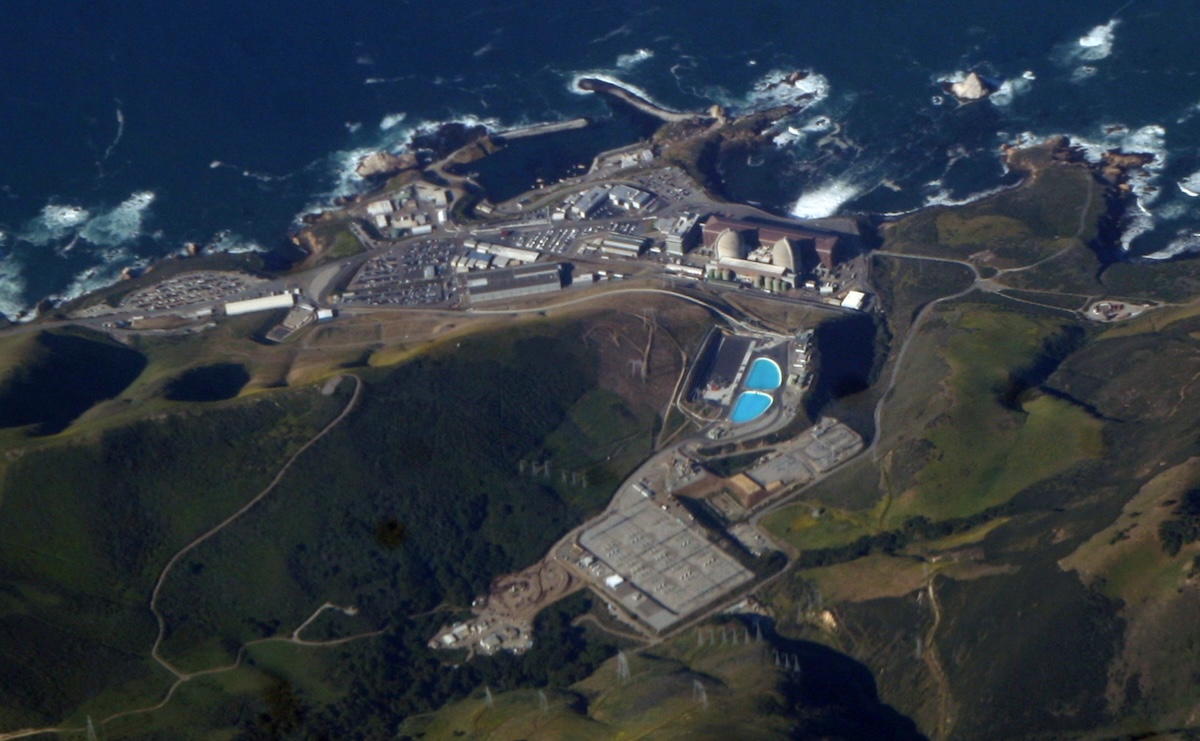
Just weeks after the U.S. Nuclear Regulatory Commission (NRC) approved a 20-year license extension for the Diablo Canyon nuclear power plant, scrutiny surrounding the human health impacts from radiation have emerged from both academia and Diablo opponents. A recent Harvard T.H. Chan School of Public Health analysis found higher cancer mortality rates in U.S. counties located closer to nuclear plants, while a nonprofit-led report questioned whether decades of Diablo Canyon’s operation may be tied to worsening infant health in surrounding San Luis Obispo County. Federal regulators and health officials, however, maintain that radiation exposure from the plant is too low to pose a measurable risk.
The federal NRC approval allows the plant to operate through 2045. State law, however, currently permits Diablo’s two reactors to operate only until 2029 and 2030, meaning any further extension will require action from the California Legislature.
The extension is contested by advocacy groups such as San Luis Obispo Mothers for Peace, whose members argue the plant’s continued operation poses unnecessary risks and costs. They point to roughly $700 million in state support, the accumulation of radioactive waste, and negative effects on sea life from the plant’s once-through cooling system and its discharge of heated seawater into the ocean.
Declining Infant Health: Correlation or Causation?
At a virtual press conference on April 29 hosted by the nonprofit Radiation and Public Health Project, epidemiologist Joseph Mangano presented an analysis of state data showing San Luis Obispo County’s infant health and mortality have been negatively impacted since plant startup. He was joined by journalist and environmentalist Lance Gould, who moderated the event, and model and activist Christie Brinkley.
Based on publicly available health statistics, the report — “Local Newborn Health Declined As California Nuclear Plant Operates” — states that infant mortality has shifted from a healthy 16-22 percent below the state average in 1968, which is the year plant construction started and such record-keeping began, to 14 percent below average after the plant went into operation in 1985, to about one percent above average today. (Statewide, infant mortality declined from roughly 21 deaths per 1,000 births in 1968 to about 5 per 1,000.) Premature births and birth defects followed similar patterns, with one category of defects reported at 114 percent above the state average.
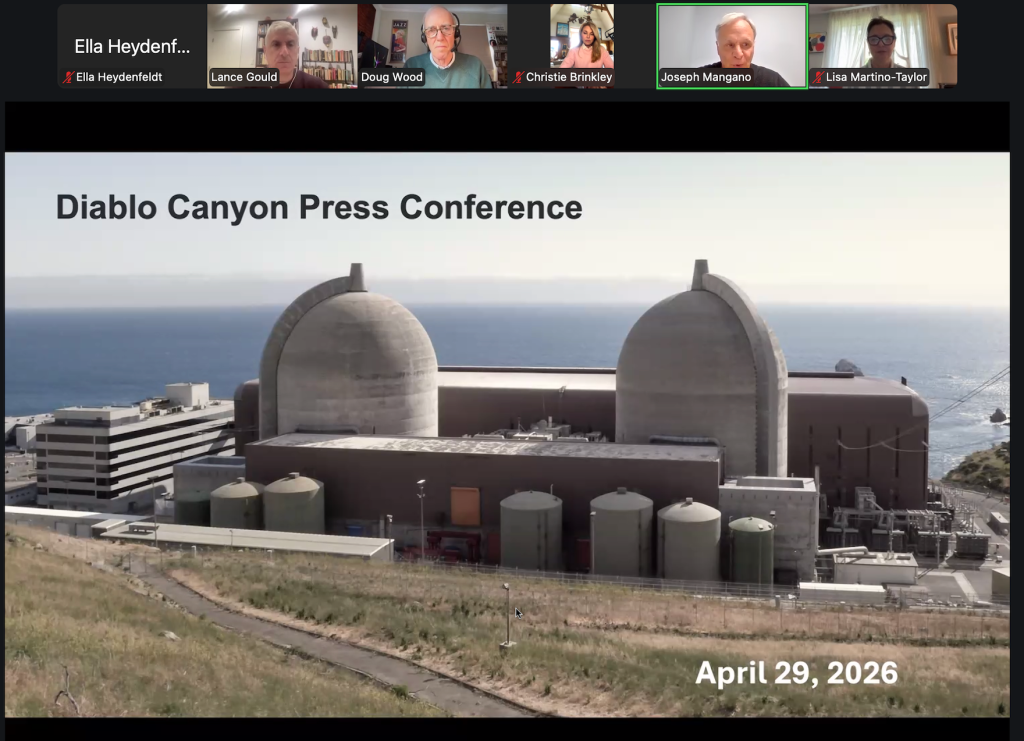
Mangano argued that San Luis Obispo County health stats now compare to regions like Shasta and Humboldt counties — areas more commonly associated with poverty and limited access to healthcare — despite lacking those same risk factors.
Still, he acknowledged the limits of his findings. “One does not find causation through epidemiology,” Mangano said. His report does not establish that emissions from Diablo Canyon caused the changes. But, “the Harvard study changed everything,” Mangano added.
That 2026 study examined nationwide data from 2000-2018 and found that counties closer to nuclear power plants, including S.L.O., had a “robust and consistent” higher rate of cancer mortality, even after adjusting for socioeconomic, demographic, and environmental factors. The association was strongest among older adult men with the most common form of cancer being lung cancer. The researchers emphasized that the study — the first this century to analyze nuclear plant proximity and cancer deaths across affected counties — do not establish causation, did not measure radiation exposure directly, and pointed to the need for further study.
Operated by Pacific Gas & Electric Company, the Diablo Canyon Power Plant sits along 700 acres of coastal San Luis Obispo County. The county Public Health Department took a look at the two studies, and an epidemiologist determined that while they used county-level ecological studies that showed a general pattern, they could not determine cause and effect.
“The studies do not measure actual individual exposure or distance from the plants, and they do not account for other factors — such as demographics, socioeconomic conditions, or air pollution — that could influence the results. In addition, one study groups all cancer types together rather than focusing on those linked to radiation,” said Tom Cuddy, the public information officer for S.L.O.’s health agency.
As for the Mangano paper, Cuddy wrote in an email, “When the data were reviewed more closely, including analysis of confidence intervals for rare outcomes like infant mortality, the results were generally similar to or lower than statewide California rates. This suggests the findings are variable and do not confirm increased risk.
“Overall, these studies do not provide strong or reliable evidence of a causal link between nuclear power plants and negative health outcomes. Their findings should be interpreted with caution and should not be used to draw firm public health or policy conclusions.”
The Radioactive Tooth Fairy
Much of the emotive tone in last month’s presentation was driven by Brinkley, who pointed to strontium-90, a radioactive byproduct of nuclear fission that can cause bone cancer, as evidence of nuclear power plants’ spillover into the environment. A 2014 report authored by Mangano found levels of the isotope in baby teeth from S.L.O. and Santa Barbara counties were 30.8 percent higher than those measured across other California counties.
“As a mom, I want other moms to know,” Brinkley said. She described learning of her proximity to a nuclear plant as “the shock of finding out I was in the crosshairs.”
She asserted that Diablo Canyon provides “4 percent” of California’s electricity and argued nuclear power should not be considered carbon-free, citing emissions tied to uranium mining and transport. State and federal estimates place Diablo Canyon’s output closer to 9 percent of California’s total electricity and roughly 17 percent of its zero-carbon power — a policy term referring to electricity generation that does not emit greenhouse gases during operation. That output has made the plant central to the state’s energy strategy, with Governor Gavin Newsom backing efforts to extend its life, citing grid reliability and California’s clean energy transition.
When asked how the state would replace this energy generation loss should the plant close, Brinkley pointed to rising wind and solar generation, saying renewable use is increasing year after year.
In a separate conversation, Ranjit Deshmukh, an energy economist at UC Santa Barbara, pointed to a different outcome. “If Diablo were taken offline, you’d likely see an increase in natural gas generation,” he said. “That has implications for emissions, electricity prices, and reliability — so it’s not a simple decision.”
In a 2021 study by the Harvard School of Public Health, researchers report that the negative impacts of burning natural gas have surpassed coal generation in many states.
“It comes down to trade-offs,” Deshmukh added. “Keeping existing nuclear plants online is beneficial from a climate perspective. But if it were definitively shown that there are serious health impacts, then that infrastructure would have to be retired.”
During Mangano’s virtual meeting, the fear of another Chernobyl, whose 40th anniversary passed just days before, were raised. That explosion released large amounts of radioactive material across Eastern Europe, leading to at least 1,800 cases of thyroid cancer in children who had been under 14 at the time, far higher than typical rates, in the years after the disaster.
For plant operator PG&E, “Diablo Canyon, as with all nuclear power plants in the U.S., is regulated and monitored by the U.S. Nuclear Regulatory Commission, which has found our operations meet all safety and security performance objectives,” stated Carina Corral, head of communications for the power company. “The facility produces clean, carbon-free energy for more than four million people and is playing a key role in helping the state achieve its ambitious greenhouse gas reduction goals and grid reliability.”
Corral went on to cite a “well-documented record of flawed and discredited research” for Mangano. “PG&E does not consider this report credible. Mr. Mangano has launched similar false claims in the past [2014], also debunked by medical experts, including those at the S.L.O. County Public Health Department as ‘fundamentally flawed.’”
The Feds: Safety Assured?
Federal regulators maintain that radiation released during normal plant operations is minimal and tightly controlled, finding that such exposure does not pose a measurable risk to public health. This assertion by the NRC hinges on a 1990 study by the National Cancer Institute, which found no significant difference in cancer mortality rates between populations living near nuclear facilities and those farther away.
Efforts to produce a more updated, comprehensive national study have failed. The NRC commissioned the National Academy of Sciences to design a large-scale follow-up, but the project was ultimately abandoned after researchers concluded that technical challenges — including small sample sizes, population movement, and the difficulty of isolating low-dose radiation effects — would likely prevent meaningful results despite significant cost and time.
Experts point to the scale of exposure when it comes to health impacts. G. Robert Odette, a UC Santa Barbara professor who studies radiation effects in materials, said the dose to the public from Diablo Canyon’s normal operations is extremely low. Estimated exposure is about 3.6 millirems per year for individuals closest to the plant, he said — compared to roughly 620 millirems annually from all sources for the average American.
Looking specifically at individual radiation exposure differs from the Harvard analysis and Mangano’s report, which rely on large-scale population and mortality data. This difference of approach complicates the effort to understand the effect of nuclear power plants on health, if any.
Mangano argues that observable shifts in public health data, combined with evidence of radioactive exposure, are enough to warrant concern and further investigation. Regulators and many scientists maintain that without clear causal evidence, the risks remain unproven.
The uncertainty adds to the many arguments for and against extending the plant’s life to the NRC-sanctioned 2045 or limiting it to California law’s 2030. Would continued operation ultimately be associated with cases of cancer, birth defects, and/or death in infants? Even the scientists are split.
Jean Yamamura contributed reporting to this story.
Related Posts







Premier Events

Sat, Jun 27
2:00 PM
Santa Barbara
HHDL’s Birthday Celebration & Tibet Cultural

Thu, Jun 25
7:00 PM
SANTA BARBARA
World Cup Watch Party: USA vs. Turkey

Sat, Jun 27
1:00 AM
Santa Barbara
Artist Walkthrough – Museum of Contemporary Art SB

Sat, Jun 27
10:00 AM
Santa Barbara
SB Cactus and Succulent Society Show and Sale
Sat, Jun 27
All day
Santa Barbara
Post-Apocalyptic Ham Radio Club Returns to SB

Sat, Jun 27
2:00 PM
Santa Barbara
Talk: Spinoza: The Radical in the Tulip Patch The Blossoming of the Dutch Golden Age
Sat, Jun 27
2:00 PM
Santa Barbara
HHDL’s Birthday Celebration & Tibet Cultural
Sat, Jun 27
9:00 PM
Santa Barbara
Out ‘N About – A Queer Dance Party

Sun, Jun 28
12:30 PM
Santa Barbara
Sandy Cummings & Jazz du Jour

Sun, Jun 28
3:00 PM
Santa Barbara
Konrad Kono Piano Concert
Tue, Jun 30
6:00 PM
Santa Barbara
Chaucer’s Books Poetry Reading With Swamini B.
Sat, Jun 27 2:00 PM
Santa Barbara
HHDL’s Birthday Celebration & Tibet Cultural
Thu, Jun 25 7:00 PM
SANTA BARBARA
World Cup Watch Party: USA vs. Turkey
Sat, Jun 27 1:00 AM
Santa Barbara
Artist Walkthrough – Museum of Contemporary Art SB
Sat, Jun 27 10:00 AM
Santa Barbara
SB Cactus and Succulent Society Show and Sale
Sat, Jun 27 All day
Santa Barbara
Post-Apocalyptic Ham Radio Club Returns to SB
Sat, Jun 27 2:00 PM
Santa Barbara
Talk: Spinoza: The Radical in the Tulip Patch The Blossoming of the Dutch Golden Age
Sat, Jun 27 2:00 PM
Santa Barbara
HHDL’s Birthday Celebration & Tibet Cultural
Sat, Jun 27 9:00 PM
Santa Barbara
Out ‘N About – A Queer Dance Party
Sun, Jun 28 12:30 PM
Santa Barbara
Sandy Cummings & Jazz du Jour
Sun, Jun 28 3:00 PM
Santa Barbara
Konrad Kono Piano Concert
Tue, Jun 30 6:00 PM
Santa Barbara


You must be logged in to post a comment.