

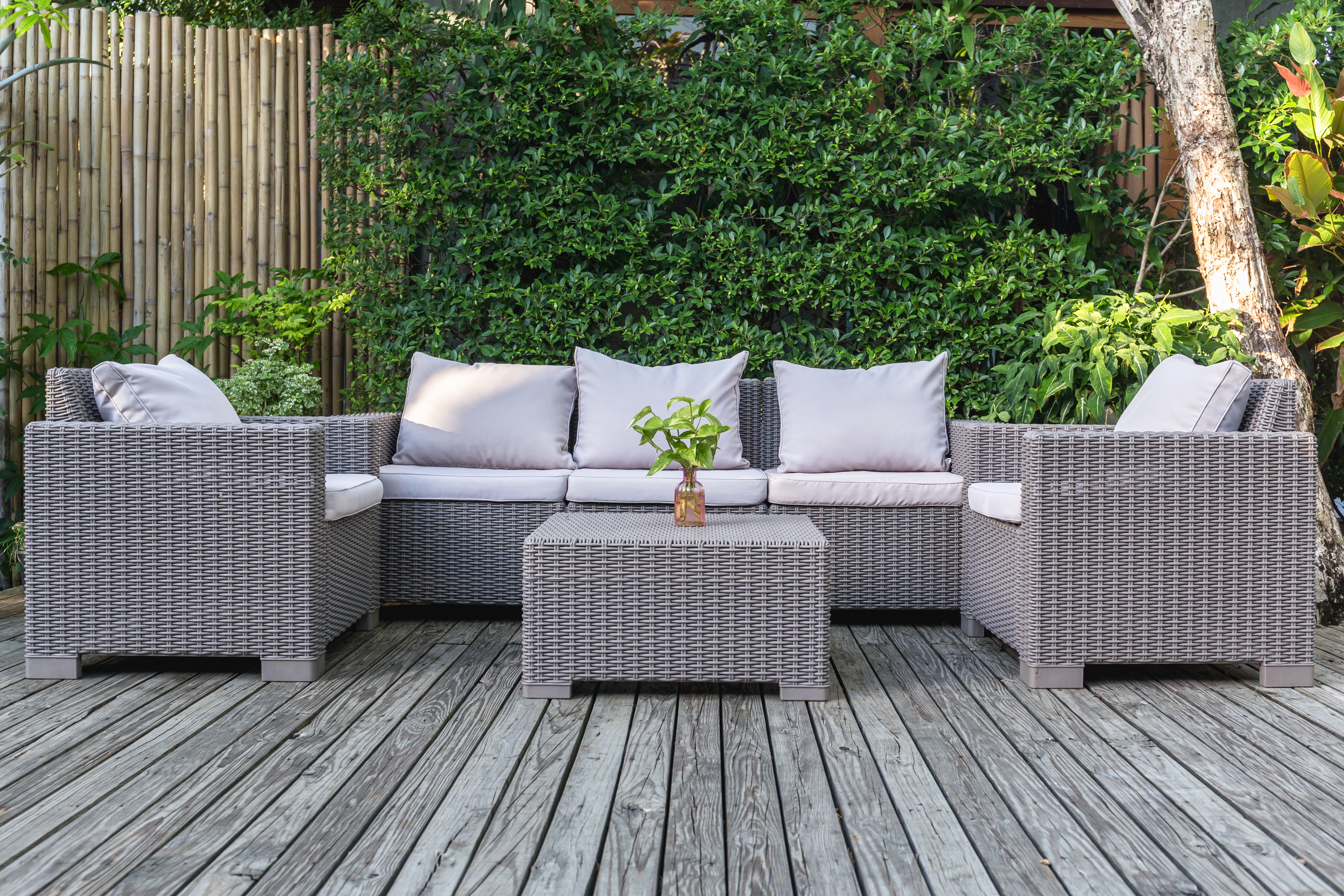
As we head into the summer months (although really, don’t we enjoy outdoor living almost year-round?), I often hear from clients who want to refresh their exterior spaces in preparation for family gatherings, neighborhood barbecues, and lazy days ahead. If you’re looking at a tired outdoor living space and want to give it a refresh, read on before you lay down your entire tax refund for some new pieces.
Here in sunny SoCal, outdoor living isn’t an afterthought. It’s an extension of our homes and, for many of us, it’s why we chose to live here. We dine outside, lounge outside, and entertain outside, likely just as much as we do indoors.
Whether you have a small patio with a bistro set for two or an expansive yard for hosting large gatherings, you’ll likely need someplace to sit and a table surface on which to place your grilled delights. But here’s the catch: Not all outdoor furniture is created equal. And what looks beautiful online or in a store doesn’t always hold up to the elements (I’m looking at you, salt air!).
Before you invest in new patio furniture, it’s worth understanding what will actually last — and what’s going to start looking tired far sooner than you’d like. There are numerous types of materials from which outdoor furniture is made, and here’s a brief rundown of what to look for.
Frame Material
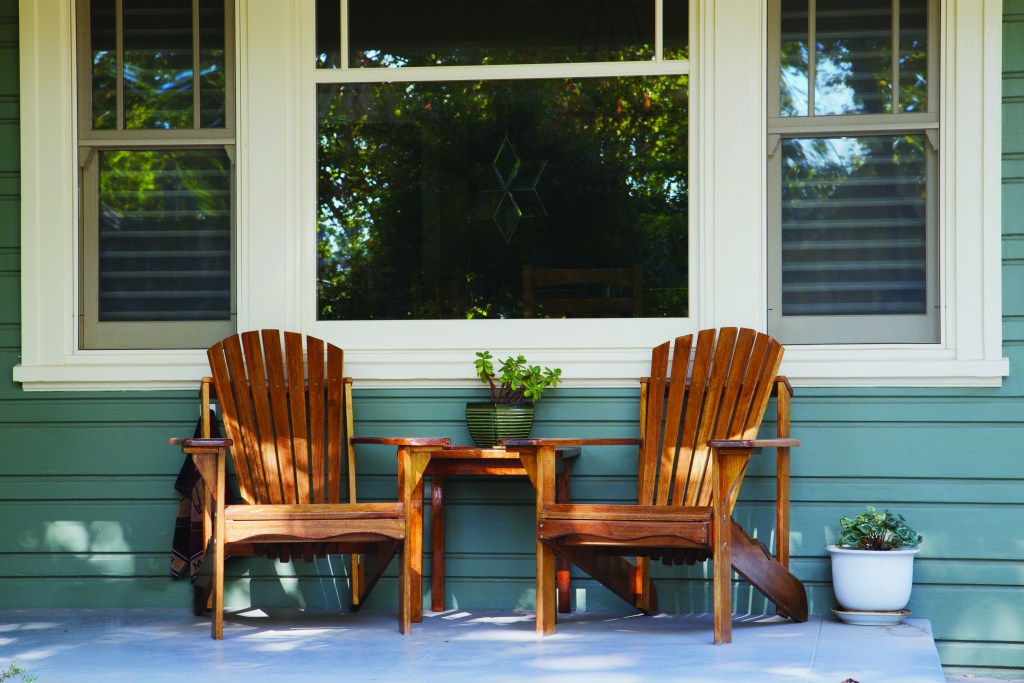
This is probably the most important material to consider, as the base material you choose will likely determine how long it will last or how much maintenance you want to dedicate. Outdoor furniture can be constructed from natural materials, such as teak, rattan, or other woods, or man-made materials, including high-density polyethylene (recycled plastic), coated metal, wicker, or concrete.
If you want the most maintenance-free materials, start looking at furniture constructed from recycled plastic, concrete, or powder-coated aluminum. In my experience, these are some of the best choices for coastal living with low maintenance. Many of these materials are engineered to withstand intense sun, resist moisture and mold, and won’t break down as quickly from salt air. You’ll get less cracking, splintering, and fading than many natural materials, which is a huge advantage if you actually want to enjoy your outdoor space rather than constantly maintain it.
Many natural materials, such as teak and acacia wood, bring warmth to outdoor spaces and are classic, beautiful choices. While natural wood can technically withstand the elements, it tends to weather quickly and unevenly in coastal conditions. Maintaining its original look requires regular upkeep, and without that, it can start to feel worn in a way that isn’t always intentional.
Cushions Matter More Than You Think
This is where I see people make the biggest mistake: choosing cushions based on looks alone.
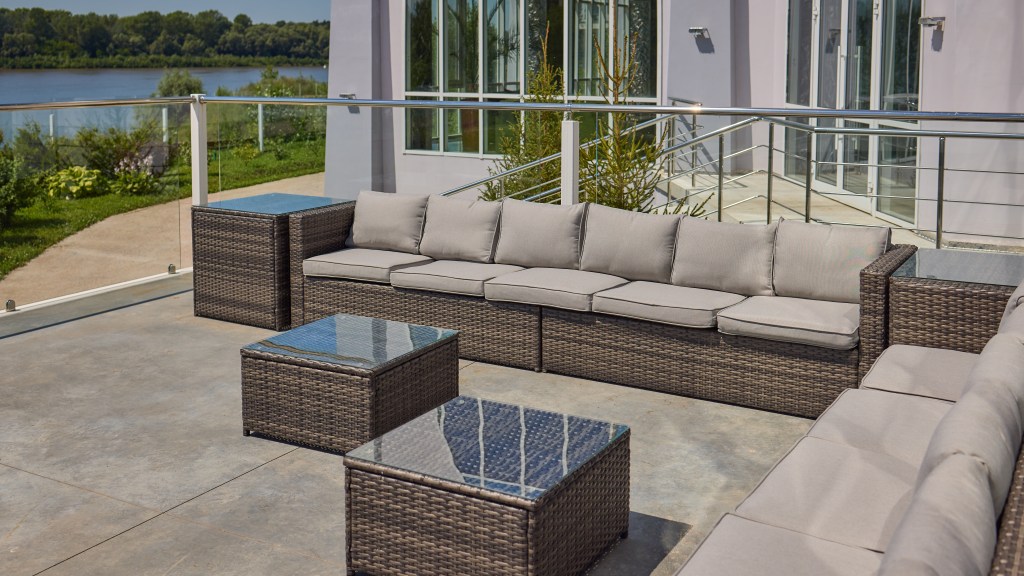
In our climate, you’ll want to use fabrics that can handle UV exposure and moisture from the marine layer, and are mildew resistant. Performance fabrics have come a long way, but it’s important to find cushion covers that are specifically made for outdoor use. Also, pay attention to what’s inside the cushion. Quick-dry foam or ventilated inserts make a noticeable difference, especially when your furniture is exposed to morning moisture.
Think About Maintenance
Every material comes with a level of upkeep, but some require far less than others.
Recycled materials are virtually maintenance-free. Aluminum needs occasional cleaning and can show water spots, but that’s about it. Wood, especially in coastal environments, requires ongoing oiling.
The key is choosing materials that match how you actually live. If you’re not going to cover, oil, or regularly maintain your furniture, it’s better to select something that’s designed to withstand the elements without intervention.
Don’t Sacrifice Comfort
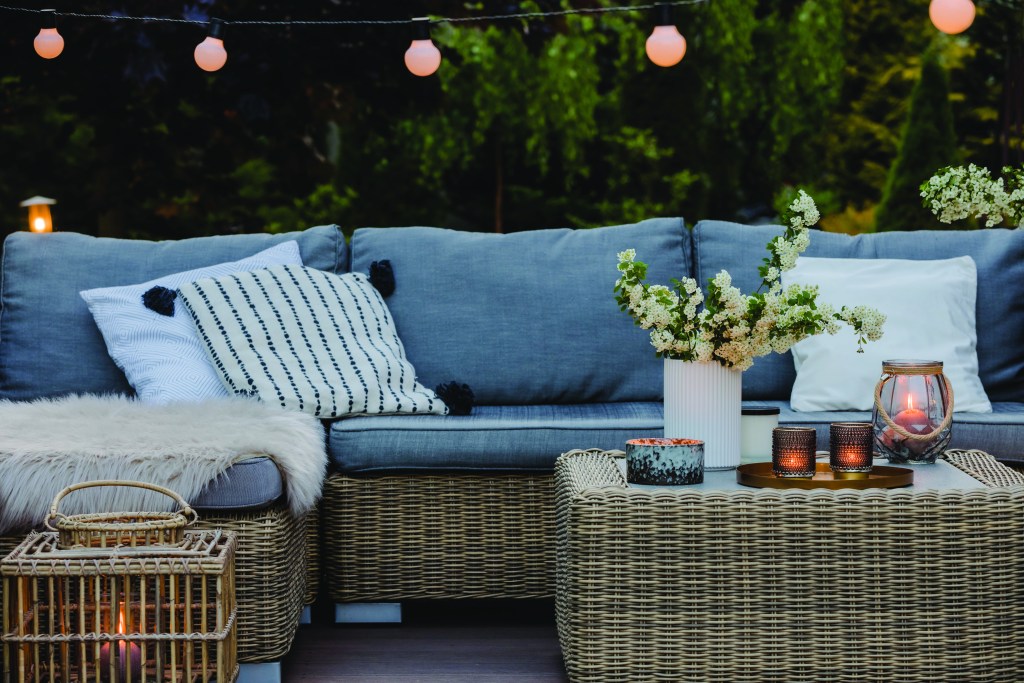
Outdoor spaces have evolved. They’re no longer just a table and a few chairs; rather, outdoor spaces these days include sectional sofas, rugs, swivel chairs, and entertainment centers. For comfort, look for deeper seating, thick cushions, and pieces that invite you to stay awhile. If it doesn’t feel comfortable enough to linger, it won’t get used, no matter how beautiful it is.
So, before you buy, take a moment to think beyond simply how the furniture looks. You want something that feels relaxed and effortless but is built to withstand sun, fog, and salt. Then get ready for anything from a quiet morning coffee to a long summer dinner with friends.
So, next time you fire up the barbecue, snap a photo and share. I’d love to see your outdoor space! Tag me on social media @saltwood.interiors.
Christine S. Cowles is the owner of Saltwood Interiors, an interior design company specializing in residential and vacation rental properties. She is a certified Short-Term Rental StylistTM, member of Santa Barbara Association of Realtors, and a proud WEV graduate. She can be reached at design@saltwoodinteriors.com.









You must be logged in to post a comment.