

Who Is Behind
Santa Barbara’s
Shocking High-Rise Projects?
The Independent Follows
the Paper Trail
By Christina McDermott
November 5, 2026
Before the lawsuits, the local outcry, and publicity, the story of the proposed eight-story building behind Santa Barbara’s Old Mission started with a simple question. Who, exactly, submitted plans to put 270 apartments and semi-underground parking behind one of the city’s most famous landmarks?
To find the answer, the Santa Barbara Independent has spent more than two years searching through public records to track a web of limited liability companies (LLCs). The web reveals the Mission project to be only one of at least eight massive housing project proposals with connections to real estate advisor Ben Eilenberg, and Craig Martin Smith and Stephanie Smith, a couple in the real estate business.
The projects range from Carpinteria to the Yosemite Valley. They include building towers in single-family neighborhoods and outside small towns, new communities, and in rural areas. Altogether, they would create more than 2,200 housing units, predominantly in expensive communities, that would fundamentally reshape the space around them, irrevocably altering traffic patterns, skylines, and the character of the land. This impressive portfolio is managed on paper by two out-of-state limited liability companies.
In July, utility company Frontier Communications, a subsidiary of Verizon, filed a lawsuit against the developers of the Carpinteria project. The suit calls into question what the real purpose of proposing such out-of-scale housing projects actually is. Pointing to both the Mission and the Carpinteria projects, the suit suggests that the buildings were never meant to be built, but instead were only a ruse — just vehicles to make money by bringing lawsuits against local governments.
The Independent has repeatedly contacted Eilenberg and Craig Martin Smith and Stephanie Smith asking for comment about this suit and sending a detailed list of questions, but as of November 4, there has been no response.
The Project Network
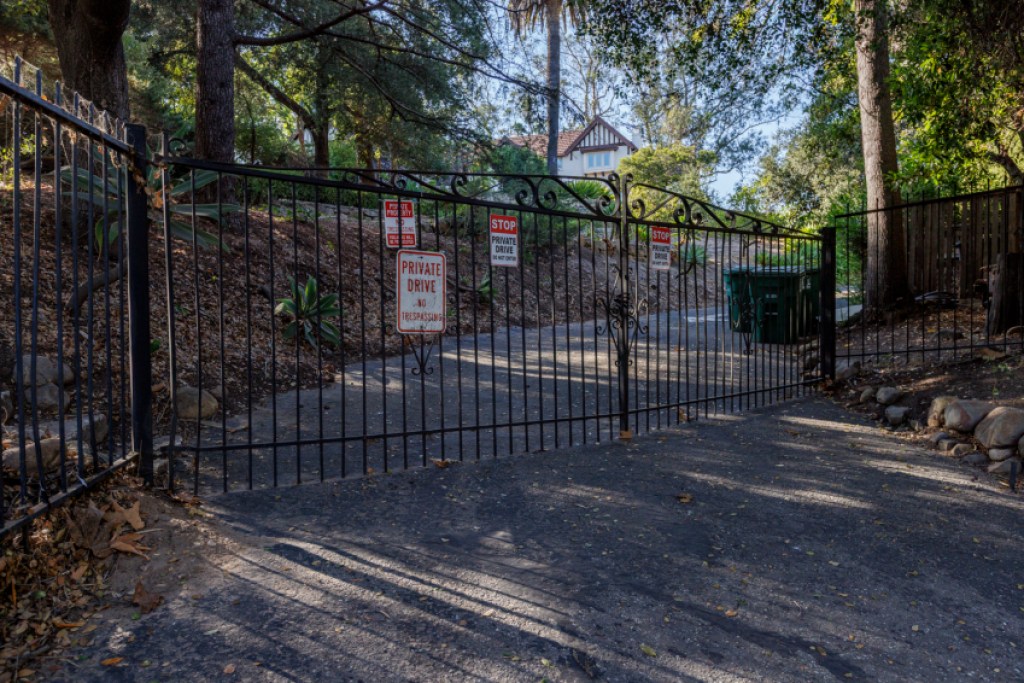
In Santa Barbara, the Mission project would loom over single-family homes, the Museum of Natural History, and the historic landmark itself. The project sparked local outcry and organization to oppose it. But who exactly is being opposed?
The property’s owner and its project applicant are one and the same, a limited liability company called The Mission LLC.
Real estate advisor Ben Eilenberg organized The Mission LLC in 2021. His name was familiar. In 2023, the Independent reported on Eilenberg and Craig Martin Smith and Stephanie Smith in connection to a proposed six-story building on Grand Avenue in Santa Barbara’s Riviera neighborhood. At the time, the Smiths told the Independent that they were supporting the state’s mandate to build affordable housing.
Two years later, the Mission LLC sued Santa Barbara County over an alleged property tax exemption for renting to a religious organization. The church that The Mission LLC claimed it rented to listed Craig Martin Smith and Stephanie Smith as its CEO and CFO. The trio, it turns out, has a years-long working history, and the Smiths’ partnership goes back decades.
But neither Eilenberg nor Craig Martin Smith and Stephanie Smith are actually listed as The Mission LLC’s manager — that title belongs to a New Mexico–based shell company called SoCal Holdings.

From SoCal Holdings, the Independent began to find other projects. In Carpinteria, an LLC called Carpinteria Group submitted plans for an 18-story tower on a vacant lot near the highway; the 218-foot building would dwarf the entire town. In the upscale town of Los Gatos, another limited liability company put forward plans for an 13-story apartment tower. In both cases, Eilenberg’s name appears on California’s filing documents for the LLC applicants. Eilenberg exchanged emails with the City of Carpinteria over the Carpinteria project, while a Martin Smith is listed on the Los Gatos LLC project owner on submitted project plans.
As the Independent tracked SoCal Holdings, a pattern appeared: Some LLCs started out as managed by SoCal Holdings but then changed management to another New Mexico–based shell company with an identical address: Sovereign Asset Managers LLC.
Today, of the eight large-scale projects connected to Eilenberg that the Independent tracked, at least five LLCs are managed by Sovereign Asset Managers. There’s a 16-story building in the small town of Woodside; an 11-story project outside of quaint Carmel-by-the-Sea; 553 homes on a subdivision east of San Jose; a quartet of towers in rural Monterey County; and a manufactured housing community just outside of Yosemite National Park where the nearest town has a population of fewer than 100 people. In this last project, the name Martin Smith appears in email exchanges on the project with Mariposa County.
Why would any entity propose so many massive projects, especially those which, on their face, do not seem to fit their environment?
What’s in a Name?
For this story, the Independent combed through hundreds of limited liability companies. Some of the companies connected to SoCal Holdings and Sovereign Asset Managers had playful names, such as:
Conjunction Junction LLC
Jolly Ranchers LLC
Borracho Con Poder
[Drunk on Power] LLC
Bubba Likes Tortillas LLC
Other Projects
There are at least two more Builder’s Remedy projects in the Santa Barbara area that were put forward by limited liability companies that list SoCal Holdings as their manager. They are large, but less dramatic than the eight proposals this story focuses on. One, on Grand Avenue in Santa Barbara’s Riviera neighborhood, proposes a six-story, 53-unit apartment building. The second, in the dense college town Isla Vista, proposes an eight-story building.
The Independent also found evidence of past and present Builder’s Remedy proposals in Compton (a 45-unit building) and Grand Terrace (a community of 115 modular homes and a development of 30 manufactured homes). The Independent has not yet established, to what extent, the 115-modular-home community is controversial or large for its location.
Big Projects Could Mean Big Money
The eight identified projects linked to SoCal Holdings and Sovereign Asset Managers are filed under a 31-year-old housing provision called Builder’s Remedy. While the provision underwent revisions in 2024, the mechanism is essentially the same: if a local city or county does not have a state-certified housing plan, a developer can bypass zoning restrictions so long as their project reserves a specific percentage of units as affordable housing. A local government can only deny a project if it has an unmitigable impact to public health or safety. All a developer needs to do to start the process is file a preliminary application meeting that requirement.
Builder’s Remedy sat largely dormant until around 2022. Across the state local governments had failed to zone for huge amounts of housing as part of their housing plans. Now, local governments have received at least 221 Builder’s Remedy project applications across the state, according to pro-housing organization YIMBY Law.
In January 2025, as the demand for housing continued to outrun supply, the state made it even more expensive for local governments to try to illegally block a project filed under Builder’s Remedy. Under the changes, if a town, city, or county is found violating the state code by impeding development, it could be charged up to $10,000 per planned unit, paid to a local housing trust fund, plus attorney fees, paid to developers.
But there’s an unintended consequence: If a developer puts forth grandiose plans with no intent to build the project, that developer can still sue the local government for blocking it. The local government must then either fight the developers in court, and risk massive fines, or settle with the developer, and avoid more trouble.
Some Projects Pose Challenges

It’s true. Take the eight-story Mission plan. The sloping 4.8-acre property is a known archaeological area, is located near the Mission’s historic graveyard, and abuts Mission Creek. The land also contains flood zones and is near wetlands and a fault line. Nevertheless, it aims to build three stories of semi-underground parking. All of the vehicles would spill onto a narrow, two-lane road.
In Yosemite, the proposed modular home project would route the property’s traffic through the national park. A July 2026 response letter from Mariposa County to the developers claims they did not include an adequate traffic plan in their application to show how people from the new community could safely evacuate during an emergency.
Monterey County’s planning department must weigh whether a proposed tower could allow for safe evacuation; the site is in a high fire zone and in an area without fully developed roadways, according to the local publication, The Carmel Pine Cone. And the town of Woodside is working on how the tower proposed by Woodside Community Housing LLC will impact the community’s plumbing system.
The challenges of building are not, however, relevant to any allegations that a city or county is blocking a project from going through its application process.
A Utility Company Alleges Fraud
In 2024, Frontier Communications entered into a deal to sell part of its land to Carpinteria Group LLC, the Carpinteria project’s developer, for $550,000. It hasn’t been a trouble-free arrangement. In June, Carpinteria Group sued Frontier over an alleged “bad-faith attempted termination” of that agreement and claimed the utility company was deliberately trying to kill the deal because of public relations.
A month later, Frontier filed a cross-complaint. It claimed the entire project was a ruse, and the developers were proposing something “doomed to fail” so they could then sue the city.
“The scheme is relatively simple,” the Frontier complaint reads. When the project, which the complaint called “facially absurd,” gets pushback from local governments, they “sue in order to reap invented damages and attorneys’ fees.”

In Frontier’s case, the company claimed that Carpinteria Group LLC approached the communications company with a purchase offer for part of its land, saying they would build a modest four-unit project with one unit deemed “affordable.” With that representation, the complaint said, Frontier agreed to sell them the land and make “commercially reasonable efforts” to get permission from the city to subdivide the land.
Then, the lawsuit said, the developers submitted the 18-story building plan with Frontier’s signature from the four-story plans.
This isn’t the first time this kind of scheme has been used in the county, Frontier’s filing claims; it specifically cites the Mission project (managed by SoCal Holdings) and the project near Yosemite National Park (managed by Sovereign Asset Managers), and makes reference to the 13-story apartment project in Los Gatos (managed by SoCal Holdings).
“On information and belief, none of the Cross-Defendants or any of Eilenberg’s associates have ever developed an actual housing project,” Frontier’s civil suit states. “Their business is lawsuits, not development.”
Carpinteria Group LLC has legally challenged these allegations in court.
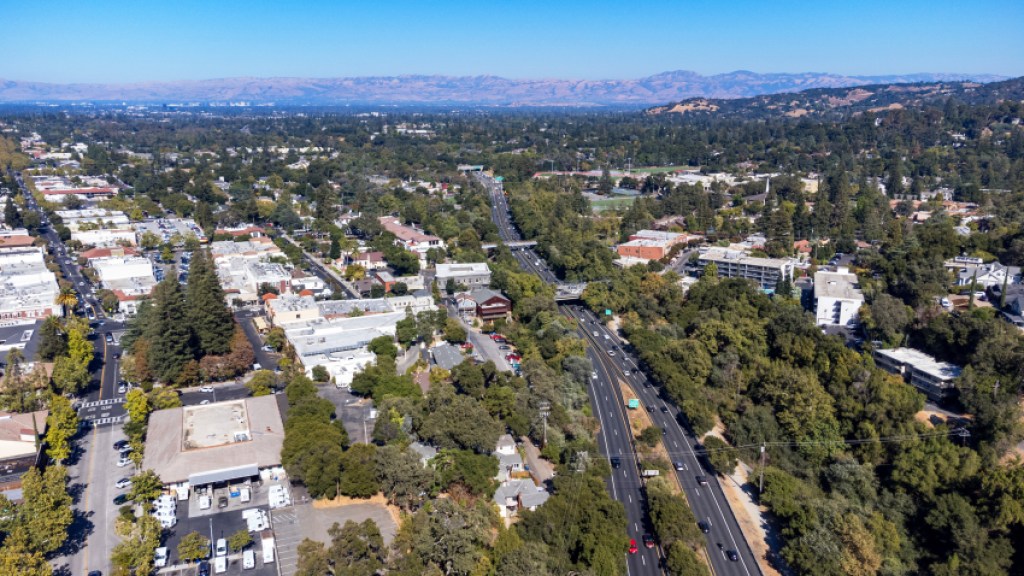
In December 2025, Ben Eilenberg spoke at a Los Gatos City Council Meeting about that project, identifying himself as the COO of Los Gatos LLC, the applicant, and saying he was part of a group that builds multi-family homes to address the state’s housing shortfall.
Eilenberg said the town had “taken positions” that go against California law, and that its multiple lawsuits, including the one against his development, would cost the town in attorney fees and in penalties.
“I’m not going to exaggerate to you,” he said. “We recently cashed the attorneys’ fees check for another city, and are in final negotiations on the amount of attorneys’ fees that a third city will be paying us.” Eilenberg did not name these cities.
Eilenberg said that these outcomes occurred after the city’s lawyers recommended they settle the disputes because there was “no path to victory for them, and they needed to stop the bleeding.”
Of the eight large-scale statewide projects under SoCal Holdings and Sovereign Asset Managers, three (in Carpinteria, Santa Barbara, and Los Gatos) filed lawsuits against their local governments. At least five other current and past project applicants with connections to SoCal Holdings also filed lawsuits against local municipalities, including the applicants for a 115-modular-home community in the small city of Grand Terrace.
The Frontier complaint specifically names Eilenberg and SoCal Holdings as cross-defendants, not Craig Martin Smith and Stephanie Smith nor Sovereign Asset Managers.
The trio have a long partnership history, and Craig Martin Smith and Stephanie Smith have on-paper connections to both holding companies through the LLCs they manage, their alleged church affiliations, and in some cases, email exchanges on project applications between them and involved cities. For this reason, the Independent decided to look further into the Smiths’ past business endeavors. We cannot, however, prove that they are specifically or exclusively behind all of these projects. It’s possible that anonymity is intentional.
Deliberate Anonymity?
Despite the companies’ vast portfolios, the people behind SoCal Holdings and Sovereign Asset Managers are hard to track down. Registered in New Mexico, the companies list their address as a small adobe office building in Santa Fe. That address doesn’t provide many clues; you can track hundreds of faceless limited liability companies to it. Many of them appear to be shell companies, without employees or a business operation.
It’s not unusual for a developer or property owner to use an LLC for a project or to buy land. The entity limits a person’s liability. If something goes wrong with their business, such as bankruptcy or a lawsuit, their other assets aren’t on the hook. LLCs also allow the true owner anonymity.
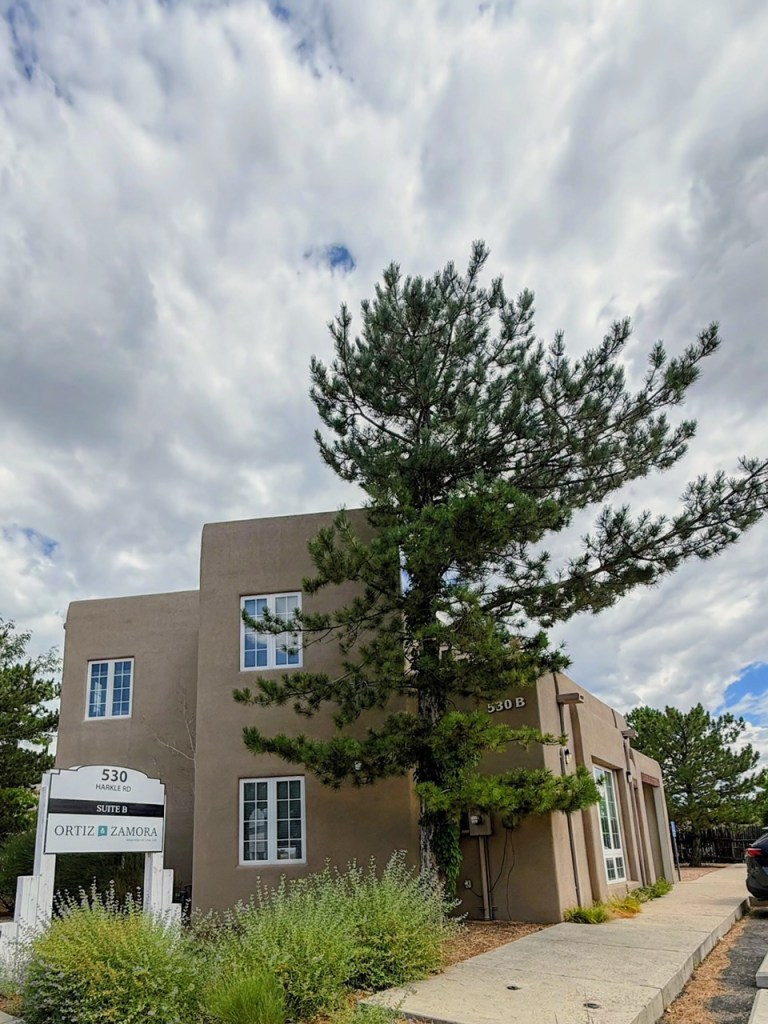
SoCal Holdings and Sovereign Asset Managers were set up with help from Registered Agents Inc, a national company that does the paperwork for paying customers that allows them to keep their identities hidden. It registers companies with specific addresses — including the adobe house in New Mexico — so that the owner can also keep their real address hidden too. Without a name or address, it is extremely difficult to locate the actual individuals behind a business.
SoCal Holdings’ registering agent and organizer is listed simply as Registered Agents Inc., but some of Sovereign Asset Managers’ filing documents include additional names. A Riley Park is listed as the company’s organizer and a Bill Havre is listed as its agent. The trouble is that neither Riley Park nor Bill Havre seems to exist.
In 2024, Wired magazine published an investigative piece on Registered Agents Inc., where it reported that the company had created at least 10 fictional agents whose names appeared on at least 36,000 filing documents across the United States. Park and Havre are both named. Havre, previously listed as the company’s president, even had a profile on its website: He allegedly attended UC Berkeley before returning home to Wyoming due to a family emergency, where he worked on ranches and built up his business career.
The Wired story followed a 2022 investigation conducted by the International Consortium of Investigative Journalists (ICIJ) and The Washington Post that called into question Havre’s existence after it could find no public records with his name. After the ICIJ and the Post made inquiries, they reported in their story, Havre’s name disappeared from the company’s website.
The story pinpointed how little oversight there was of registered agents generally which allowed avenues for criminals and scammers to operate. Case in point: Wired also reported on an FBI investigation of three LLCs that facilitated moving money from the United States to the North Korean military. The companies were set up legally with Registered Agents Inc. The agent on their filing documents? The fictional Riley Park.
In 2024, Wyoming’s Secretary of State dissolved the three LLCs, with Secretary of State Chuck Gray saying, “The communist, authoritarian Kim Jong Un regime has no place in Wyoming” in a press release.
But although people using Registered Agents Inc. could commit illegal acts anonymously, the work the company does is legal. That includes its role in Sovereign Asset Managers and SoCal Holdings.
Without living, breathing names attached to the holding companies themselves, the Independent turned to the man with the most connections to the companies: Ben Eilenberg.
Lawyer, Manager, Chief Operating Officer
Real estate advisor Ben Eilenberg signed a California filing document as SoCal Holdings’ manager — it was for a limited partnership called Sovereign Property Management — in 2023. Further, Eilenberg organized more than three dozen LLCs managed by either SoCal Holdings or Sovereign Asset Managers, including the companies proposing the eight large projects around California.
Unlike Riley Park or Bill Havre, however, Eilenberg is a real person. A lawyer turned real estate manager, he was admitted to the California Bar Association in 2008. Eilenberg has publicly stated that before earning his law degree, he was a data security technician at BNY Mellon (formerly Mellon Bank), a major finance company headquartered in New York.
Eilenberg is a suspended attorney who faced his first disciplinary charges in October 2017 for failing to communicate with his clients and fulfill his professional duties. He faced subsequent disciplinary actions from the bar.
He also has at least a nine-year history working with Stephanie Smith. Before his first suspension, Eilenberg served as Smith’s attorney and from at least 2019, he has held the title of chief operating officer for Stephanie Smith’s firm, Industrial Partners Group. His profile is still on the company’s webpage, though it is currently obscured in white text.
Industrial Partners Group might ring a bell; it’s the company proposing the six-story apartment building on Grand Avenue in Santa Barbara near the Mission project. But the firm previously marketed itself as a cannabis real estate company. Stephanie Smith, its principal, has an extensive and litigious history when it comes to cannabis.
It is through lawsuits over cannabis regulation that the Independent found links between Stephanie Smith and SoCal Holdings.
Stephanie Smith, the Queenpin
In 2017, a few months after Eilenberg faced his first disciplinary charges with the State Bar, law enforcement seized tens of thousands of illegal cannabis plants from two commercial buildings and a house in the San Bernardino Valley. In reporting by the Associated Press and the San Bernardino Sun, Stephanie Smith was identified as the properties’ owner.
Smith was not charged after the operation. But it caused a small media storm with some outlets referring to her as “queenpin.” She embraced the title.
“A queenpin is a woman essential to an organization’s success,” Smith wrote on her website. “So yeah, that label fits me at home and in the office. I run a successful real estate firm and I’ve fought for cannabis legalization and other personal rights for over a decade.”
By that time, Smith was not a newbie in the world of cannabis real estate. She began to lease space to cannabis growers as early as 2009, according to a 2018 article from the Los Angeles Times. By 2018, Smith told the Times, she owned nearly two million square feet of industrial real estate, with the majority rented to cannabis growers for high rents.
She was involved in at least three lawsuits related to marijuana regulation, represented by Ben Eilenberg’s law offices. In one case, Smith sued the City of San Bernardino through a limited liability company called Bubba Likes Tortillas. On paper, Stephanie Smith was initially listed as the LLC’s manager. Later, however, that listed manager was changed to SoCal Holdings.
Eilenberg also represented an LLC managed by Stephanie Smith’s partner, Craig Martin Smith, in a suit against the City of Moreno Valley regarding its marijuana policies. That LLC also changed its listed manager to SoCal Holdings. The courts dismissed of both of these cases.
Stephanie Smith’s business and life partner, Craig Martin Smith, has had his own experiences with limited liability companies and litigation.
AmeriScan and LipoDiesel
“Going shopping? Why not get a full-body health scan?”
So declared a 2001 Wall Street Journal headline for an article on Craig Martin Smith’s company, AmeriScan. At the time, Smith — a physician and radiologist — went by Dr. Craig Alan Bittner. AmeriScan offered commercial medical imaging around the country, mainly in shopping malls, according to a 2004 Arizona Republic article. Stephanie Smith, then known as Stephanie Darcy, was also involved with the company as early as 2002.
Smith faced allegations of fraud while head of AmeriScan. According to documents from a 2006 civil case, Smith (then Bittner) had leased equipment from Siemens Medical Solutions U.S.A. (today Siemens Healthineers), a multinational medical technology company. Siemens said Smith/Bittner, through his companies, had failed to make payments on the equipment and owed them more than $35 million.
Siemens listed more than three dozen of Smith/Bittner’s alleged LLCs as co-defendants as well as two trusts. The lawsuit claims that Smith/Bittner created these LLCs, owned by the trusts, allegedly to defraud creditors. “Craig Bittner transferred money from his companies to the LLCs and then caused the LLCs to purchase property,” a court document from February 6, 2006, alleges.
In July 2006, Siemens, as the plaintiff, submitted a notice of settlement to the court. Smith would sell land he owned in Fresno County and give the profits to Siemens, and in turn, Siemens would drop the case with prejudice, meaning they would not file again.
Meanwhile, AmeriScan’s locations had shut down. The company faced a civil suit from the California Medical Board and the San Francisco District Attorney’s Office for overstating its effectiveness in detecting breast cancer.
By December 2003, Smith/Bittner had posted a letter on AmeriScan’s website saying that “the controversy and criticisms over using advanced technology for health screening” had forced him to close his doors.
“The allegations brought against me are unfortunate,” Smith/Bittner wrote. “My only fault is to be the voice for medical science.”
Smith worked at the intersection of medicine and business for at least another five years, running a micro-liposuction clinic in Beverly Hills, which gained media fame around 2008 after Forbes and other media outlets reported Smith allegedly converted the liposuction fat into biofuel. On their website, LipoDiesel.com, Craig and “Steph” Smith said they got 11 miles to the gallon for their Mercedes. Beverly Hills Liposuction closed in December 2008.
“I am proud to be able to tell you that the record of my liposculpture practice has been impeccable; not one single serious complication or infection,” he wrote.
Not everyone agreed. Though all cases were eventually dismissed, three former patients sued him for professional injury that year. Still, Smith eventually surrendered his medical license, admitting to California’s Medical Board that he had “aided and abetted” the unlicensed practice of medicine. Stephanie Smith admitted to practicing medicine without a license and paid a $240 fine.
By Smith’s own account, he then traveled to Bogotá, Colombia. In 2023, the Smiths told the Independent that the harassment and threats they faced over their liposuction diesel business prompted them to change their names from Bittner and Darcy to Smith.
We Don’t Know Our Neighbors
As far as the Independent is aware, Frontier’s case is the first lawsuit alleging fraud through Builder’s Remedy. Regardless of how the case plays out, the situation in Carpinteria and in Santa Barbara reveals how someone could exploit a law intended to pave the way for housing and use the legal system as a tool for profit.
And, it shows how, through limited liability companies, they could do so nearly anonymously. After all, SoCal Holdings and Sovereign Asset Managers’ projects, complex and numerous as they are, have no public declarations of financing. Despite their connection to Eilenberg and Craig Martin and Stephanie Smith, the Independent cannot say for certain that the trio are the only three people behind these companies, and that these companies are, in turn, the only entities behind these housing proposals. Filing a major housing project does not, after all, require transparency.




You must be logged in to post a comment.