
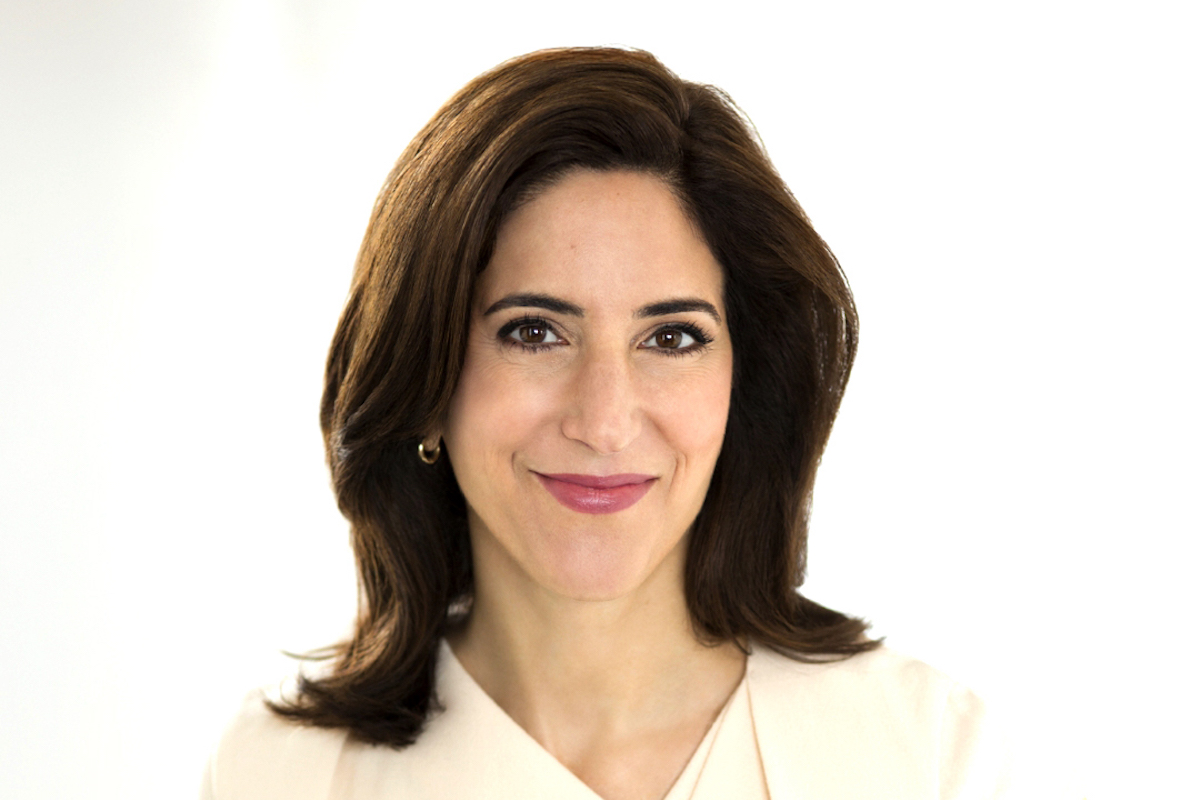
Polar ice is melting in the Arctic, opening up new trade routes and resources for countries to pounce on. Economist and longtime journalist Rana Foroohar, who is speaking at UC Santa Barbara on Thursday, November 19, saw this with her own two eyes on a trip to the North Pole.
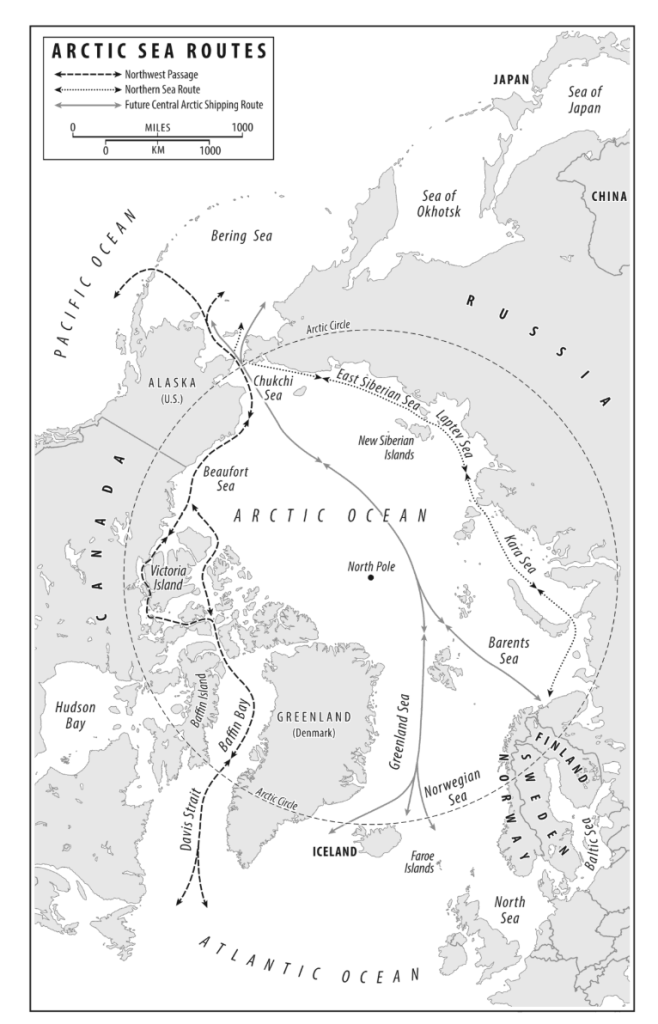
Foroohar’s newest book, Sea Change: America’s New Great Game in the Arctic Circle, details her three-week trip with Captain Michele Schallip aboard the U.S. Coast Guard’s only icebreaker in the Arctic (the first journalist to do so), and the geopolitical epiphanies she experienced. She reports on U.S., European, Russian, and Chinese efforts to chart new commercial sea passages, tap rare earth minerals and energy resources, and grab territory in a new “Great Game.”
She boarded in Nome, Alaska, and traveled through the Bering Strait, up through the Chukchi Sea and ultimately to the Beaufort Sea, before circling back to Alaska.
Natural beauty and scientific discovery grace the pages recounting her ocean voyage.
The weather was much rougher than she imagined, Foroohar told the Independent, facing 20-foot seas that later grew to 40 feet, “thankfully after I’d disembarked,” she said. There was much less ice than she expected, which contributed to the giant waves.
“Melting ice creates not only the opportunity for greater wave action, but stronger weather patterns in general,” she said.
“That affects not just what happens in the Arctic, but weather as far away as my home in New York,” she said, citing stronger fires in Canadian boreal forests connected to increased smog throughout the Eastern Seaboard.
Melting ice has kick-started chain reactions in both the natural world and our geopolitical reality.
Drawing on three decades of knowledge and experience, including serving as a Financial Times associate editor and CNN global economic analyst, Foroohar argues in her book that “ships are the new chips.” By chips, she means semiconductors — the lifeblood of the digital economy. Until recently, 92 percent of the best ones were made in Taiwan, “which has become a national security issue,” she said.
The last two administrations, particularly the Biden administration, made American production of chips a priority in order to “create resiliency.”
“Now, we’re going to do the same for ships, which as former [National Security Council] director Jake Sullivan told me, ‘are the new chips’ because 80 percent of global trade travels by ships — and the U.S. can’t make them at home alone in an efficient or cost-effective way anymore,” Foroohar explained.
With the Arctic heating up, so too is global competition to claim new trade routes and tap untapped natural resources. This race to control the world’s oceans is reshaping the global economy and redefining national security, Foroohar argues in her book. America is struggling to keep up, she explains, as maritime power becomes ever more consequential in being a global superpower. To stake its claim, the U.S. needs to step up its game in the shipping industry — including making the ships themselves.
She says the United States must take a “systems approach,” not only to economic and security issues in the Arctic, but everywhere. Climate change, commerce, manufacturing, mining, and industrial strategy with allies cannot be considered “in their individual silos,” because they are all part of a system that must be developed together, she said.
China did that in the early 2000s when it made the maritime sector a strategic sector, throwing all the resources of the state at building capacity and combining that with the trade strategy of recreating the old Silk Road and extending it into the Arctic, she said.
“At the same time, it was buying global port land and maritime interests, putting a ring fence around rare earths, and thinking about the fact that the Arctic would one day be a way to ship without being tied to chokepoints in, say, the Strait of Hormuz or the Suez Canal,” Foroohar said. “That’s long term, systems thinking.”
But this race does not need to accelerate conflict, Foroohar said. There was a precedent for cooperation in the Arctic. Until Russia’s war in Ukraine, the Arctic Council, a seven-nation body, did “a pretty good job of cooperating in the region,” she noted. She said it should be revived, albeit without Russia in the short term, in order to set some rules of the road for things like mining and exploration.
Smaller nations and indigenous communities will play a big role, she explained, as they inform governments about geography, fish and whale migration patterns, and spoken history of the natural world in the High North. Native tribes have helped both the US and Canadian governments locate navigable paths for ships. They are on the front lines of climate change and need to be able to weigh in on both the risks and opportunities of global warming, she said.
More transit in the region will definitely speed up the degradation of the ice, she noted. But there is also a need for science in the Arctic — such as cutting-edge experiments to rebuild glaciers — that requires ships.
“Ultimately, China and Russia will be in the region, and that’s going to necessitate meeting presence with presence,” she said. “But we should work with allies to do this in a way that balances the risks and opportunities.”
“On the upside, farming may become viable in some areas in a new way, even as melting permafrost releases mining toxins that countries have to work together to contain,” she added.
It’s a big, complex topic, Foroohar acknowledged. And the Arctic is quite far away from our coastal city. Why should the average California citizen care?
Well, what happens in the Arctic doesn’t stay in the Arctic, she said.
“Climate change there is having a huge impact on what people on the West Coast experience daily in weather and sea patterns,” she said.
“Meanwhile, America’s biggest geostrategic adversary — China (with Russia as a vassal state) — is doing more shipping and trade in the region than the U.S. or its allies,” she continued. “That’s a big deal. The view of the world from the top down is very different, and we need to understand it better.”
On Thursday, Foroohar will be speaking about these ideas in more detail for UC Santa Barbara’s Arts & Lectures. She wants attendees to leave the talk thinking about “de-siloing these conversations.”
Her point: we live in a political economy. Politics, economics, the environment and power are all part of the same conversation.
“In particular, I hope that Sea Change makes students think about the risks of concentrated power — be it in countries or companies — and how to offset that by building more resiliency at home and abroad,” she said.
Rana Foroohar will speak at UC Santa Barbara’s Campbell Hall on Thursday, November 19, at 7:30 p.m. Tickets start at $30 / $10 UCSB students. Free copies of Sea Change will be available while supplies last. Tickets available here: artsandlectures.ucsb.edu/events-tickets/events/26-27/rana-foroohar
Related Posts



Premier Events

Thu, Nov 19
10:30 AM
Santa Barbara
Sunshine In a Jar, The Art of Making Meyer Lemon Marmalade
Tue, Nov 17
7:00 PM
Santa Barbara
CWC Screening and Conversation: “Criminal Minds” James T. Clemente

Wed, Nov 18
12:00 PM
Santa Barbara
UCSB Son Jarocho

Wed, Nov 18
7:00 PM
Santa Barbara
Outside+ Showing of “Warren Miller’s Days Off”
Fri, Nov 20
11:00 AM
Santa Barbara
Santa Barbara Antique & Vintage Show

Sat, Nov 21
10:00 AM
Solvang
56th Annual Holiday Open House
Sat, Nov 21
10:00 AM
Santa Barbara
MOXI’s Seaside Sock Skating
Sat, Nov 21
11:00 AM
Santa Barbara
Santa Barbara Antique & Vintage Show
Sat, Nov 21
11:00 AM
Santa Barbara
Cassatt Reconsidered: Lecture with Mary G. Morton
Sat, Nov 21
7:30 PM
Santa Barbara
Juilliard String Quartet & Simone Dinnerstein

Sat, Nov 21
7:30 PM
Santa Barbara
Santa Barbara Blues Society Presents Teresa James and the Rhythm Tramps
Thu, Nov 19 10:30 AM
Santa Barbara
Sunshine In a Jar, The Art of Making Meyer Lemon Marmalade
Tue, Nov 17 7:00 PM
Santa Barbara
CWC Screening and Conversation: “Criminal Minds” James T. Clemente
Wed, Nov 18 12:00 PM
Santa Barbara
UCSB Son Jarocho
Wed, Nov 18 7:00 PM
Santa Barbara
Outside+ Showing of “Warren Miller’s Days Off”
Fri, Nov 20 11:00 AM
Santa Barbara
Santa Barbara Antique & Vintage Show
Sat, Nov 21 10:00 AM
Solvang
56th Annual Holiday Open House
Sat, Nov 21 10:00 AM
Santa Barbara
MOXI’s Seaside Sock Skating
Sat, Nov 21 11:00 AM
Santa Barbara
Santa Barbara Antique & Vintage Show
Sat, Nov 21 11:00 AM
Santa Barbara
Cassatt Reconsidered: Lecture with Mary G. Morton
Sat, Nov 21 7:30 PM
Santa Barbara
Juilliard String Quartet & Simone Dinnerstein
Sat, Nov 21 7:30 PM
Santa Barbara


You must be logged in to post a comment.