The History of Palmistry
The Gypsy Fortune Teller Bows Out to the Male Expert

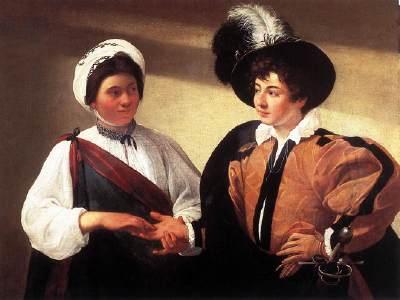
Speculation existed that the gypsy fortune tellers prevalent in England had come from Egypt. But practice in Egypt had long ago died out by the time the gypsies arrived in Europe. In high social circles in India, however, the art was still popular and thriving.
Yet the official British attitude towards palmistry expressed in a statute of Henry VIII in 1530 was that it was “a crafty means to deceive people.” Such an attitude was not found on the continent. Furthermore, there was already a written chiromantic tradition 200 years before the gypsies arrived.
Eventually, the British began to rescue the art from the gypsy veneer, which was thought to spoil the practice.
New books on palmistry began to appear in England in 1652, such as George Wharton’s The Art of Divining by the Lines and Signature Ingraven on the Hand of Man. These books appeared during the so-called “golden age” of the pseudo-sciences in England; supported by Thomas Hyll’s publication of a book on palmistry in 1613.
Hyll was able to support himself as a “miscellaneous” writer, working on translations for publishers and on compilations. But he also was a very enlightened Jack of all trades whose interest in palmistry, astrology, and the like showed through in his publications – which flourished between 1550 and 1599.
Alchemical research was also on the rise at this time. All sorts of arts were being rescued from where they had been buried during the Dark Ages. But chirology (a scientific approach) began to replace chiromancy. The latter was more intuitive. Chirology set the tone for rationalization of the art during the Enlightenment. And guess what? (This should come to no surprise to those familiar with the history of women in Western civilization); as medical doctors ousted the female midwives, the scientific rationalists gradually usurped the female gypsy fortune tellers from society.
The palmists portrayed in Italian paintings of gypsy chiromancers during the 16th century were women, delicately holding the hands of male clients. Go see an engraving by Benoit Audran and Caravaggio’s The Gypsy Fortune Teller the next time you are in the vicinity of the Louvre.
Gradually, these visual images were replaced by portraits of distinguished-looking gentlemen bearing books, such as that of Richard Sanders in his text, Physiognomie, And Chiromacie, Metoposcopie.
The man in the portrait holds a book. He stands between a British family seal and a window to the outside world. Beside him is a globe situated behind a table with various instruments suggesting scientific procedure.
But his books are readable, which helped to re-popularize the arts. His love of more occult sciences – like divination by nails reflecting sunrays (onychomancy), divination by the flight of birds (orniscopy), and divination by wine (oinomancy) – remained in the picture as he disclosed the secrets of palmistry.
Sanders later became an advocate of the interpretation of signs on the various mounds of the palms, combined with alchemical and astrological references. Both Hebrew and Latin are used on the front of the above-mentioned book.
Palmistry was thus rescued from the lower classes – from foreigners and from women – for the benefit of titillation of the British upper class.
Batya Weinbaum is a practicing palmist with a national reputation, as well as an artist, writer, and scholar. For your reading, call 216 233 0567.