• CREATE AN ACCOUNT
  • LOG.IN
  • CONTENTS
  • CLASSIFIEDS
  • ARCHIVE
  • INFO | ADVERTISING | CONTACT US

  • Home
  • News
    • News Main Page
    • NewsFlash
  • A&E
    • A&E Main Page
    • Movie Times
    • TV Listings
    • A&E Blog
    • Art Galleries
    • Best Bets
  • Opinion
    • Opinion Main Page
    • Endorsements
    • Blogs
    • Columns
    • Voices
    • Letters
    • In Memoriam
    • Obituaries
  • Events
    • Today
    • Search
    • Submit
    • Best Bets
  • Living
    • Living Main Page
    • Outdoors
    • Travel
    • Sports
    • Peeps
  • Food & Drink
    • Food & Drink Main Page
    • All Restaurants
    • Delivery
    • All Bars & Clubs
    • Drink Specials
    • Open Now
  • Sports
  • Outdoors
    • Outdoors Main Page
    • Outside Insider
    • Spotlight On
    • Features
  • Classifieds
    • Real Estate
    • Jobs
    • Autos
  • Obits

    Paul Wellman

    California Condors Close-Up

    Fresh Photographs from June 11 Trip Deep into Condor Country

    Saturday, June 13, 2009
    By Matt Kettmann (Contact), Paul Wellman (Contact)
    Article Tools
    Print friendly
    E-mail story
    Tip Us Off
    iPod friendly
    Comments
    Bookmark This
    del.icio.us. del.icio.us.
    Digg! Digg!
    furl furl
    google google
    newsvine newsvine
    reddit reddit
    technorati technorati
    Facebook Facebook
    Yahoo! My Web 2.0 Yahoo!

    This past Thursday, June 11, photographer Paul Wellman and I were escorted by representatives from U.S. Fish and Wildlife Service and the Santa Barbara Zoo deep into the Hopper Mountain National Wildlife Refuge, where we got an inside look at what’s being done to bring the endangered California condor back to the wild. It was the first trip in a series of excursions that we’ll be taking to research a forthcoming feature in The Santa Barbara Independent about the state of the condor, which nearly went extinct in the 1980s.

    Photo Gallery

    California Condors

    Hopper Mountain National Wildlife Refuge

    Enlarge photos | View thumbnails

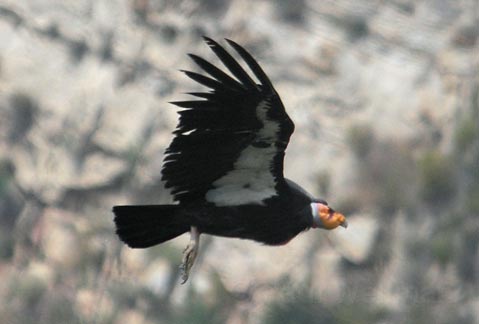
    Though we weren’t promised any actual condor sightings, the day turned out to be a surprising success: Just a few minutes into our hike down a ridge, we found ourselves within a few dozen yards of a juvenile condor perched on a dead pine tree. Twenty minutes later, we reached a nest observation post. After watching a hole in the cliff for awhile, we had the unique opportunity to witness a condor pair trade off chick-watching duties. The two flew together for a few turns and the father did a few swoops near our position before he landed near the cave, preened his black and white feathers, sunned his large wings, and eventually hopped in to check out his chick. Later that afternoon, while making a pit stop at the Hopper Mountain ranch house, we also saw another pair of condors flying high in the sky.

    Rather than have you wait until the article comes out later this year, we decided to publish Paul’s photos on our Web site today. We hope you enjoy them, and we hope there will be more sightings to come.


    Story Help (Click-ability)
    Double-clicking on any word or phrase in this story will open a reference window with definitions and links to other reference material.

    Comments

    Discussion Guidelines

    thank you! these images are spectacular - very good photo narrative.

    tom (Tom Morey)
    June 13, 2009 at 12:58 p.m. (Suggest removal)

    This article was really apropos for me, as I just got back from a volunteer condor nest watch for the USFWS in the Sespe Wilderness. Your article had great photos! You were really fortunate to be in the right place at the right time!

    Readers say: Thumbs Up: 1 of 1 • Thumbs Down: 0 of 1

    condorhiker (anonymous profile)
    June 13, 2009 at 5:52 p.m. (Suggest removal)

    Great photos Paul!

    Readers say: Thumbs Up: 1 of 1 • Thumbs Down: 0 of 1

    barbhirsch (anonymous profile)
    June 14, 2009 at 8:42 a.m. (Suggest removal)

    THIS IS A FEATURE I HAVE AWAITED since the tragic "Jesusita" fire and concerns then at the Tejon Ranch Conservancy [in Kern County] on the status & health of "The Santa Barbara Four" at the SB Zoo! ;-) Looking forward to the forthcoming feature article on this topic, guys! WELL DONE! "Only in THE INDY"! ;-)

    Readers say: Thumbs Up: 0 of 0 • Thumbs Down: 0 of 0

    gogosian2001 (anonymous profile)
    June 15, 2009 at 5 a.m. (Suggest removal)

    terrific photos, Paul!
    Matt, I hope in your future article you handle the tricky question of just how much government money has been spent to rescuscitate a dying species [how much spent per bird]? This is a "trophy" species and, in a sense, the program's "success" tends to mask how much biodiversity we are losing. Further, how many of these condors truly "live in the wild" and feed on carrion they find themselves, and how many actually eat those "beef popsicles" USFS personnel drop off out there...? I know by Lion Canyon these birds mainly eat what we humans put out there for them, since we can be sure it's lead-free. The issue is that maybe these beautiful birds are actually in a very large "zoo" -- and since humans have taken encroached/impacted most of their habitat it's a huge exaggeration to say they're BACK when it's actually a very controlled return, amazingly expensive, and perhaps those monies could be better spent rescuing scores of other species at much less cost. I know this isn't a very popular view.

    Readers say: Thumbs Up: 0 of 1 • Thumbs Down: 1 of 1

    DrDan (anonymous profile)
    June 15, 2009 at 6:30 a.m. (Suggest removal)

    Good points to research from DrDan. As a kid growing up in Santa Paula I remember taking jeep trips deep into the Sespe and up Hopper Mtn. just to go see these amazing birds (plus a few bears, some trout and many a snake). Anyway, the whole condor project is a touchy subject. Why do we spend millions of taxpayers dollars to help keep alive a species left over from the Pleistocene era when large abundant predators left plenty of carcasses for large carrion feeders to consume? Add to that the fact that condors were routinely killed by settlers and later ranchers back in the 1800s (blamed for killing young livestock when it was actually the golden eagles), habitat loss, don't forget the fashionable egg collecting days of the early 1900s, more habitat loss, DDT, lead bullets, did I say habitat loss? etc. I have to admit though, it has been a thrill for our family to have seen 3 in the last 3 years: 2 in the local backcountry and one soaring out over Pt. Conception. Sadly though, if left completely alone today— condors would continue to go extinct. So yes we are interfering with Nature with one big costly zoo experiment. Does it ever end? Maybe this one is just too much of a dead end to keep going...

    Readers say: Thumbs Up: 0 of 0 • Thumbs Down: 0 of 0

    LRaf (anonymous profile)
    June 18, 2009 at 8:26 a.m. (Suggest removal)

    Post a comment

    Username:
    Password: (Forgotten your password?)

    Comment:

    EVENT CALENDAR

    Previous Month | Next Month

    Today's Events Best Bets Submit an Event

    Local Weather

    Currently:
    Clear Sky
    Temperature:
    54.0°
    Wind:
    6 W

    Surf Report
    • Specials
    • InPrint
    • Top Emails
    • Best Of 2009
    • 2009 Election Coverage
    • Wedding Guide 2009
    • Blue Green Guide 2009
    • SBIFF 2009
    • Tea Fire 2008
    • Local Heroes 2008
    • Calendar of Fundraisers
    • Local Bands
    • High Noon in the Garden of Controversy
    • CAMA Presents the Shanghai Symphony
    • Elings Park Expansion Shot Down
    • Before I Be Your Dog …
    • Flobots Return with New Record, New Vision
    • Autism Attacked Alternatively
    1. Eating Animals
    2. Montecito Pet Shop to Sell Only Rescued Dogs
    3. Producer Must Pay Landscaper
    4. Nothing to Hide Anymore
    5. Teacher in Trouble
    6. Gardens of Rare Books
    • CREATE AN ACCOUNT
    • LOG.IN
    • CONTENTS
    • CLASSIFIEDS
    • ARCHIVE
    • INFO | ADVERTISING | CONTACT US
    Google
     
    Independent.com Web
    Copyright ©2009 Santa Barbara Independent, Inc. Reproduction of material from any Independent.com pages without written permission is strictly prohibited. If you believe an Independent.com user or any material appearing on Independent.com is copyrighted material used without proper permission, please click here.
    This is our Privacy Policy.