Where’s the Wildlife?
Where to Look for Creatures and Critters in S.B. County

The trail was a real lung-buster-super steep with plenty of loose rock-turning a typical day hike into a difficult trudge, but the sweeping hillside beckoned. Winter rains had delivered enough moisture to transform portions of the Santa Barbara backcountry into carpets of purple and gold. Lupines and poppies had sprung to life, signaling nature’s rebirth.
Halfway through the field of wildflowers, I looked up and caught a glimpse of something leaping out of the blooms across the narrow single track. Initially startled by my unexpected presence, the bobcat froze and stared back at me from a splintered pine tree. Then it relaxed, melting away in a potpourri of flowers and chaparral.
You don’t have to go to this extent to see wildlife in Santa Barbara County. The region is one of the most biodiverse in the state, and there are plenty of places to choose from to observe things on the wild side.
Here’s a selection of areas that will deliver guaranteed sightings of specific species. Don’t forget to bring your binoculars and spotting scopes to find those elusive critters camouflaged in tall brush, multicolored pickleweed, and swaying grasses. Make sure you have your camera to document your discoveries.
Coal Oil Point
At this time of year, beach closures are in effect to protect the breeding and nesting of the western snowy plover and the California least tern in Goleta and other beaches in Central and Southern California. From March 1 to September 30, these stretches of sand are closed to protect this tiny shorebird and seabird.
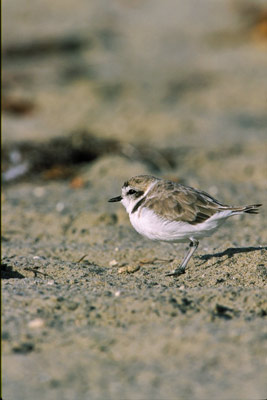
North and south of the wetland’s mouth, Coal Oil Point is roped off along the rack line of driftwood and gnarled kelp. To get a good view of these threatened birds, you’ll have to watch closely the natural depressions in the sand. Plovers don’t make nests, instead relying on depressions next to kelp, cobblestones, and driftwood. These tough little shorebirds depend on their camouflage to blend into their coastal environment.
The least terns are much easier to spot. Males and females constantly work on their nests, and once their chicks are born, the father is going continually to the sea to bring back food to the young. Once the chicks fledge, the mother shows them how to catch their own food. The parents also make a lot of noise, another easy way to locate these sleek, aerodynamic birds of the sea. Visit coaloilpoint.ucnrs.org/snowyploverprogram.html.
Carpinteria Salt Marsh Nature Park and Reserve
This 230-acre wetland has more than 200 birds recorded in its maze of channels and dense pickleweed. Easy, maintained trails lead to vantage points for expansive views, and interpretive signs explain the inner workings of the marsh. You can almost pull up a chair at one of the channels that serpentines through the estuary and watch for cinnamon, green, and blue-winged teal, lesser scaups, common mergansers, double-crested cormorants, and marbled godwits.
Sneaking around the pickleweed are marsh wrens, Say’s phoebes, snowy egrets, a slew of songbirds, and the extremely secretive light-footed clapper rail. Red-tailed hawks, American kestrels, white-tailed kites, and seafaring ospreys patrol the skies.
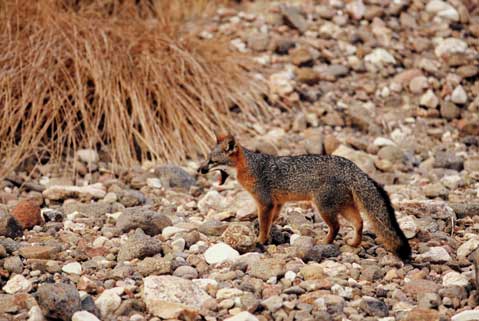
Keeping all the waterfowl and waders on their toes is a resident gray fox frequently seen foraging through the pickleweed and crossing the muddy channels at the lowest of tides. For docent-led trips in the Carpinteria Salt Marsh Nature Park, call 684-8077.
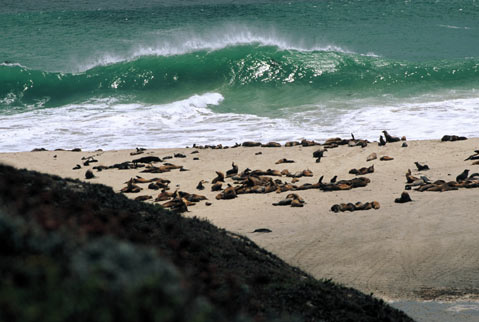
San Miguel Island, Channel Islands National Park
The most westerly islet in the Channel Islands National Park archipelago is home to the largest seal and sea lion rookery in North America. More species are seen here than anywhere else on the planet. Plan on seeing northern elephant seals, harbor seals, California sea lions, and northern fur seals-numbering more than 100,000 animals-surrounding the windswept isle.
The best place to see this massive congregation is at Point Bennett, located on the western tip of San Miguel. A cold current from Alaska and a warm current from Mexico collide around the chain, bringing with them a rich assortment of food items, making Point Bennett a popular spot for the pinnipeds.
Now all you have to do is get there. After a three-hour boat ride with Island Packers (642-1393, islandpackers.com), campers will be dropped off for three days at Cuyler Harbor. The hike out to Point Bennett is 15 miles round-trip and ranger-led. The hike itself is long but easy, and anticipation mounts by the distant bellows of seals and sea lions carrying across the island.
Along the hike, keep an eye out for the endangered island fox, making a comeback on San Miguel. Remember to bring your binoculars to watch nature’s drama unfold on the long, gritty finger of sand at Point Bennett.
Carrizo Plain National Monument
The last of California’s historic grasslands can be found here, along with a throng of various critters. It’s not known as California’s Serengeti for nothing. Soda Lake’s 50-mile dirt road is the main drag through the monument, with many old cattle roads leading to points unknown.
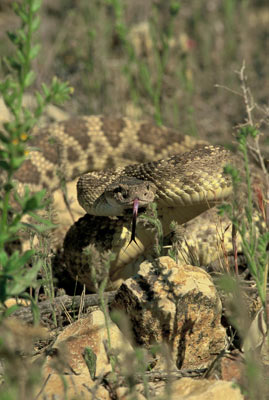
Along Soda Lake Road, it’s common to see pronghorn antelope, desert cottontails, San Joaquin kit foxes, antelope ground squirrels, roadrunners, and maybe Tule elk and burrowing owls. The Caliente Mountains just west of the grasslands are foraging habitat for black-tailed mule deer. Coyotes, golden eagles, and great horned owls are also seen in the woodlands.
As summer approaches, the Carrizo Plain becomes one of the hottest places in the state, a good time to spot beautiful western Pacific rattlesnakes. East of the plain, along the base of the Temblor Mountains and the San Andreas Fault, is one of the few remaining refuges for the endangered blunt-nosed leopard lizard. For a little nocturnal activity, go for a night drive searching for kangaroo rats and jackrabbits. For more information, call the Goodwin Education Center at 475-2131, or visit blm.gov/ca/st/en/fo/bakersfield/Programs/carrizo.html.