Watching the Agendas: Week of August 9
Supes to Declare 71 Properties as Fire Nuisances; Consider CEO Replacement Candidates

County of Santa Barbara
CEO Candidates: This Monday morning at 7:30 a.m., the Board of Supervisors are meeting in closed session to consider candidates to replace County Executive Officer Mike Brown, who is retiring at the end of October after nearly 15 years as the county’s top administrator.
During his term, Brown was able to consolidate power and, some say, overstretched his bounds when former 3rd District Supervisor Brooks Firestone led the then-conservative-leaning board to give Brown even more control. Those circumstances formed the basis of this investigative cover story in the February 5, 2009 issue of The Independent.
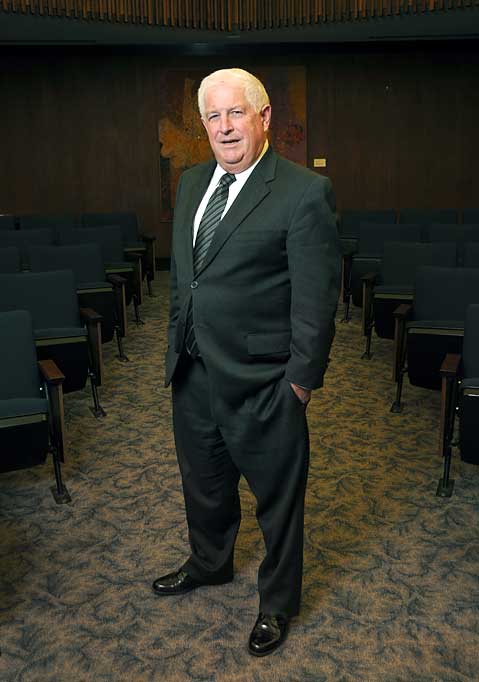
When the political winds shifted with the election of liberal-leaning Doreen Farr in 2008, Brown opted for an early retirement program.
On Monday morning, the supervisors are expected to review the reportedly numerous candidates applying for the position. No word on when a replacement will be officially named.
Homeless Death Report: Tuesday’s Board of Supervisors hearing is in Santa Maria. Among other items on the agenda, the supes will hear a report from the Homeless Death Review Team, which was commenced in February 2010 to investigate the deaths and violence against homeless people. Among other findings in the 41-page report, an overwhelming number of deaths were related to drugs and/or alcohol and there appear to be numerous hurdles to identifying critical information, including questions over the role of mental illness and the response from official agencies.
Wildfire Nuisances: The supervisors will also look at 71 parcels in the county that have not complied with wildfire abatement measures and declare those properties, which are located in almost every part of the county, from Mission Canyon and the Gaviota Coast to Santa Ynez and Lompoc, as fire nuisances. Download a PDF of the updated 2010 list here. These property owners will then be served with more official notice and perhaps fines for not complying.
Other Items: Also on the docket is a proposal to ban semi-trailers from traveling on Harris Grade Road between Lompoc and Orcutt; a General Plan amendment to change flood hazards standards based on state Assembly Bill 162; analysis of a new stormwater management program; and the consideration of Sweeney Canyon Winery, which is seeking a rezone, constructions of two 8,000-square-foot winery production facilities, and 10 special events per year.
City of Goleta
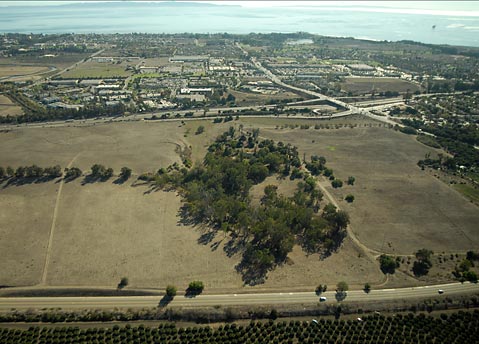
Bishop Ranch: The future of the Bishop Ranch property — the City of Goleta’s largest undeveloped plot of land, located between 101, Cathedral Oaks, Glen Annie, and Los Carneros road — makes its reincarnated debut before city council on Tuesday. (Read more about the 240-acre property and what its owners would like to do here.)
To pursue any of their development plans, the owners must seek amendments to the city’s General Plan, so they will have to foot the bill for that analysis. This week’s hearing will make that official, and tacks on the $85,000 price tag for such work, which will be aided by consultants at Jones and Stokes Associates. The firm was an integral part of the city’s General Plan process.
Although the right to assess a General Plan amendment is open to any property owner, this hearing is likely to bring in some of the anti-development crowd, for Bishop Ranch remains the biggest potential growth zone for the entire city.
Also on the docket are approving a continuation of fees for the library and street lights.
For more Goleta news, always make sure to check independent.com/goleta
City of Santa Barbara
Jail Tax: There may not be many items on this Tuesday’s Santa Barbara City Council agenda, but the few there are promise to be doozies. Early in the session at roughly 2:30 p.m., Mayor Helene Schneider and councilmember Dale Francisco — hardly kissing cousins when it comes to their politics — will announce that they’re putting aside a myriad of differences to support Measure S — Sheriff Bill Brown’s proposed half-cent sales tax increase — that goes before voters countywide this November.
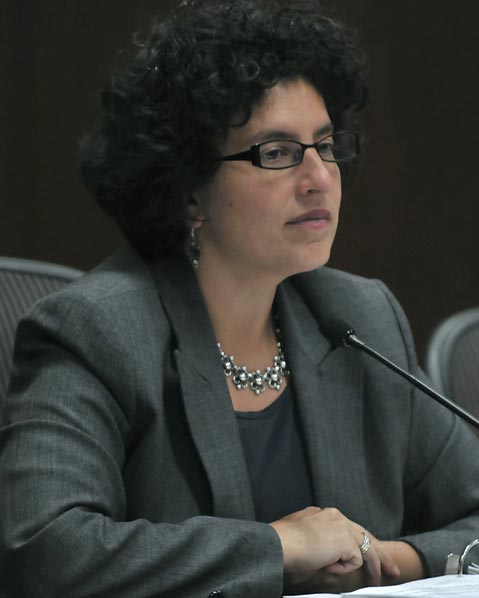
Schneider and Francisco will be giving Brown a forum to make his pitch: Without the sales tax, there can be no new county jail, prisoners will continue to be released early and as result, and innocent people will die. They are hoping to persuade the rest of the council to officially endorse the measure.
To pass any tax increase requires a two-thirds majority, which under any circumstances poses a daunting challenge. Adding to the degree of difficulty, the Republican Central Committee has not only come out against Measure S, but its executive, Greg Gandrud, signed the ballot argument against it. Now is not the time for a tax increase he said, and the $30 million generated annually by Measure S is far more than what’s needed to build a new jail.

Sheriff Brown has argued that without prevention and intervention programs — which Measure S would fund to the tune of $5 million a year — the proposed new 304-bed jail would be overwhelmed with new prisoners in no time. In addition, he’s proposed setting aside an additional $5 million to fire fighting agencies throughout the county and another $5 million to law enforcement agencies — including the county probation department — throughout the county as well.
While it’s likely the council majority will ultimately endorse Measure S, councilmember Frank Hotchkiss sits on the Republican Central Committee and voted against the measure two weeks ago.
General Plan: The real fireworks, however, will come afterwards, as the council attempts to come to terms with major changes proposed for the city’s general plan — the basic blue-print guiding how much development takes place over the next 20 years, what kind, where, and for whom.
On the table are a series of strategies that would allow for increased residential densities downtown, especially when rental and subsidized housing is concerned. How far the council is willing to go, however, in the name of greater housing affordability for Santa Barbara’s workforce, remains to be seen. Part of the equation also calls for reducing the amount of parking developers have to provide, the theory being that by reducing the parking requirements city hall can help reduce the cost of building new homes.
These plans are of intense and abiding concern to warring camps involved in the politics of land use Santa Barbara-style. One group — which tends to represent an older, more established constituency — worries that such changes will destroy Santa Barbara’s small town character while delivering none of the social benefits promised. They are represented on the council by councilmembers Dale Francisco, Frank Hotchkiss, and Michael Self. The other group — which tends to speak for a younger workers, developers, and affordable housing advocates — contends without these changes Santa Barbara will become increasingly gentrified and hostile to essential workers like cops, nurses, and teachers. Furthermore, they contend that the status quo will allow 60-foot tall buildings and luxury condos.
Under any scenario, common ground would be difficult to fund. But because these changes require a 5-to-2 supermajority to pass, the council’s reflexive 4-to-3 split presents additional challenges. Tuesday’s hearing promises little in the way of lengthy staff reports and public testimony. Instead, it will be up to the councilmembers themselves to articulate what changes, if any, they’re comfortable with, and divine a path by which they make it to the magical number five. Deliberations are expected to be time consuming. While there’s no time certain, discussion should start around 3:30 p.m., plus or minus 30 minutes.