Far Left and Liking It
Oliver Stone Goes South of the Border for Hugo Chávez

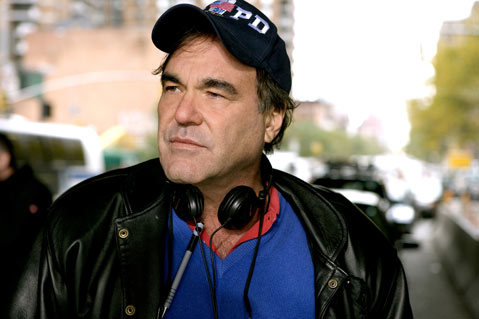
Last February, hundreds gathered in the Lobero Theatre during the Santa Barbara International Film Festival to dive into Oliver Stone’s film South of the Border, the director’s in-your-face whirlwind documentary about Venezuelan president Hugo Chávez and the rise of leftist regimes in South America. Essentially a series of interviews between an on-screen Stone and his subjects during a January 2009 11-day shooting spree, the film puts a charmingly human face on Chávez, a man that American media has made us all fear, and showcases some very frank discussions with the elected leaders of Brazil, Paraguay, Bolivia, Ecuador, Argentina, and, gulp, Cuba to help the audience understand this resurgence of the anti-colonial, often anti-American-government sentiment.
As such, it’s been greeted with great controversy — a state that seems to follow the avowed liberal Stone around no matter what he does, including this fall’s long-awaited Wall Street 2 — and the distributors never anticipated much of a theatrical release in the United States. But it seems the public doesn’t want to just stick their heads in the sand when it comes to our southern neighbors anymore, as the doc has been applauded around the country and is coming to the Plaza de Oro theater in Santa Barbara this weekend.
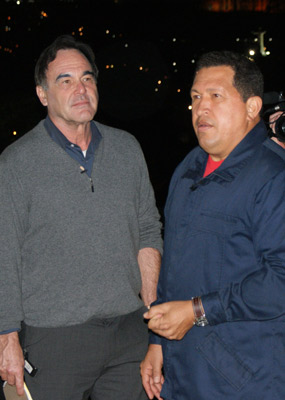
In anticipation of the film’s second coming to Santa Barbara, I recently spoke on the phone with producer Rob Wilson, who is also producing Stone’s Secret History of America miniseries that will air on Showtime in spring 2011. Here’s an edited version of our chat.
How did this film come about?
It originally began as a documentary that Oliver wanted to do on mass media manipulation — and specifically about the American media — using Chávez as an example. What ended up happening was that…Oliver spent three days interviewing him, and Chávez said, “Look, there are a lot of changes going on in this region. But don’t take my word for it. Go talk to some of my neighbors.” So we got amazing access to all the presidents in the film, and the story broadened out and became more valuable. People already know that mass media is not giving us the whole truth and deliberately lies sometimes, and we do explore that a little bit. But we also give people a window on a region that they usually don’t care much or don’t care at all about.
Was Oliver Stone known to the presidents?
Well, Raúl Castro did, because of the two documentaries he did on Fidel, so Oliver was known in Cuba. But it’s tough to tell. These are human politicians, but they’re also politicians. [laughs.] I think he was kind of known more because of Comandante and Looking for Fidel than some of his feature films.
Do you find having the director on screen to be an effective technique?
I studied film and Oliver Stone was one of my favorite filmmakers, so as a fan, I would say it is interesting….It’s interesting to see him interacting with the subject. It feels more personal, and feels like he made the film as opposed to phoning it in. Frankly, it just seemed natural. It wasn’t Oliver inserting himself in the process. It was his roadtrip through South America. It’s an American filmmaker going down and discovering for himself and taking the audience along with him. It’s difficult to imagine the film without having him in it.
Does Hugo Chávez necessarily have to be so threatening to the United States?
He says that he admires the American people. [Venezuela’s] oil industry donates loads of heating oil to poor families in the Northeast, which the media and politicians initially said was a publicity stunt to make Bush look bad. But they’re still doing it. I don’t know why he’s a threat. As we show in the movie, Obama shook his hand, and all hell broke loose.
Did Barack Obama’s election change their perspective?
I think that the whole region had high hopes for Obama, and I think they still have high hopes. But when we first went, it was before the inauguration. When we went back last month to release the film, people are a little disappointed in the foreign policy. They see it as a continuation of the old.
Has there been any trouble getting it shown in the U.S.?
The resistance was your sort of standard documentary resistance. Oliver is a known quantity as a filmmaker, but it’s a documentary about a subject that, when people read about it in the news, they don’t really care. So it’s been a struggle to get people to care, but they just opened in London and the response has been really great. I don’t think we expected to have a theatrical release in this country, but Oliver calls it the little engine that could.
4•1•1
Oliver Stone’s documentary South of the Border is scheduled to start showing this weekend at Plaza de Oro theatre in Santa Barbara.