

Sign up to get Matt Kettmann’s Full Belly Files, which serves up multiple courses of food & drink coverage every Friday, going off-menu from our regularly published content to deliver tasty nuggets of restaurant, recipe, and refreshment wisdom to your inbox
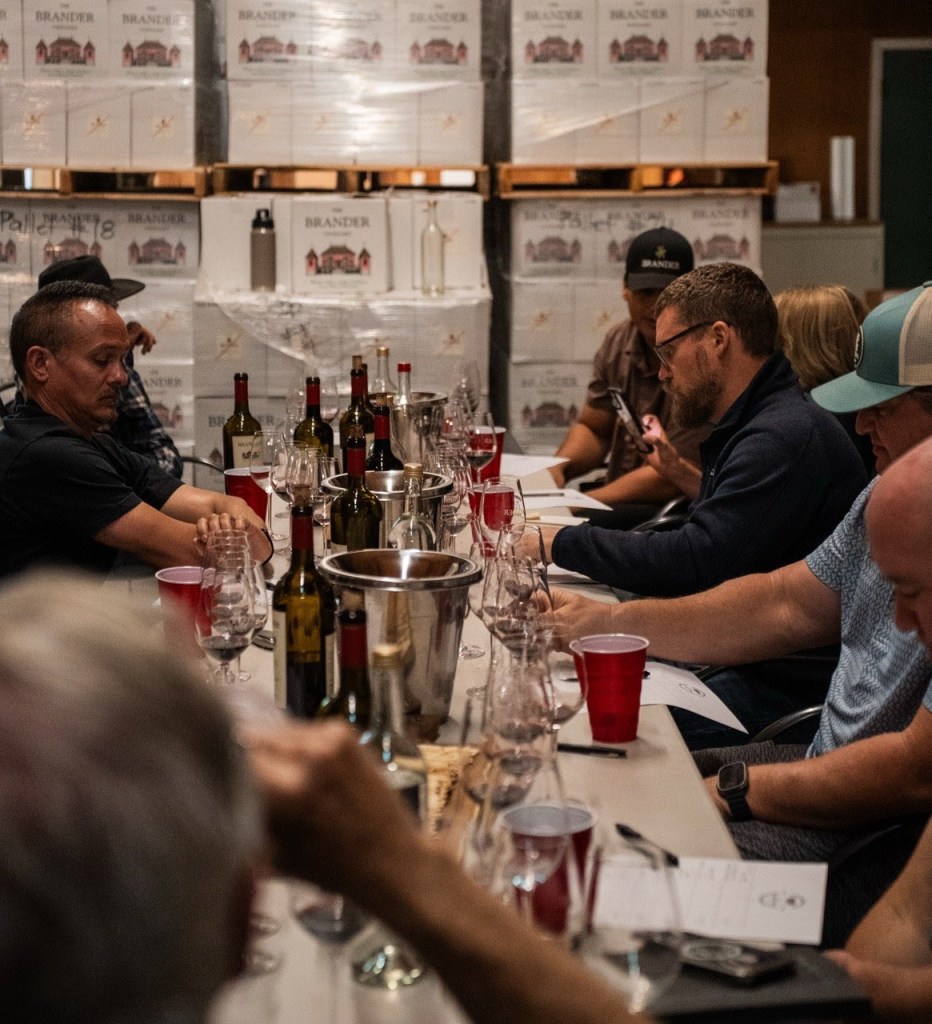
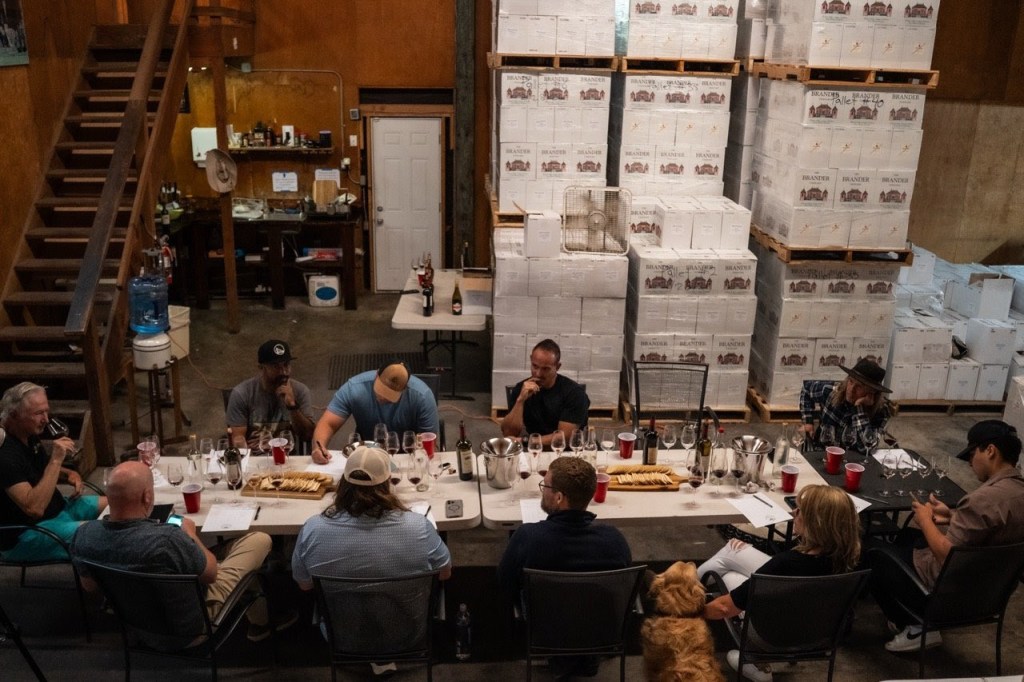
Inside the old cellar, a cacophony of chuffy sniffs and glassy clinks crescendoes into sloshy sips and splashy spits. This weirdly rhythmic routine would be a curious chorus for outsiders, but it’s a familiar soundtrack to the winemakers assembled around a cluttered table, where they’re scribbling thoughts on splatter-marked, white-paper grids.
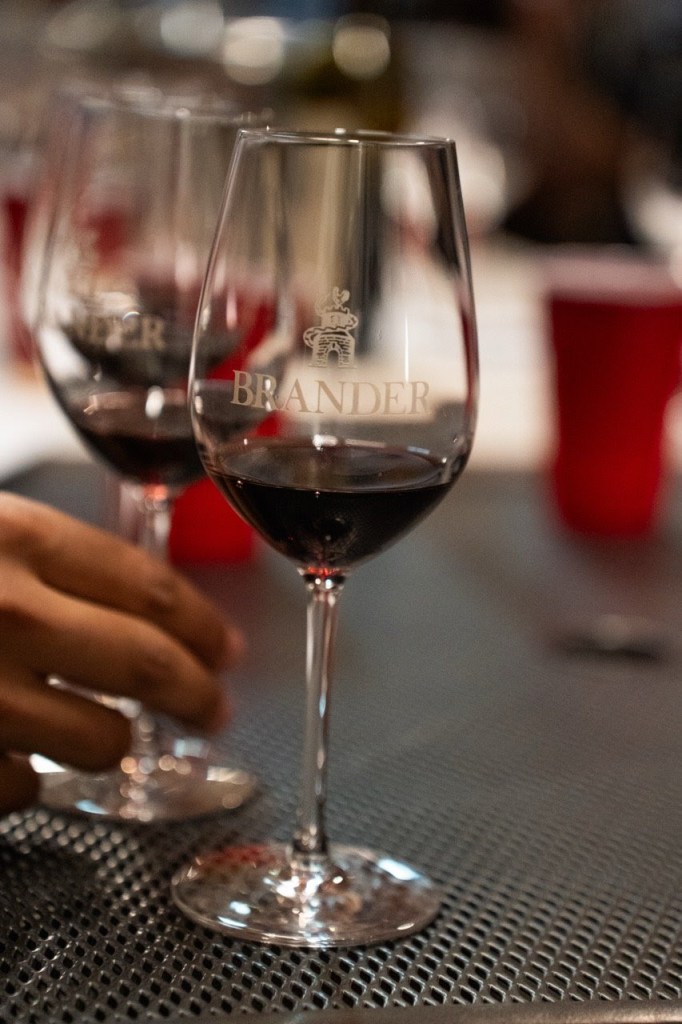
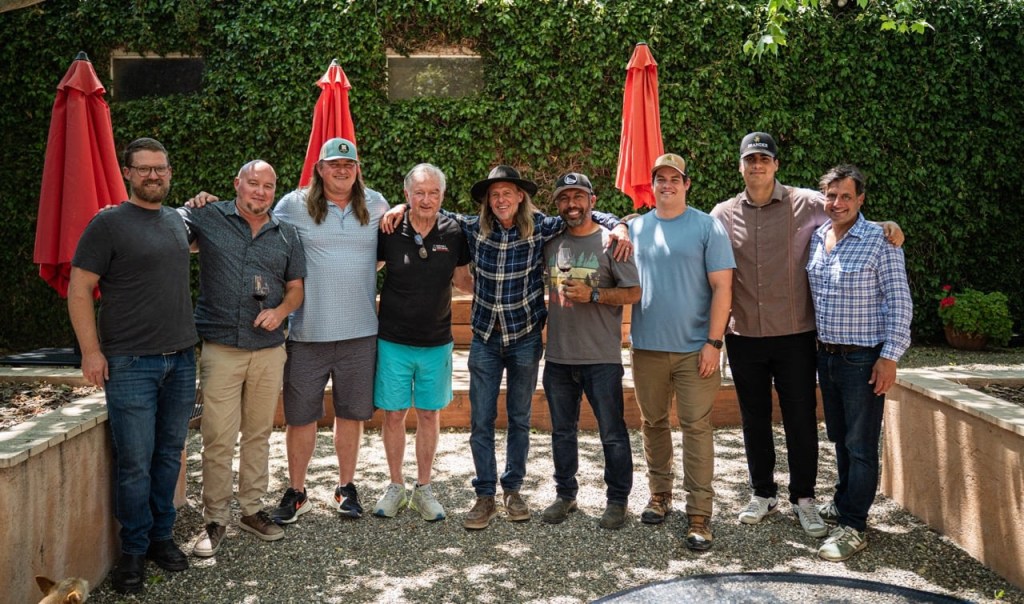
From Fred Brander and Bryan Babcock to Fabian Bravo, Jeff LeBard, Mikael Sigouin, and Drew Pickering, they’re all veterans of the Santa Barbara County wine scene, though some are about twice the age of others. We’ve gathered to toast and ponder the 50th anniversary of the Brander Vineyard, which Fred established in 1975, eventually becoming one of the top producers of sauvignon blanc in America.
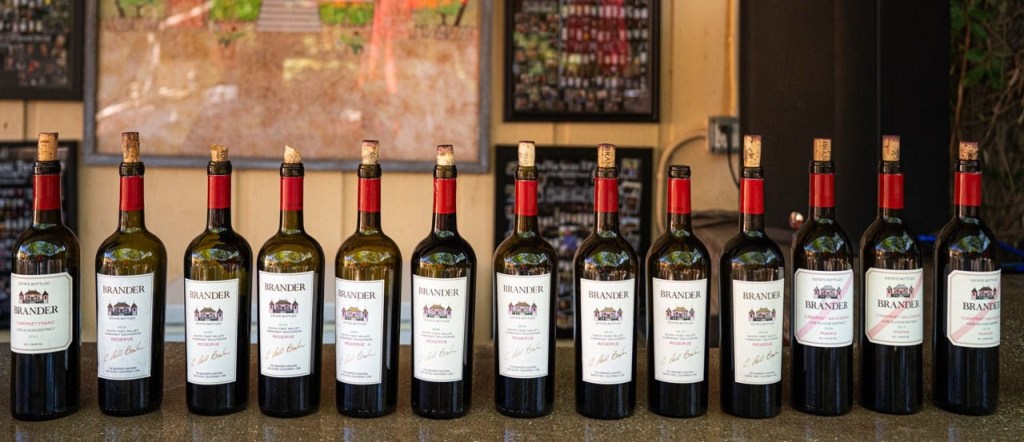
But sauv blanc isn’t on the menu. Instead, we’re tasting through 20 years of Brander Reserve Cabernet Sauvignon, starting with the first bottling ever of this wine in 2000 and carrying through a dozen selected vintages up to 2019.
“Our first cab was in 1977,” said Brander, but he wasn’t happy calling anything a “reserve” for 23 more years. “It took a while to get it right.”
Historically, Santa Ynez Valley cabs were considered quite herbaceous, at least compared to the leading California style produced by the Napa Valley. Santa Barbara’s savory, sometimes rather green notes didn’t please the sweeter-leaning American palate, so cab couldn’t take off as our flagship grape, opening the door for pinot noir, chardonnay, and even syrah to become better known here.
But Brander never stopped trying, eventually realizing that he had to let the cab ripen longer than expected. In fact, during the harvest season of 2000, after picking the rest of the Brander Vineyard’s grapes, he took a road trip to Napa while his cab still hung on the vine. When he returned, the grapes were riper than ever, and became the base of that 2000 reserve cab.
“You gotta wait, you gotta be patient,” said Brander, swirling that 2000 in his glass, now 25 years old. “It’s nice to be able to pick riper and not have any vegetal character.”
Winemakers love to hem and haw over how much herbaceousness should be in cabernet sauvignon. Many posit that bottlings from Bordeaux, where the grape is from, can exhibit quite a bit of elegant greenness, while others proclaim the powerful fruit bombs of Napa and Paso to be the variety’s true self.
Brander’s approach — which is now mirrored across much of the Santa Ynez Valley, particularly in the Los Olivos District and Happy Canyon appellations — achieves a sort of middle ground, satisfying with fruit while letting the herbs linger. That was certainly my impression of the 2000 bottling, which was probably my favorite of the day, somehow still freshly fruited a quarter-century in, amidst the peppery spices and leathery texture.
As usual, there was a lot of technical talk about grape-growing approaches. Most of the reserve comes from Block 3, whose vines were originally planted for Brander on their own roots — without commercial rootstock — in 1975 by pioneer viticulturist Joe Carrari. “I think the direct-rooted vines make the best wines,” said Brander, though the yields are now down to just one ton per acre, down from the four tons per acre of 20 years ago.
When the conversation turned to cellar strategies, Brander and Fabian Bravo, who started making wine with Brander in 2007, divulged a trick for intensifying their cabs during certain vintages: freezing some of the juice to create a concentrate that can be added to fermenters to intensify the finished product. “You’re removing water not by raisining, but by cryogenic extraction,” said Brander.
As the tasting went on, we all shared our thoughts on each wine. At times, I had almost the exact opposite impression of certain characteristics of wines than Brander, and yet still really liked those same wines. It was a reminder that there’s no right answer for someone’s palate — it’s all about what you like, rather than how you like it.
If there was objective truth to be discovered in a dozen cabs, it was this: If you only drink wines young, when they’re fresh and fruity, you’re missing out on a lot of the potential party in that bottle. That’s why it’s best to buy a few wines when they’re released, drink a couple soon, then drink the last few over the course of 10 to 20 years. You’ll be amazed at what aromas, flavors, and textures can come from the same exact wine with a little patience.
Toward the end, I asked the requisite though unanswerable question of which wine Brander liked best. “It’s like choosing a favorite girlfriend,” he replied, explaining that some were decades ago, others more recent. “You can’t compare time. That’s why we do these exercises.”
For Bryan Babcock — whose neverending adventure stretches from the gewürztraminers of the 1980s to the pinots and chardonnays of the 1990s and 2000s to the clairette blanches and petit verdots and mencias of today — the tasting evidently elevated the regional status of the grape at hand.
“The 2009 is stunning,” he said, his glinted eyes pondering future retrospectives of both older wines and cabernets to come. “After tasting all these Branders, I’m all in on cab.”
Brander Vineyard’s 50th Anniversary Celebration
The Brander Vineyard continues to celebrate the 50th anniversary with events all year long, including this weekend’s concert with the Randy Hansen Band on Saturday, July 12, at 4 p.m. Tickets are $50. Click here for info.
But the real big party will be the 50th Anniversary Open House on the weekend of August 29 to 31. The celebration will include after-hours tastings, live music, complimentary tours of the estate’s amazing Mexican art museum, and a winemaker dinner on August 30 at Intermezzo in Santa Barbara. Stay tuned to brander.com/winery-events for details and tickets.
From Our Table
I followed up my work trip to very hot and humid France (more on that in a future newsletter) with an actual family vacation to Tahoe for Fourth of July, so there’s a lot to catch you up on:
- Meaghan Clark Tiernan learns about the Zapp Thai food truck, now serving at Draughtsmen.
- Madeline Slogoff tells us about the two Santa Barbara County recipients of The Vineyard Team’s Juan Nevarez Scholarship.
- Alice Dehghanzadeh previews next weekend’s California Wine Festival.
- In the sad news department, Christina McDermott covered the closing of Soul Bites on State Street.
- Leslie Dinaberg got to meet the new chef at Loquita.
- George Yatchisin writes stories about the new Café La Fonda across from the County Courthouse and fine dining chef David Rosner’s new Rozzi Pizza down by West Beach.
- And I filed features on the modern-minded Pony Cocktails + Kitchen in the quaint old town of Santa Ynez and on the husband-and-wife team behind Matilija Wines.


You must be logged in to post a comment.