
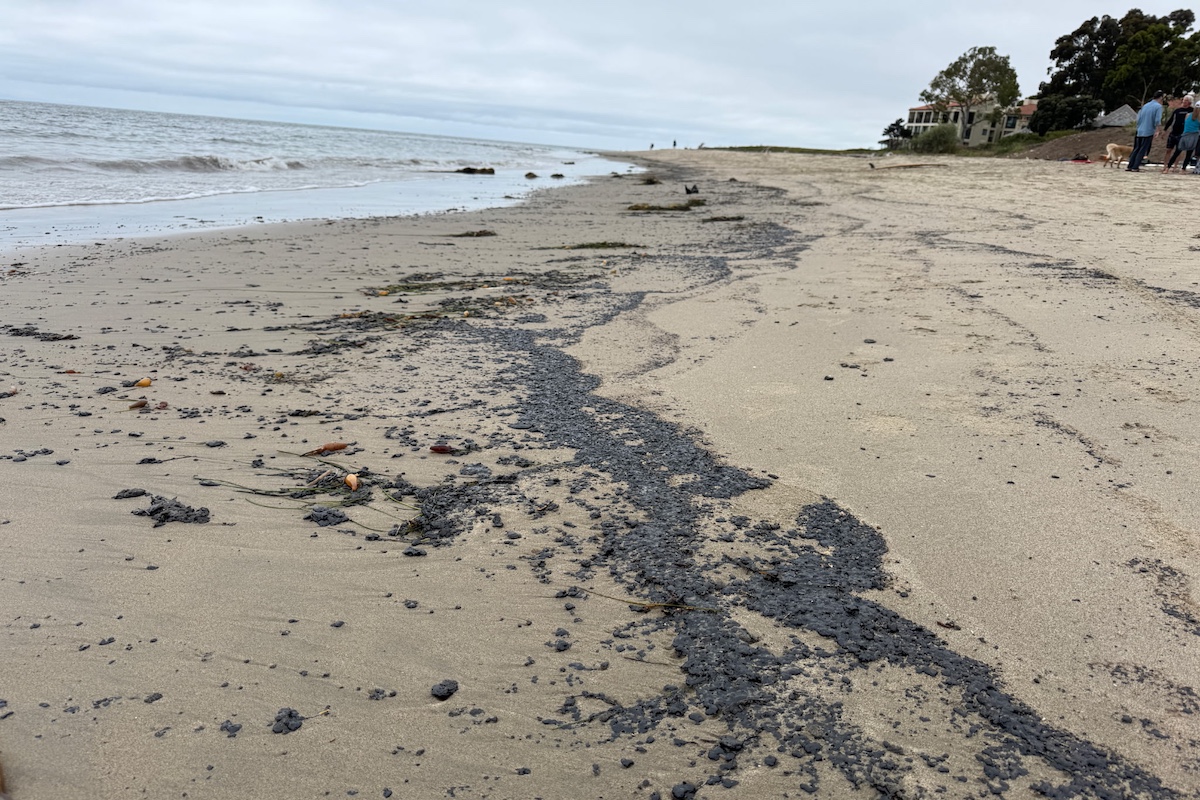
Unusually high amounts of tar were reported on beaches across Santa Barbara County this week, prompting cleanup efforts from Heal the Ocean and their partners and triggering an investigation into where the mysterious globs originated.
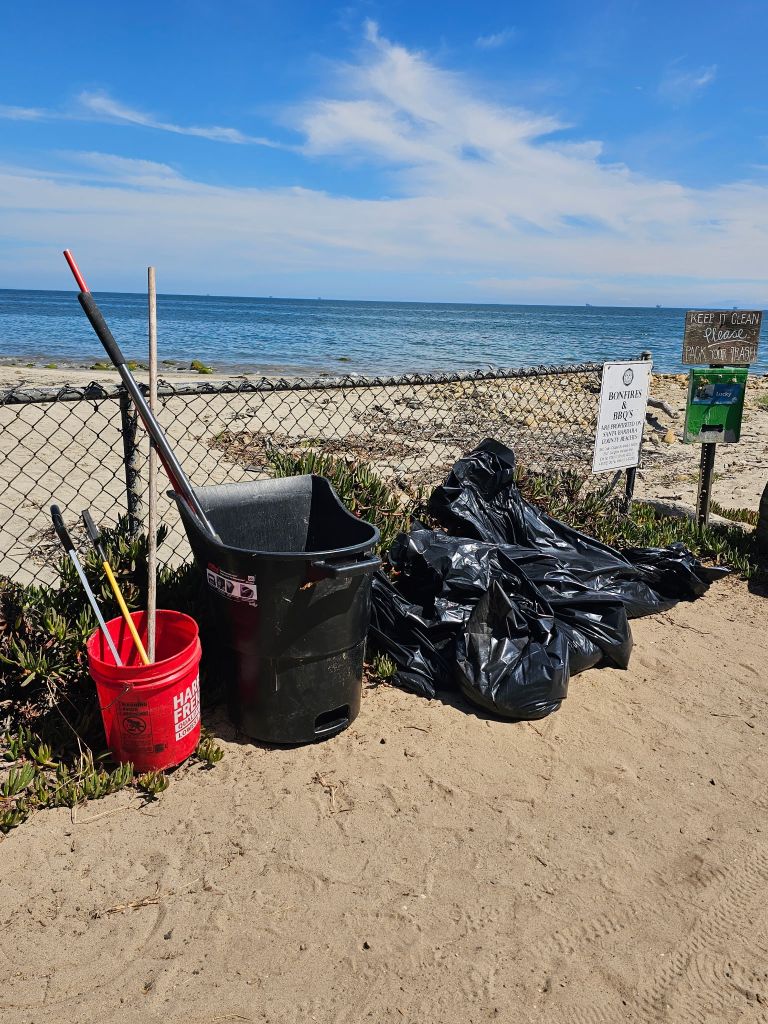
According to Heal the Ocean’s new executive director Karina Johnston, the organization and its partners cleaned up more than 450 pounds of tar across only 50 yards of Hammond’s Beach. That’s like cleaning up three beer kegs’ worth of gunk dumped on just half a city block. The cleanup crew also collected more than 100 pounds of tar spread across the whole of Leadbetter Beach.
Heal the Ocean originally planned to clean up some tar reported on Summerland Beach as well, but field teams discovered that it had largely moved off the beach by this Tuesday. Likewise, so far, it seems Carpinteria and Ventura have not been hit as hard.
“We’re going to keep tracking and checking out local beaches the next few days, but I’m not sure where the field team will end up,” said Johnston — an experienced leader in environmental nonprofits who is completing her PhD in Environmental Science and Management from UC Santa Barbara — on Tuesday. “We’ve been tracking it moving south the last couple of days.”
The amount of tar and the extent to which it blanketed the landscape was troubling, she said, and threw them into immediate action before it impacted the health of the beaches, the ocean, and the creatures that live there.
“This tar event was much higher than normal, and much more widespread than the episodic tar balls that seep up naturally from the sand,” she added.
She said that as of now, they are unsure of where the tar came from: Was it just natural seepage? Did it have anything to do with offshore production? Did it bubble up because of recent efforts to cap abandoned oil wells across the coast?
Right now, they have no solid answer — only speculations. But they are coordinating with UC Santa Barbara and other organizations to try to understand it and track it if it pops up farther down the coast.
What they do know is that it was a heck of a lot of tar.
“Local beachgoers contacted us to let us know it was a much higher amount of tar than they were used to,” she said.
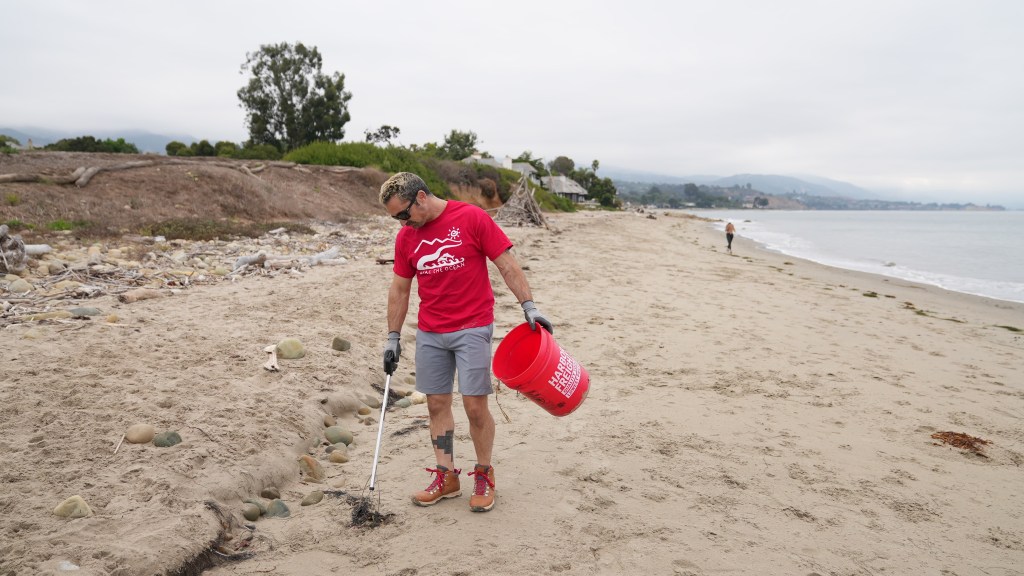
The tar patrol was led by Harry Rabin and Andrew Velikanje, in partnership with Velikanje’s company, Earthcomb, which combines litter removal and homeless outreach to clean up trash around local communities. In the past month, Rabin had also been involved in aiding cleanup efforts resulting from earlier boat wrecks along South Coast beaches.
Velikanje called tar an “elusive little monster” because of the way it comes and goes with the tides. It can quickly be washed away and end up on another beach down the coastline. And when Velikanje does get there in time, it’s usually melted onto the beach and tangled in sand and seaweed.
“I was born and raised in S.B., I’ve been surfing my whole life, and I’ve been plagued by the bane of tar — it gets everywhere. It’s an absolute mess,” said Velikanje, who started partnering with Heal the Ocean in 2020. “I always swore I’d find a way to figure out this damn tar. So I grabbed a rake and decided to get to it.”
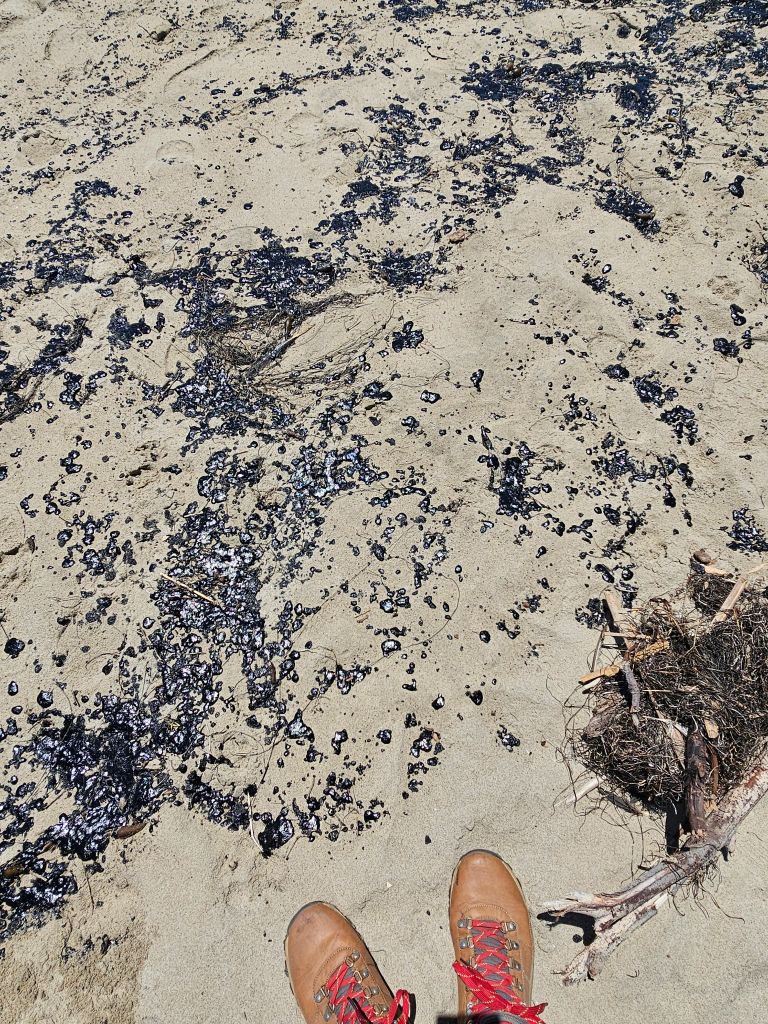
He estimates that since Earthcomb’s beginnings, his company has removed around two and a half tons of tar from county beaches “with just hands and shovels.” But that does not mean it’s easy. “There are no real tools available to be able to easily collect tar,” he noted. He uses rakes and other yard tools to get the job done.
Because of these difficulties, this week, “We probably got only about 20 percent of what was on the beach at the time,” he said.
Still, Velikanje ended up with about 600 pounds of tar-filled trash bags in his truck. Over the next week, he will be delivering the tar in small loads to UCSB for study and disposal.
And while its origin remains a mystery for now, Johnston said she hopes that Heal the Ocean’s ongoing Summerland Oil Mitigation Study, which is about one year out from completion, will help reveal some answers.
“It was incredible to be a part of this and be able to actually make a difference,” Johnston said. “It made me hopeful that we can really work together to tackle these kinds of issues.”
In the future, Velikanje asked for anyone who notices unusual amounts of tar on the beach to report it immediately — “while their feet are in the sand,” so that the tar patrol can respond quickly. People can report directly to Earthcomb via their website: earthcomb.org/report-liter/.
Related Posts

Premier Events
Sun, Jan 25
11:00 AM
Santa Barbara
CANCELED – 18th Annual Santa Barbara Community Seed Swap – CANCELED
Sat, Jan 24
7:30 PM
Santa Barbara
Billy F Gibbons and the BFG Band
Sat, Jan 24
7:30 PM
Santa Barbara
Sweet Home Santa Barbara-The Doublewide Kings
Sun, Jan 25
11:00 AM
Santa Barbara
CANCELED – 18th Annual Santa Barbara Community Seed Swap – CANCELED
Mon, Jan 26
6:30 PM
Santa Barbara
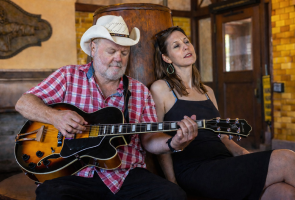
Lucinda Lane Returns to SOhO
Tue, Jan 27
7:00 PM
Santa Barbara
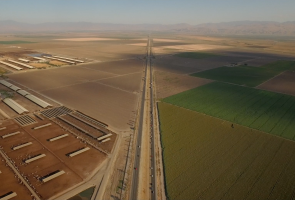
CWC Docs: Pistachio Wars
Wed, Jan 28
5:30 PM
Santa Barbara
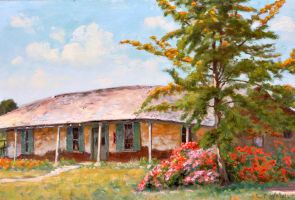
The Astonishing Tale of Ludmilla and Thad Welch
Fri, Jan 30
6:00 PM
Santa Barbara
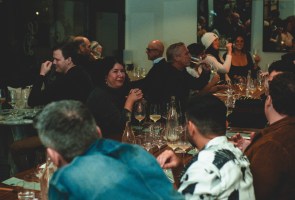
Friday Night Supper Club at Tyler x Lieu Dit
Fri, Jan 30
7:00 PM
Santa Barbara
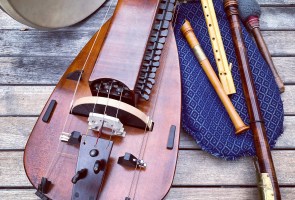
Folk Orchestra of Santa Barbara Medieval Concert – El Presidio Chapel
Sat, Jan 31
7:00 PM
Santa Barbara
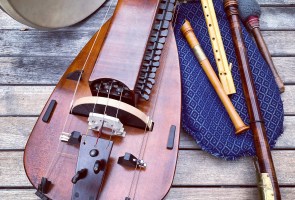
Folk Orchestra of Santa Barbara Medieval Concert – Trinity Episcopal Church
Sun, Feb 01
4:00 PM
Los Olivos
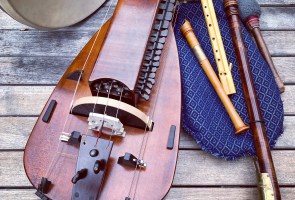
Folk Orchestra of Santa Barbara Medieval Concert – St Marks-In-The-Valley
Sun, Jan 25 11:00 AM
Santa Barbara
CANCELED – 18th Annual Santa Barbara Community Seed Swap – CANCELED
Sat, Jan 24 7:30 PM
Santa Barbara
Billy F Gibbons and the BFG Band
Sat, Jan 24 7:30 PM
Santa Barbara
Sweet Home Santa Barbara-The Doublewide Kings
Sun, Jan 25 11:00 AM
Santa Barbara
CANCELED – 18th Annual Santa Barbara Community Seed Swap – CANCELED
Mon, Jan 26 6:30 PM
Santa Barbara
Lucinda Lane Returns to SOhO
Tue, Jan 27 7:00 PM
Santa Barbara
CWC Docs: Pistachio Wars
Wed, Jan 28 5:30 PM
Santa Barbara
The Astonishing Tale of Ludmilla and Thad Welch
Fri, Jan 30 6:00 PM
Santa Barbara
Friday Night Supper Club at Tyler x Lieu Dit
Fri, Jan 30 7:00 PM
Santa Barbara
Folk Orchestra of Santa Barbara Medieval Concert – El Presidio Chapel
Sat, Jan 31 7:00 PM
Santa Barbara
Folk Orchestra of Santa Barbara Medieval Concert – Trinity Episcopal Church
Sun, Feb 01 4:00 PM
Los Olivos


You must be logged in to post a comment.