
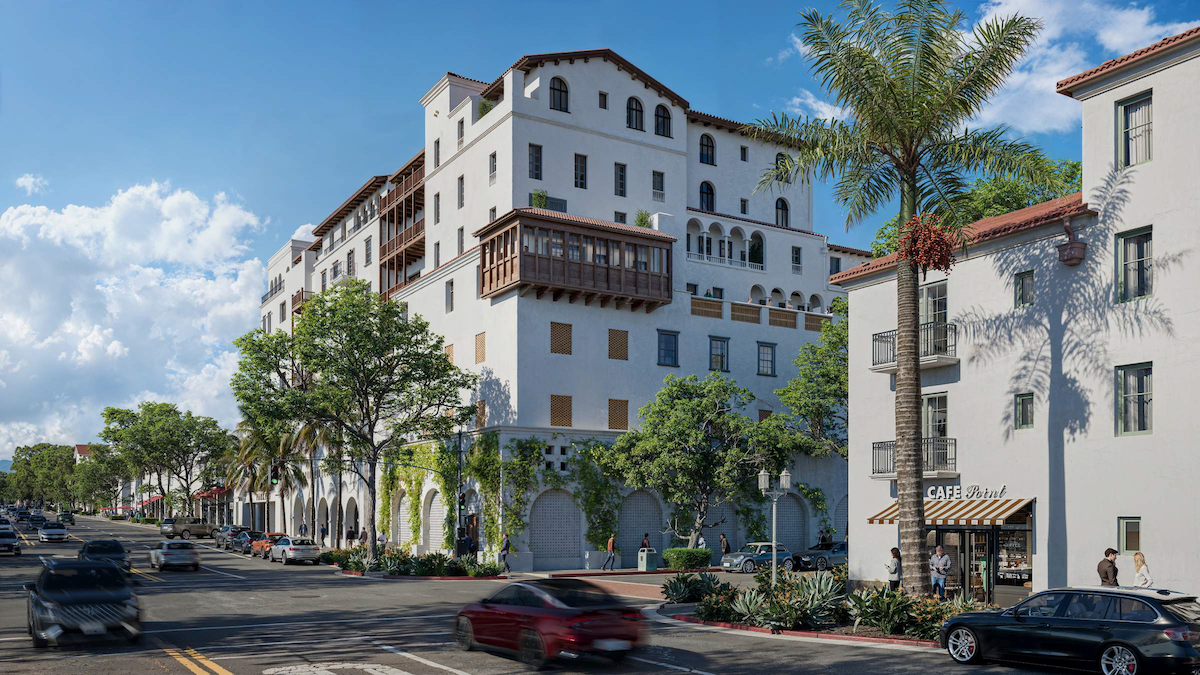
The proposed redevelopment of Paseo Nuevo mall in downtown Santa Barbara is beginning to take shape, as the City Council cleared the way for negotiations to begin on updated plans to downsize the residential development from 500 units to 233, plus an additional 80 units of deed-restricted affordable housing at a city parking lot.
On Tuesday, the City Council learned the latest details of the redevelopment agreement, which hinges on the cooperation of the city, which owns the ground lease for the next 40 years, Shopoff, the owner of the empty Nordstrom building, and AB Commercial — an investment firm that became the accidental owner after lending capital to the former owners of the property in 2022.
An earlier version of the proposal had as many as 500 residential units, though planners pivoted when AB Commercial found it would not be feasible to build on the interior retail corridor without redoing the foundation itself. Instead, the company worked along with city staff to develop a new plan for residential units centralized on edges of the property, at the vacant Macy’s building and the two existing city parking lots.
The city can dictate certain terms of the deal, though AB Commercial, which owns the mall leases, holds much of the power in negotiations. City Administrator Kelly McAdoo explained that the city would turn over the land underneath the properties, and agree to give a portion of the city’s property tax amounting to about $300,000 per year.
AB Commercial will agree to build at least 80 units of affordable housing, in addition to the 233 market-rate units. This is more than six times as many units as required by the city’s inclusionary ordinance, and the rents would be set according to tenants’ incomes. Because of this, state law allows for AB Commercial to build up to 75 feet — giving the city no say in this concession.
City staff explained that there weren’t many alternatives to this project; if the city, AB Commercial, and Shopoff don’t all agree to the updated agreement, there can’t be any residential construction at the property at all.
Councilmember Eric Friedman, who remembers discussing the future of the Macy’s building back in 2017, said the latest version of the deal was the most favorable to date. “We’re getting a lot more affordable [units] than we would otherwise get — for 90 years — which is a huge benefit,” he said.
Some of the councilmembers questioned allowing the use of City Lot 2, across the street from the Nordstrom building. City Administrator McAdoo explained that, by concentrating all the affordable units into one area, the city could partner with an agency like the Housing Authority to acquire tax credits to fund construction.
“If [AB Commercial] didn’t use Lot 2, or build those 80 units, they could put 12 units,” McAdoo said. “And that would be all that we could get.”
The redevelopment would include a 25,000-square-foot public gym and 17,000-square-foot “specialty food market” at the corner of State and Ortega streets.
Councilmember Kristen Sneddon, who was “cautiously optimistic,” said she preferred that the specialty food store be a “community-type” brand such as Sprouts instead of a more luxury store like Erewhon. She also made clear that images of cars on State Street in the renderings were “not indicative of any plans” to reopen the street.
Community members, housing advocates, and planning experts urged city officials to be carefully considerate of what concessions were being made, and asked that City Council not rush to approve a project right away.
“I support transforming this space into housing, public-serving uses, and a vibrant civic space that makes downtown more inclusive, resilient, and welcoming,” former City Planner and longtime resident Dan Gullett wrote in a letter to council. “But this transformation must be thoughtful, transparent, and grounded in community priorities, not rushed under pressure from private interests.”
Councilmembers suggested a robust public engagement process, with public town hall meetings where people could weigh in on the project before it was officially approved.
“I want us all to be on the same page and very clear about what this public engagement is,” Councilmember Wendy Santamaria said. “It’s not just informative. We need to receive that input from folks, which is why I’m very adamant about us being not just thorough with it, but doing it soon.”
The council unanimously approved the amendment to the agreement, approving the general plan for the project to allow the city and AB Commercial to officially begin negotiations. This is not a full approval of the project, but allows for the construction of housing at City Lots 1 and 2.
Editor’s Note: The first paragraph of this story was updated to clarify that the City Council cleared the way for negotiations to begin on the updated plans but has not approved the plans themselves yet.
Related Posts




Premier Events

Sat, Mar 28
12:00 PM
Santa Barbara
Spring Fragrance Release Party

Sat, Mar 28
7:15 PM
Santa Barbara
Santa Barbara Stargazing Tour
Sat, Apr 18
5:30 PM
Solvang
The Winemaker’s Table: An Evening of Rideau Reds

Thu, Mar 26
11:00 AM
Santa Barbara
Lunch and Learn at La Casa de Maria

Sat, Mar 28
All day
Santa Barbara
Coffee Culture Fest

Sat, Mar 28
11:00 AM
Santa Barbara
NO KINGS 3!

Mon, Mar 30
6:00 PM
Santa Barbara
Art4Grief Support Group 2nd 2-Week Session
Thu, Apr 02
2:00 PM
Santa Barbara
S.B. Rescue Mission Annual Easter Feast
Thu, Apr 02
5:00 PM
Santa Barbara
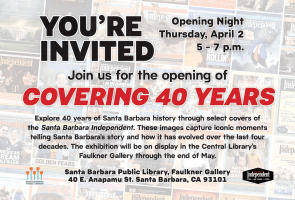
Exhibit Opening: The Santa Barbara Independent: ‘Covering 40 Years’

Sat, Apr 04
9:00 AM
Santa Barbara
Mesa Harmony Garden Spring Plant Sale

Sat, Apr 04
9:00 AM
Santa Barbara
Passport Fair, hosted by Congressman Salud Carbajal

Sun, Apr 05
10:00 AM
Santa Barbara
Easter Brunch at Brass Bear
Thu, Apr 09
6:00 PM
Santa Barbara
Chaucer’s Books – Poetry Night
Sat, Mar 28 12:00 PM
Santa Barbara
Spring Fragrance Release Party
Sat, Mar 28 7:15 PM
Santa Barbara
Santa Barbara Stargazing Tour
Sat, Apr 18 5:30 PM
Solvang
The Winemaker’s Table: An Evening of Rideau Reds
Thu, Mar 26 11:00 AM
Santa Barbara
Lunch and Learn at La Casa de Maria
Sat, Mar 28 All day
Santa Barbara
Coffee Culture Fest
Sat, Mar 28 11:00 AM
Santa Barbara
NO KINGS 3!
Mon, Mar 30 6:00 PM
Santa Barbara
Art4Grief Support Group 2nd 2-Week Session
Thu, Apr 02 2:00 PM
Santa Barbara
S.B. Rescue Mission Annual Easter Feast
Thu, Apr 02 5:00 PM
Santa Barbara
Exhibit Opening: The Santa Barbara Independent: ‘Covering 40 Years’
Sat, Apr 04 9:00 AM
Santa Barbara
Mesa Harmony Garden Spring Plant Sale
Sat, Apr 04 9:00 AM
Santa Barbara
Passport Fair, hosted by Congressman Salud Carbajal
Sun, Apr 05 10:00 AM
Santa Barbara
Easter Brunch at Brass Bear
Thu, Apr 09 6:00 PM
Santa Barbara

