

The accumulation of things is usually a slow creep. But with kids, the process kicks into overdrive.
It starts innocently enough with bottles and onesies and a handful of stuffed animals. Then come the books, blocks, dolls, and dinosaurs. Then, amid a steady stream of holidays, birthdays, and Amazon one-clicks, arrive the princess outfits, superhero gear, train tracks, tea sets, monster trucks, Play-Doh, Lego, bikes, scooters, paint, puzzles, games, dollhouses, sports equipment, and more books and clothes. So many books and clothes.
You do your best to keep everything orderly and make regular donations by the bin-ful. But like grains of rice in a sensory bin, the items start slipping through your fingers and wind up jammed in closets and cluttering your once-tidy home. A subtle tension builds in the household as stuff becomes harder to find. Sometimes it’s not so subtle.
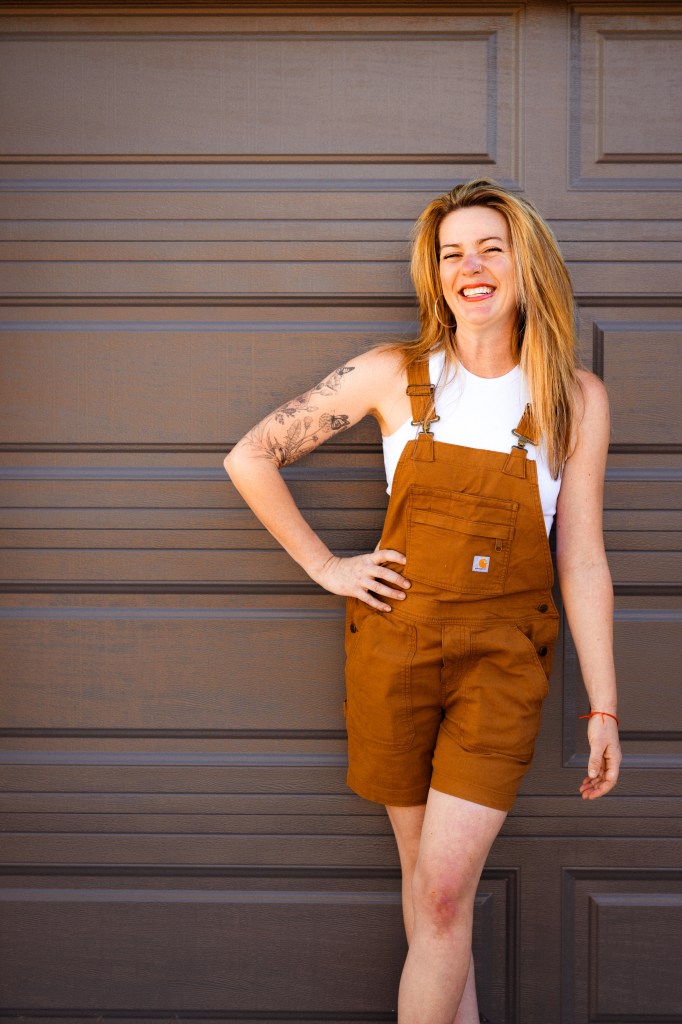
That’s when you call Jean Marie Driskel, a veteran Montessori teacher turned professional home organizer. Her business ― TOPE, or The Organized Prepared Environment ― follows the mantra of “less is more” by creating peaceful, functional living spaces that are devoid of piles and more “child-oriented,” not “kid-centric.” Because, as my wife and I learned, there’s a big difference.
Driskel began with thorough consultation and inventory of our home. She asked about our son’s temperament, interests, and what he does in different rooms. She wanted to know about our family’s routines, pressure points, and goals. All of this information, she explained, would help her customize a plan to fit our individual needs while supporting our toddler’s confidence and independence.
Driskel returned a few days later armed with a label maker, storage bins, and construction-grade trash bags. She pulled up her hair and quickly got down to business. With our help (though parents can split and leave her to it, if they wish), we pulled everything out and grouped the items into categories. Seeing everything at once was a service in itself.
Next came decision time: what to keep out, what to store, and what to donate or toss. Driskel makes it easy. She doesn’t pressure you to purge (though we did load a ton of stuff into her truck) and instead gently guides you along the path of what makes most sense for your family unit ― for instance, grouping quieter activities like puzzles and Magna Tiles near where Dad likes to read, while concentrating balls and other rumpus gear in another corner of the house. Maybe most critically (at least for us, a couple who is overscheduled, overstimulated, and easily distracted) she kept me and my wife on-task and plowing ahead with the paring down and reorganizing we’d been meaning to do for years.
Of Driskel’s many helpful suggestions, my favorite was clearing a space on a low kitchen shelf for our son to keep his cups, plates, utensils, an age-appropriate cutting board, and a basket of healthy snacks for him to grab at his leisure, or when we ask him to help set the table. Opportunities like this that allow kids to take ownership of their spaces is a central tenant of Driskel’s approach.
Another major takeaway was the workable and practical toy rotation we created that freed up our living space and gave everything a place. Driskel even provided a photo library of the items we put in storage with accompanying QR codes, so instead of grumbling while elbow-deep in the garage as we dig for that specific dump truck, my wife and I now know exactly where to find it.
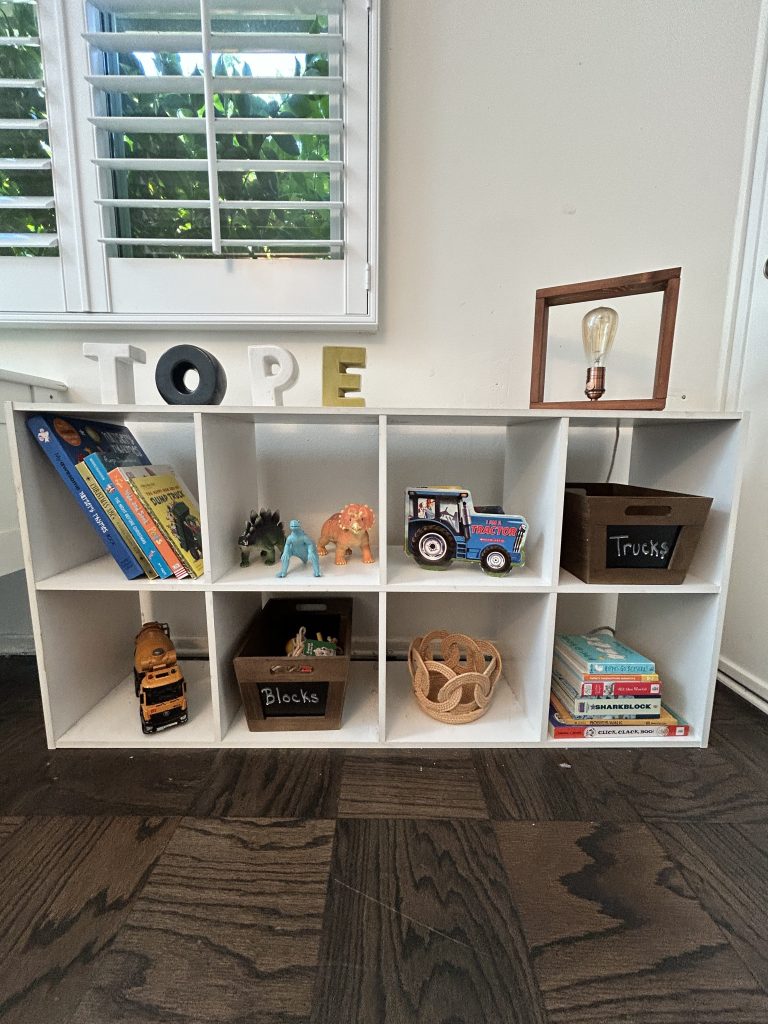
The overall effect is a much more breathable and less chaotic home, for adults and their offspring alike. The process also fosters the appreciation that just because something is gone from sight doesn’t mean it’s gone ― or lost ― for good. “The beauty of children is their ability to let go and move on,” Driskel said of the rotation system. “It’s a really important skill for kids to learn, that they can’t have everything at their fingertips all the time.”
I also appreciated her clear-eyed perspective when it comes to our culture of overconsumption. “The toy industry makes you think you need the next big thing, that it will make your kid happy and smart,” Driskel said. “But what they really need is you.” With less clutter around, I already feel more present with my son, and I’m seeing his sense of self-worth grow with more self-directed play.
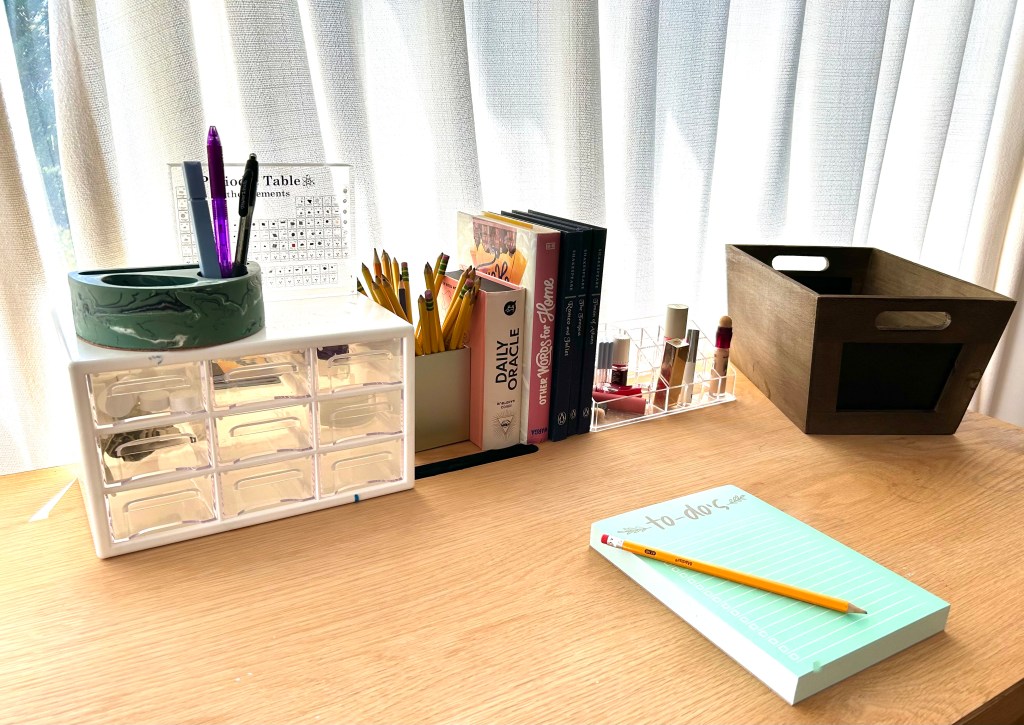
While Driskel speaks fluent toddler and vibed instantly with our young’un, she’s just as effective across the age spectrum. She sets up everything from nurseries to gaming centers, puts together makeup stands for tweens, and helps homeschooled kids get their study areas in order. She’s also experienced with the needs of neurodivergent children.
Lastly, Driskel ― who was born and raised in Santa Barbara and knows our town and its people as well as anyone ― doesn’t just swoop in and leave. Just the opposite. She offers ongoing support, guiding parents in how to observe their children’s changing needs, how to make adjustments to a space, and how to create routines that anchor their lives.
“My work is as much about parenting as it is about organizing,” she explained. “Many of my families report that after working with TOPE, their children become more independent, transitions become easier, and the overall mood in the home becomes more peaceful.”
We can attest to that.
Learn more at tope805.com.
Related Posts





Premier Events
Sat, Mar 28
7:15 PM
Santa Barbara
Santa Barbara Stargazing Tour
Sat, Apr 18
5:30 PM
Solvang
The Winemaker’s Table: An Evening of Rideau Reds
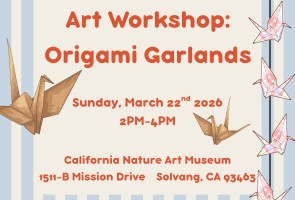
Sun, Mar 22
2:00 PM
Solvang
Art Workshop – Origami Garlands

Sun, Mar 22
3:30 PM
Santa Barbara
History and Joy of Blues Music: Live Presentation
Sun, Mar 22
4:00 PM
Santa Barbara
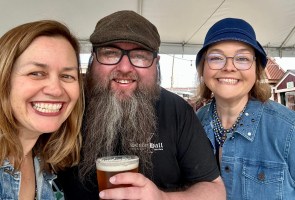
SANTA BARBARA REVELS -PUB SING followed by Karaoke
Wed, Mar 25
6:30 PM
Santa Barbara
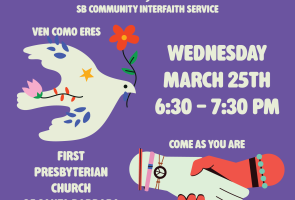
Vigil for Lament, Solidarity and Peace

Sat, Mar 28
All day
Santa Barbara
Coffee Culture Fest
Sat, Apr 18
11:30 AM
Goleta
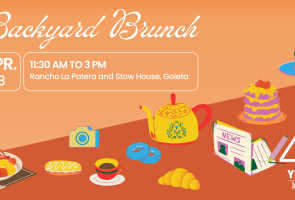
The Santa Barbara Independent Backyard Brunch
Sat, Mar 28 7:15 PM
Santa Barbara
Santa Barbara Stargazing Tour
Sat, Apr 18 5:30 PM
Solvang
The Winemaker’s Table: An Evening of Rideau Reds
Sun, Mar 22 2:00 PM
Solvang
Art Workshop – Origami Garlands
Sun, Mar 22 3:30 PM
Santa Barbara
History and Joy of Blues Music: Live Presentation
Sun, Mar 22 4:00 PM
Santa Barbara
SANTA BARBARA REVELS -PUB SING followed by Karaoke
Wed, Mar 25 6:30 PM
Santa Barbara
Vigil for Lament, Solidarity and Peace
Sat, Mar 28 All day
Santa Barbara
Coffee Culture Fest
Sat, Apr 18 11:30 AM
Goleta


You must be logged in to post a comment.