
[Updated: Thu., Oct. 9, 2025, 1:21pm]
Scientists just revealed new information about the eerie, leaky barrels abandoned along the seafloor off the coast of Los Angeles that could provide hints into their toxic contents.
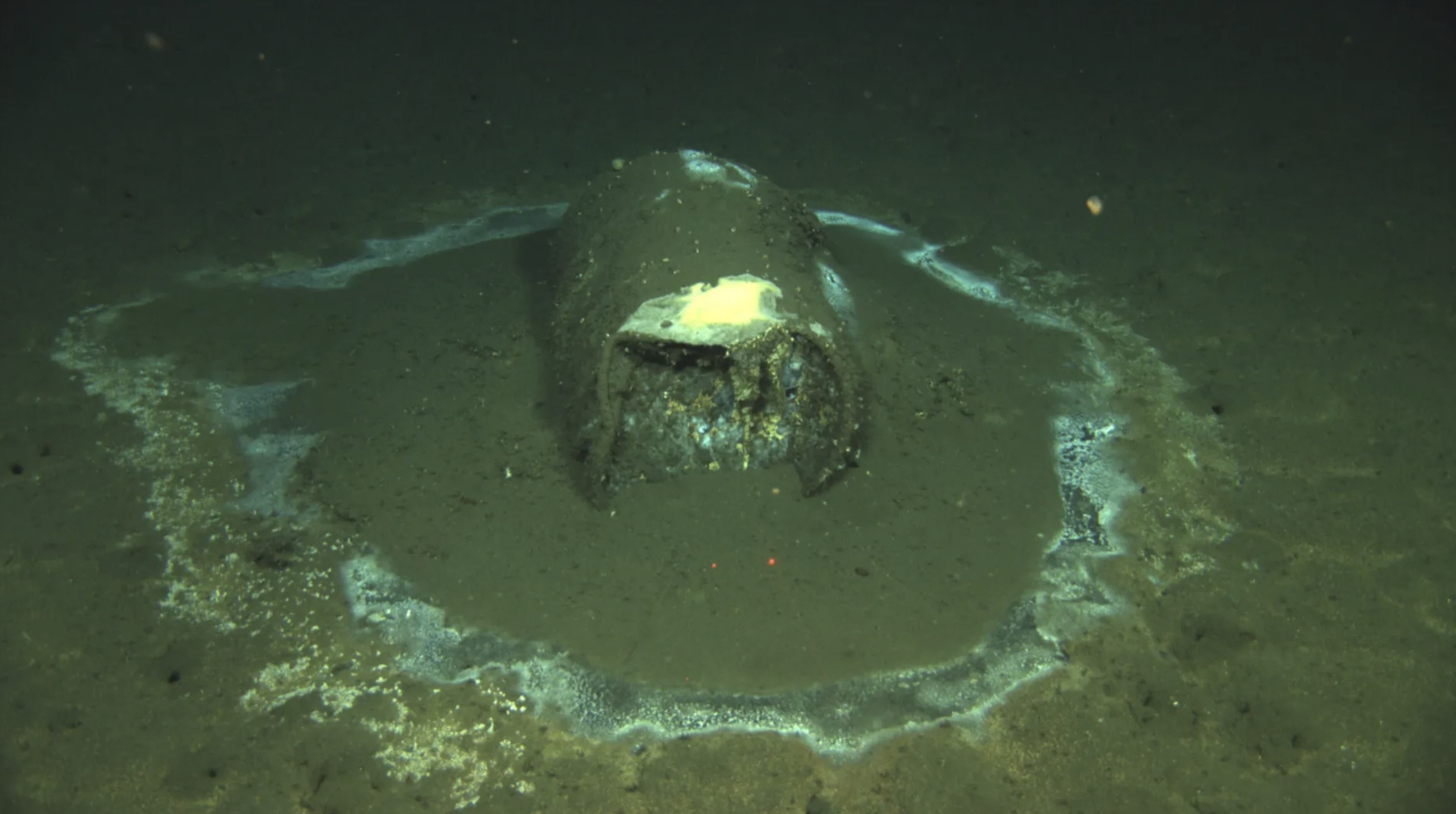
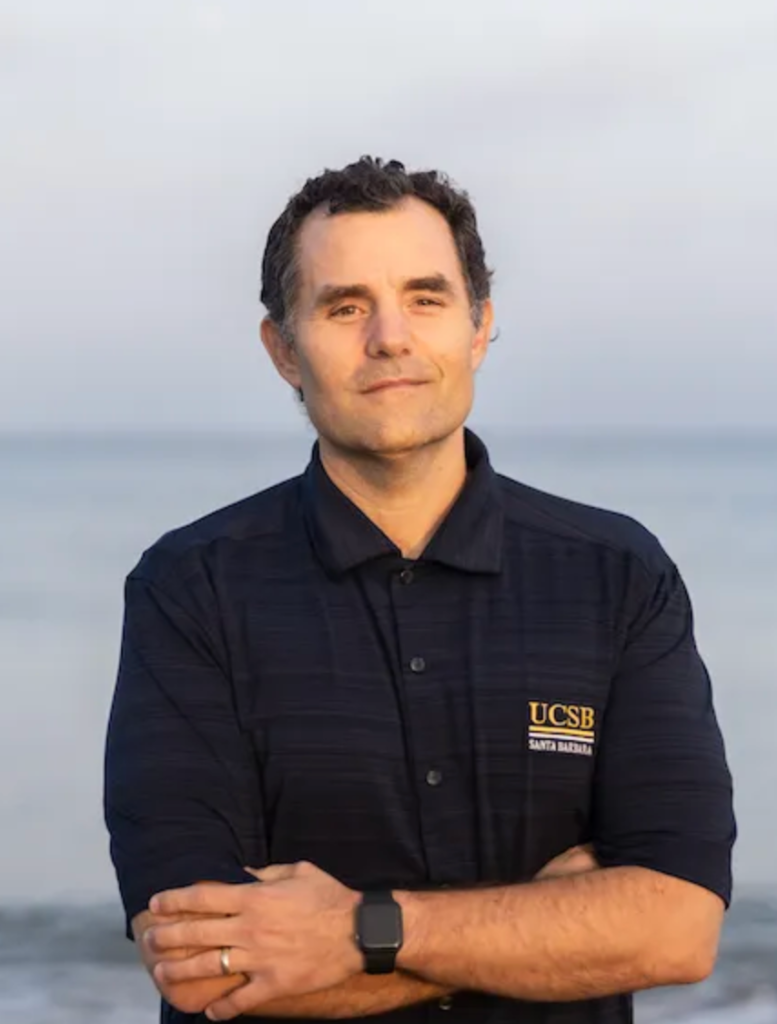
David Valentine, a professor at UC Santa Barbara, discovered the barrels back in 2011. They were everywhere — buried in the sand with pale, crusty, alien-looking halos baked into the surrounding sediment.
Valentine’s finding led researchers to unearth a history of chemical dumping off the coast of Southern California, including the disposal of tons of DDT — the toxic insecticide banned in the U.S. in 1972 — by pumping it straight into the water.
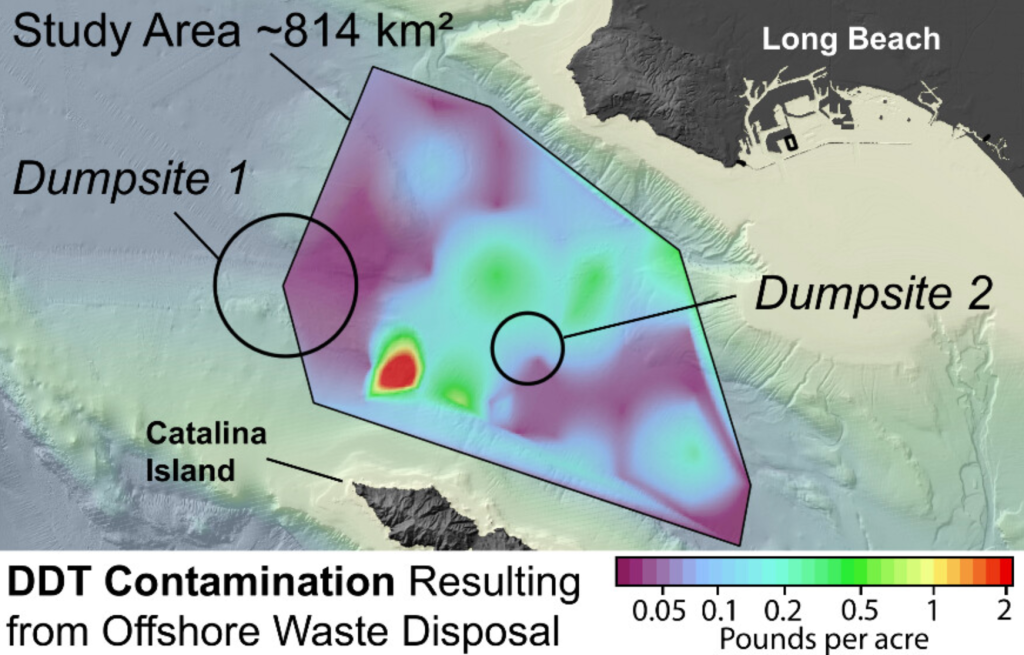
Valentine’s team recently released their first spatial map of the DDT contamination in the primary disposal area of the San Pedro Basin, finding “highly elevated concentrations” of the toxic chemical and its daughter products DDD and DDE throughout the study area — including “hot spots” of contamination.
This mapping is key to helping researchers understand how DDT moves and changes in the deep sea, the paper states. The results could also help shed light on how past offshore dumping might be connected to today’s ecological issues, in the study region and beyond.
But as more information is coming out about the extent of the contamination, a question has lingered: What’s in the creepy barrels? And what is the stuff around it? That’s what scientists at UC San Diego’s Scripps Institution of Oceanography studying the DDT dumpsite are seeking to answer. Researchers analyzed the halos and determined the barrels contain caustic alkaline waste, which created the halos as it leaked out. Alkaline describes something basic, with a high pH value, as opposed to acidic.
“The study also finds that the caustic waste from these barrels transformed portions of the seafloor into extreme environments mirroring natural hydrothermal vents, complete with specialized bacteria that thrive where most life cannot survive,” according to UC San Diego Today.
“Though the study’s findings can’t identify which specific chemicals were present in the barrels, DDT manufacturing did produce alkaline as well as acidic waste. Other major industries in the region such as oil refining also generated significant alkaline waste.”
Most of this research was done following analysis of sediment cores collected during a July 2021 expedition using a remotely operated vehicle. The halos are made of concrete-like crust, created by a mineral called brucite that formed when the unknown alkaline materials reacted with the seawater. It has a high pH, meaning very few microbes can survive in it. When the high pH meets the surrounding seawater, it creates calcium carbonate, which makes the white dust that forms the halos. But not all the barrels had these halos around them.
“The lowdown is that they don’t really know what’s in the barrels,” Valentine said in an interview with the Independent.
Researchers confidently said that the waste in the barrels must be alkaline of some sort, which could be the case, Valentine noted. But there are other ways that the barrels could create alkalinity in the surrounding sediments, such as if the barrels were filled with concrete to help them sink. “Let’s say you have a barrel that has, say, radioactive material, and you fill it up with concrete, and you seal it. That concrete is also highly alkaline, and so it will react with water and form exactly the same things that they observed around the barrels.”
“So I’m not entirely sold that they really know what’s in the barrels,” he continued, “but what they found was still pretty cool, scientifically, that these halo effects are caused by these really alkaline fluids coming out of the barrels.”
Paul Jensen, emeritus marine microbiologist at Scripps and senior author of the study, told UC San Diego Today that he’d expect alkaline waste to dissipate in seawater. However, “Instead, it has persisted for more than half a century, suggesting this alkaline waste ‘can now join the ranks of DDT as a persistent pollutant with long-term environmental impacts.’”
Valentine and others are left with a question: What was actually being disposed of in the barrels? If it was liquid, it would have been much easier to just pour it straight into the ocean. “Why spend the money to buy a barrel? What would the alkaline waste have to be to make it worth it to go through that hassle?
“The great thing about science is it’s not about proving something; it’s about developing hypotheses and testing them and coming out with the best explanation,” Valentine said. “I am looking forward to the next set of studies on it.”
As for Valentine’s team, they are continuing to complete large-scale mapping of the dump sites off the Los Angeles coast, and taking sediment samples to calculate the total amounts of chemical waste lingering in the ocean.
“We found a few samples with high concentrations of things that concern us,” he said. “We’re doing a deep dive to ensure accuracy before chasing that in a more concerted way.”
After Valentine’s first paper was published in 2019, the work received attention from the likes of Diane Feinstein and garnered financial support for the work.
“This recent study was from that initial round of support,” Valentine said. “We will see things coming out at a faster pace in the next year or two.”
Editor’s Note: This story was updated to include new information on David Valentine and his team’s recently released spatial map of DDT contamination around the San Pedro Basin and an image of the map.
Related Posts
Premier Events
Sat, Mar 28
7:15 PM
Santa Barbara
Santa Barbara Stargazing Tour
Sat, Apr 18
5:30 PM
Solvang
The Winemaker’s Table: An Evening of Rideau Reds

Wed, Mar 25
6:30 PM
Santa Barbara
Vigil for Lament, Solidarity and Peace

Thu, Mar 26
11:00 AM
Santa Barbara
Lunch and Learn at La Casa de Maria
Sat, Mar 28
All day
Santa Barbara
Coffee Culture Fest

Sat, Mar 28
11:00 AM
Santa Barbara
NO KINGS 3!
Mon, Mar 30
6:00 PM
Santa Barbara
Art4Grief Support Group 2nd 2-Week Session
Thu, Apr 02
2:00 PM
Santa Barbara
S.B. Rescue Mission Annual Easter Feast
Thu, Apr 02
5:00 PM
Santa Barbara
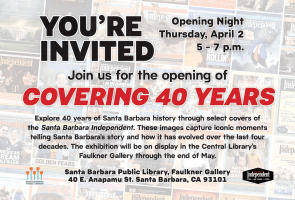
Exhibit Opening: The Santa Barbara Independent: ‘Covering 40 Years’
Sat, Apr 04
9:00 AM
Santa Barbara
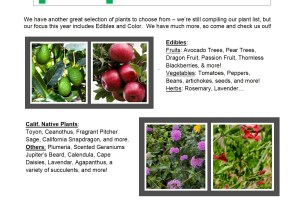
Mesa Harmony Garden Spring Plant Sale
Sat, Apr 04
9:00 AM
Santa Barbara
Passport Fair, hosted by Congressman Salud Carbajal

Sun, Apr 05
10:00 AM
Santa Barbara
Easter Brunch at Brass Bear
Sat, Mar 28 7:15 PM
Santa Barbara
Santa Barbara Stargazing Tour
Sat, Apr 18 5:30 PM
Solvang
The Winemaker’s Table: An Evening of Rideau Reds
Wed, Mar 25 6:30 PM
Santa Barbara
Vigil for Lament, Solidarity and Peace
Thu, Mar 26 11:00 AM
Santa Barbara
Lunch and Learn at La Casa de Maria
Sat, Mar 28 All day
Santa Barbara
Coffee Culture Fest
Sat, Mar 28 11:00 AM
Santa Barbara
NO KINGS 3!
Mon, Mar 30 6:00 PM
Santa Barbara
Art4Grief Support Group 2nd 2-Week Session
Thu, Apr 02 2:00 PM
Santa Barbara
S.B. Rescue Mission Annual Easter Feast
Thu, Apr 02 5:00 PM
Santa Barbara
Exhibit Opening: The Santa Barbara Independent: ‘Covering 40 Years’
Sat, Apr 04 9:00 AM
Santa Barbara
Mesa Harmony Garden Spring Plant Sale
Sat, Apr 04 9:00 AM
Santa Barbara
Passport Fair, hosted by Congressman Salud Carbajal
Sun, Apr 05 10:00 AM
Santa Barbara


You must be logged in to post a comment.