
Gillnet fishing in the Channel Islands is meeting its grave. Fishermen can keep their nets in the water for now, but after Assembly Bill 1056 takes effect in 2027, they will only be able to transfer their permit to a single family member. And then it’s the end of the line.
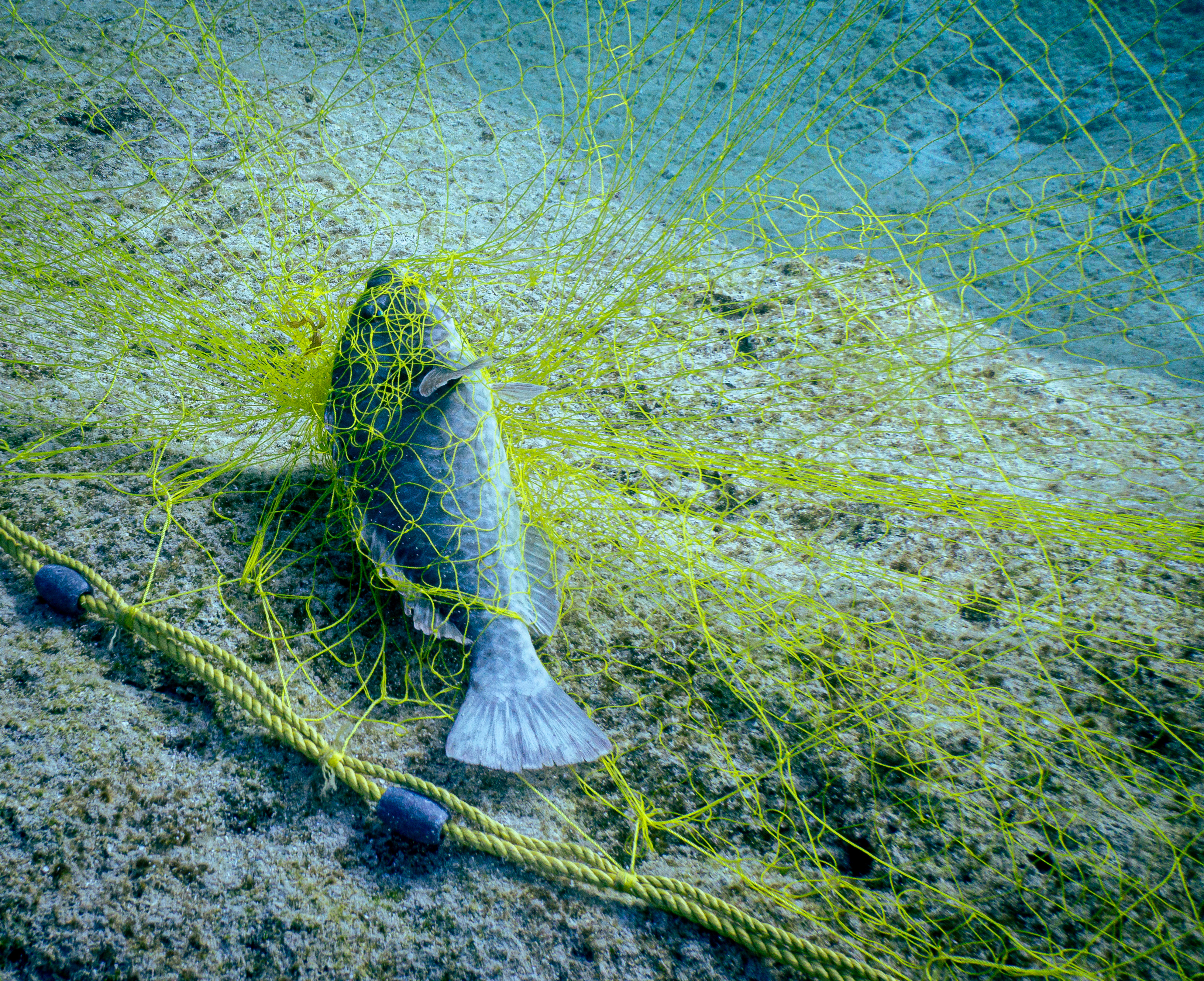
Set gillnets are nearly invisible, mile-long nets anchored to the sea floor, intended to catch species such as California halibut and white sea bass. However, unsuspecting sea lions, sharks, and other animals can get trapped in their clutches. When that happens, if the catch cannot be sold, it is thrown overboard as waste. About half of all gillnet catches are discarded this way, according to conservationists.
Concerned by these casualties, Assemblymember Steve Bennett (D-Ventura) worked with ocean advocates Oceana and Resource Renewal Institute to author and pass AB 1056, which will eventually eliminate the use of gillnets off the California Coast.
Bennett sees it as catching up. Due to the high number of federally protected marine mammals and seabirds killed by gillnets in the 1900s, they were banned in state waters off the California coastline decades ago. But the nets have continued to be used in federal waters off of Ventura and Santa Barbara Counties and around the Channel Islands.
The new bill will render them dead in the water, once the fishing permits are phased out.
“California’s biodiverse underwater ecosystems are world-renowned and we must do our part to keep it that way,” said Bennett in a statement. The Channel Islands, he noted, is one of the last examples of “natural Southern California coastal ecosystems,” and are critical to “community well-being” and the “multi-million dollar fishing and tourism industries.”
“AB 1056 provides a fair and just transition to both fishermen and the fisheries affected,” he added.
Sure, the bill grants fishermen some leeway, but it’s a drawn-out death sentence for the fishery, said Chris Voss, president of the Commercial Fishermen of Santa Barbara. And he sees it as overkill.
This is the second version of the bill — its predecessor died in the legislative process — and it is less aggressive than its previous iteration. It allows existing gill-netters to continue fishing through their retirement. Although all gillnet permits will become non-transferable in January 2027, the law includes the exception of a one-time transfer to a single family member. After it has been passed down once, however, it will become non-transferable.
“Even though it’s less aggressive, legislation shouldn’t be used to make fishery management decisions,” Voss said. Participants in the gillnet fishery have dwindled significantly already, he said. As of 2024, there were 91 set gill net permits managed by the state of California, of which only 34 were active. Further, only a handful of those active permits are producing a significant amount of catch, Voss noted.
That said, the port area of Santa Barbara is the most productive in the state when it comes to white seabass, producing nearly 46 percent of the total commercial landings throughout the state from 2014 to 2022, according to the California Department of Fish & Wildlife.
“Our fishery is abundant,” Voss said. “And a set gillnet is efficient, which is a major consideration for fishermen. Catching with less effort benefits the overall economic dynamic, with benefits to the broader community, including restaurants.”
Thanks to past fishery management actions to reduce bycatch, gillnet fishermen have long grappled with heavy restrictions in the name of conservation.
Voss pointed to research by UC Santa Barbara professor and principal investigator Chris Free, which showed that official estimates of bycatch had not been updated since 2012, and “that current fishing operations do not pose a threat” to the populations of the study’s evaluated, protected marine species, “which suggests that current management is sufficient at limiting bycatch” in the gillnet fishery, the study states. If there were still major impacts on bycatch, Voss said, “we would definitely want to make adjustments, but that’s definitely not the case.”
Instead of outright killing the fishery, Voss said he would have preferred discussions on limiting fishery capacity, or potentially regulating the nets’ mesh size to further reduce bycatch, for example.
“It’s a dangerous precedent to allow the legislature to phase a fishery out of existence, when as a community, we don’t believe that’s justified,” Voss said.
For Bennett and ocean advocates, though, a win is a win.
“We thank Assemblymember Bennett for championing this effort, the legislature for advancing it, and Governor Newsom for signing it into law,” said Caitlynn Birch, campaign manager and marine scientist with Oceana. Oceana is planning its third expedition to research biodiversity around the Channel Islands, expanding on its first two expeditions that found that more than 11,000 species frequent waters around the Channel Islands. “Together, we are securing a sustainable future for California’s ocean ecosystems and the people and wildlife who rely on them,” she said.
Related Posts

Premier Events
Sat, Oct 17
9:00 AM
Santa Barbara
Mesa Harmony Garden Fall Plant Sale Continues…
Fri, Oct 23
2:00 PM
Santa Barbara
Music & Meditation: Clarinetist Nancy Mathison & Pianist Antonio Artese
Sat, Oct 24
9:00 AM
Santa Barbara
Mesa Harmony Garden Fall Plant Sale Continues…

Sun, Oct 18
9:00 AM
Santa Barbara
“Move with MADD” Santa Barbara 3K Community Walk & Fundraiser to Prevents Impaired Driving
Sun, Oct 18
11:00 AM
Santa Barbara
17th Annual Asian American Neighborhood Festival

Sun, Oct 18
1:00 PM
Santa Barbara
Lincoln Elementary School 150th All Year Reunion

Sun, Oct 18
3:00 PM
Santa Barbara
Seaworthy Author Talk -Will Sofrin

Sun, Oct 18
3:00 PM
Goleta
Free Concert Offers Journey Through Italian Music

Mon, Oct 19
7:00 PM
Santa Barbara
PFLAG Santa Barbara October Meeting: “Schools and Inclusive Practices – What creates a safe and inclusive school?”

Tue, Oct 20
7:00 PM
Santa Barbara
Get Out the Vote Night @ SOHO, Music Performance by Loyal Defense Workers

Wed, Oct 21
6:30 PM
Santa Barbara
Teflon Comedy/Non-Schtick – Evening of Comedy

Thu, Oct 22
5:30 PM
Santa Barbara
Best Fest: A Celebration of the Best of Santa Barbara® Readers’ Poll 2026
Sat, Oct 17 9:00 AM
Santa Barbara
Mesa Harmony Garden Fall Plant Sale Continues…
Fri, Oct 23 2:00 PM
Santa Barbara
Music & Meditation: Clarinetist Nancy Mathison & Pianist Antonio Artese
Sat, Oct 24 9:00 AM
Santa Barbara
Mesa Harmony Garden Fall Plant Sale Continues…
Sun, Oct 18 9:00 AM
Santa Barbara
“Move with MADD” Santa Barbara 3K Community Walk & Fundraiser to Prevents Impaired Driving
Sun, Oct 18 11:00 AM
Santa Barbara
17th Annual Asian American Neighborhood Festival
Sun, Oct 18 1:00 PM
Santa Barbara
Lincoln Elementary School 150th All Year Reunion
Sun, Oct 18 3:00 PM
Santa Barbara
Seaworthy Author Talk -Will Sofrin
Sun, Oct 18 3:00 PM
Goleta
Free Concert Offers Journey Through Italian Music

Mon, Oct 19 7:00 PM
Santa Barbara
PFLAG Santa Barbara October Meeting: “Schools and Inclusive Practices – What creates a safe and inclusive school?”
Tue, Oct 20 7:00 PM
Santa Barbara
Get Out the Vote Night @ SOHO, Music Performance by Loyal Defense Workers
Wed, Oct 21 6:30 PM
Santa Barbara
Teflon Comedy/Non-Schtick – Evening of Comedy
Thu, Oct 22 5:30 PM
Santa Barbara

